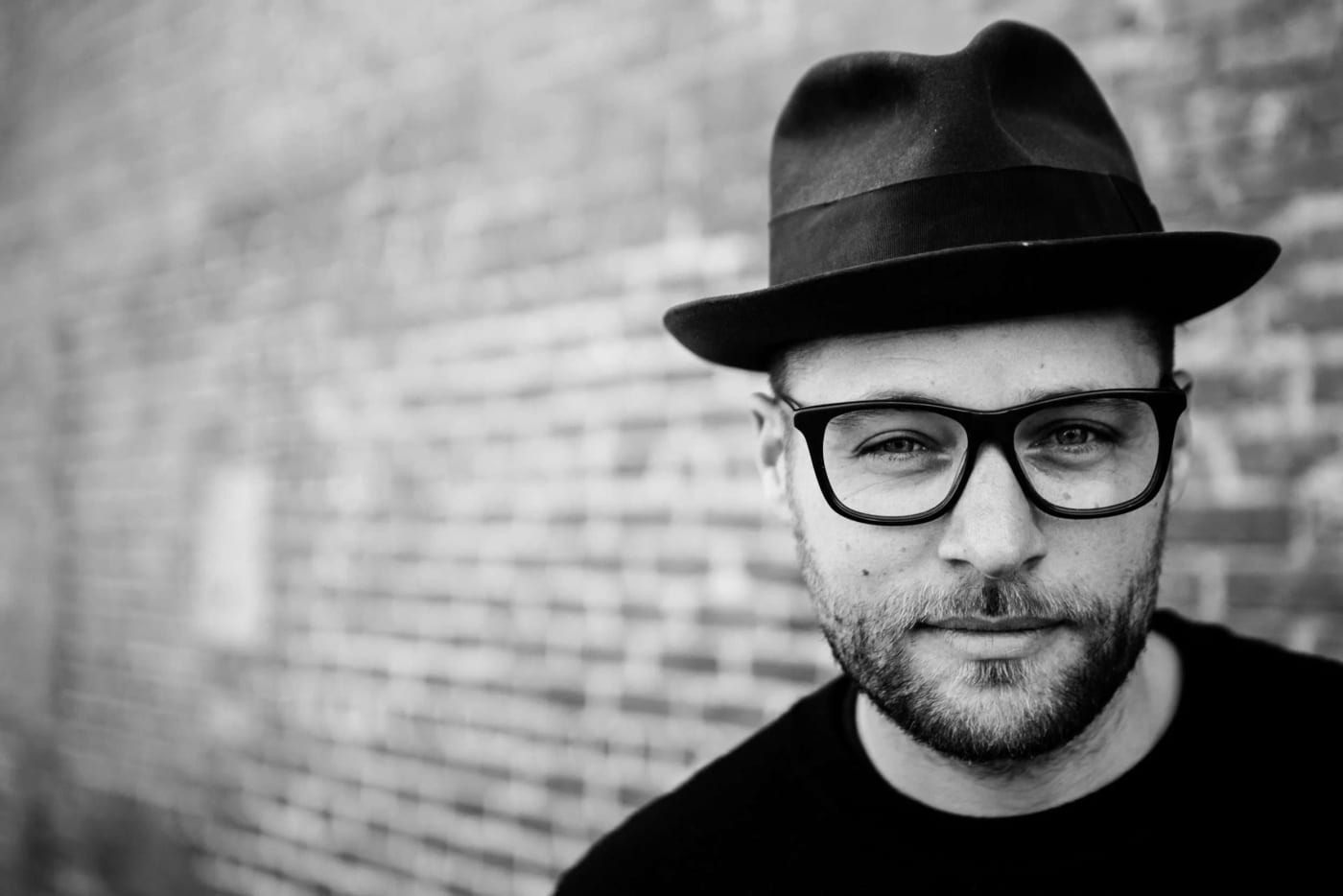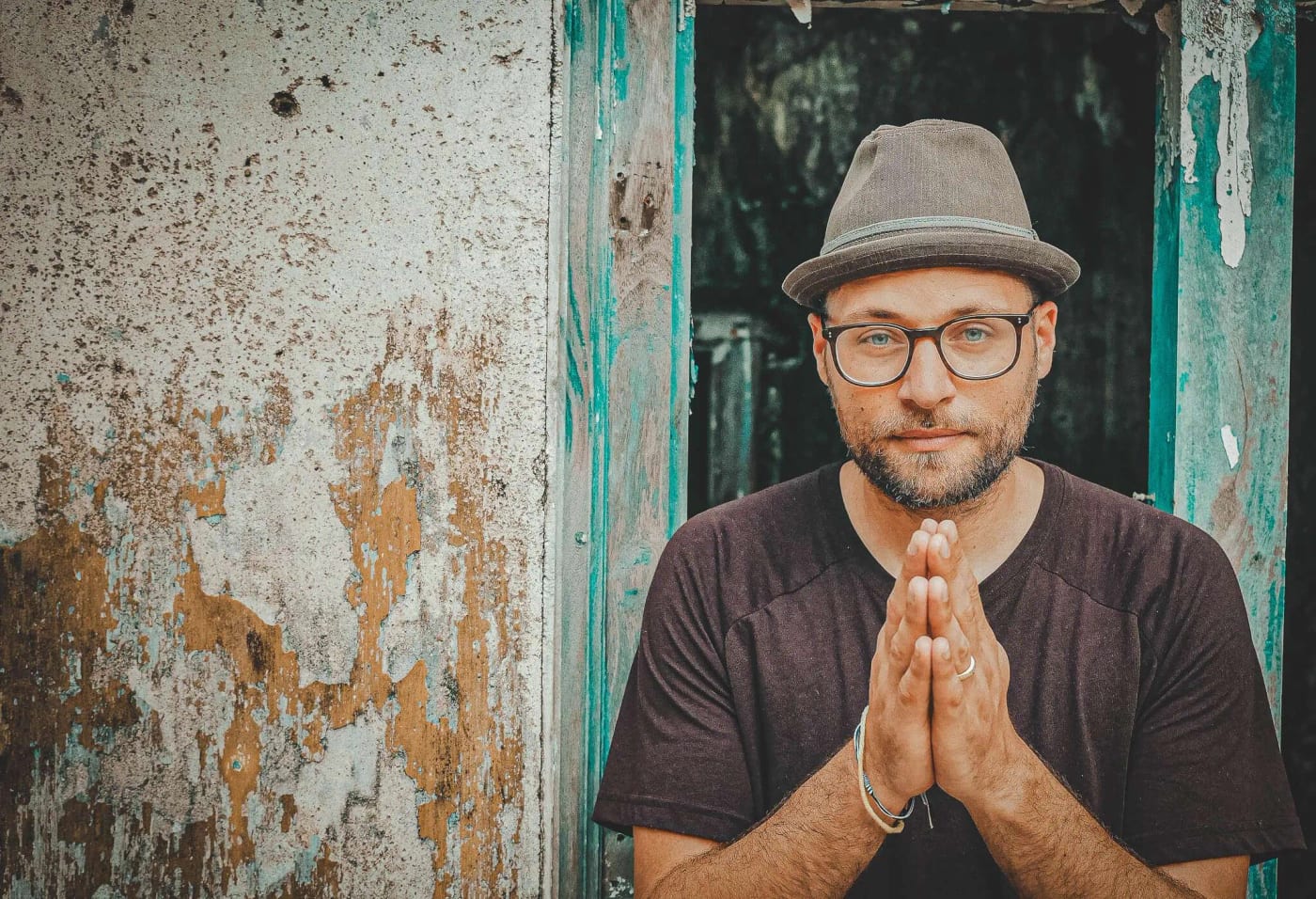

MC YOGI's music sounds like what would happen if the Beastie Boys had spent a decade in an ashram and emerged with beatboxing skills and a harmonium. His tracks layer crisp hip-hop beats—often built on boom-bap foundations with808 kicks and snare patterns—beneath melodic Sanskrit mantras and rap verses that reference both Patanjali's sutras and street culture. The production tends toward warmth rather than aggression: tabla and mridangam sit comfortably alongside programmed drums, acoustic guitar fingerpicking weaves through synthesizer pads, and the occasional flute or bansuri adds melodic counterpoint. His voice carries the relaxed California cadence of West Coast hip-hop, but he code-switches seamlessly between English rap delivery and the call-and-response melodic phrasing of traditional kirtan.
The tempo ranges from mid-tempo grooves around 90-100 BPM—slow enough for contemplation, fast enough to nod your head—to uptempo tracks that push 120 BPM when he wants bodies moving. The texture is intentionally hybrid: not quite the acoustic warmth of traditional kirtan led by harmonium and hand drums, but far from the digital hardness of mainstream hip-hop. There's space in the mix, a deliberate breathing room that separates his work from the compressed wall-of-sound approach common in commercial rap. When he chants "Om Namah Shivaya" over a breakbeat, both elements remain distinct and legible rather than fighting for dominance.
MC YOGI works primarily within the bhakti yoga tradition, specifically the kirtan lineage that flows through figures like Neem Karoli Baba and into the Western yoga movement. His mantras draw from the same devotional well as Krishna Das and Jai Uttal—repetitions of divine names, invocations of deities, affirmations from the Vedic texts. But where traditional kirtan developed as communal call-and-response singing in temple settings, MC YOGI approaches these sacred syllables through the lens of hip-hop, a tradition equally concerned with repetition, rhythm, and the transformative power of words spoken with intention.
He doesn't abandon the traditional forms so much as refract them through a different cultural prism. When he chants "Hare Krishna," he maintains the melodic contour familiar to devotees while adding a rhythmic complexity borrowed from rap's syncopated flows. He's essentially creating a bridge between two oral traditions—both of which value the power of repeated phrases to shift consciousness, both of which emerged from marginalized communities finding voice through rhythm and poetry.
MC YOGI's specific contribution to sacred music is the legitimization of hip-hop as a vehicle for mantra and devotional practice. Before him, the Western kirtan scene largely remained within acoustic folk and world music aesthetics. He demonstrated that beats, samples, and rap verses could carry mantras without diluting their potency—that the attitude and energy of hip-hop culture (self-expression, authenticity, speaking truth) actually aligns with bhakti yoga's emphasis on direct, heartfelt devotion.
His track "Ganesh is Fresh" exemplifies this approach: the elephant-headed deity remover of obstacles becomes a character in a upbeat hip-hop narrative, complete with playful wordplay and a chorus designed for both yoga classes and headphones. It's devotional, but it's also genuinely fun in a way that traditional kirtan sometimes isn't. He brought swagger to sacred music—not ego, but the kind of confident joy that makes spirituality feel accessible rather than austere.
His work has been shaped by collaborations with musicians who understand both worlds. Producer and multi-instrumentalist Ben Leinbach has been crucial in crafting the hybrid production aesthetic, knowing when to feature live instruments versus samples, when to let mantras breathe versus when to layer them thick. Vocalist Amanda Giacomini has appeared on multiple tracks, her classical training adding another textural dimension to the mix.
The influence of earlier fusion pioneers is audible: the Beastie Boys' later Buddhist-influenced work, Michael Franti's spiritual-political hip-hop, and the electronic kirtan experiments of Jai Uttal all left fingerprints on MC YOGI's sound. But his specific alchemy—rap verses that explain yoga philosophy mixed with Sanskrit chanting over hip-hop production—carved out new territory.
New listeners should expect music that takes neither hip-hop nor kirtan entirely seriously, yet respects both deeply. You'll hear beats that make you want to move and mantras that invite you to close your eyes—sometimes simultaneously. Don't be surprised when a track opens with a hard boom-bap beat and transitions into melodic group chanting, or when he rhymes about chakras and meditation techniques over production that wouldn't sound out of place on a underground hip-hop album.
The music works in yoga classes but doesn't require that context. It sits comfortably in the conscious hip-hop landscape alongside artists like Common or Talib Kweli while also belonging to the devotional music world of Bhagavan Das and Deva Premal. This is hip-hop for seekers and kirtan for people who grew up with rap—finally, the same thing.