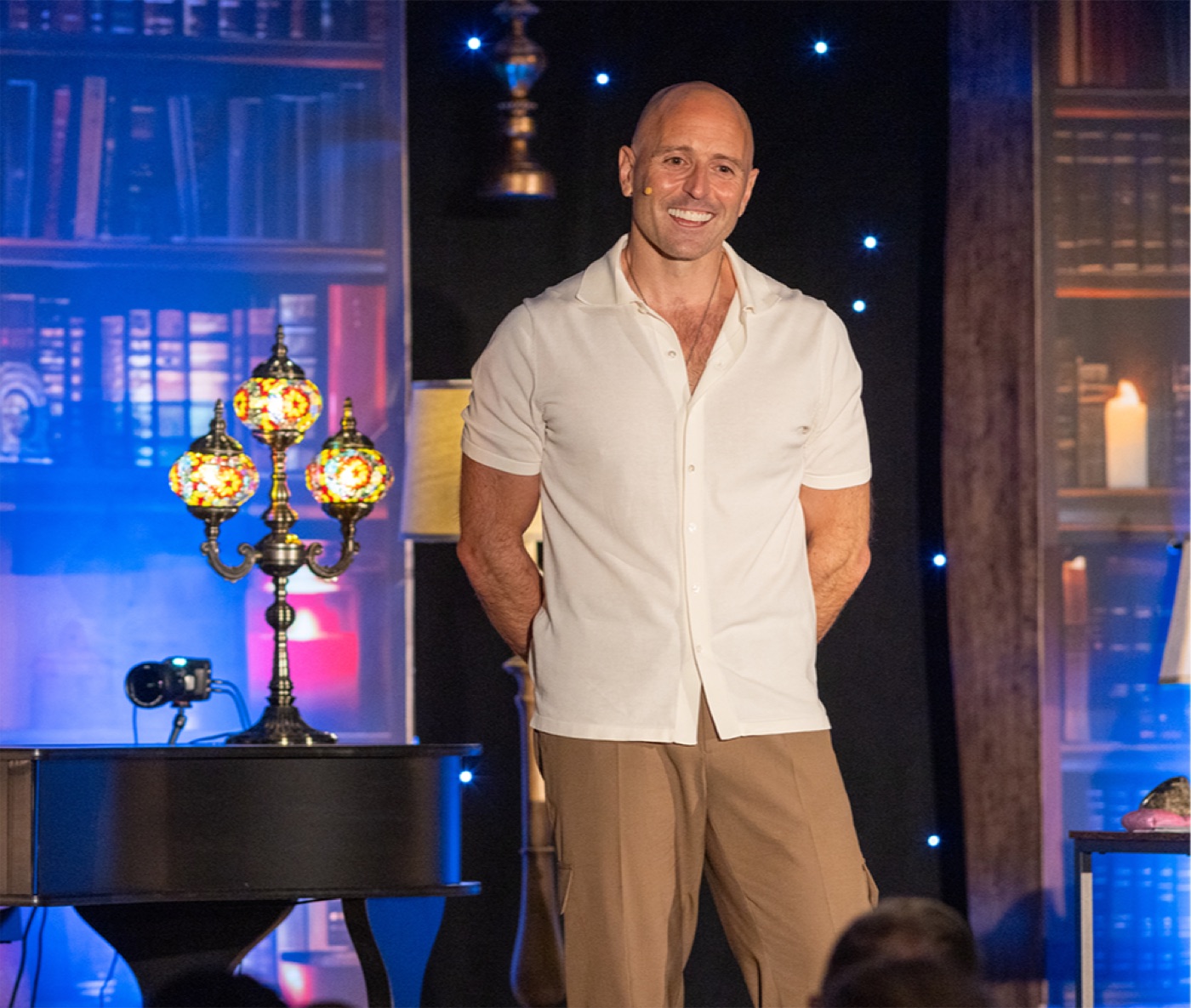

"I Trust My Life Is Guiding Me" arrived on November 14, 2025, as a one-track single. That makes it a different kind of object from the full-length albums that define much of his catalog. Harris has been writing and producing music since 1998, and his discography includes Transmissions, Awaken, Timelines, Mantramorphs and the Medicine Mantras series, many of them made with composer Davor Bozic. This release is closer in spirit to the Medicine Mantras approach: one affirmation, one intention, one piece of music built around it.
It belongs to a busy stretch. Mantramorphs came in September 2025, and Rising in Love: Medicine Mantras 3 followed in December 2025. This single falls between them. It reads less as a statement piece than as another tool in a working kit, which suits an artist who treats music as a functional companion to his teaching.
Harris's music is vocal-forward and mantra-based, and the sound described across his work is spare by design. Expect his voice at the center, warm and present rather than ethereal, supported by layered guitar, subtle synth textures and occasional, restrained percussion. Nothing crowds the voice. The pacing is slow and contemplative, with moderately paced melodies that put lyrical clarity ahead of technical display.
The mood is steady and reassuring. His mantra pieces typically repeat and vary a single affirmation over several minutes, with no sudden dynamic shifts or crescendos that demand attention. The lyric is the title itself, a sentence of trust, and the music exists to let that sentence settle in. Listeners shaped by pop production may find it repetitive at first. That restraint is the design, because repetition is how the phrase moves from something heard to something rehearsed.
There is only one, and it carries the whole release: "I Trust My Life Is Guiding Me." Here is what makes it land.
The grammar of the affirmation. The line is not "I hope" or "I will learn to." It is present tense and first person, and it places the guiding intelligence inside the listener's own life rather than in a teacher or an outside authority. That fits the thread running through Harris's teaching, which stresses personal agency and discernment over guru dependence.
The warmth of the voice. Because the arrangement stays open, the vocal does the emotional work. A phrase like this can sound saccharine if delivered grandly. Delivered plainly, it sounds more like a person talking to himself in a difficult moment, and that is where it earns trust.
Its usefulness. Like the best of his affirmation pieces, it is built to be used, whether in a meditation, a quiet reset or a stretch of uncertainty, rather than simply played in the background.
This is not bhakti or kirtan in the strict sense. Harris's work sits outside traditional lineage structures, with no Sanskrit chants, no guru-initiated mantras and no monastic framework. His lineage is modern: contemporary energy work, Western channeling practice, New Age spirituality and the mainstreaming of meditation and sound healing in wellness culture.
What the single does share with devotional music is the mechanism. A short sacred phrase is repeated until it changes the listener's state. Here the phrase is plain English and self-directed. That makes it accessible to people wary of borrowing from traditions they have no connection to, though it also means there is no deeper esoteric structure to grow into. The practice is transparent by intention.
This single speaks most directly to sensitive, intuitive people in a season of transition, such as a career pivot, an ending, a stretch where the path is unclear and control feels out of reach. It suits those already comfortable with the language of energy and intuition, and anyone who has followed Harris through the Energy Update videos or The Portal and wants a sung version of the same orientation.
It is less suited to listeners who want instrumental virtuosity, avant-garde composition or confrontational, deconstructive spiritual work. Those who find affirmation-based music too gentle, or who are uncomfortable with New Age framing, may find it too simple.
Give it a quiet room, an evening hour and headphones, which keep the voice close and let the spare arrangement show its detail. Listen once without doing anything else. Then play it again and speak the line along with him, silently or aloud, noticing where it feels true and where it meets resistance.
Because it is a single, it asks little time. That makes it easy to return to daily, as a bookend to the morning or a way of closing the evening. Repetition over many days will likely tell you more than any one careful listen.