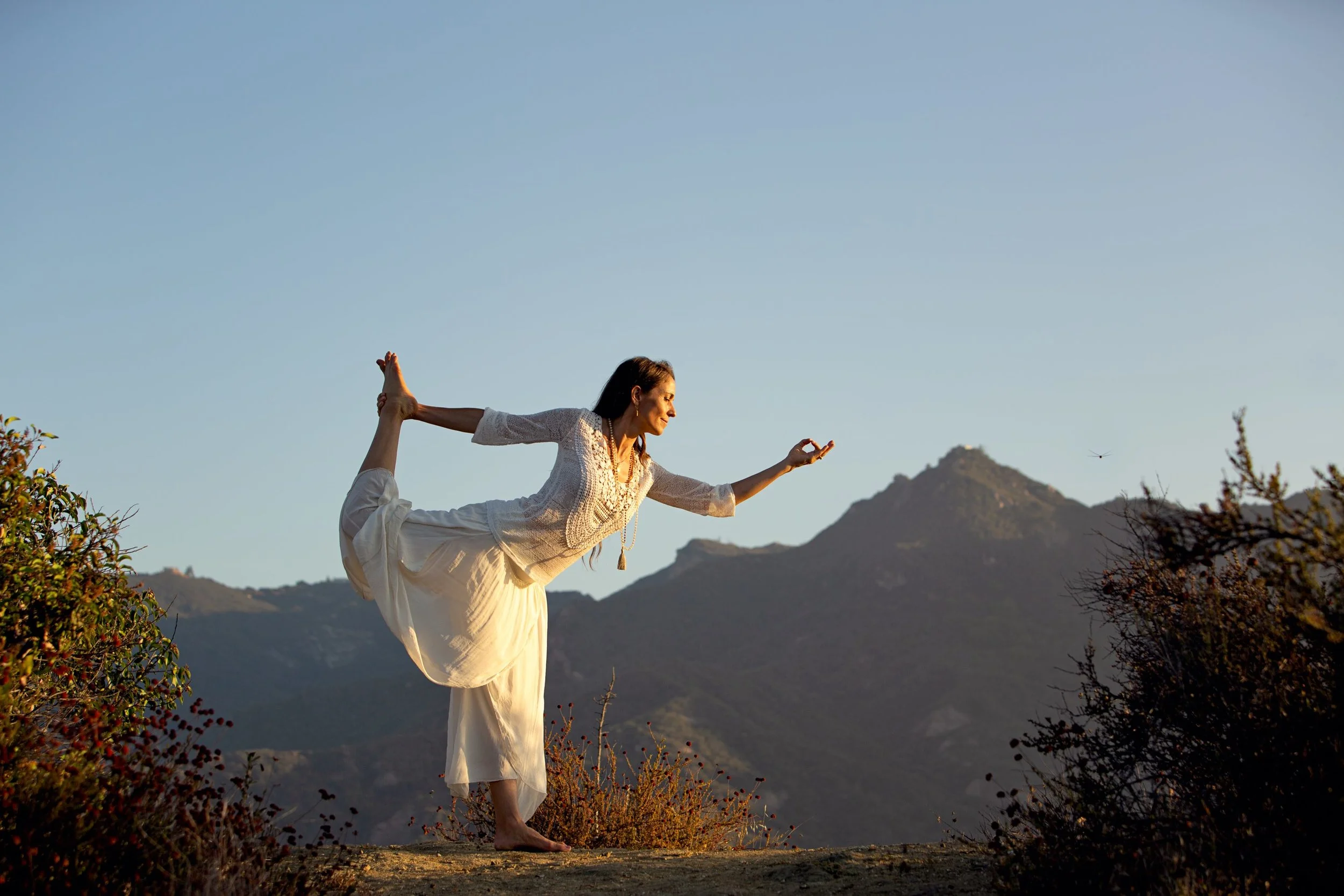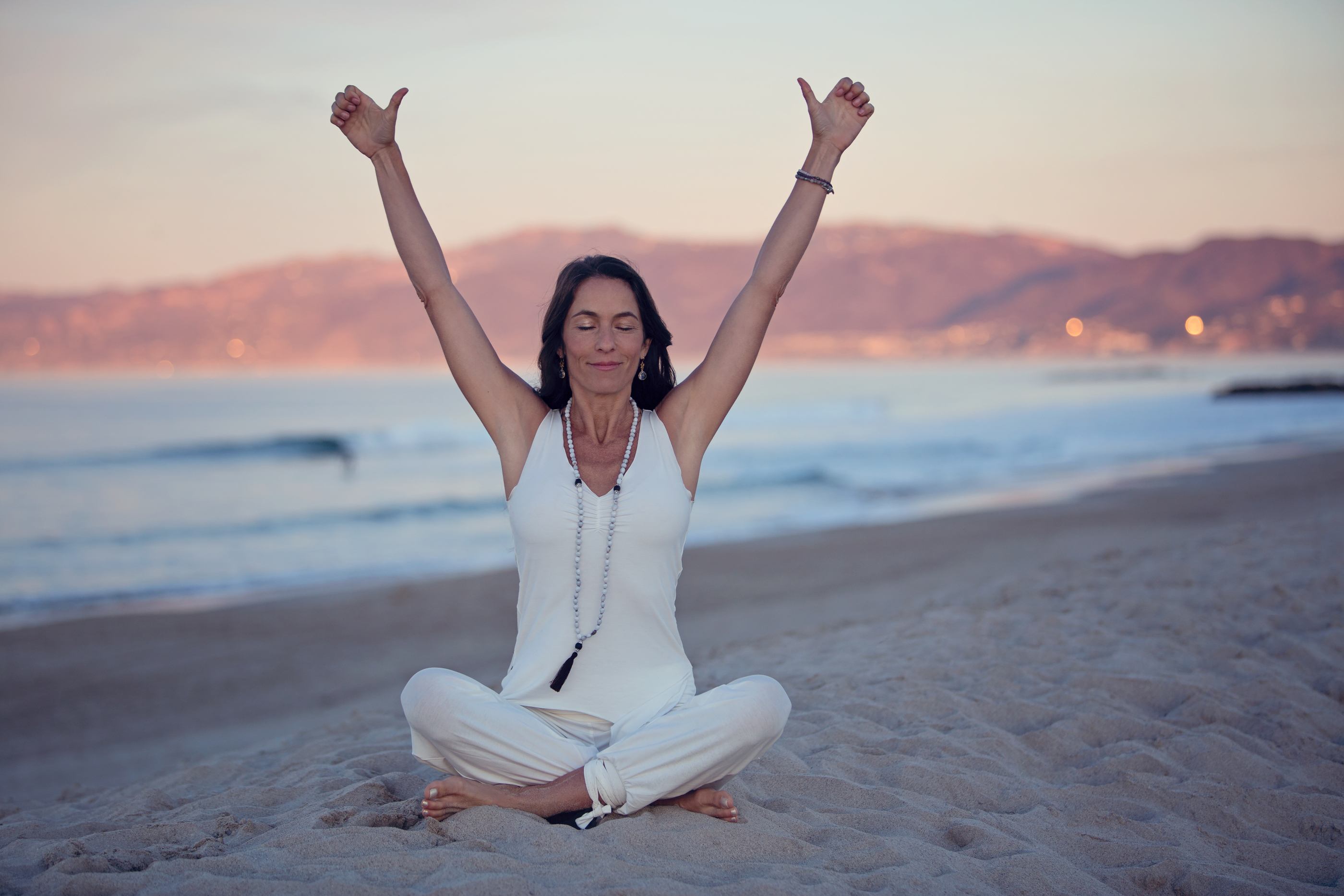

Kia Miller occupies a distinctive position in contemporary yoga: she is both a devoted practitioner of an ancient lineage and a rigorous adapter of its methods for modern life. As the founder of Radiant Body Yoga, Miller has built a teaching organization that honors the depth of traditional kriya practice while translating its principles into language and formats that resonate with today's practitioners. Her work bridges the esoteric and the embodied, treating yoga not as fitness or even wellness alone, but as what she calls "a science of consciousness."
At the heart of Miller's approach is kriya—integrated sequences that weave together asana, pranayama, mantra, mudra, and meditative focus. This methodology, rooted in the Kundalini yoga tradition as transmitted through Yogi Bhajan's lineage, forms the foundation of everything she teaches. But Miller's contribution lies not in simple preservation. She has spent years adapting these powerful spiritual technologies for contemporary formats, making them accessible without dilution, practical without losing their transformative edge.
Miller's teaching synthesizes multiple yogic disciplines, but her distinguishing feature is the precision she brings to both the subtle and the structural. She emphasizes breath mechanics and anatomical alignment with the rigor of someone who understands that the body is the instrument through which consciousness shifts. Her classes layer pranayama techniques and mantra over carefully sequenced movement, creating experiences designed to regulate the nervous system and anchor students in present-moment awareness.
This is yoga as method rather than metaphor. Miller frames the practice as a practical response to what she sees as the defining challenge of modern life: chronic stress and its cascade of physiological and psychological effects. Her teaching doesn't just acknowledge this context—it's built around it. The kriyas she shares are selected and adapted specifically to address nervous system dysregulation, mental fragmentation, and the pervasive sense of disconnection that characterizes contemporary experience.
Through Radiant Body Yoga, Miller has created an infrastructure for transmission. The organization offers 200-hour and 300-hour Yoga Alliance–certified teacher trainings, designed not simply to produce instructors but to cultivate what Miller calls "guides rather than performers." This distinction is central to her philosophy. She's interested in teachers who can hold space with authenticity, who understand that their role is facilitation rather than display.
These trainings unfold in intentionally chosen landscapes: Zion National Park, Greece, Sedona. The settings aren't incidental. Miller creates immersive residential experiences where the environment itself becomes part of the practice, where students can step fully away from their ordinary patterns and into sustained inquiry. The curriculum focuses on equipping teachers with both technical skill and something harder to quantify—the capacity to be present with students as they navigate their own transformation.
Beyond formal teacher training, Miller leads international workshops and retreats, extending her reach while maintaining the intimacy and depth she values. Her teaching resources have expanded into the digital realm through the Radiant Body Yoga app, which offers on-demand access to guided meditations, practice sequences, and breathwork sessions. It's a pragmatic response to geography and accessibility, allowing practitioners around the world to engage with her methods on their own time.
What emerges across Miller's work is a coherent philosophy about how transformation actually occurs. In her view, it doesn't happen through external technique alone. The magic—if we can call it that—lives in the relationship between teacher, practice, and student. She emphasizes presence and self-inquiry, treating yoga as a participatory art rather than a prescribed protocol.
This perspective shapes how she teaches. Miller is known for creating space for students to discover their own experience rather than imposing a singular interpretation. Her instruction in pranayama and mantra isn't about mastering forms; it's about using these tools to observe and shift one's own internal state. The kriyas become laboratories for consciousness, structured containers within which practitioners can witness their own patterns and possibilities.
Miller's cultural significance lies in her ability to serve multiple audiences simultaneously without compromising integrity. She speaks to serious practitioners seeking depth in the Kundalini tradition. She reaches teachers who want rigorous training that honors lineage while addressing contemporary needs. And she connects with everyday students looking for practical methods to manage stress and cultivate presence.
In an era when yoga is often reduced to physical fitness or commodified wellness, Miller maintains its status as a spiritual discipline and a science of mind. She does this without inaccessibility or pretension, grounding even the most esoteric practices in tangible, embodied experience.
Miller's current chapter centers on refinement and reach. Through Radiant Body Yoga's ongoing trainings, workshops, and digital offerings, she continues to develop teachers who can carry this work forward. Her legacy is already taking shape: a generation of instructors trained not just in technique but in presence, equipped to meet students where they are while guiding them toward genuine transformation.
In Miller's hands, kriya remains what it has always been—a technology for awakening—while becoming something it might not have been without her: a living practice fully engaged with the challenges and possibilities of our particular moment in time.