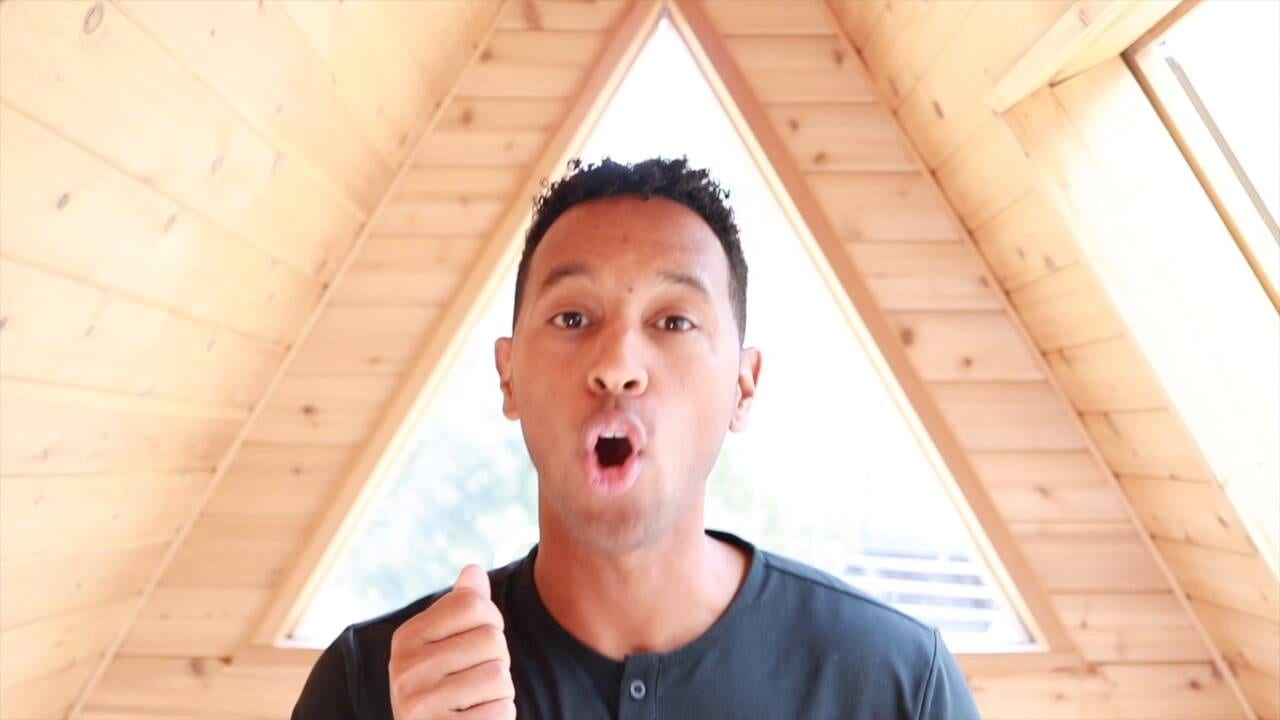

"Hello (feat. Frank Fitzpatrick)" arrived on October 27, 2023, as a one-track single, and it is best heard as a small, deliberate door rather than a full room. Justin Michael Williams is a best-selling author, Grammy-nominated recording artist and keynote speaker who works at the intersection of music, meditation and equality. He calls music his original and true love, and he has said he has learned to meld his speaking and his songs. A single like this is where that melding can happen in miniature: one title, one collaborator, one gesture of greeting.
In the arc of his recorded work, 2023 sits between the 2022 album Meditations for the People and the 2024 full-length SOUL CHILD. That placement matters. "Hello" is not the teaching-oriented practice album, and it is not the later eight-track statement. It is a bridge piece, a moment where a teacher who has spent nearly two decades guiding people inward steps forward with a song.
The available record on production credits is thin, so this guide stays close to what can be said responsibly. The single is a collaboration with Frank Fitzpatrick, who is described as a singer-guitarist. That pairing points toward a warm, voice-forward setting rather than a dancefloor one. Williams's recent work generally favors space and intention over density and velocity, and his voice tends to carry a song rather than dominate it, with the emphasis on lyrical clarity and emotional legibility.
Expect restraint. His music avoids the usual meditation-music signals: no obvious relaxation triggers, no reflexive wash of ambient pads. The pacing reflects his teaching philosophy, which is slow and intentional, asking the listener to bring attention rather than promising automatic transformation. Even his more energetic material is contemplative rather than euphoric, and "Hello" is best approached in that spirit.
This is a single, so there is one track, and it is the whole story.
"Hello (feat. Frank Fitzpatrick)." What makes it land is the simplicity of its premise. A greeting is the most accessible thing a song can offer, and accessibility is the center of Williams's work. He speaks to people who do not typically see themselves as part of the motivational, healing or wellness movement, and he works without mystification or coded spiritual jargon. A song called "Hello" fits that stance: it asks for no prior knowledge and no vocabulary, only presence. The presence of Fitzpatrick as a featured voice also shifts the song from monologue to meeting. Hello is, by definition, something said between two parties, and the collaboration lets the title become an actual exchange.
It may also serve well as an opening or threshold in a ceremonial or practice context: a way to begin a sit, a journaling session, or a quiet evening.
Williams does not describe himself within a single spiritual lineage in the available record, and this guide will not assign him one. Nor is this a bhakti or kirtan recording in any documented sense. The more accurate frame is contemplative practice recast for people with lived experience of struggle: mindfulness and meditation paired with shadow work, and music offered as a companion to both. His work sits in the growing intersection of wellness, music-as-medicine and social equality.
That framing distinguishes him from much devotional and ambient music. Where those traditions often invite transcendence, his premise assumes listeners are already living through difficulty and need practices that honor that context. "Hello" belongs to that approach: a greeting offered to where you actually are.
This single will resonate most with listeners who are new to meditation or wary of wellness culture, people who have found conventional spiritual music too thin, too serene, or too far from their own lives. It suits someone at the start of something: a new practice, a return after a hard stretch, or a moment of tentatively reopening to connection. It is less suited to listeners seeking escapist spirituality, high-energy electronic production, or purely feel-good affirmation. Williams's audience tends to self-select for deep change rather than surface uplift.
Give it a quiet evening and headphones, ideally alone and without multitasking. Listen once with no agenda, simply noticing how the two voices meet. Then listen a second time as a threshold: sit, breathe, and let the song function as the moment you arrive in your own space before whatever practice or rest follows. Because it is a single, it asks little of your time, which makes it easy to return to as a short ritual of beginning.
For those who want to go further, Meditations for the People (2022) and SOUL CHILD (2024) are the natural next steps, one toward guided practice and the other toward his current artistic direction.