HD
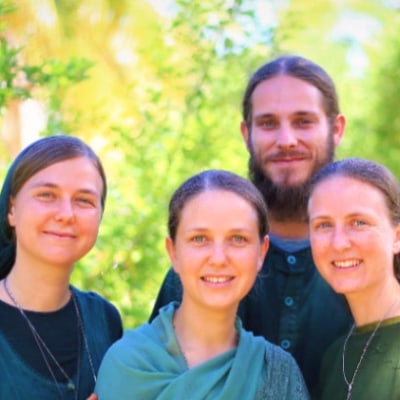
Harpa Dei
Gregorian Chant Artist
) into the 13th century. Differing from the lyres of the Mediterranean antiquity, Germanic lyres are characterised by a long, shallow and broadly rectangular shape, with a hollow soundbox curving at the base, and two hollow arms connected across the top by an integrated crossbar or ‘yoke’. D. The plucked variants declined in the medieval era (spreading less often in manuscripts in the 13th century), while bowed variants have survived into modern times. C. , and separately by Germanic peoples. They were played in Anglo-Saxon England, and more widely, in Germanic regions of northwestern Europe. D. The Germanic lyre has been thought to be a descendant of the ancient lyre which originated in western Asia.
That same instrument was adopted in Ancient Egypt and also by the Ancient Greeks as the cithara. The rotte is shaped differently than these, however, and discoveries from further east has led to the possibility that it arrived with invading tribes. The oldest rotte found in England dates possibly before 450 AD and the most recent dates to the 10th century. The Germanic lyre was depicted in manuscript illuminations and mentioned in Anglo-Saxon literature and poetry (as the hearpe). Despite this, knowledge of the instrument was largely forgotten, and it was confused with the later medieval harp. Then in the 19th century, two lyres (Oberflacht 84 and 37) were found in cemetery excavations in southwest Germany, giving concrete examples of the Germanic lyre's existence. " The direction of the spread of the instrument is uncertain. The instrument may have developed in several locations. Other possibilities include an Irish instrument that spread eastwards to Germany, or an instrument of central Europe that spread northwest.
Across Europe, lyres were named with etymologically related variations: crwth, cruit, crot (Celtic); rote and crowd (English); rota, rotta, rote, rotte (French, English, German, Provencal). The instrument disappeared in most of Europe, surviving in Scandinavia, and elsewhere remembered in medieval images and in literature. D. manuscript and labeled the instrument the Cythara Teutonica. After archeological finds, the instrument has been recreated and studied anew, labeled Germanic round-lyre, Anglo-Saxon lyre, Germanic lyre and Viking lyre today. Historical names include rotta (and variations rota, rotte, rote, Harpa (Old Norse) and hearpe (Old-English). Medieval clerics sometimes used lyra, recalling classical Greece and Rome.
Discover More
Kindred Spirits


Continue your journey
There's more where this came from.
BrightStar is the global directory of artists, teachers, and healers in the wellness and spiritual movement. Find your next experience — or add yourself.
Discover More Artists
Browse 24,000+ curated profiles across kirtan, yoga, meditation, and beyond.
Explore directory →Find an Event Near You
Kirtan, retreats, sound baths, breathwork, ceremonies — happening this week.
Browse events →Add Your Profile
Are you an artist, teacher, or healer? Get listed — free, AI-assisted, live in minutes.
Get started →