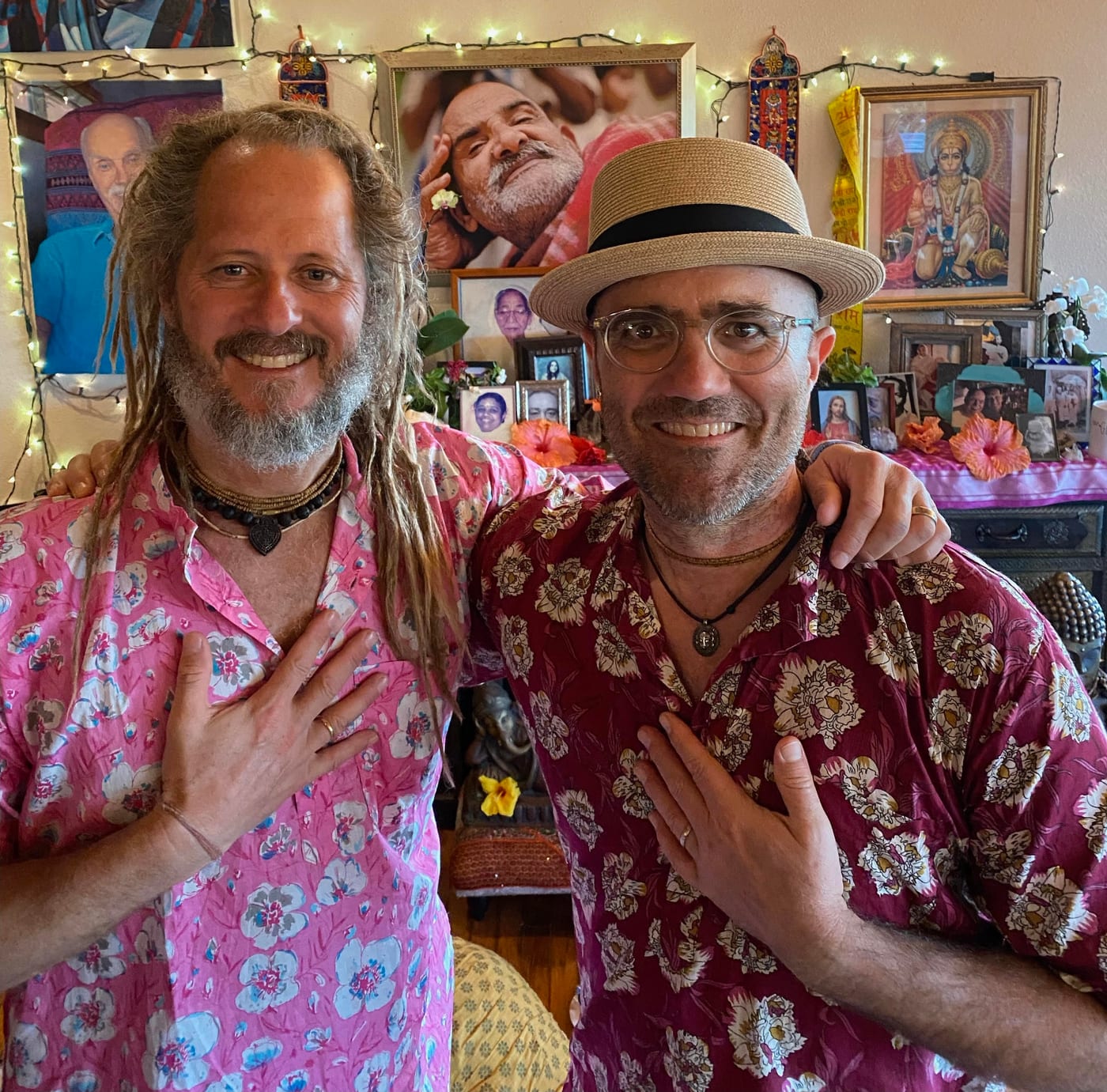

Govind Das does not have a documented album catalog, so this guide cannot walk through a numbered run of releases. His profile lists no discography: no titles, no years, no cover art, no track listings. Anything resembling a "first release to present" timeline would have to be invented, and that would be a disservice to a listener who wants to know what is actually there.
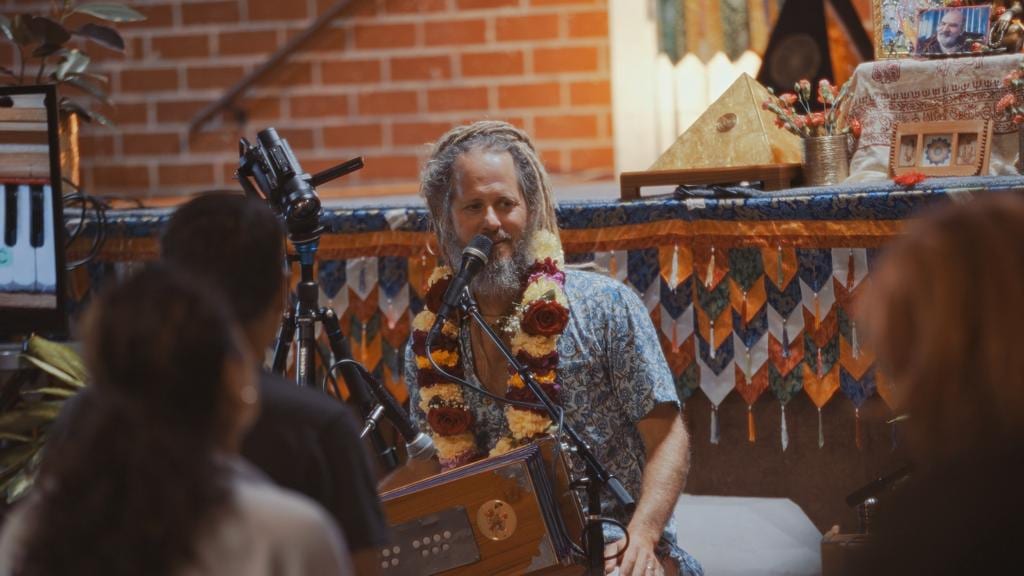
What the record does show is a long practice. He is a musician, kirtan leader and spiritual teacher from Pacific Palisades, California, and he has played harmonium and led kirtan for more than twenty years. He directs Bhakti Yoga Shala, a community built around the yoga of love, gratitude and devotion. His music lives on Spotify, where his artist page has about 12,300 followers, and on a YouTube channel linked from his profile. The sound is voice, harmonium and the response of a room. It is sparse, repetitive and patient by design, and the same phrase deepens across cycles instead of resolving into a hook.
A listening guide usually gives each album a heading, a cover image, a year and a first track to try. For Govind Das, none of those details are documented, so there are no albums to profile. The profile does not name individual tracks either, and there is no verified set of songs labeled for meditation, yoga or ceremony.
For a new listener, that changes the approach. His reputation rests on in-person kirtan and the Shala's community more than on streaming numbers, and kirtan is built on call-and-response singing. The harmonium's role is easier to grasp in a room than on a recording. If you want a listening-first route, the Spotify artist page and the YouTube channel give the clearest sense of his voice and harmonium. Browse them directly, since no curated list exists.
Expect the harmonium to do the grounding. It is a reedy, breathing instrument, and in his hands it holds the chant instead of decorating it. The mantras and devotional songs come from the Bhakti tradition. The Bhakti Yoga Shala follows the teachings of Neem Karoli Baba, who celebrated all Gods as one and welcomed anyone.
The pacing builds gradually. A short melodic phrase is sung, then answered, and the repetition is the point. First listens often feel circular, and the circle is where the music works. Listeners who want rich orchestration, English-language songwriting, fast tempos or heavy production will find something quite different. Anyone who likes restraint and absorption over virtuosity is in the right place.
Because the recorded catalog is thin, the spoken and live material fills the gap.
The Love Everyone Podcast, co-hosted with Rama Chandra Das, is the clearest window into his thinking. Each episode takes one line of the Hanuman Chalisa and talks through it alongside Bhakti Yoga, kirtan, Neem Karoli Baba and walking the path of devotion. It works for a commute and rewards repeat listens.
Bhakti Yoga Shala offers yoga, kirtan, yin and restorative classes, breathwork, trance dance and sound healing. The online studio, Portal to the Path of Devotion, opens this to listeners anywhere. The website is bhaktiyogashala.com.
The India retreats have run since 2005 through Rishikesh, Kainchi Dham and Vrindavan. Days pair early-morning meditation and kirtan with Bhakti Vinyasa yoga, temple visits, vegetarian food and satsang. He has traveled to India since 1999 and calls it a holy land, "the Mother" from which the great yoga practices and wisdom were born. He has also taught alongside Saul David Raye, a friend of more than 25 years.
Since there are no albums to recommend, these are the best entry points for each mood, drawn only from what is documented.
Devotional: Attend a kirtan session, in person or through the Shala's online studio. Chanted mantra in a group, with the harmonium holding the melodic line, is the form made for devotion. If you can only stream, start on the Spotify artist page and let a single chant repeat.
Contemplative: Try an episode of The Love Everyone Podcast. One line of the Hanuman Chalisa per episode gives you a single idea to sit with, and the conversation moves slowly enough to leave room for thought.
Energetic: His recordings are not high-energy by nature, since kirtan is repetitive and participatory rather than fast. The closest documented match is the Shala's trance dance offering, where movement carries the energy. For a sung version, join a live call-and-response kirtan and let the group's volume build across the cycles.
Healing: Pair the Shala's restorative or yin classes, or its sound healing and breathwork sessions, with quiet listening. The slower, quieter pacing suits stillness. At home, repeat a single mantra for a set time instead of moving through many songs.
If you are unsure whether devotional chanting suits you, try one short kirtan before committing to anything larger. If it takes hold, the India retreats are the deepest immersion on offer, with the day's practice, singing, food and satsang forming one continuous flow.