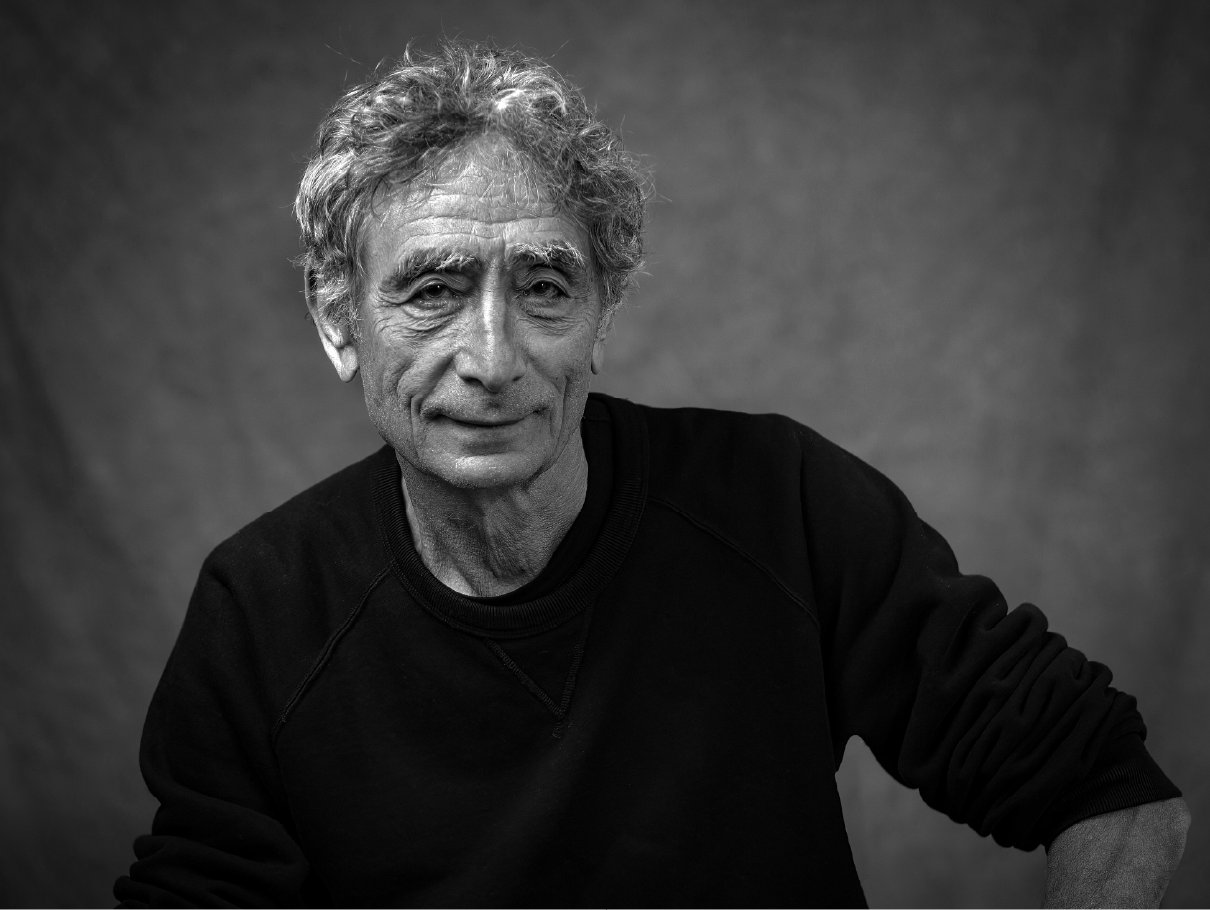

Gabor Maté's life began in the shadow of history's darkest chapter. Born in Budapest in 1944 to a Jewish family, his infancy unfolded against the backdrop of World War II and the Holocaust. While still a baby, his family was forced into hiding, navigating the constant threat of discovery and death. These early months, though beyond conscious recall, would become central to his later understanding of how trauma inscribes itself on the developing nervous system—how suffering enters the body long before language can name it.
In 1957, Maté's family emigrated to Canada, trading the ruins of postwar Hungary for the promise of a new beginning. Yet displacement carries its own wounds, and the young Maté carried with him an inheritance of unspoken pain that would take decades to fully comprehend. He pursued medicine, eventually becoming a physician, but the conventional medical model would prove insufficient for the questions that haunted him about human suffering and healing.
Maté's trajectory shifted fundamentally when he began working with patients struggling with addiction and mental health issues in Vancouver's Downtown Eastside, one of North America's most impoverished urban areas. Here, among people society had largely abandoned, he encountered suffering that defied the simplistic narratives of personal failure and moral weakness that dominated addiction discourse.
What he witnessed wasn't a collection of bad choices but a pattern of wounded people trying desperately to escape pain. In listening to his patients' stories, Maté recognized echoes of his own early trauma and began to see addiction not as a disease of substances but as an attempt at self-medication—a response to childhood trauma and emotional suffering. This realization became the foundation for his life's work: understanding how early experiences shape our capacity for health, connection, and well-being.
Maté's core contribution lies in his unflinching examination of the relationship between trauma, emotional pain, and physical illness. He approaches addiction, chronic disease, and mental health challenges not as isolated medical problems but as expressions of deeper wounds—often rooted in childhood experiences and the failure of early environments to provide safety, attunement, and authentic connection.
His work bridges the artificial divide between mind and body, demonstrating how suppressed emotions and unprocessed trauma manifest as physical illness. This isn't metaphorical thinking but grounded in the emerging science of psychoneuroimmunology and the understanding that our biography becomes our biology. Maté argues that the question isn't "What's wrong with you?" but "What happened to you?"—a shift in perspective that moves from judgment to curiosity, from pathology to compassion.
Through his books, Maté has reached audiences far beyond his examination room. In the Realm of Hungry Ghosts explores addiction through the lives of his Downtown Eastside patients, weaving together neuroscience, personal narrative, and Buddhist philosophy to create a deeply humane portrait of dependency. The book challenges readers to see the addict as a suffering human being rather than a moral failure.
When the Body Says No examines the connection between emotional repression and disease, documenting how the inability to express anger or establish boundaries can contribute to conditions from cancer to autoimmune disorders. The book resonated particularly with those who recognized themselves in its pages—the accommodators, the people-pleasers, those who learned early to prioritize others' needs over their own authentic feelings.
More recently, The Myth of Normal (co-authored with his son Daniel) offers a sweeping critique of modern culture's impact on human health and well-being. The book argues that what we consider normal—chronic stress, emotional disconnection, material obsession—is actually toxic, and that many of our illnesses reflect not individual pathology but collective trauma and societal dysfunction.
Today, Maté continues his work as a sought-after speaker, bringing his message to audiences worldwide. His presentations blend scientific research with personal vulnerability, creating spaces where complex ideas about trauma and healing become accessible without being oversimplified. He draws from diverse influences—Carl Jung's depth psychology, Alice Miller's work on childhood trauma, indigenous healing traditions—synthesizing these streams into a coherent framework for understanding human suffering.
His approach has also incorporated elements of holistic healing that challenge conventional medical paradigms, including advocacy for plant medicine and alternative therapeutic approaches. This work has drawn both devoted followers and criticism from those who find his positions too far outside mainstream medicine.
In an era of mounting mental health crises, addiction epidemics, and chronic illness, Maté offers a framework that makes sense of suffering without reducing it to chemical imbalances or individual failings. He speaks to those who sense that their pain has a story, that their bodies are trying to communicate something important through symptoms and struggles.
His influence extends across diverse audiences—from trauma therapists and addiction counselors to parents trying to raise emotionally healthy children, from chronic illness patients seeking answers to activists questioning societal structures that generate suffering. What unites these readers is a hunger for explanations that honor the complexity of human experience and offer hope for genuine healing rather than mere symptom management.
Maté's legacy isn't a cure or a technique but a shift in perspective—an invitation to look at ourselves and each other with greater compassion, to recognize that beneath our symptoms and struggles lie unmet needs and unhealed wounds, and that understanding this might be the first step toward becoming whole.