
Elena Brower's Teaching: Approach, Method, and Voice
The Shape of the Session
A class or talk with Elena Brower does not move quickly. It opens slowly, often with breath or silence, and lingers in that opening longer than beginners expect. Her sessions—whether asana classes, meditation sits, or retreat evenings—unfold with a deliberate pacing that resists the tempo of contemporary wellness culture. She tends to work in layers: a physical posture becomes a breathing pattern becomes a question to carry into stillness. Her voice is soft but precise, and there is little filler. When she speaks, it's to reorient attention, not to occupy time.
In longer formats, such as retreats or multi-week courses, she structures progression not around physical difficulty but around the student's capacity to notice. The arc is inward. Early sessions may emphasize foundational practices—simple breathing techniques, seated meditation, or basic movement sequences—but the revisitation of these same elements days later reveals their depth. She returns to tools rather than discarding them. A single breath technique may anchor an entire week, examined from different angles: as concentration practice, as emotional regulation, as devotion.
Recurring Themes and Central Questions
Brower's teaching circles around attention as both method and subject. Not attention in the productivity sense, but attention as spiritual practice—learning to meet what is present without grasping or rejection. She speaks often about "what we practice becomes what we do," framing the incremental cultivation of awareness as shaping moral and relational life. Her interest in Zen Buddhism since 2020 has sharpened this focus, bringing in the rigor of zazen and the koan-like quality of sitting with uncertainty.
Another persistent thread is the relationship between softness and discernment. She does not equate gentleness with passivity. Her work on "spiritual intelligence" asks students to develop the ability to meet difficulty with both tenderness and clarity. This plays out in her courses on perceptive parenting and women's wellness, where the question is less about technique and more about developing the steadiness to see what's true in real time.
The questions she returns to are deceptively simple: What are you practicing? What do you actually need? Where is your attention right now? These are not rhetorical. She expects students to sit with them, to return to them across weeks or months. Her teaching resists resolution. She does not offer tidy frameworks for transformation, but rather invites sustained investigation.
Aesthetic and Delivery
Brower's aesthetic is quiet, feminine, and unfussy. She uses story sparingly, and when she does, it's domestic and relational—conversations with her son, moments in her own practice, small encounters that reveal something structural. There is little scripture citation, even as her work is grounded in yogic and Buddhist philosophy. She translates concepts into felt experience rather than exegesis.
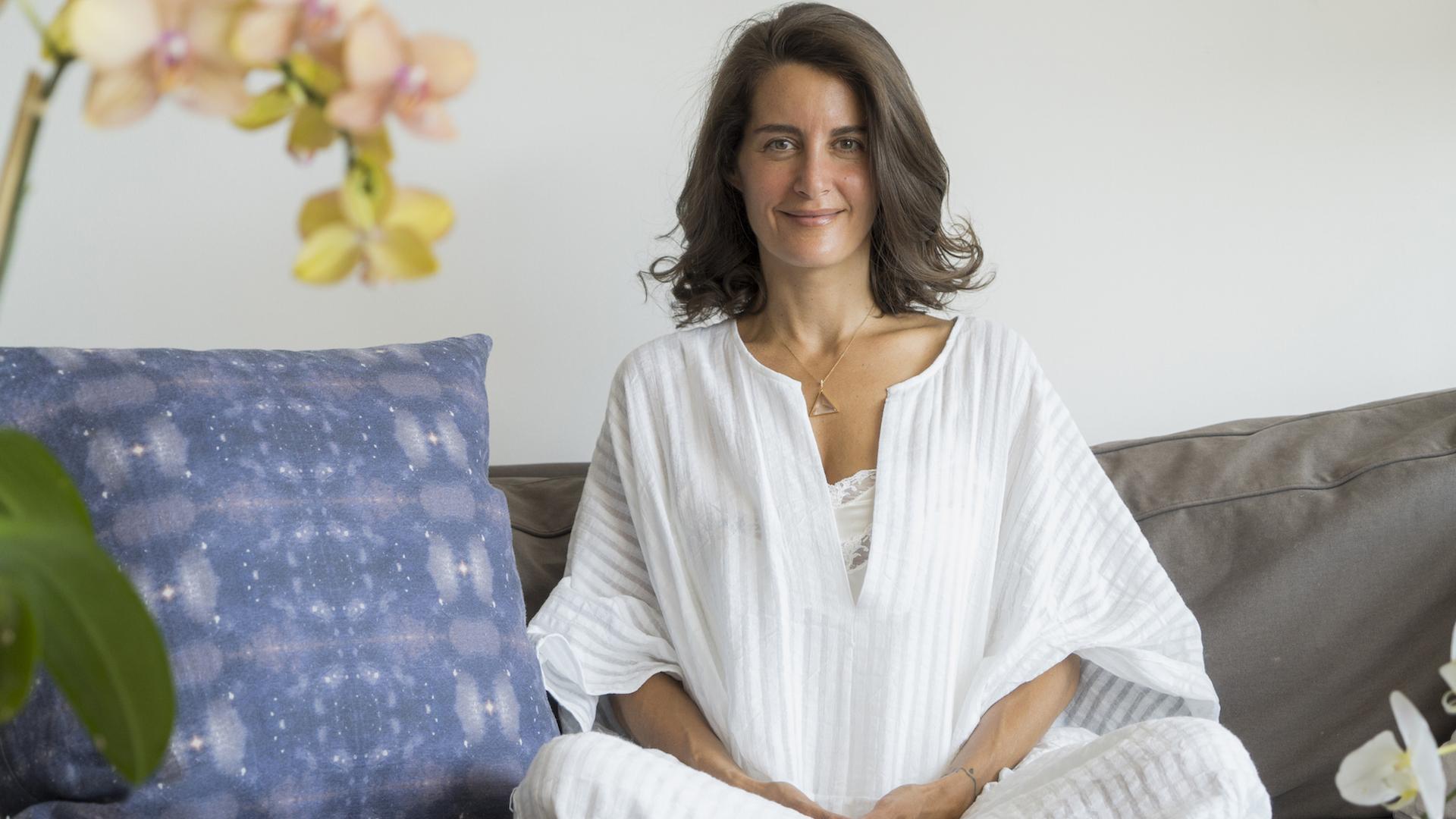
Humor is present but understated. Silence is central. In recorded sessions, pauses stretch longer than most teachers allow. She trusts the gap. Her voice itself—unhurried, low, almost conspiratorial—creates a particular intimacy. The aesthetic is less polished than curated: soft lighting, simple clothing, minimal branding. It reads as intentional restraint rather than casual authenticity.
Who It Lands For
Brower's teaching finds traction with students already suspicious of quick fixes. It appeals to those who have cycled through more performance-oriented practices and are ready for something slower and less legible as achievement. Her work attracts practitioners interested in the intersection of contemplative practice and daily life, particularly women navigating midlife, parenthood, or creative work. Those drawn to her approach often have some literacy in yoga or meditation but are seeking depth rather than variety.
It will likely frustrate students looking for clear progression, measurable milestones, or energetic catharsis. Her pacing can feel withholding to those used to more dynamic teaching. The emphasis on return and repetition—doing the same practice again and again—runs counter to the novelty-driven culture of modern wellness. Students seeking traditional lineage transmission or scriptural rigor may find her synthesis too eclectic or too soft.
The Tradition She Belongs To
Brower occupies a specific niche in American yoga and meditation: post-lineage but not secular, informed by tradition but not bound by it. She shares terrain with teachers like Sebene Selassie, Tracee Stanley, and Cyndi Lee—women who integrate multiple wisdom traditions while centering interiority and attention. Her Buddhist chaplaincy training places her in conversation with engaged Buddhism and contemporary mindfulness, though her roots remain in the somatic intelligence of yoga.
She is part of a generation attempting to hold tradition seriously while acknowledging the limitations and harms within those structures. Her work is not about building a new system but about tending the practices themselves with care and precision.