
Who Is Dalai Lama? Life, Work, and Legacy
The Foundation of a Philosophical Life
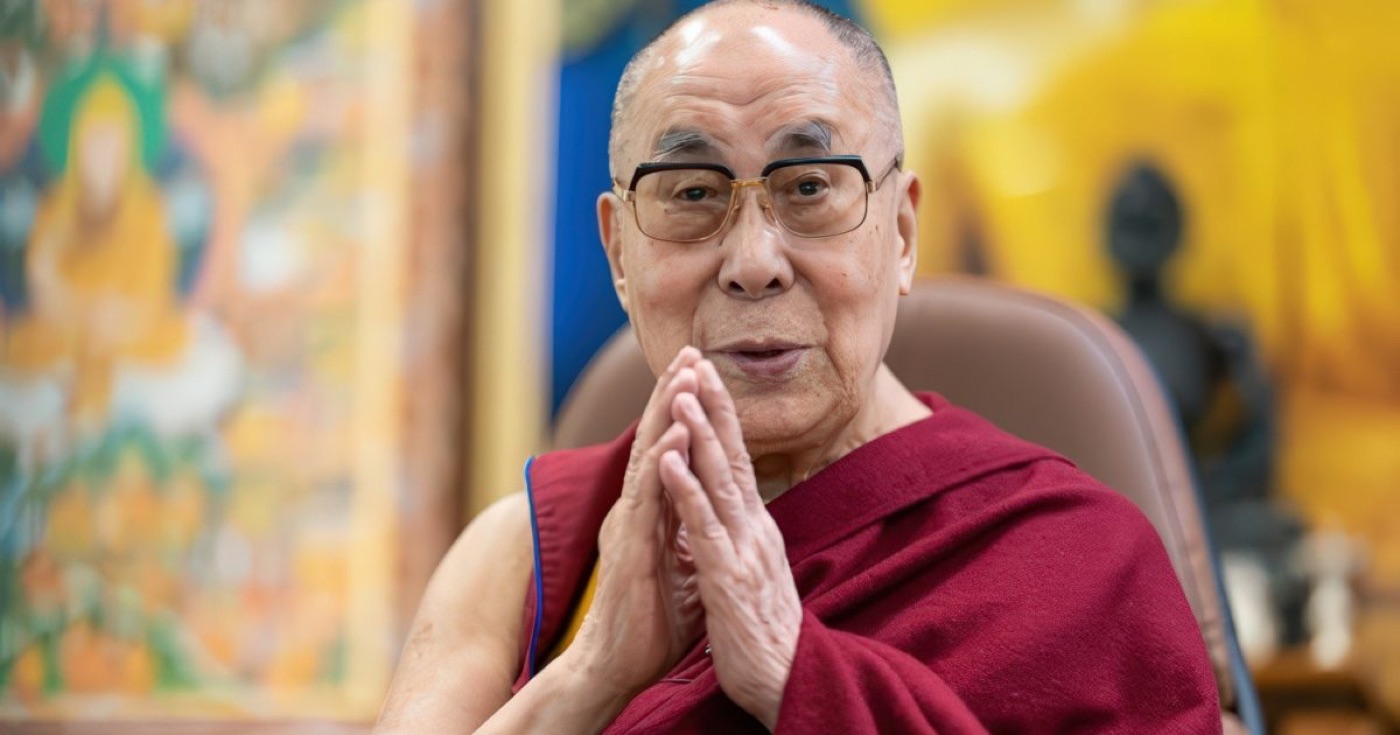
His Holiness the 14th Dalai Lama, Tenzin Gyatso, was born in 1935 into a world that would soon ask extraordinary things of him. Now in his tenth decade, he stands as the spiritual leader of Tibetan Buddhism and arguably the world's most recognizable Buddhist figure. Yet what distinguishes him from the popular image of a meditative sage is something less frequently understood: his fierce commitment to intellectual rigor, analytical philosophy, and the ancient Indian tradition of using logic and debate as tools for spiritual liberation.
For more than sixty years, the Dalai Lama has dedicated himself to teaching what he calls the Nalanda tradition—the sophisticated philosophical and contemplative methods developed by the great Buddhist scholars of medieval India. Where contemporary spirituality often emphasizes intuition, devotion, or experiential practice alone, his work centers on something more demanding: the systematic investigation of reality through reason, evidence, and relentless questioning.
The Nalanda Tradition and Its Modern Exponent
The Nalanda tradition takes its name from Nalanda University, an ancient Indian monastery that flourished between the fifth and twelfth centuries. It was there that scholars like Nāgārjuna, Śāntideva, and Dharmakīrti developed the commentaries and analytical frameworks that would become the intellectual foundation of Tibetan Buddhist philosophy. These masters weren't interested merely in devotion or mystical experience—they wanted to understand the nature of mind, the meaning of emptiness, and the mechanics of selflessness through direct investigation.
The Dalai Lama has positioned himself as the primary contemporary custodian of this approach. In an era when Buddhism in the West often arrives stripped of its philosophical complexity, he has insisted on preserving the Nalanda masters' commitment to debate, logic, and empirical inquiry. His teaching emphasizes that liberation isn't a matter of blind faith but of clear seeing—achieved through the same kind of rigorous analysis one might apply to scientific questions.
This intellectual approach sets him apart from many modern Buddhist teachers. While others emphasize meditation retreats or devotional practices, the Dalai Lama has centered his work on the classical Indian methods for investigating consciousness and reality. He treats emptiness and selflessness not as mystical concepts but as propositions to be examined, tested, and understood through systematic reasoning.
Making Ancient Philosophy Accessible
The scope of the Dalai Lama's scholarly project became particularly visible with the publication of Science and Philosophy in the Indian Buddhist Classics, a four-volume series released between 2017 and 2020. Compiled under his guidance, the series presents English translations and commentary on core texts by the Nalanda masters—work that had previously been accessible primarily to Tibetan monastics and specialized scholars.
These volumes represent something more than academic preservation. They're an attempt to demonstrate that India's Buddhist philosophical inheritance offers practical tools for understanding consciousness, ethics, and the nature of reality—tools as relevant now as when they were first developed over a millennium ago.
His collaboration with Wisdom Publications, a nonprofit press, has been central to this mission. In 2025, marking his ninetieth birthday, the publisher released an online course on the Nalanda tradition designed to bring classical Indian Buddhist philosophy to a global audience. The course reflects decades of effort to translate complex scholastic material into forms accessible to people without monastic training or knowledge of Tibetan.
A Six-Decade Teaching Mission
The Dalai Lama's work spans more than sixty years of continuous teaching, writing, and dialogue. His subject matter—emptiness, selflessness, the nature of mind—sounds esoteric, but he approaches it with the directness of someone convinced these questions matter for how we live. His method draws on the traditional Tibetan monastic curriculum, which itself preserves the Nalanda approach: study, debate, and contemplation in careful sequence.
He's particularly known for his engagement with logic and reason as spiritual tools. In the Nalanda tradition, understanding isn't achieved through revelation but through a process of questioning assumptions, examining contradictions, and following arguments to their conclusions. The Dalai Lama has spent decades demonstrating this method to audiences worldwide, insisting that Buddhism need not—and should not—require believers to set aside their critical faculties.
Cultural Reach and Contemporary Significance
With 11,600 Spotify followers—a modest number by pop culture standards but notable for a Buddhist scholar—the Dalai Lama maintains a presence in contemporary digital spaces even as he represents an ancient tradition. His reach extends far beyond Buddhism's traditional territories, touching people interested in philosophy, consciousness studies, and the intersection of contemplative practice with modern intellectual life.
What makes him matter, six decades into his teaching career, isn't celebrity or charisma alone. It's his insistence that serious philosophical investigation belongs in spiritual life—that faith and reason aren't enemies but partners in understanding. At a time when both religion and public discourse often abandon analytical rigor, his commitment to the Nalanda tradition offers something countercultural: a spirituality that demands you think harder, question more carefully, and follow arguments wherever they lead.
The Dalai Lama's legacy lies in keeping alive a tradition that might otherwise have remained locked in Tibetan monasteries or Sanskrit texts. He's made the case, persistently and patiently, that the methods developed by Nāgārjuna and his successors remain vital—not as historical curiosities but as living tools for investigating the deepest questions about mind, reality, and human suffering. Whether that tradition continues to find new audiences will depend partly on projects like the ones he's spent his ninth decade bringing to fruition: translations, courses, and accessible presentations of ideas that are anything but simple.