The Marketing Executive Who Traded São Paulo for Sound
Bruno Justi's story begins with a departure. In 2011, the Brazilian musician made a decision that would reshape his creative trajectory entirely: he left behind a stable career in marketing and business in São Paulo to pursue music in Los Angeles. It was the kind of leap that separates those who wonder "what if" from those who discover what's possible when artistic calling overrides practical certainty.
This wasn't youthful impulsivity—it was a considered pivot toward something deeper. What followed was formal study, rigorous collaboration, and a gradual expansion into territories where music becomes not just entertainment but a vehicle for consciousness itself.
A Convergence of Traditions
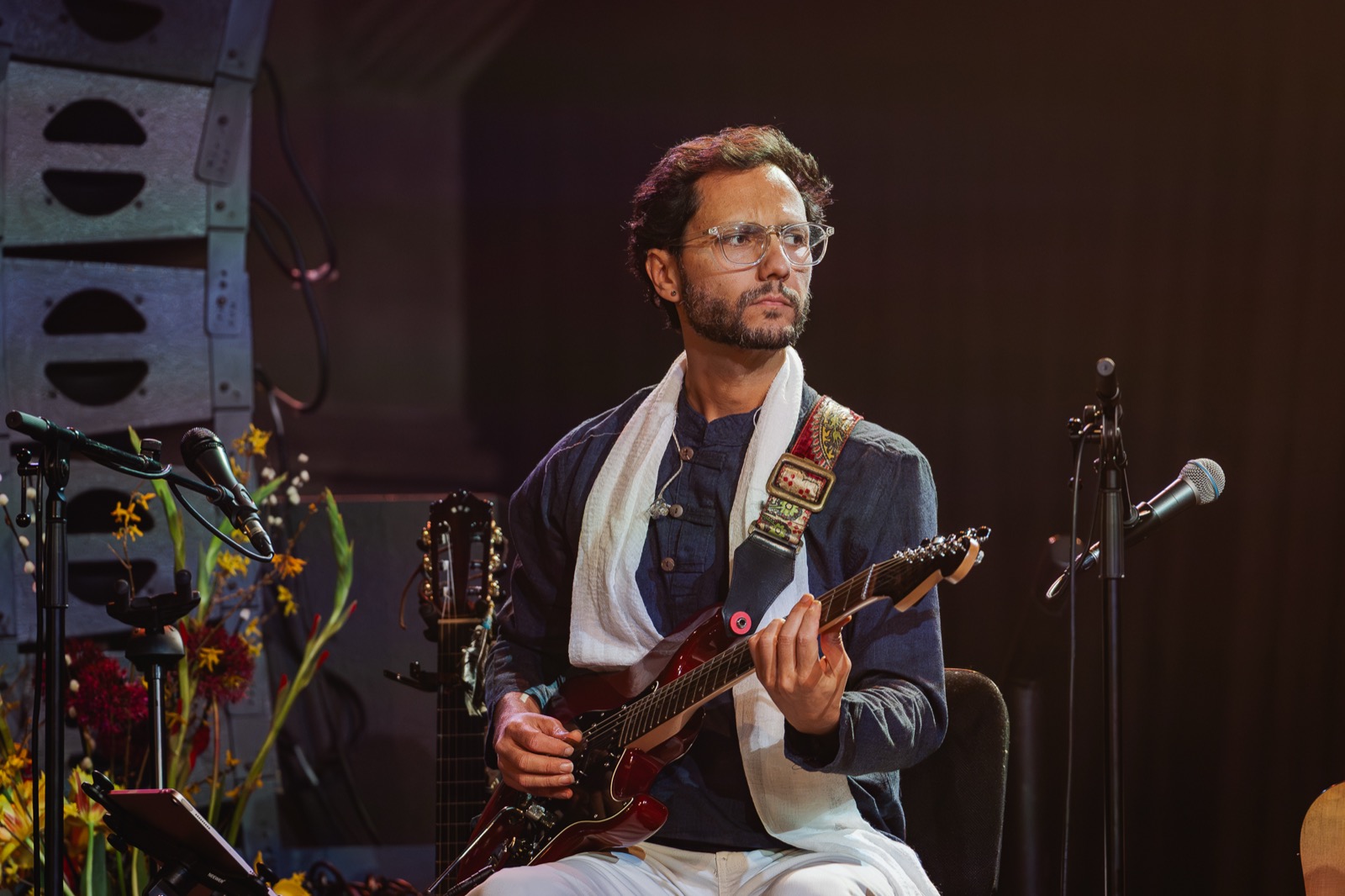
Bruno Justi operates at an intersection that few musicians attempt to navigate: the space where technical musicianship meets spiritual exploration, where world music traditions encounter contemporary production, and where commercial viability doesn't preclude profound intention. He plays guitar and flute, composes across genres from ambient to folk, and has built a career that straddles multiple worlds with apparent ease.
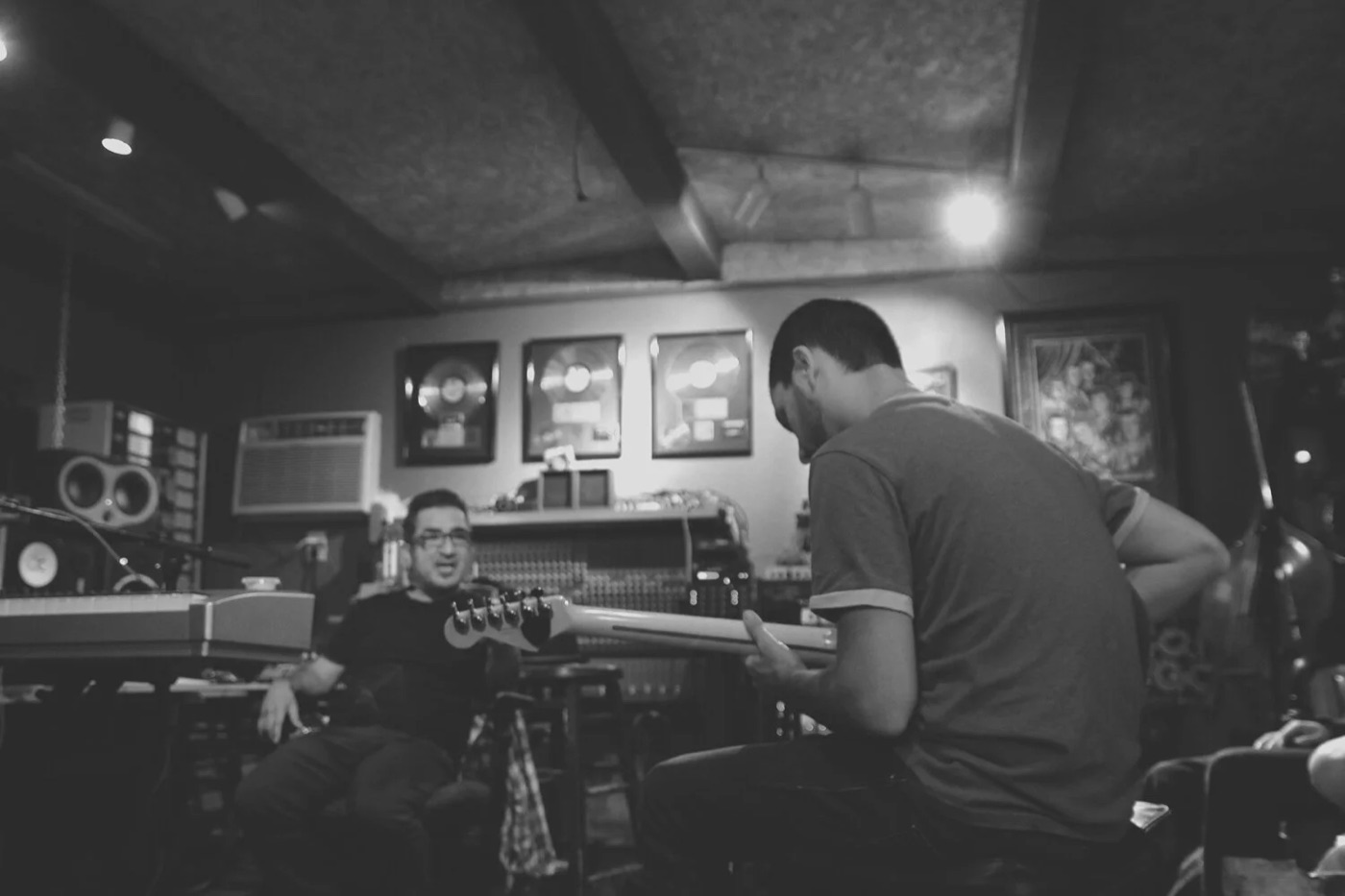
His collaborations tell the story of an artist who moves fluidly between contexts. He's worked with EA Games and Disney—commercial giants requiring technical precision and deadline-driven professionalism. He's also collaborated with sacred music luminaries Deva Premal & Miten, artists whose work lives in yoga studios and meditation halls worldwide. This range isn't accidental. It suggests someone equally comfortable with Logic Pro and ceremony, with licensing agreements and sound healing.
The roster of collaborators extends further: Carl Verheyen of Supertramp, songwriter Claudia Brant (known for her work with Bruno Mars), John Avila of Oingo Boingo, Andrew Murdock of Avenged Sevenfold, and Anne-Kathrin Dern, whose recent work includes Netflix's The Claus Family 3. These aren't vanity credits—they represent a working musician's ability to contribute meaningfully across wildly different musical languages.
Music Cosmos and the Educational Turn
Beyond his work as a performer and producer, Bruno co-created Music Cosmos (dot) Earth, a platform whose name suggests its ambition: music as cosmology, as worldview, as ecosystem. While details of the project remain focused on its mission rather than its metrics, it represents a natural extension of his interests—creating infrastructure for the kind of conscious music-making that doesn't always find obvious commercial channels.
His involvement with education has been equally substantive. Bruno has contributed to the California School of Arts and the Los Angeles College of Music, writing and teaching courses in Music Business departments while also working in marketing, events, branding, and artist development. This dual engagement—as both practitioner and educator—suggests someone invested in building frameworks, not just individual works. He's thinking about how music reaches audiences, how artists sustain careers, and how educational institutions can serve students navigating an industry in constant flux.
The Shamanic and the Systematic
What distinguishes Bruno's approach is how he holds multiple knowledge systems simultaneously. He's a certified practitioner of Systemic Intelligence (formerly known as Family Constellation), a therapeutic modality that examines inherited patterns within family systems. He studies Vedanta, the philosophical foundation of much Hindu thought. He engages with shamanic and intuitive healing tools, plant medicine traditions, and even raw veganism as a practice of physical consciousness.
These aren't dilettantish dabbling or spiritual tourism. They're integrated into how he conceptualizes music itself—as sound healing, sacred practice, and consciousness exploration. His inspirations, as he describes them, range from "the transformative power of earth medicines and the origins of existence to the boundless possibilities of space and consciousness exploration," but also include "the serene beauty of simple moments, like an afternoon in the park."
This grounding matters. It keeps the work from floating into abstraction. The park is as sacred as the ceremony.
Cultural Significance in the Conscious Music Movement
Bruno Justi represents a growing cohort of musicians for whom the category "musician" feels insufficient. They are facilitators, educators, producers, and guides. They create music for meditation apps and festival main stages, for personal healing and communal ritual, for Spotify playlists and silent retreats.
His audience likely includes yoga practitioners and psychedelic explorers, world music enthusiasts and spiritual seekers, people attending workshops on sound healing and those simply looking for music that feels intentional rather than background. In an era when the wellness industry and music industry increasingly overlap, artists like Bruno help define what conscious artistry can look like—commercially engaged but not compromised, spiritually serious but not solemn.
The Current Chapter
Today, Bruno continues producing, composing, and collaborating while deepening his study of the traditions that inform his work. His output exists across contexts: commercial projects that fund continued exploration, sacred music that serves ceremonial space, educational work that builds capacity in others, and the ongoing project of integrating what he learns from Vedanta, shamanism, and systemic practice into sonic form.
His legacy, still unfolding, may ultimately be this integration itself—a demonstration that the professional and the mystical, the technical and the transcendent, need not occupy separate spheres. In a fragmented cultural moment, Bruno Justi offers something increasingly rare: coherence without rigidity, seriousness without self-importance, and music that honors both craft and consciousness.