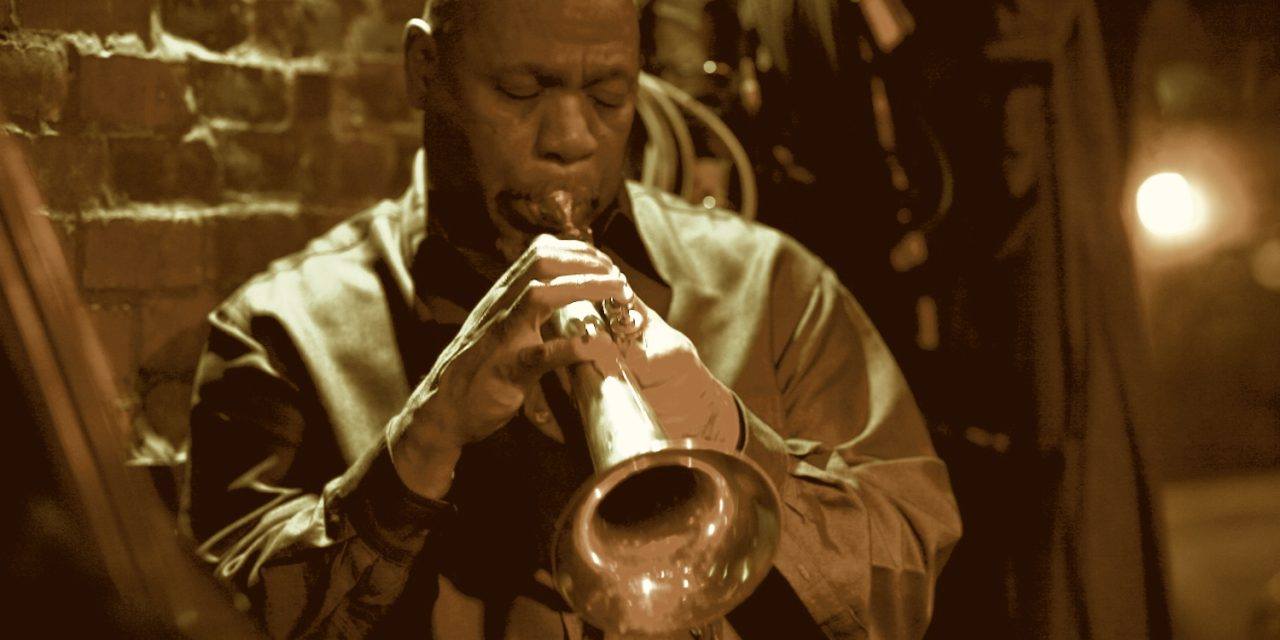
Arthur Brooks occupies a rare space in contemporary culture: he is both a trained musician and a scholar of human flourishing, someone who has spent his career exploring what makes life worth living through the dual lenses of artistic expression and empirical research. Born in 1964 in Seattle, Washington, Brooks grew up in an environment that valued both education and the arts—a foundation that would prove essential to his later synthesis of seemingly disparate disciplines.
His early years in the Pacific Northwest were marked by an unusual combination of passions: a deep engagement with music alongside an abiding curiosity about the human condition. This wasn't the typical trajectory of someone destined for either an academic career or an artistic one—it suggested something more complex, a mind unwilling to choose between feeling and thinking.
Brooks pursued his formal education at Harvard University, where he earned a degree in social science before going on to complete a Ph.D. in public policy. This rigorous academic training might have pulled him entirely into the world of scholarship and policy analysis, but instead it provided him with the intellectual architecture to explore his central preoccupations more deeply. Rather than abandoning his musical pursuits, he found ways to integrate them with his growing expertise in understanding human behavior, happiness, and social structures.
The turning point in Brooks's career came as he began to realize that his work need not exist in separate silos. Music could inform social science; research into well-being could deepen artistic expression. This integration became the hallmark of his approach, distinguishing him from pure academics on one side and traditional musicians on the other.
As a musician and composer, Brooks has developed a distinctive approach that bridges classical and contemporary music. His compositions reflect not just technical proficiency but a philosophical depth—an understanding that music can be a vehicle for exploring the very themes that occupy his scholarly work: meaning, connection, and human flourishing.
His discography reveals an artist concerned with emotional authenticity and societal resonance. Rather than creating music solely for aesthetic pleasure, Brooks composes with an awareness of how sound can illuminate the human experience, making his work accessible while maintaining intellectual rigor. This balance—between the cerebral and the visceral—defines his artistic output.
Beyond performance and composition, Brooks has established himself as a significant author, producing numerous books that explore happiness, success, and the vital importance of community. His writing demonstrates the same integrative thinking that characterizes his music: complex ideas from positive psychology, Stoicism, and social science rendered in language that speaks to a general audience. He doesn't simplify so much as translate, maintaining the substance of scholarly insights while making them relevant to everyday life.
Brooks's work extends beyond albums and books into teaching and public speaking, where he has found another avenue for his mission of helping people discover joy and purpose. His engagement with audiences suggests someone who sees scholarship and artistry not as ends in themselves but as tools for broader social impact. He encourages individuals to engage meaningfully with their communities, to contribute positively to society—a message that flows naturally from someone who has spent his career studying what actually makes humans thrive.
His influences reflect this eclecticism: classical composers sit alongside contemporary musicians in his artistic pantheon, while philosophical traditions from Stoicism inform his thinking about resilience and well-being. This intellectual breadth allows Brooks to create work that operates on multiple levels, appealing to both analytical minds and those seeking emotional or spiritual resonance.
Brooks's significance lies in his refusal to accept the false dichotomy between art and science, between feeling and thinking. In an era of increasing specialization, he models a more integrative approach to understanding human experience. His work reaches people seeking substantive answers to questions about meaning and happiness—audiences tired of either purely academic treatments or superficial self-help.
What makes Brooks matter is his insistence that these questions deserve both intellectual rigor and artistic depth. He doesn't merely study happiness; he creates music that embodies it. He doesn't simply theorize about community; he actively works to build it through his teaching and public engagement.
In this current chapter of his work, Brooks continues to develop both his musical and scholarly projects, demonstrating that a life well-lived might involve multiple forms of expression, each enriching the other. His legacy is still being written, but it already suggests an alternative to the narrow careerism that often dominates both academia and the arts—a model of what it means to bring one's whole self to the work of understanding and celebrating human existence.
For those who encounter his music, his books, or his ideas, Arthur Brooks offers something increasingly rare: a body of work that trusts in both reason and beauty, that believes profound questions deserve both careful thought and artistic expression.