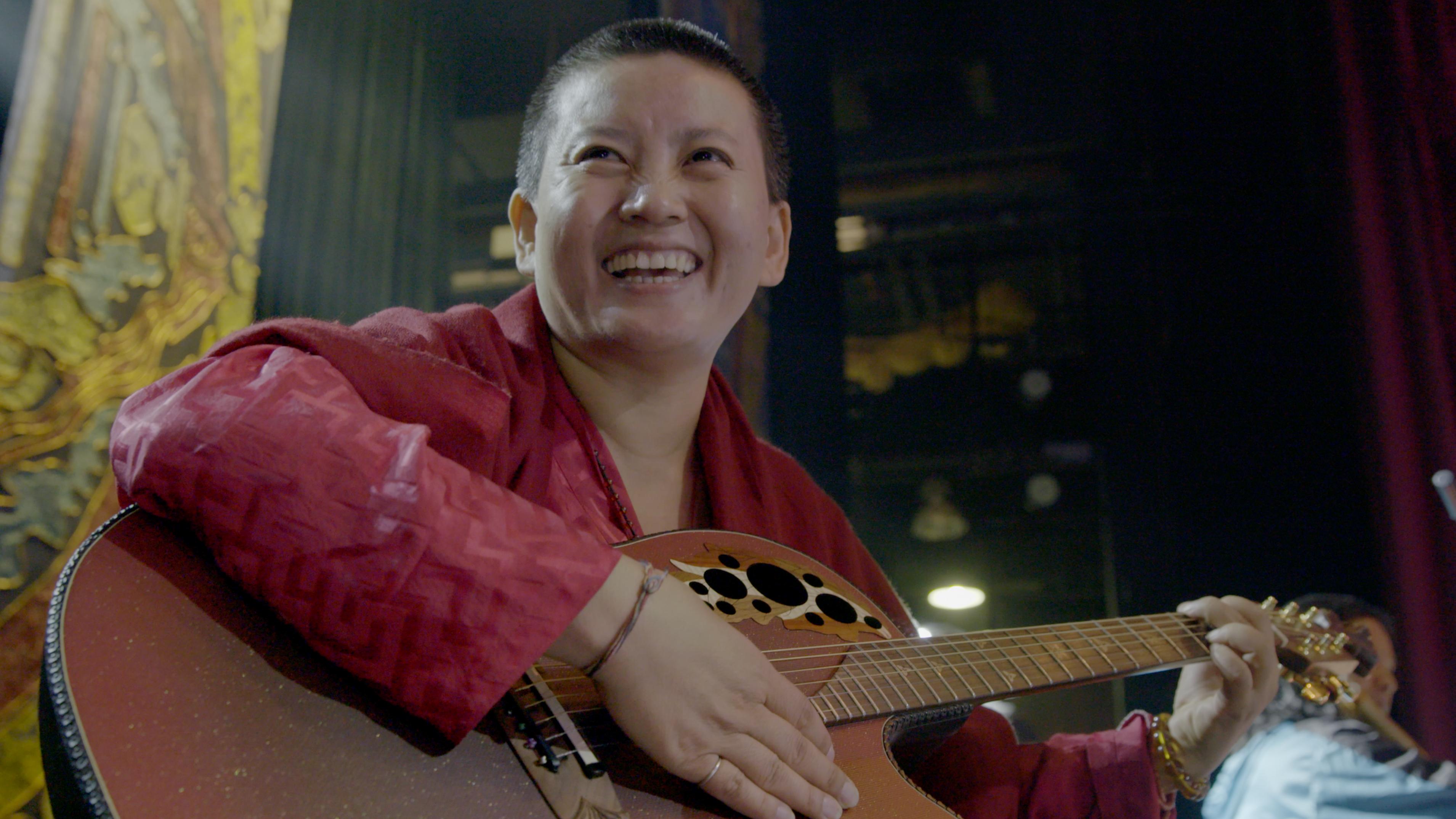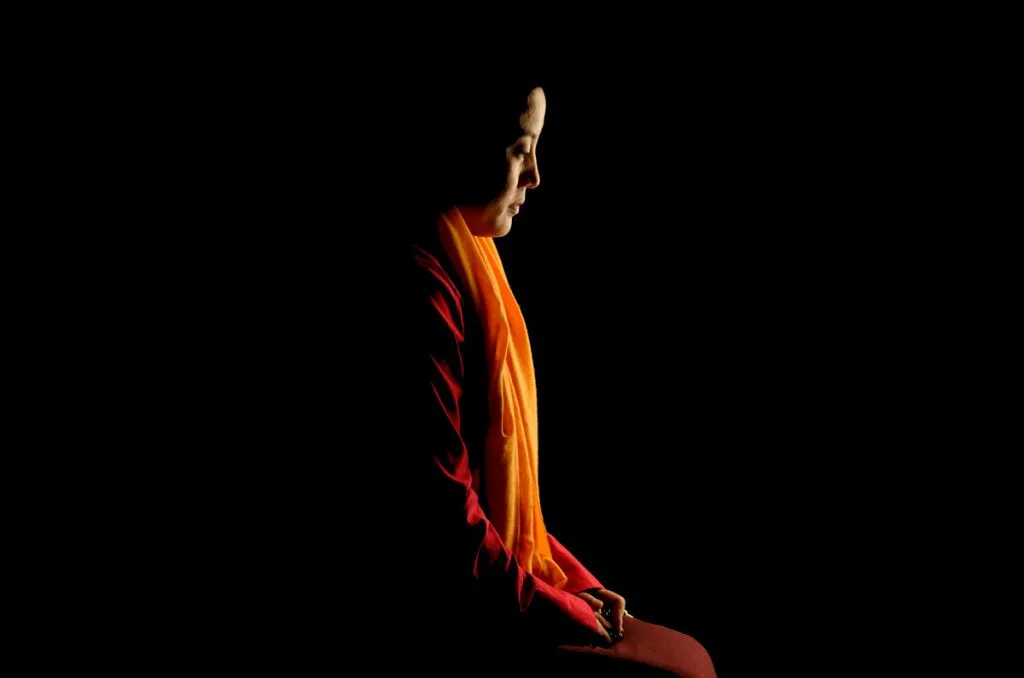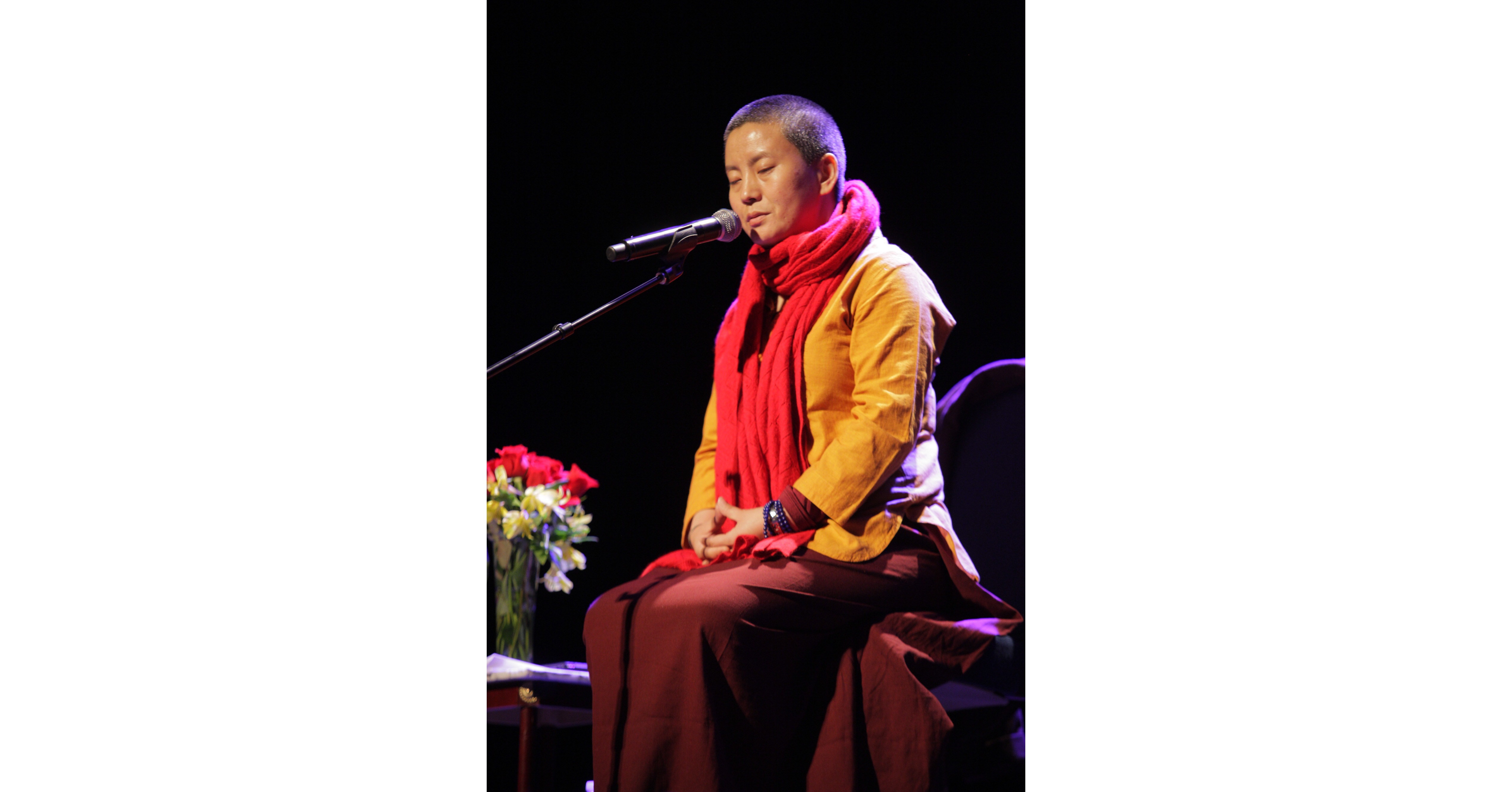

Ani Choying Drolma occupies an unusual position in contemporary sacred music. She is neither a crossover artist seeking to popularize tradition nor a purist confined to the monastery. For more than three decades, she has recorded Tibetan Buddhist chants with an approach that honors their liturgical origins while allowing them to circulate in secular spaces—concert halls, streaming platforms, meditation studios far removed from the Himalayan context in which these texts were composed. Her work raises questions about what happens when devotional practice becomes recorded music, when ritual becomes performance, and when a monastic vocation intersects with a public career.
Born Choying Drolma in Kathmandu, she was ordained as a nun in the Vajrayana Buddhist tradition, the tantric lineage that flourished in Tibet and survived in exile communities across Nepal, India, and Bhutan. The details of her early life remain largely private, though her public work suggests a formation steeped in the disciplined environment of monastic training. Ordination for women in Tibetan Buddhism has historically been fraught—full bhikkhuni ordination was never transmitted to Tibet, leaving nuns in an ambiguous institutional position. Ani Choying entered this tradition at a time when opportunities for female monastics were limited, and her later success would allow her to address some of those structural inequalities directly.
Her turning point came not through a monastery but through an encounter with the American guitarist Steve Tibbetts, who had been traveling in Nepal in the mid-1990s. Tibbetts, known for his experimental work blending ambient textures with non-Western musical forms, proposed a collaboration that would document Ani Choying's chanting in a recording studio rather than a shrine room. The result was Cho, released in 1997 on the Hannibal label. The album paired her unaccompanied voice—clear, precise, trained through years of daily recitation—with Tibbetts' spare guitar work, creating a sound that was neither traditional nor fusion, but something more ambiguous.
Cho introduced her music to North American and European audiences who had little familiarity with Tibetan liturgical forms. What distinguished the recording was its restraint. Where other projects might overlay production or reimagine sacred texts as world music, Cho preserved the melodic contours and phonetic integrity of the original chants. The devotional texts, many addressed to Tara—the female bodhisattva embodying compassionate action—were presented with minimal ornamentation, accompanied only by traditional instruments like Tibetan singing bowls and damaru drums. The meditative function of the chants remained intact even as the context shifted from ritual to recording.
Ani Choying's discography reflects a deliberate choice to remain close to traditional sources. Albums including Selwa, Inner Peace, Moment, Smile, and Warmth each document different facets of the Tibetan Buddhist chant repertoire, drawing from the canon of devotional texts used in daily monastic practice. Her voice—a clear soprano shaped by ritual recitation rather than classical vocal training—delivers Sanskrit and Tibetan mantras with a directness that resists theatricality. The performances are not concerts in the conventional sense but extensions of her monastic discipline into public space.
This approach has limitations and strengths. Listeners seeking innovation or reinterpretation will find little here; those drawn to the music's function as a meditative aid will find it remarkably consistent. Her work does not translate Buddhism for Western consumption so much as allow a specific liturgical tradition to be overheard. The 75,000 followers on Spotify suggest a quiet, sustained audience—people who return to these recordings not as entertainment but as practice.
Ani Choying's legacy extends beyond her recordings. She has channeled income from her music career into social projects, particularly initiatives supporting the education of young women in Nepal. Her work as a social worker reflects a Buddhist ethics that does not separate spiritual practice from material intervention. In a region where educational opportunities for girls remain limited, especially within monastic communities, her efforts have provided pathways that did not exist when she was ordained.
This dual commitment—to monastic life and to engaged social work—positions her within a broader movement of socially engaged Buddhism that emerged in the late twentieth century. She represents a tradition learning to navigate modernity without abandoning its core commitments, a balancing act that is as much institutional as personal.
Ani Choying Drolma matters not because she popularized Tibetan chant—though she did—but because she demonstrated that sacred music could retain its integrity outside its original context. She reached audiences who might never enter a monastery but who found in her recordings a point of entry into contemplative practice. Her cultural significance lies in this quiet, undramatic transmission: a voice carrying centuries-old texts across linguistic, geographic, and spiritual boundaries, inviting attention without demanding conversion. In an era saturated with spirituality-as-commodity, her work stands as a reminder that some traditions resist easy translation, and that restraint itself can be a form of generosity.