
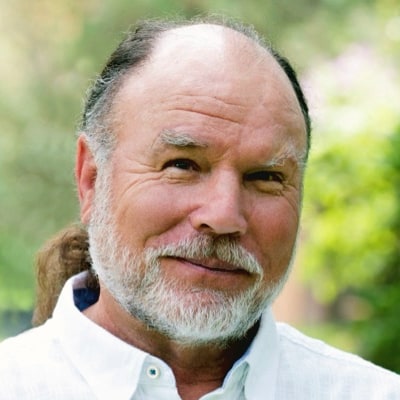
Guy Finley
Meditation Teacher · Merlin
About
Guy Finley is a spiritual teacher whose work centers on self-discovery and the path of letting go. His teaching is shared through the Life of Learning Foundation, a non-profit school for self-realization and spiritual enlightenment.
Guy Finley is a spiritual teacher whose work centers on self-discovery and the path of letting go. His teaching is shared through the Life of Learning Foundation, a non-profit school for self-realization and spiritual enlightenment.
His material covers a wide range of inner questions, among them fear, relationships, love, the purpose of life, the quiet mind, and meditation and prayer. He also teaches practical tools such as attention exercises, self-observation and other spiritual exercises. The body of work includes books, short talks, letters, a blog, special lessons, eCourses, daily meditation emails, interviews and radio appearances, and sacred music.
Guy invites listeners to keep returning their awareness to their own thoughts and feelings as they listen, and to be curious about what that awareness reveals. As he puts it on his YouTube channel, "Understand what you can, not what you can't." He offers ideas that may feel familiar or may lie beyond immediate understanding, and he treats either response as fine.
He speaks live on YouTube and also meets listeners on the Insight Timer meditation platform.


FAQ
Questions
Guy Finley is a spiritual teacher and author born in 1949 who has spent decades exploring the inner landscape of self-discovery and letting go. He founded the Life of Learning Foundation in Merlin, Oregon—a nonprofit center dedicated to transcendent self-study and spiritual enlightenment—and has become an internationally recognized voice in contemporary spiritual teaching. Students and listeners come to his work because he addresses the practical inner struggles most people face: managing fear, navigating relationships, finding meaning, and quieting the restless mind. What distinguishes his approach is his emphasis on self-observation and attention as tools for spiritual discovery, paired with a radically non-dogmatic stance. He invites people to "understand what you can, not what you can't," treating confusion or resistance as part of the learning itself. This combination of accessible vulnerability and rigorous spiritual practice has drawn a diverse following across meditation platforms and YouTube, where he speaks live to students worldwide.
The data doesn't explicitly name a lineage or tradition, but several threads emerge from how Finley frames his work. He emphasizes inner freedom, self-discovery, and the investigation of one's own consciousness—themes central to contemplative traditions that privilege direct experience over doctrine. His teaching method, which relies on attention exercises, self-observation, and meditation, shares philosophical DNA with both Buddhist and Advaita Vedanta lineages, though he presents these tools in a secular, non-denominational context suited to Western students. His focus on the "quiet mind" and the examination of thought itself echoes classical meditation practice, while his emphasis on relationships, fear, and the practical side of spiritual life grounds his work in the householder's path—the idea that enlightenment isn't reserved for monastics or hermits. The Life of Learning Foundation itself operates as a school for self-realization, suggesting a lineage model closer to self-inquiry traditions than to devotional or liturgical schools.
The most accessible entry point for newcomers is Guy Finley's live YouTube channel, where he speaks directly and answers questions from students. His videos tend to be conversational rather than lecture-based, making them ideal for someone testing whether his approach resonates. From there, the Insight Timer platform offers guided meditations and talks in a structured format—this is particularly useful for people new to meditation who want support in developing a daily practice. For those drawn to something more immersive, his daily meditation emails and eCourses available through guyfinley.org create a scaffold for learning, introducing core ideas about self-observation and letting go in digestible increments. The blog and short talks on his website operate similarly, allowing entry at any point—you can read one reflection and immediately recognize whether his voice speaks to you. His sacred music singles, "Stand Before the Mirror of the Moment" and "Four Stepping Stones to Success without Stress," offer a different gateway for those who experience spiritual ideas through sound rather than words.
In a field crowded with teachers offering quick fixes for stress and anxiety, Finley stands apart by centering the work on radical self-honesty and curiosity rather than comfort. He doesn't promise that meditation will make you feel better—instead, he investigates why we suffer, what creates our suffering, and how attention can gradually dissolve our identification with habitual thought patterns. His teaching emphasizes self-observation and attention exercises as spiritual practice, not mere relaxation techniques, which appeals to students serious about inner transformation. Many contemporary meditation teachers remain deliberately vague or agnostic about deeper philosophical questions; Finley engages directly with the big themes—purpose, death, love, the nature of self—without resorting to either New Age platitudes or religious dogma. His age (now 77) and decades of teaching give his work a maturity and specificity that distinguish him from younger teachers, and his willingness to sit with complexity rather than resolve it into neat answers attracts intellectually rigorous seekers. The Life of Learning Foundation's nonprofit structure also sets him apart, framing his work as a school for self-realization rather than a brand or personal empire.
Finley's teaching is explicitly investigative and inward-turning, which means it won't suit people seeking community, movement, chanting, or devotional practice as their primary spiritual modality. Someone drawn to ecstatic or energizing spiritual expression—kirtan, breathwork, high-intensity sound baths, or physically activating practices—will find his style austere and cerebral by comparison. His emphasis on letting go, non-striving, and releasing attachment can feel depressing or overly pessimistic to those coming from New Thought or abundance-focused spiritual backgrounds; he offers no vision of manifest success or accumulation of spiritual attainment. Beginners in crisis who need immediate behavioral or emotional support should seek a therapist alongside or instead of his teaching; Finley's work assumes a baseline of stability and intellectual curiosity. Additionally, because he teaches that understanding is available through direct self-observation rather than through information, students who want a system of concepts or a complete philosophical framework may feel frustrated by his recurring invitation to sit in not-knowing.
The primary hub for all of Guy Finley's work is his website, guyfinley.org, where you'll find his blog, special lessons, eCourses, and links to his various platforms. He streams live on YouTube regularly—his channel is the best place to check for scheduled talks and live Q&As. For daily practice, you can subscribe to his daily meditation emails through the website, or find his meditations and talks on Insight Timer, a major meditation app where his content is catalogued by topic and duration. He also maintains a presence on Spotify for his sacred music singles, though his primary output is teaching rather than musical releases. For updates on any upcoming in-person events or retreats at the Life of Learning Foundation in Merlin, Oregon, the website remains the authoritative source. Since there's no dedicated touring schedule, most engagement with his teaching happens asynchronously through these platforms, which allows students worldwide to follow his work on their own timeline.
Based on his publicly shared work, Guy Finley's teaching style emphasizes dialog and inquiry rather than declarative wisdom. In his live YouTube sessions and recorded talks, he invites students to examine their own experience—asking "What did you notice about your fear?" or "What does it mean to let go?"—rather than offering prescriptive answers. His approach to learning through the Life of Learning Foundation appears structured around self-observation exercises and meditative practice, with the framework that understanding arises from direct investigation of one's own mind and conditioning. He speaks in everyday language about complex inner states, making philosophical ideas accessible without dumbing them down; the tone is conversational, often humorous, rarely reverent. There's an intellectual rigor to his sessions—he will sit with paradoxes, contradictions, and the limits of language—which appeals to students who find many teachers too simplistic. His invitation to "understand what you can, not what you can't" sets a permission structure that relaxes the usual spiritual pressure to achieve or attain, making space for genuine curiosity about spiritual discovery.
Fear, relationships, and the relationship between attention and freedom recur consistently throughout Guy Finley's work. He investigates how we use relationships to avoid ourselves, how fear constrains our inner life, and how the stories we tell about ourselves create suffering. The theme of letting go—releasing our grip on outcomes, our attachment to being right, our identification with the thinking mind—is foundational; this connects directly to his work on inner freedom and spiritual discovery. He frequently examines the quiet mind not as blank emptiness but as the ground from which real thought and creativity emerge, distinct from the compulsive mental chatter that exhausts most people. Stress and anxiety appear as themes not to be "fixed" but to be understood, with the understanding that dissolves them arising from patient self-observation. The purpose of life and what constitutes meaningful existence thread through his teaching, grounding spiritual practice in the real questions students actually live with rather than abstract philosophy. His treatment of these themes tends toward the paradoxical—he doesn't resolve them into neat conclusions but invites students to sit with the questions.
Absolutely. Guy Finley's entire body of accessible work exists outside of live sessions, making his teaching available to students on their own timeline and in their own pace. His YouTube channel contains hundreds of recorded talks and Q&A sessions that function as standalone teachings; you can watch a single 20-minute video or work through his channel sequentially. He publishes a blog on guyfinley.org with short written reflections on inner questions, updated regularly, which serve as daily contemplative prompts. His eCourses, available through the website, structure his teaching into progressive lessons on specific topics—self-discovery, relationships, stress—with exercises and meditations you complete at home. Daily meditation emails, subscribable through the website, deliver guided practice and brief teachings to your inbox. His sacred music singles, "Stand Before the Mirror of the Moment" and "Four Stepping Stones to Success without Stress," also function as recorded material for independent listening and contemplation. The breadth of formats—video, text, audio, music—means students can engage with his work in whichever modality suits their learning style.
No formal background in meditation, spirituality, or philosophy is required to engage with Guy Finley's work, though a willingness to examine your own mind and stay curious about discomfort is essential. He intentionally teaches in accessible language about universal human experiences—fear, love, loss, purpose—so someone encountering meditation for the first time won't feel alienated by jargon. That said, his teaching isn't designed to soothe or reassure; it asks you to look at parts of yourself and your conditioning that most of us would rather avoid. His emphasis on self-observation means you need to be capable of some basic introspection and willing to sit with being confused or uncertain. Students without meditation experience may find his daily meditation emails or Insight Timer guided sessions a gentler entry point than diving into his longer philosophical talks. His invitation to "understand what you can, not what you can't" explicitly removes the requirement that you grasp everything immediately—confusion is treated as data, not failure. What matters most is showing up with genuine interest in your own inner life and a readiness to have your assumptions questioned.


There's more where this came from.
BrightStar is the global directory of artists, teachers, and healers in the wellness and spiritual movement. Find your next experience — or add yourself.
Discover More Artists
Browse 14,000+ curated profiles across kirtan, yoga, meditation, and beyond.
Explore directory →Find an Event Near You
Kirtan, retreats, sound baths, breathwork, ceremonies — happening this week.
Browse events →Add Your Profile
Are you an artist, teacher, or healer? Get listed — free, AI-assisted, live in minutes.
Get started →