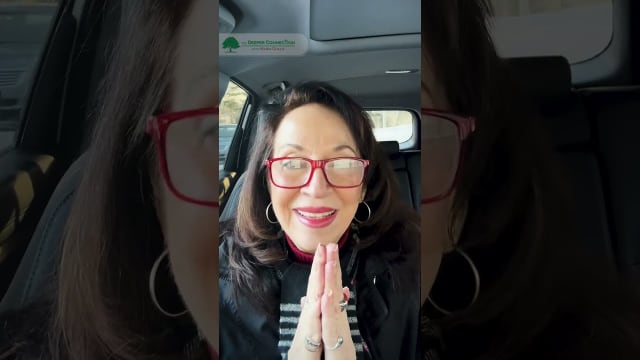
The first thing that happens in this roughly seven-minute video is nothing you can see. A slow swell of music, which the transcript marks only as [Music], rises and settles, and then a single voice begins the words that anchor everything after them: you are the Beloved. There is no lesson plan, no diagram, no argument to follow step by step. What Maria Gullo offers, in a video posted to her channel The Deeper Connection on March 10, 2017, is a spoken devotion built on one unusual move. It tells the listener who they are by first saying what they do not have to be. Worth, in this reading, is not earned by deeds, inherited from a birthplace or a parent, banked as wealth, or lost through failure. It was given "since before your time on earth existed," and the work of the piece is to help the listener receive that gift and believe it.
The video opens with a set of claims that read almost like a charter. The listener has "been chosen to carry the Light of Christ into the world," has "been called to be an instrument of Peace," and has had "the Holy Spirit" placed within. Each claim is stated flatly, without qualification, and the repetition does the rhetorical work. By the time the phrase "you are the Beloved of the Beloved" arrives, the listener has been told three times that they are chosen, and the sentence turns that choice into a relationship: the Beloved is loved by the Beloved.
Gullo then names the obstacle directly. "Any resistance in you to this reality is only because you have forgotten who you truly are." This is a specific and useful diagnosis. Resistance, in this framing, is not evidence that the claim is false. It is evidence that the person has lost track of their own identity. Doubt becomes a symptom of forgetting rather than a verdict about the self. Whether one accepts the theology or not, the structure is worth noticing: the piece treats self-rejection as something that happens to a person, not as a fact the person has discovered about themselves.
The middle third of the video is a run of comparisons that, on first hearing, looks like simple praise. Are you "greater than the Sun that warms and lights the Earth by day"? Are you "Lovelier than the stars that pierce the midnight Heavens"? Are you "braver than all creatures," "stronger than the tallest oak tree that can withstand the storms of a thousand years," "more glorious than the vast oceans whose Mighty waves break in perfect time"? Each question is answered with the same word: yes.
The rhetorical choice is deliberate. Gullo picks the most impressive natural phenomena a listener can name, then places the self above them, a move that could easily feel inflated. The effect is different because the grounds for the comparison are not performance. The comparisons are not "you are better at this." They are about endurance, rhythm, and light, the qualities that nature displays without effort. The oak does not earn its storm-resistance; the ocean does not earn its timing. By placing the listener alongside these, the video pulls the idea of worth away from achievement and toward something closer to being.
The most structurally important sentence in the video comes in the middle, and it is a negation. "All of this is true of you not because of what you have done or what you have failed to do. Not for where you were born or Who Bore you. Not for the wealth you have accumulated or lost. Not for riches poverty status or lack of." The passage reads as a litany of exclusions, and each exclusion removes a common basis for self-worth: conduct, failure, ancestry, money, social standing.
Once those supports are cleared away, the video offers its positive ground, and it is not an achievement. You are the Beloved, Gullo says, "because you were loved since before your time on earth existed." Read alongside the negations, that sentence does something specific. It moves the source of worth out of time altogether. What you do cannot add to a love that predates your first breath, and what you fail to do cannot subtract from it.
"You are the Beloved because you were loved since before your time on earth existed because you hold more Glory into your being than all the galaxies put together." — Maria Gullo, "You Are The Beloved," The Deeper Connection, published March 10, 2017
The passage also contains a second, quieter move. Gullo describes the body in terms usually reserved for sacred things: "one drop of your blood one tear that falls from your eye one breath that moves effortlessly through your lungs One Beat of your heart is beyond Brilliance." The video calls "every cell that makes up the universe within you" the "greatest miracle." It is worth pausing on the word effortlessly. The breath moves without the listener doing anything to make it so. The video is teaching the listener to notice that the most basic functions of their body already operate on a principle of gift, and to extend that principle to the self.
The video makes its most direct religious claim in the passage about Mary: "just as Mary was chosen to be the bearer of Christ, so you too are called to be the vessel that the Christ presence now pours through into the world." The comparison is not that the listener should imitate Mary's life or actions. The comparison is structural. Mary is described as chosen, and the video says the listener is chosen in the same way: as a vessel rather than a source.
That distinction matters for the piece's logic. A vessel does not generate what it carries. The video puts the initiative with what it calls "the most high God who is love," who "pours into you without measure." The listener's task is to be an open channel, not a reservoir that must keep itself full. This is consistent with the rest of the video. If worth were something you produced, you would need to keep producing it. If it is something poured in, the work is to remain open, and to stop blocking the flow with the false notion that you are "anything less."
The final section moves from description to instruction. "It is time for you to accept your identity and set forth the course of your true self." The verbs are specific. The video asks the listener to "soften your heart," "redirect your mind," and "open your soul." These are not intellectual demands. They are postures, and each one addresses a different faculty: emotion, thought, and spiritual receptivity.
The close is a three-word sequence repeated as a rhythm: "receive, believe and live." Then the closing formula, "let it be so, let it be now, let it be." For a listener who wants to use this video as a practice rather than simply hear it, a reasonable approach is to read the litany aloud, pause after each "not because of" exclusion, and notice which of those supports the listener is still leaning on. That is an interpretation of how the piece is built, not something Gullo prescribes, but it follows directly from the video's structure. The negations are a kind of inventory, and the affirmation that follows is the thing being tested against it.
What makes the piece distinctive is its refusal to make worth conditional on the listener's feeling. Gullo does not say the listener will feel beloved. She says they are, and asks them to receive and believe it. The distance between the two is where most people live, and the video is built to stand in that distance and keep speaking.
If this video has caught you, the most useful next step is to return to the text itself and read it slowly, once for each of the claims it makes. Notice which negation you find hardest to accept. Notice which comparison feels most like flattery and which feels most like truth. Then ask what it would mean to live as a vessel rather than a source: open to what is poured in, and quiet about the need to produce your own worth. The video is seven minutes long, but the questions it raises are the kind that take a lifetime to answer.