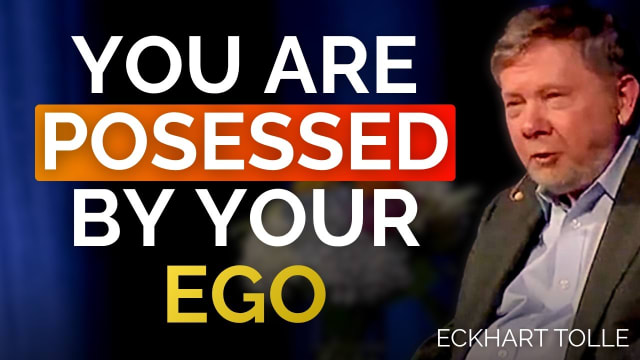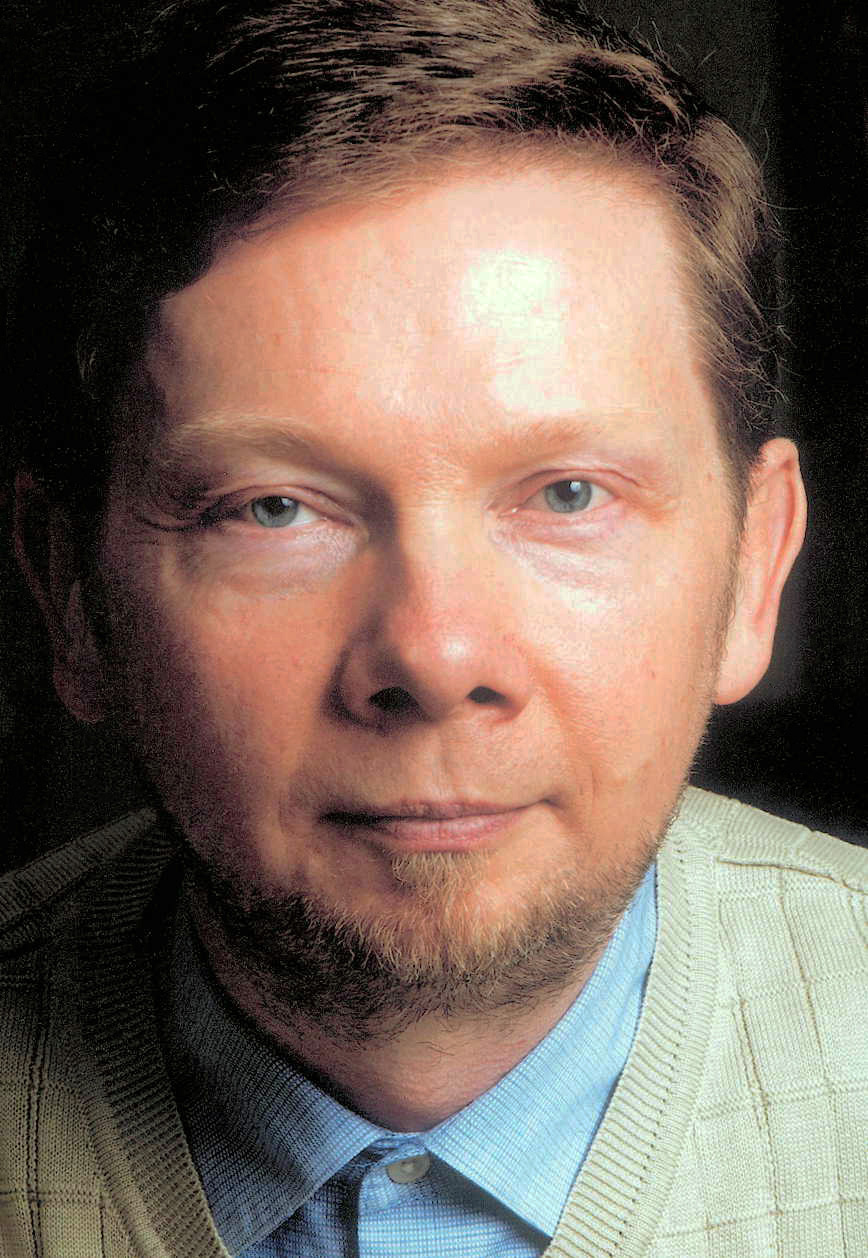
A car pulls alongside you, a window rolls down, and a stranger shouts that you are an idiot. Within a second your jaw tightens and your mind is already drafting a comeback. In a YouTube video published November 5, 2026, Eckhart Tolle takes that ordinary moment of road rage and treats it as a clue to something larger: the ego does not simply feel hurt by an insult, it needs the fight. His argument is that the urge to argue is rarely about the person in front of you. It is the voice of an accumulated store of emotional pain he calls the pain body, and the way out is not to win the exchange but to become conscious enough to decline the hook. Along the way he makes a counterintuitive case that discomfort itself, whether cold water, physical strain, or a difficult person, can be a doorway to awakening.
Tolle's example is deliberately mundane. "You're driving, somebody shouts at you, calls you something, idiot," he says, "and you can feel if the ego is there, you can feel the injury to the ego." The insult lands on a sense of self that has been built up and defended over a lifetime, and the reflex that follows is a kind of repair job. He describes it as happening in "one or two seconds": the ego immediately jumps "into repair mechanism" and shouts something back, usually something worse. From there, as he puts it with dry humor, the other driver may stop his car, and you may find yourself jumping out of yours.
What makes the passage useful is its insistence that this sequence is unconscious, and that the choice point sits inside the same instant. Tolle's alternative is not a pep talk about patience. It is simply to be present, to notice that the words are "just sounds coming out of his mouth" with "absolutely nothing to do with you." The outcome he describes is almost comic. The other person, expecting a reaction that never arrives, becomes the one who is disconcerted.
The talk's most surprising move comes early, when Tolle points to a long tradition of deliberate hardship. He mentions spiritual practitioners who "created extreme discomfort in order to awaken," citing the desert people of early Christianity and ascetic practices he says continue in India, including sleeping on a bed of nails. He is careful to add a caveat: "I don't recommend it." His reasoning is that the traditions "realize if you take yourself out of [the comfort zone] there is a possibility of awakening is greater."
He then scales the idea down to something anyone can test. Put your hand in very cold water, he suggests, and watch what happens. The first impulse is to pull it back, and that reaction is the point. If you observe the sensation rather than flinching from it, "you become the observer of that feeling, which is the observing consciousness." You have not stopped feeling the cold. You have stepped out of identification with it. Tolle extends the same claim to people in prisons, who he says often write to him, and "quite a few have reported that" through his teaching or spontaneously, they were able to awaken "in this situation of extreme discomfort."
The body analogy is the simplest version of the principle. Lie on the sofa for six hours, he says, and the body grows weaker because it is not being challenged. Lift weights, even small ones, and the body protests. Keep going and "at some point... you will experience an influx of energy which would never have come if the body had remained in its comfort zone." Then comes the twist: "you even begin to enjoy the movement because the energy is there." Tolle applies the same logic to life. A challenge, including a hard relationship, can be used to make you "more conscious" rather than simply more bothered.
Tolle is blunt about what the ego wants from an argument. "The ego wants the reaction. It wants the other to react. It thrives on the turmoil." Insults are a way of drawing energy out of another person, and a defended ego is happy to supply the other half of the transaction. This is why, in his telling, an unconscious person can pull you down to their level so easily.
He illustrates it with a story from his own driving. People sometimes get upset with him in traffic, he says, and shout all kinds of things while he simply looks at them. "Sometimes they think I must be deaf," he says, to laughter from the audience. "Then they shout even louder." The point is not that the shouting is clever or that he has won. The point is that without a reaction, the exchange has no fuel, and the other person's agitation has nowhere to land.
The concept at the center of the talk is what Tolle calls the pain body. He describes it as "an accumulation of emotional pain and negativity accumulated since childhood," living in you "as a kind of energetic entity so to speak." It is usually dormant, but an external event can trigger it. When it rises, "the dormant pain body, the emotion that is painful then rises up into your mind and forces you to speak and say something." It uses your mind, and every thought you have while it is active will be "irrational," because "the old emotion in you is doing the thinking."
That framing explains why arguments with a triggered person go nowhere. Tolle's advice is stark: "you cannot argue with a pain body" (around 13:23 in the video), because the pain body is not interested in the facts of the situation. He offers an example. The driver who shouts at you may have carried the same emotion "for 45 years," and "you were just a convenient trigger." The pain body wants a reaction, and it "feeds on every negative thought" (around 15:53) you give it. Engaging with it, in other words, feeds it. That is the practical core of the title's promise. Stop arguing, and you stop handing the pain body the fuel it runs on.
The obvious objection is that not reacting sounds like bottling things up. Tolle addresses it directly. "You're not suppressing a reaction. You're simply present." The difference is one of identification. A suppressed reaction is still a reaction, with the ego bracing against it. Presence is the recognition that the emotion is arising in you, which lets you observe it instead of acting it out.
Several threads from the talk add up to a working approach:
- Notice the first instant. The insult lands, the ego flinches, and there is a gap of a second or two. That gap is where the choice lives.
- Observe the feeling as you would the cold water. Let the sensation be there without turning it into a story about who is right, who is stupid, or what should happen next.
- Don't argue with the pain body. It will try again, perhaps with a different insult. Without a reaction, Tolle says, "it can't do very much."
- Decide case by case whether to speak. Tolle is clear that "in some cases you need to say something," while "in many other cases any reaction would be futile."
- Wait it out. The pain body is temporary in its grip, even when it recurs. Presence lets you outlast it.
None of this is a call to be passive. It is closer to a reordering: the reaction still exists, but you are no longer the one doing the thinking inside it.
The video is a short excerpt, and its own description points to a larger frame. The description describes a thought experiment in which a god offers Tolle, in his twenties, a fine body to enjoy for three decades in exchange for twenty years of his life. He says he would have accepted, and would be dead now, having spent those years on ego satisfaction. The point is how strong body identification can be, whether it shows up as pride or, for many years in his own case, as a negative identification that made him unhappy. The description's argument is that "a miserable ego... is just as strong as a proud one," and that a negative identification may even be easier to let go of, because you are more motivated.
The same description returns to age. People who built their identity on appearance often move into years of growing unhappiness, unless they break through to a deeper level. Old age, by contrast, is framed as a possible flowering of consciousness, as the body begins to dissolve and "something else can emerge." Its advice is to go to that deeper level before time erodes you, and if not then, at any point after, because "this moment is always the best moment to step out of time."
If the core lesson of this talk fits in one sentence, it is that an argument is rarely about the argument. Tolle's teaching asks you to notice the pull, see the pain body behind it, and let the insult pass without feeding it. Start with the next time a stranger shouts at you on the road. The full session, which the video description says goes much further into these ideas, is available through the speaker's Eckhart Tolle Now program.