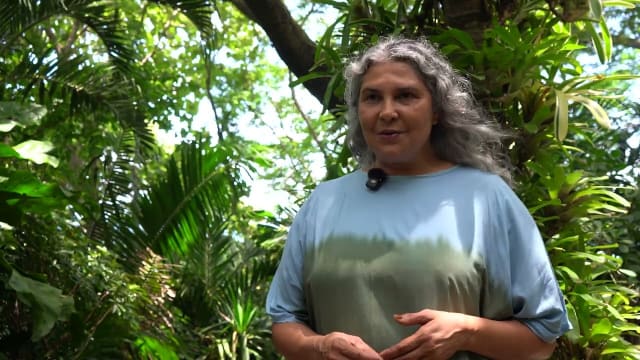
Most people who try breathwork for the first time expect it to be either a jolt or a rest, and a morning session that tries to be both can sound like a contradiction. In a 12-minute guided video posted in June 2021, teacher Conni Biesalski builds exactly that kind of session. It opens with an activating breath meant to get the body moving, passes through a body scan and a set of breath holds, and closes with equal-count "coherence" breathing that she says regulates and balances the nervous system. Her stated goal is to leave you with energy and grounding at the same time, and the order of the practice is how she tries to get there.
The video starts with a single instruction: find a comfortable seat and close your eyes. Before any breathing begins, Biesalski asks the viewer to check in. "Take a moment to tune in," she says, and to "consciously choose to look what's going on within" (video, 0:00 to 0:50). That first pause matters. It treats the breath not as a tool you pick up cold but as something you arrive at, after you have noticed what sensations and emotions are already present.
The structure is easy to follow once you see it. There are four movements: a body scan, connected breathing with breath holds, a stretch of coherence breathing, and a return to natural breath. The first two are about energy. The last two are about steadiness. The sequence is built so that the activating work comes before the regulating work, which is the reverse of how many people approach a bad morning, where they collapse back into rest and hope the energy follows.
Around the 1:29 mark, the video moves the attention downward. Biesalski guides the viewer through a slow scan "from the soles of your feet" up through the legs, hips, belly, chest, face and top of the head, noticing "any tension that you can let go of." She cues specific releases along the way: relax the jaw, relax the forehead, soften the shoulders. Then she offers a line that works almost as a thesis for the whole session: "allow your body to be completely held, to be completely supported."
There is a practical logic here. Breathing hard into a body that is clenched at the jaw and locked in the shoulders tends to put the effort in the wrong place. A scan first gives you a map of where the held tension lives, so the breath has somewhere to go. It also sets up the grounding half of the promise. The support she describes is something you feel in the body, not something you produce with the breath.
From there the video shifts to the breath itself, and it asks for something specific: "bringing awareness to your belly and sending your breath into your belly," breathing through the nose, keeping what she calls "a soft diligent focus on the breath." Three slow, deep breaths follow, each with a pause at the top and a long exhale. This is the bridge into the more active work.
The first active section, starting around 3:59, is what Biesalski calls connected breathing. The rules are stated plainly: "we inhale through the nose and exhale out the mouth. It's an active inhale and a relaxed exhale with no gaps." That last phrase is the key to the technique. There is no pause between one breath and the next, so the rhythm becomes continuous, and the inhale is deliberately energetic while the exhale is allowed to fall away.
The video runs two rounds of this, with a few more breaths after, and it does not give a fixed count per round. What it does give is cues to keep the flow going: "keep it flowing, keep it going, stay with it, stay present." Her instruction to "feel that rhythm" and then "let go into it" points to what the practice is trying to produce. The first rounds are about building momentum. The later ones are about letting that momentum settle into something you can hold without forcing.
"Notice where your mind is as you're breathing."
Conni Biesalski, in the video (around 6:20)
That line is less a technical instruction than a check-in. By this point the breath is doing something to the body, and the video asks you to watch what happens to attention while it does.
After each round of connected breathing, the video inserts breath holds, and this is where the energy work becomes more pointed. The holds come in two places: at the top, after the full inhale, and at the bottom, after the exhale. Biesalski's instructions are consistent. Hold at the top, then release. Hold at the bottom, "just hold the breath, relaxing into the breath hold, really letting go into the breath hold."
What makes these holds distinctive in her version is the emphasis on softness. The phrase "no need to breathe, just relax" comes up as a deliberate reminder that the hold is not a test of endurance. She also asks a question that reframes the whole effort: "To what extent can you just let everything be?" It is a question about surrender, not willpower. The holds are where the practice asks you to be still in the middle of an activated state, which is a useful thing to practice early in the day.
A note of honesty is needed here. The video does not discuss safety considerations for breath holds, and it does not address who should avoid them. If you have a heart or respiratory condition, or are pregnant, speak with a clinician before you try this section. Stop if you feel dizzy or unwell, and return to natural breathing.
The turn toward regulation begins around 8:19, when Biesalski says, "let's move into some coherence breathing." The mechanics are the simplest in the session. You breathe in and out through the nose, counting to four on the inhale and four on the exhale, with both phases the same length. She adds a detail that anchors the practice to the body: engage the diaphragm. "On the inhale the belly rises and on the exhale the belly falls. Nice and easy."
The counting does real work. It removes the decisions. There is no question about how deep to go or how long to pause, only a steady, even cycle. She counts the first rounds out loud, then drops the count and lets the viewer hold the rhythm alone: "inhale for four and exhale for four, in the belly rises and out the belly falls." The repetition is the point. A pattern that is easy to follow is a pattern you can stay inside, and staying inside it is what the video means by coming back to something stable.
The video does not explain the physiology behind coherence breathing. It frames the practice in terms of regulating and balancing the nervous system, and it describes the experience of "noticing the groundedness" in the breath and "really connecting to that anchor that is your breath." Readers who want the science will have to look past this video. What the video offers is the instruction and the felt sense it is trying to cultivate.
The last section, starting around 11:22, is the part many breathwork videos skip. Biesalski asks the viewer to come back to a normal breath and then to notice "any shift in your body, any shift in your mind, any shift in the quality of your breath." She asks you to rest "within this stillness for just a little bit longer" before getting up to meet the day.
This closing pause does two things. It lets you compare the beginning and the end. The viewer who started with a lively inhale and a set of holds now has a baseline to measure against, and the shifts she names become visible. It also gives the grounding work a chance to set. Ending on a regulated breath, rather than on the last high-energy round, is consistent with the promise of the whole session: energy that does not leave you scattered.
The practice is easy to reproduce from the video's own structure. Sit comfortably with your eyes closed. Do a short body scan from the feet upward, releasing the jaw, forehead and shoulders. Breathe through the nose into the belly, then take a few slow breaths with a pause at the top. Move into two rounds of connected breathing, inhaling through the nose and exhaling through the mouth with no gap between breaths, followed by a relaxed breath hold at the top and at the bottom. Then shift into four-count coherence breathing, belly rising on the inhale and falling on the exhale, for as many rounds as feel steady. Finish with a few breaths of natural rhythm and notice what has changed.
Keep in mind that the video gives no specific number of holds or total rounds beyond what is described above, so use your own judgment on pacing. If the activating section feels like too much, slow the inhale and make the exhale longer. The sequence is built to be adjusted.
This video is a compact, well-ordered example of how an activating practice and a regulating practice can share a single morning. Its best lesson is structural: wake the body first, then settle it, and check in at both ends. If you want more guided instruction from Biesalski, the video's description points to her one-to-one work, her Foundations course, which it says has more than 600 students, and a free seven-day email course. Those resources are where to go if you want the practice expanded beyond a single twelve-minute session.
The clearest next step is to try the sequence once, at the same time of day, for a week. Notice what changes in the first minute of the body scan and in the last minute of rest. The practice is short enough to fit into any morning, and what it asks for, in the end, is attention.