Leonard Cohen's "Hallelujah" arrives as a text already steeped in scripture and sorrow—a song about spiritual hunger, failed desire, and the paradox of praise. The composition itself carries biblical weight: Cohen unfolds the mystery of David's secret chord, the architecture of major and minor intervals that somehow unlock divine pleasure. When Gregorian—the German chant ensemble known for layering Gregorian polyphony onto contemporary music—takes the piece into their sacred tradition, they're not covering a pop song. They're returning it to a liturgical space it always inhabited.
The transformation is immediate and total. Where Cohen's original yields to guitar and intimate vocal vulnerability, Gregorian's version ascends into pure choral resonance. The opening invocation—"I've heard there was a secret chord that David played and it pleased the Lord"—becomes incantatory, sung in unison and harmony that echoes medieval cathedral walls. This isn't arrangement as interpretation; it's excavation. Gregorian treats Cohen's lyrics as a sacred text deserving the reverence of the liturgical tradition itself, the one that shaped Western music for a thousand years.
The genius of the piece lies in how naturally Cohen's theology fits the chant medium. His meditation on spiritual knowledge—"you let me know what's really going on below"—and his reference to "the Holy Dove" moving through physical intimacy already speak the language of incarnational faith, of the sacred dwelling in the sensual. Gregorian's choral arrangement emphasizes this: the voices interweave with the music, creating layers of harmonic meaning that Cohen embedded in his lyrics but never fully orchestrated. The "major lift" and "minor fall" he describes become audible in the melodic contours the voices trace.
The repeated invocation of "Hallelujah" takes on new weight in this setting. In Hebrew, the word means "praise the Lord"—a direct address to the divine, not a metaphor for transcendence but a command and an offering. Cohen understood this. His genius was to make "Hallelujah" not a declaration of faith but a question about faith, sung in a broken key. Gregorian honors that complexity: their rendition doesn't resolve the tension between spiritual yearning and human doubt. Instead, the choral harmonies hold both truths at once—the certainty of liturgical tradition meeting the uncertainty of individual human experience.
The arrangement also reveals the mathematical precision underlying both Gregorian chant and Cohen's compositional method. Cohen spent years writing "Hallelujah," revising and deepening its theological architecture. Gregorian chant, meanwhile, represents centuries of acoustic refinement—melodies designed to carry prayer through stone vaults, harmonies that amplify meaning through resonance. When these two traditions meet, the result is a kind of double liturgy: Cohen's words moving through Gregorian's modal language, each tradition amplifying the other's spiritual intention.
This is the work of an ensemble that understands both traditions deeply. Gregorian has spent nearly three decades reimagining contemporary songs through the lens of sacred choral music. Their approach isn't novelty—it's recognition. They hear in modern songs the theological questions that chant was always meant to hold: Who is God? How do we address the divine? What happens when human desire meets spiritual longing? By returning "Hallelujah" to the choral tradition from which Western music emerged, they suggest that Cohen's song was never secular at all. It was always a prayer, asking to be sung in the language of faith itself.
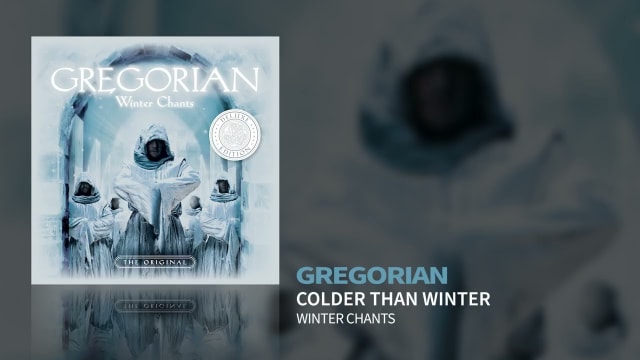
The "WinterChants" album, from which this version comes, positions "Hallelujah" within a season of contemplation. Winter is the liturgical time of waiting—Advent, when the faithful prepare for redemption they cannot yet see. Cohen's lyrics fit perfectly: they speak of mysteries half-glimpsed, of knowledge withheld, of desire that cannot be satisfied in the present moment. Gregorian's choral treatment transforms this waiting into communal experience. What Cohen sang alone becomes something shared, a congregation's voice holding the question together.
The voice of Leonard Cohen remains present in the piece—sampled, interwoven with the choral harmonies, giving the arrangement its human anchor. This choice is crucial. Gregorian doesn't erase the original or subsume it into tradition. Instead, they create a dialogue between Cohen's fractured, searching individual voice and the collective, timeless voice of the chant tradition. The result suggests that both are necessary: the personal question and the communal answer, the modern seeker and the ancient form, the broken chord and the sacred harmony.
By placing a modern song within a liturgical framework, Gregorian reveals the spiritual questions embedded in its lyrics. Cohen's "Hallelujah" becomes not an individual meditation but a communal prayer, its theological weight amplified by centuries of choral tradition designed to elevate human voice toward the divine.
Cohen's explicit references to David, the Holy Dove, and the mystery of divine knowledge already spoke the language of Scripture. Gregorian chant—the traditional music of Christian liturgy—is the natural harmonic home for these words. The arrangement simply honors what was always theologically present in the composition.
The structure of Cohen's song—built on repeating, evolving meditations on a single theme—mirrors the repetitive, deepening nature of liturgical chant. Both forms use repetition not as monotony but as a method for exploring meaning at greater depths with each iteration.
When Cohen sings of "the fourth, the fifth, the minor fall, the major lift," he's describing intervals fundamental to both modern and medieval music. Gregorian's arrangement makes these intervals audible in the voices themselves, letting listeners hear the "secret chord" as living harmony rather than abstract concept.
Winter is liturgically a season of waiting and darkness, of faith tested by absence. Cohen's lyrics speak of knowledge withheld and desire unfulfilled. Positioning this arrangement within "WinterChants" suggests that faith itself is a winter experience—a journey through unknowing toward distant light.
Where to go from here: Listen closely to how Gregorian's voices trace the melodic lines Cohen implied in his lyrics. Notice where individual voices separate and where they unite—these moments mirror the song's movement between personal doubt and collective faith. If you're drawn to this fusion of sacred and contemporary music, explore other works by Gregorian that bridge tradition and modernity, and return to Cohen's original "Hallelujah" with fresh ears, hearing how much theology he embedded in every chord.