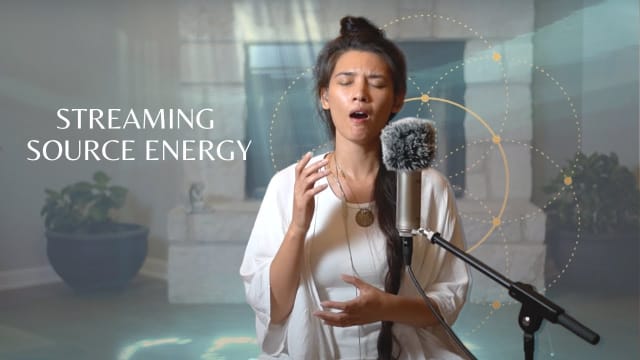
"Eternal Soul" is a devotional music composition by Mei-lan Maurits and Ali Pervez Mehdi that functions as a spiritual transmission—a vehicle for deepening connection to the eternal, unchanging aspect of consciousness that persists beyond the body and personality. The song emerges from a lineage of sacred music practices designed to invoke transcendental states, using sound frequency, lyrical intention, and collective attention to align the listener's heart with higher vibrations. This is not entertainment but a spiritual technology intended to lift consciousness toward awakening.
A spiritual music transmission differs fundamentally from conventional songwriting. Rather than primarily aiming to entertain or tell a story, transmission music carries an energetic intention embedded within melody, harmony, rhythm, and lyrics. The composer and performer act as channels, allowing specific frequencies and spiritual states to flow through them into the listener's awareness.
In the context of "Eternal Soul," Mei-lan Maurits and Ali Pervez Mehdi collaborate as artists who understand music as a doorway. The song is framed explicitly as transmission—an invitation for the listener to receive not just audio information but vibrational teaching. This aligns with ancient practices found across contemplative traditions: using sacred sound (mantra, chanting, ragas) to shift consciousness toward states of peace, devotion, and recognition of what lies beyond ordinary mind.
The description's closing invocation—"May it inspire your heart to soar and lift you to the heavens"—indicates the intended outcome: a lifting of awareness, a softening of boundaries between the personal self and something larger, often described as the soul or the eternal dimension of being.
The title "Eternal Soul" points to a specific spiritual understanding present across many traditions: the recognition that beneath personality, emotion, and body exists something unchanging, infinite, and beyond time. This is distinct from the ego-self, which is finite, changing, and bound to the physical world.
In Hindu and Vedantic philosophy, this is called the Atman—the eternal self that is identical with Brahman, the ground of all existence. In Sufi traditions (relevant given Ali Pervez Mehdi's background), the soul (ruh) is the eternal essence that knows itself through return and remembrance. In Christian mysticism, the soul is the part of consciousness that is eternal and can commune directly with the divine.
A spiritual music transmission addressing "the eternal soul" functions as a remembrance practice. It serves to awaken the listener's awareness from identification with the temporary (thoughts, emotions, body sensations, social roles) toward recognition of what is permanent within them. The heart, mentioned in the invocation, is often the portal through which this recognition occurs—not as emotional sentimentality but as a center of direct knowing and connection to the infinite.
The creation of "Eternal Soul" brings together two artists with deep roots in devotional practice. This collaboration matters because transmission music is strengthened by the consciousness and intention the artists bring to it. When skilled practitioners work together, the field they create carries more power to shift the listener's state.
Ali Pervez Mehdi is known within the world of qawwali and Sufi music traditions—lineages explicitly designed to invoke divine remembrance and states of spiritual ecstasy. His contribution likely brings the depth and technical mastery of these ancient practices. Mei-lan's work centers on modern devotional music that makes these transmissions accessible to contemporary listeners while maintaining their spiritual integrity.
James Gibson, credited as a contributor, likely provides production and sonic craftsmanship—ensuring that the physical medium (recording, mixing, composition structure) optimally carries the spiritual intention. This is crucial: a transmission poorly recorded or mixed can lose its effectiveness, while professional production that respects the material's sacredness amplifies its capacity to affect the listener.
The claim that music can transmit spiritual states is not poetic metaphor—it rests on observable phenomena. Sound carries frequency, and living organisms respond to frequency at the cellular and neurological level. When we listen to music composed with specific intention and performed by practitioners in states of genuine devotion, several things occur:
- Frequency entrainment: The brain's electrical activity synchronizes with the rhythmic and harmonic patterns it receives. Certain frequencies promote states associated with meditation, relaxation, and coherence (alpha and theta brainwave states).
- Emotional resonance: Melody and harmony trigger emotional responses that can soften defensive patterns and open the heart center. When the heart opens, the listener becomes more permeable to subtle states of consciousness.
- Lyrical intention: Words themselves carry vibrational signatures. Sacred syllables and phrases (whether in Sanskrit, Persian, Arabic, or English) invoke specific archetypal forces and states when spoken or heard with attention.
- The field of the performer: An artist performing in genuine devotion or meditation creates an energetic field that extends beyond the sound waves themselves. Listeners in receptive states can attune to this field, amplifying the transmission.
This is why the same musical piece can feel vastly different depending on who performs it and in what state they perform. A technically perfect recording of a sacred song performed by an artist in a contracted or inauthentic state will carry less transmission value than a simpler recording by an artist in deep devotional presence.
The description invites listeners to engage with "Eternal Soul" as an act of collective spiritual participation. Over 3 million views suggests that many people have encountered this transmission. In contemplative traditions, there is an understanding that collective listening amplifies effect: when many hearts receive the same transmission simultaneously or in sequence, the resonance deepens.
This relates to the concept of morphic resonance—the idea that patterns and states established by individuals can strengthen the field for others. When thousands of people listen to "Eternal Soul" with open hearts, they are not just passively receiving audio; they are participating in a collective act of remembrance and awakening. This, in turn, makes the transmission more available to new listeners who encounter it.
The provision of the album for download, separate from the streaming context, acknowledges that sacred music functions differently when taken into one's personal sonic space. A song downloaded and listened to repeatedly in meditation, while driving, or during moments of solitude, becomes woven into the listener's own spiritual practice—no longer external transmission but internalized presence.
The final lines of the description—"It is with open hearts that we bring you this song" and "May it inspire your heart to soar"—reveal a specific understanding of how transmission works. The heart must be open on both ends: the artists offer from open hearts, and the listener must receive with an open heart. This is not a transaction but a mutual vulnerability.
An open heart in this context means: willingness to feel beyond the protective structures of the mind, capacity to receive without immediately analyzing or judging, readiness to be moved or changed by what arrives. For many listeners, especially in contemporary secular contexts, this openness is not automatic. It requires a deliberate choice to receive the music as something more than entertainment—as a genuine offer of spiritual medicine or remembrance.
This is likely why spiritual music transmissions often flourish in dedicated practice communities and retreats, where the environment and intention support open-hearted listening. The same song in a noisy public space will register differently than in a meditation hall or home sanctuary. The listener's capacity to open and the environment's resonance are crucial variables in how effectively a transmission is received.
If "Eternal Soul" resonates with you, deepening your engagement with it can extend and embody the transmission. Download the full album and establish a regular listening practice—perhaps during meditation, yoga, or simply as a dedication to remembrance. Notice what shifts in your awareness, emotional tone, or sense of connection when you listen with genuine attention.
Explore the lineages from which this music emerges: the Sufi traditions of qawwali and sacred sound, the yogic understanding of mantra and frequency, the contemplative music practices across world wisdom traditions. Understanding the tradition deepens your capacity to receive the transmission.
Finally, recognize that what you receive through "Eternal Soul" is an invitation to awaken to your own eternal nature—the aspect of consciousness within you that is beyond birth and death, beyond change, beyond time. The song is a mirror and a doorway. Your own hearts' opening in response to it is the actual transmission taking place.