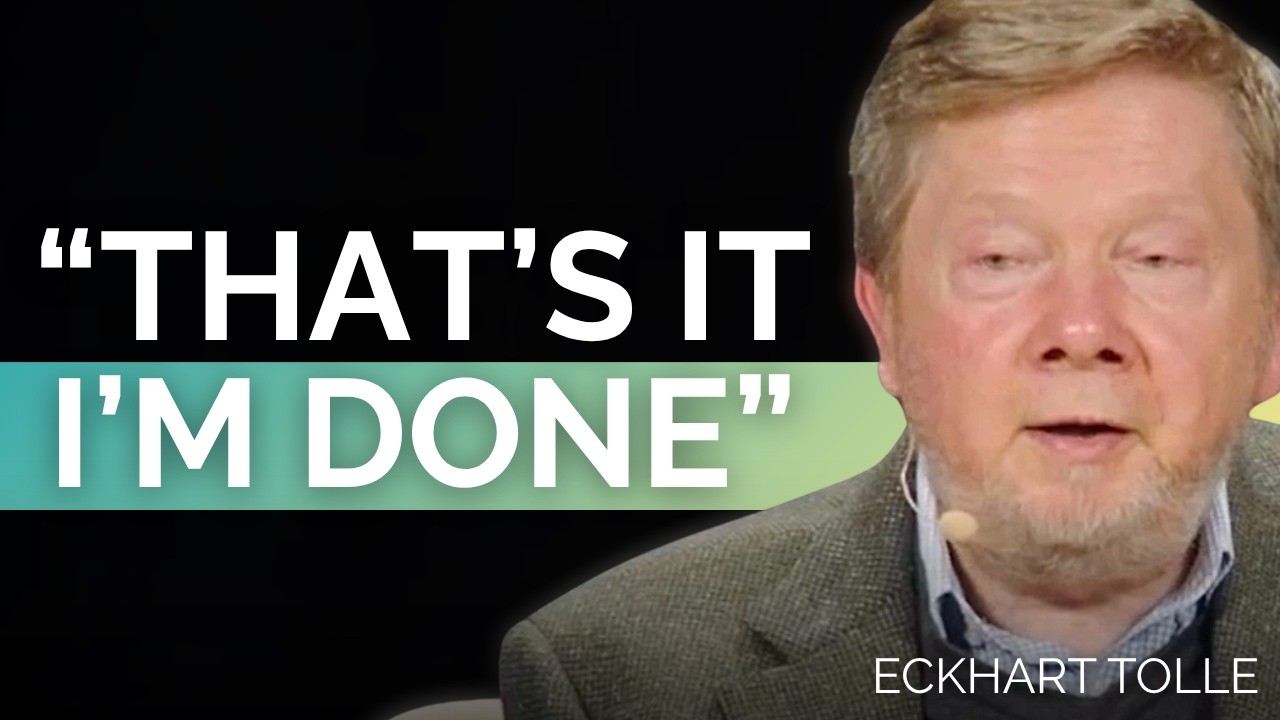
"You want to hear about something crazy?" Tim Ferriss asks, and the loose, joking rhythm of this episode of The Random Show tightens into something closer to a lab briefing. Recorded in Los Angeles alongside his co-host Kevin, the conversation moves from a teenage fascination with lucid dreaming to dream engineering, a startup that aims to modify dream content to address PTSD, and a line of research suggesting the dreams people have under anesthesia might matter. Ferriss is an enthusiastic investor and self-described experimenter, and he is unusually candid about where his enthusiasm outruns the evidence. What follows unpacks the ideas he describes, the science he points to, and the questions a careful listener should carry out of the room.
Ferriss traces his interest to the start of high school, when he first read Exploring the World of Lucid Dreaming by Stephen LaBerge. He defines the terms plainly. Lucid dreaming is a trainable state in which you "become conscious of the fact that you're dreaming," and with practice, he says, you can reach the point of modifying your own dream content. The skill is not magic in his telling. It is a process, one that starts with recognizing that you are dreaming and builds from there.
The personal detail that makes the topic stick is what he did with the skill. While competing in wrestling, he says, he ran extra training sessions at night, inside his dreams.
"I'm not making this up, and I felt like there was a direct translation to improve performance."
— Tim Ferriss, The Random Show (1:05)
It is worth being precise about what that anecdote does and does not establish. It is one person's account of his own practice, and nothing in this segment offers measured results showing that rehearsing in dreams improves physical performance. What it does explain is the thread that runs through the rest of the conversation: the belief that the dreaming mind is a place where practice, and perhaps repair, can happen.
The leap from a teenager's hobby to an actual company came through Dr. Adam Haar Horowitz, whom Ferriss says took research out of MIT and Harvard to make dream engineering "a reality." Horowitz's startup is called Dust, and Ferriss discloses up front that he is an investor. Asked what it does, he is direct about the goal: "They're going to be helping people to modify dream content to address things like PTSD."
"They're going to be helping people to modify dream content to address things like PTSD."
— Tim Ferriss, The Random Show (1:37)
The ambition he describes goes further than a single therapy. Ferriss says the longer-standing question for him is whether it is possible to facilitate two-way communication between scientists and dreamers while they are dreaming. That is a research frontier rather than a clinical product, and the segment does not show it working. But it helps explain why a PTSD application is attractive. Trauma often replays in sleep, and if dream content can be shaped, the idea goes, the replay might be reshaped too.
Psychedelic-assisted therapies have been a long-running interest for Ferriss, but he says they have taken a back seat for him in recent years. The reason is access. Many people cannot safely take psychedelics because of health reasons, contraindications, or psychiatric history, such as schizophrenia in the family. For those people, he argues, the field needs options that do not depend on a substance that could be ill-advised.
That is where neuromodulation, or brain stimulation, enters. Ferriss says he remains "super super bullish" on it and that he uses it himself. His cadence is specific: every three to four months, with another session planned within the next month.
"I would say every 3 to 4 months."
— Tim Ferriss, The Random Show (2:31)
He is also fond of Ampa Health, which he says he "did get involved with" after thinking hard about it. He calls its hardware the smallest and most modular option on the market and says it may be the company most likely to someday run stimulation off something as small as a phone. The company's approach, as Ferriss describes it, is built around speed. Rather than five days away from work, the protocol he cites is a single day of treatment, paired with a very small dose of D-Cycloserine, an antibiotic that he says induces plasticity in the brain "much like certain psychedelics." The patient dissolves it in the mouth beforehand.
The outcome he reports is striking and entirely personal. On a 1-to-10 severity scale, he says, his OCD and generalized anxiety sat around an 8 or 9 before treatment. Afterward, he says, they dropped to roughly a zero or a one. Ferriss's reaction, "Holy [expletive]," captures the surprise. But this is one man's self-reported result after one protocol, and it should be read as a story rather than a trial.
The economics matter to his argument, too. He describes older devices as roughly the size of a refrigerator, requiring a lease in the quarter-million-dollar range. The provider product he cites from Ampa Health is about three thousand dollars a month and cancellable at any time, which he suggests could let clinics that already offer ketamine or CBT add stimulation as an add-on.
One of the more instructive parts of the conversation is Ferriss's explanation of why the exact location of stimulation matters. He describes the targets as built on overlapping brain networks identified through deep brain stimulation data and lesion research. Some regions are fairly uniform from person to person. Others, such as the dorsolateral prefrontal cortex on the front of the head, vary more, so the clinician has to be exact.
"If they were off by like a half a centimeter, nothing. And you just wasted a week, right? And like 30 grand."
— Tim Ferriss, The Random Show (5:46)
That detail is a useful lens for any treatment that depends on hardware. A few millimeters of error can turn an effective session into a wasted one, which is why Ferriss emphasizes how newer systems aim to be "very effective, very fast and less likely to suffer from clinician error." He also reports the side effects he has experienced: a mild headache lasting about a day. Asked whether the whole thing is unsettling, since it can sound like "putting magnets in your brain," he laughs but does not dismiss the question. That skepticism is worth keeping, and it is the reaction most listeners will bring.
The most unusual thread in the episode is anesthesia. Ferriss reads two headlines from pieces published by Stanford Medicine: "Could anesthesia-induced dreams wipe away trauma?" and "Could anesthesia dreams be a more palatable psychedelic therapy?"
The second headline explains the appeal. Psychedelic therapies are promising for many people but hard to access for others. If the dream state produced under anesthesia carried some of what makes psychedelics interesting, without the same barriers, it would be a different kind of door. Ferriss treats the headlines as questions, not findings, and that framing is important. A headline asking whether something could work is not a demonstration that it does.
He also acknowledges how much remains unknown. Anesthesia, he notes, is one of those areas where the mechanisms are not fully understood, and many different anesthetics act on the nervous system in different ways. He says he wants to lay out the "dream protocol" itself, and the question he keeps pressing, "What is the protocol?", is the right one. The clearest description of how the protocol would work is still ahead in the full conversation, and the segment available here leaves the mechanics as a promise rather than a method.
Ferriss makes a comparative claim that deserves scrutiny: "I think the risk-benefit ratio is much more attractive for the general population than psychedelics, which is why I'm spending so much time looking at it."
"I think the risk-benefit ratio is much more attractive for the general population than psychedelics."
— Tim Ferriss, The Random Show (6:29)
Several things temper that claim. He is an investor in Dust and has been involved with Ampa Health, and he says so. The results he cites come from his own experience. The Stanford material he reads is presented as headlines rather than as conclusions about trauma outcomes. And he is careful to say, when pressed, that the company is not doing anything beyond what it has disclosed. The honest reading is that dream engineering for PTSD is at the stage of research questions, company ambitions, and personal testimony. Those are legitimate starting points. They are not yet a treatment a patient can rely on.
For a reader dealing with trauma, that distinction matters a great deal. Ferriss himself frames these tools as options for people who cannot take psychedelics, not as replacements for the established care that already exists. Any decision about stimulation, anesthesia-based approaches, or dream-focused therapy belongs in a conversation with a qualified clinician who knows the individual's history.
The conversation is an entry point into a fast-moving corner of neuroscience, and a few steps will deepen it. Watch the full episode to hear the rest of Ferriss's description of the dream protocol and the Stanford research he references. Read Stephen LaBerge's Exploring the World of Lucid Dreaming, the book that started Ferriss's interest, to understand what lucid dreaming training looks like on its own terms. Look up the Stanford Medicine pieces directly, so you can read the questions in their original context rather than as headlines. And if trauma or PTSD is part of your life, treat any new modality as something to discuss with a licensed professional, weighing both the promise Ferriss describes and the evidence that has not yet arrived.