BrightStar

Browse All Events

Discover conscious gatherings

events

Yoga
Meditation
Breathwork
Qigong
Tai Chi
Sacred Music
World Music
Medicine Music
Sound Healing
Ecstatic Dance
Popular Destinations
BaliSedonaLos AngelesCosta RicaNew YorkSan FranciscoAustinMiamiJoshua TreeTulum
View All CategoriesView All Destinations

Explore All Features

Powerful tools to grow your events

Platform Features

Smart Dynamic Pricing
Ticket Categories
Assigned Seating
Abandoned Cart Recovery
Visitor Recovery
Donations & Sliding Scale
Affiliate Engine
Ticket Scanner
Coupon Codes
Custom Questions
Ticket Sharing
Upsells & Add-ons
Analytics & Reporting
Email Sequences
Waitlist / Notify / Remind
People & Places
Artists & TeachersEvent OrganizersVenues & StudiosKnowledge BaseGlossaryInspiration
View All FeaturesAbout Us
PricingBlog
Language
Saved events
Browse All Events

events

YogaMeditationBreathworkQigongTai ChiSacred MusicWorld MusicMedicine Music

Popular Destinations

BaliSedonaLos AngelesCosta RicaNew YorkSan Francisco

People & Places

Artists & TeachersEvent OrganizersVenues & StudiosKnowledge BaseGlossaryInspiration

Platform Features

Smart Dynamic PricingTicket CategoriesAssigned SeatingAbandoned Cart RecoveryVisitor RecoveryDonations & Sliding ScaleAffiliate EngineTicket ScannerCoupon CodesCustom QuestionsTicket SharingUpsells & Add-onsAnalytics & ReportingEmail SequencesWaitlist / Notify / Remind
View All FeaturesAbout Us
PricingBlog
Log inFind EventsHost Events
  • Browse All Events
  • For Seekers
  • Yoga
  • Meditation
  • Breathwork
  • Qigong
  • Tai Chi
  • Sacred Music
  • World Music
  • Medicine Music
  • Sound Healing
  • Ecstatic Dance
  • Retreats
  • Workshops
  • All Categories →
  • Bali
  • Sedona
  • Los Angeles
  • Costa Rica
  • Tulum
  • Byron Bay
  • San Francisco
  • Austin
  • New York
  • San Diego
  • Denver
  • Seattle
  • Portland
  • Miami
  • All Cities →
  • Join the Movement
  • Why we list
  • Sell Globally
  • For Creators
  • For Teams
  • For Writers
  • For Teachers
  • For Kirtan Artists
  • For Studios
  • For Festivals
  • For Retreat Centers
  • For Nonprofits
  • Brand Ambassador
  • Case Studies
  • Free Ticketing
  • Elevate
  • Amplify
  • 500K+ Buyer Network
  • Abandoned Cart Recovery
  • Smart Dynamic Pricing
  • Ticket Categories
  • Recurring Events
  • Assigned Seating
  • Affiliate Engine
  • Waitlist / Notify
  • Ticket Scanner
  • Embed Widget
  • Event Syndication
  • Message Center
  • Integrations
  • Reports
  • All Features →
  • About
  • The Ecosystem
  • Blog
  • Glossary
  • Inspiration
  • Help Center
  • Contact
  • API Docs
  • Brand Assets
  • Careers
  • Press
  • Terms of Service
  • Privacy Policy

Events

  • Browse All Events
  • For Seekers
  • Yoga
  • Meditation
  • Breathwork
  • Qigong
  • Tai Chi
  • Sacred Music
  • World Music
  • Medicine Music
  • Sound Healing
  • Ecstatic Dance
  • Retreats
  • Workshops
  • All Categories →

Destinations

  • Bali
  • Sedona
  • Los Angeles
  • Costa Rica
  • Tulum
  • Byron Bay
  • San Francisco
  • Austin
  • New York
  • San Diego
  • Denver
  • Seattle
  • Portland
  • Miami
  • All Cities →

For Creators

  • Join the Movement
  • Why we list
  • Sell Globally
  • For Creators
  • For Teams
  • For Writers
  • For Teachers
  • For Kirtan Artists
  • For Studios
  • For Festivals
  • For Retreat Centers
  • For Nonprofits
  • Brand Ambassador
  • Case Studies
  • Free Ticketing
  • Elevate
  • Amplify

Features

  • 500K+ Buyer Network
  • Abandoned Cart Recovery
  • Smart Dynamic Pricing
  • Ticket Categories
  • Recurring Events
  • Assigned Seating
  • Affiliate Engine
  • Waitlist / Notify
  • Ticket Scanner
  • Embed Widget
  • Event Syndication
  • Message Center
  • Integrations
  • Reports
  • All Features →

Company

  • About
  • The Ecosystem
  • Blog
  • Glossary
  • Inspiration
  • Help Center
  • Contact
  • API Docs
  • Brand Assets
  • Careers
  • Press
  • Terms of Service
  • Privacy Policy
BrightStar
© 2026 BrightStar. All rights reserved.
Inspire

Buteyko Breathing: Holding Your Breath to Clear Your Nose

Patrick McKeown
Patrick McKeown
Jan 4, 2017
10 min read
Watch · 8

Patrick McKeown's roughly eleven-minute demonstration of the Buteyko breathing exercise for adults rests on an idea most people were taught to avoid: that holding your breath, done gently and for a set purpose, can open a blocked nose. Published in January 2017 on the Buteyko Clinic International channel, the video walks viewers and an on-camera group through a short hold-and-release routine, explains the physiology McKeown links to it (carbon dioxide in the blood, the sympathetic nervous system, the diaphragm and the phrenic nerve), and spends real time on who should skip it, what can go wrong, and where the method runs out of road. The claim is modest and specific. The nose can be cleared within minutes, and bringing breathing volume closer to normal is what keeps it clear.

Read · 9 sections

What does the Buteyko nose exercise look like in practice?

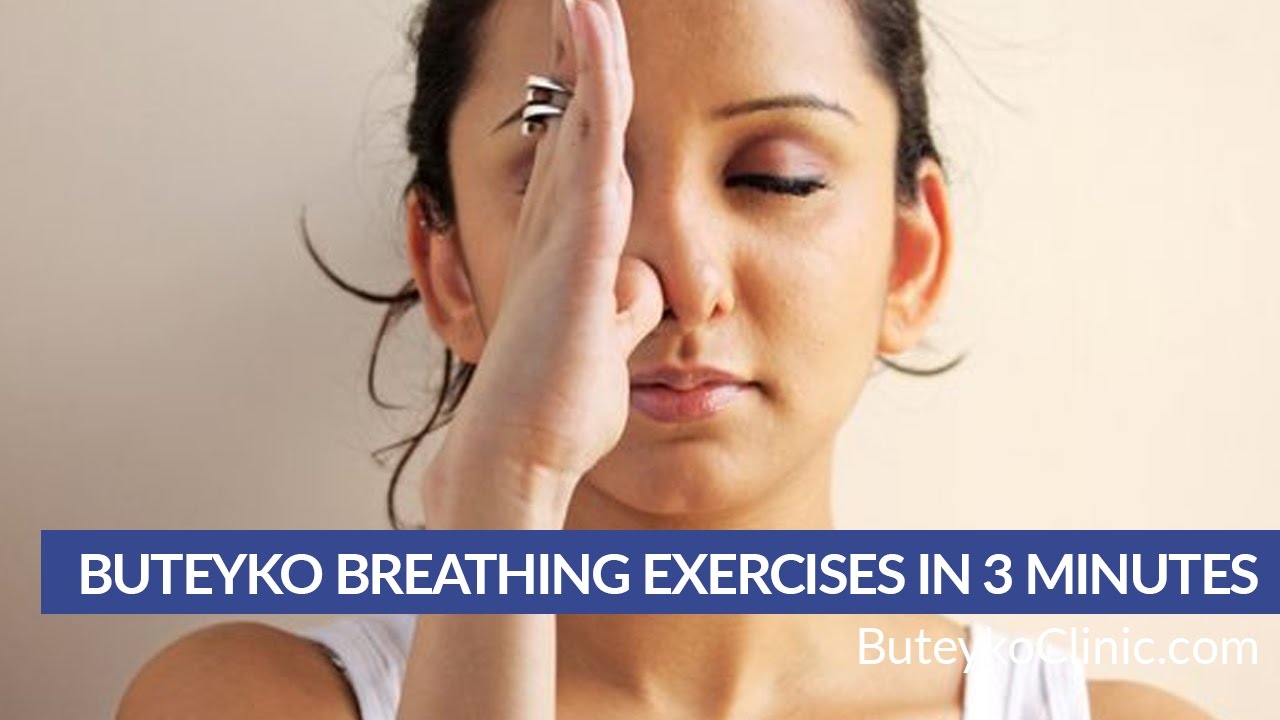
McKeown opens the session the way a good session leader opens a rehearsal: with ground rules before the first note. He asks the group to take a small, gentle breath in through the nose, a small gentle breath out, then pinch the nose closed and hold. While holding, you may sway or nod the head slightly, which he describes as a distraction, and you should keep your body relaxed rather than tense. The hold ends when you feel a medium to strong need for air, and you release the nose, breathe through it, and calm your breathing right away.

The video's written routine, printed in the description, spells out the cycle: breathe out gently through the nose, pinch, hold for as long as possible, release, resume normal breathing, then wait half a minute to a minute before repeating. The description lists six repetitions. In the spoken instruction, McKeown says five times, and he is consistent about the rest interval. Either way, the point is repetition with recovery, not one heroic breath-hold. Pacing matters as much as the hold itself, and the rest between rounds is part of the exercise.

The target is specific. In the spoken instruction, McKeown says the aim is a hold of around thirty seconds or more, long enough to produce what he calls medium to strong air hunger. Less than that, the exercise is a pleasant pause. More than that, without care, it becomes a strain.

Why would holding your breath clear a blocked nose?

This is the question the video is built around, and McKeown's answer is a chain of cause and effect rather than a slogan. As you hold your breath, carbon dioxide accumulates in the blood. McKeown's reading of the evidence is blunt about where the credit lands:

"carbon dioxide builds up in the blood and it seems to be carbon dioxide that's causing the dilating of the nasal cavity" (McKeown, Buteyko Clinic International video, about 1:43)

He adds a second possibility: activation of the sympathetic nervous system, the branch of the autonomic system tied to the body's activating responses, may also help decongest the nose. He draws a parallel with physical exercise, which also opens the nasal passages, though he notes the nose may run a little as well. The physiology is still being argued over in the research literature, and McKeown frames his explanation as what the evidence seems to suggest, not settled fact.

The video description goes further, summarizing research it describes as showing that breath holding increased nasal volume, apparently through prompt and even shrinkage of the nasal membrane within the nasal cavity. It also reports that nasal airway resistance decreased during breath holding in humans, and during experimentally induced asphyxia in animals. Read carefully, the description's language is hedged ("results suggested"), and it is a summary of studies rather than the speaker's own experiment. It is useful context, not a guarantee.

There is a practical lesson in the mechanism, though. The exercise works by changing blood gases and nervous system tone, not by forcing air through a narrow passage. That distinction explains why the instruction is to keep the breath gentle at the start and the hold soft at the middle, and why McKeown keeps returning to calm breathing at the end.

Which nostril is more blocked, and how do you check?

Before the big hold, McKeown offers a simple test that doubles as a self-assessment. Block one nostril, breathe through the open one, then switch. The side that feels harder to breathe through is the more obstructed side. He presents this as a simpler stand-in for a fogging test, and it requires nothing but your fingers and a mirror if you want one. It is a useful baseline: if you repeat the exercise and return to the test afterward, you can see whether the open side has changed.

McKeown uses this check during the session itself, asking participants to compare their nostrils before and after rounds. Several people in the room report that their nose is beginning to open after the first set, and he treats that as an encouraging early sign rather than proof of anything long term.

Who should not do the breath hold?

This is the part of the video that deserves the most attention from viewers, and McKeown gives it real weight. He names several situations in which the exercise should not be done, or should be approached very lightly:

  • Pregnant women, who are asked not to do it.
  • People with obstructive sleep apnea, who should skip it or go lightly.
  • Anyone already holding their breath during sleep, who should not add breath holds during the day.
  • Anyone with cardiovascular issues, who should not do it.

Outside those cases, he says, the exercise is "pretty safe," and he grounds that reassurance in a familiar comparison: holding the breath is a natural thing to do. Anyone who has stayed underwater while swimming has done it. The caution is about dosage and about people for whom any deliberate breath hold carries extra risk. Viewers with a heart condition, sleep apnea, or who are pregnant should check with their own clinician before trying the exercise, and no online demonstration substitutes for that conversation.

Why does the diaphragm matter in a nose exercise?

McKeown's most interesting digression is about the diaphragm, the dome-shaped muscle at the base of the lungs that does most of the work of breathing. He describes how, during a hold, the brain senses changing blood gases, and the diaphragm also registers discomfort. Signals travel from the brain to the diaphragm through the phrenic nerve, and the diaphragm begins to contract. "You're starting to give it a workout," he says in effect.

His broader concern is that many people breathe with their mouths open and rely on the upper parts of the lungs, leaving the diaphragm stiff and underused. Holding the breath, he argues, can improve respiratory muscle strength by engaging the diaphragm. That is a claim worth flagging as the speaker's position, since the video does not present data for it, but it explains why he treats the nose exercise as more than a decongestant. The hold is a way of re-engaging a muscle that daily habit may have let go slack.

Can the exercise backfire, and how do you handle coughing?

Coughing is a common reaction during breath holds, and McKeown addresses it directly. Holding the breath can dilate the airways, and mucus may start to move. But he identifies a specific cause: holding too long, followed by big breaths at the end, can produce hyperventilation, and that alone can trigger a cough. His advice is practical, not alarmed:

"the hyperventilation could just trigger the cough but that's your symptom it's easy to address it if you change your breathing" (McKeown, Buteyko Clinic International video, about 4:52)

The fix, in other words, is in the exit. Release the nose, breathe gently through it, and let the breathing settle rather than gasping for a large volume. Anyone who coughs repeatedly, or who feels lightheaded, should stop the session and not push through it.

What about a deviated septum or a nose that won't open?

The video's most honest passage comes when McKeown works with a volunteer who has a badly blocked nostril. Before he proceeds, he tests the volunteer's left and right sides, then sends the volunteer through a stronger variant: a small breath in, a small breath out, a pinch, and then walking as many paces as possible while holding, with the breath released when the air hunger becomes fairly strong. The nostril improves. McKeown is careful to say that if the blockage is physical, a complete deviated septum, there is not much the exercise can do.

He draws a distinction that matters. The exercise can help with reversible obstruction, the kind that changes with breathing pattern. Structural problems are another matter. The volunteer describes a deviated septum that clinicians have imaged, and McKeown responds with reassurance, not false promise:

"the human body is very resilient" (McKeown, Buteyko Clinic International video, about 8:15)

His argument is that when you bring breathing volume down toward normal, you are not forcing a large volume of air through a restricted passage, and most people, to a lesser or greater degree, have some deviation in the septum anyway. The lesson for viewers with a structural block is to set realistic expectations and to pursue medical evaluation rather than assume breathing work will fix an anatomical problem.

Why does McKeown teach this to children, and what does he say about lasting change?

McKeown says the approach is taught to children from age five upward in Hong Kong, and he recounts a hospital case in which a young child with an adenoid face and one nostril completely blocked was guided through the exercise, with the nose decongested within five minutes. He offers this as a demonstration of how quickly decongestion can happen, not as a clinical study, and the video does not supply outcome data for children.

The more durable point is about volume. McKeown says:

"when you start bringing breathing volume down towards normal the nose will remain more permanently decongested" (McKeown, Buteyko Clinic International video, about 2:38)

That is the thread that ties the whole video together. The hold clears the nose in the moment, but the lasting effect, in his framing, comes from breathing more gently and more quietly over time. For readers, that suggests the exercise is best understood as a tool within a wider approach to breathing, not a one-time fix.

Where to go from here

If the exercise appeals to you, start slowly. Do the nostril check first, try a single round of the gentle hold, and stop well before strong distress. Build toward five rounds only if you feel steady and clear afterward. If you have any of the conditions McKeown flags, or any heart, lung, or pregnancy concern, talk to your clinician before you try it. For a deeper look at the method, the Buteyko Clinic International website is the place McKeown points viewers to for more information on how the breathing exercises are taught.

The video's real gift is its honesty about limits. It offers a clear, repeatable routine, a plausible physiology that the speaker himself hedges, a list of people who should not try it, and an admission that structure beats technique when the blockage is physical. Watch it with a notebook and a timer, and treat it as an invitation to pay closer attention to how you breathe, not as a promise that a held breath will fix everything.

Comments

Loading the conversation…

Transcript

[0:04] so the breathing exercise the first one

[0:06] that I'm going to have you do is to

[0:08] decongest the nose it's very very simple

[0:11] now if any of the females are pregnant

[0:13] please don't do it if you actually do

[0:15] have obstructive sleep happen you please

[0:17] don't do it or if you're doing it Go

[0:19] Lightly I don't want you holding your

[0:21] breath during the day if you're already

[0:22] holding your breath during your sleep if

[0:24] you have any cardiovascular issues as

[0:26] well please don't do it but other than

[0:28] that it's pretty safe

[0:33] as individuals holding the breath is a

[0:35] very natural thing to do anytime you go

[0:37] swimming you're going to stay underwater

[0:39] for a period of time but holding of the

[0:42] breath decongest the nose now a very

[0:44] simple way to determine which nostril is

[0:46] more obstructed than the other is simply

[0:48] block one nostril and breathe through

[0:51] it and then switch and block one nostril

[0:54] and breathe through it so instead of the

[0:56] fogging test we just have you do that

[0:58] I'll give you some insight and I would

[1:00] i' like you to practice this now the key

[1:02] to decongesting the nose is to hold your

[1:05] breath for a period until you creating

[1:08] medium to strong air shortage ideally it

[1:10] would be about 30 seconds

[1:12] plus so the objective is for you to take

[1:14] a small gentle breath in I like

[1:16] everybody to practice it a small gentle

[1:19] breath in through your nose a small

[1:21] gentle breath out through your nose

[1:23] pinch your nose and gently nod your head

[1:26] holding your breath and continue holding

[1:29] your breath until you feel feel a medium

[1:31] to strong air shortage continue holding

[1:33] your breath until you feel a medium to

[1:35] strong air shortage you can go easy on

[1:38] your neck maybe just even move your body

[1:40] about but at the end of it make sure you

[1:42] breathe through your

[1:43] nose now as you hold your breath carbon

[1:46] dioxide builds up in the blood and it

[1:48] seems to be carbon dioxide that's

[1:50] causing the dilating of the nasal cavity

[1:53] but it's also activating sympathetic

[1:55] tone activation of the sympathetic

[1:57] nervous system may also be helping to

[1:59] decongest to NOS because physical

[2:02] exercise will open up your nose if you

[2:04] do physical exercise your nose will open

[2:06] it will run a little bit but it will

[2:08] also open now you have to practice this

[2:10] five times and I'm going to have you do

[2:12] it as a group is to practice it five

[2:14] times so you do it once wait about a

[2:17] half a minute to a minute do it again

[2:19] now we teach this to children from 5

[2:22] years of age upwards in Hong Kong I was

[2:25] in a hospital in their rounds and a

[2:27] little kid comes in with adenoid face

[2:29] and the whole faces sank downwards and

[2:32] one of our nostrils completely blocked

[2:34] and the other nostril partially blocked

[2:36] we had her do this in 5 minutes we can

[2:38] decongest the nose it's very easy to

[2:42] decongest the nose and what's more when

[2:45] you start bringing breathing volume down

[2:47] towards normal the nose will remain more

[2:49] permanently decongested so let's try

[2:52] again take a normal breath into your

[2:54] nose and normal breath out through your

[2:56] nose pinch your nose and gently nod your

[2:59] head and hold your breath and hold for

[3:01] as long as you can I need you to hold

[3:03] your breath for as long as you can so

[3:06] continue to hold your breath for as long

[3:08] as you can continue holding your breath

[3:11] and when you feel a fairly strong need

[3:13] to breathe to let go and to breathe

[3:14] through the

[3:16] nose now another thing that can be quite

[3:18] useful there is when you hold your

[3:20] breath you'll start to feel your die

[3:23] from kick or contract because at some

[3:26] point the brain is sensing there's a

[3:28] changes in blood gases and the diaphragm

[3:30] is also sensing discomfort so there's

[3:33] messages coming from the brain via the

[3:35] frenic nerve to the diaphragm and the

[3:37] diaphragm is starting to inate you're

[3:40] starting to give it a workout if we go

[3:42] around with our mouth open we primarily

[3:44] use the upper parts of the lungs the

[3:47] diaphragm can become stiff it's

[3:49] difficult to get in at the diaphragm

[3:50] it's our main breathing muscle but

[3:52] holding the breath can improve respir

[3:54] muscle strength by innervating the

[3:56] diaphragm can we try that exercise again

[3:59] take a small breath in through your nose

[4:01] a small breath out through your nose

[4:02] pinch your nose and I'd like you to hold

[4:04] your breath and hold your breath for as

[4:06] long as you can so continue to hold your

[4:08] breath for as long as you can and it's

[4:11] better if you move it's better if you

[4:12] move hold your breath for as long as you

[4:14] can I need you to experience the effect

[4:17] of as you hold your breath carbon

[4:19] dioxide is increasing in the blood and

[4:21] carbon dioxide is helping to open up

[4:25] dilate the nasal

[4:27] passages so at the end of it make sure

[4:29] you breathe through your nose and calm

[4:31] down your

[4:32] breathing and I'm going to do it two

[4:34] more

[4:35] times you can even check your no

[4:38] nostrils there check your left nostril

[4:40] and check your right nostril some of you

[4:42] will start to experience some changes

[4:44] there after three but ideally you need

[4:47] to do it five

[4:49] times now the individual who's

[4:52] coughing when you hold your breath you

[4:55] can you will have dilation of the upper

[4:57] of the lower Airways as well mucus

[4:59] that's will start to come up but the

[5:02] other thing is if you hold your breath

[5:04] for too long and if you take big breaths

[5:05] at the end of it the hyperventilation

[5:08] could just trigger the cough but that's

[5:11] your symptom it's easy to address it if

[5:13] you change your breathing can we try

[5:15] that exercise again small breath in

[5:18] through your nose small breath out

[5:19] through your nose pinch your nose and

[5:21] hold your breath and hold your breath

[5:23] for as long as you can hold your breath

[5:25] for as long as you can and the key is to

[5:28] keep relaxing into your body as you hold

[5:30] your breath keep relaxing into your body

[5:32] as you hold your breath to decongest the

[5:35] nose you have to hold it for a medium to

[5:38] strong air shortage from a medium to

[5:40] strong air

[5:42] shortage okay so I would be comfortable

[5:45] enough just check one nostril and then

[5:48] check the other

[5:51] nostril is there anybody with quite

[5:53] severely blocks nose at the moment you

[5:57] have can I try something else with you

[6:01] okay would you mind coming up to the

[6:03] top you'll be probably regretting it

[6:08] now you don't have sleep out you high

[6:10] blood pressure nothing no no okay um so

[6:13] if you block one nostril breathe through

[6:14] it the the one that's open the one is

[6:17] blocked try it's quite blocked and try

[6:20] the other

[6:21] one okay so the left so the left nostril

[6:25] here is very blocked now if it's a

[6:26] complete deviated septum or pups I can't

[6:29] do much about

[6:31] but if for instance the nose un blocking

[6:33] exercise that we just did if that

[6:35] doesn't work we try a different approach

[6:38] that's slightly Stronger by the way can

[6:40] I just see those of you a show of hands

[6:42] who feel their nose is starting to open

[6:44] as a result of doing the exercise so

[6:46] it's quite positive better it's better

[6:49] it's so I'm going to have you stand down

[6:51] Richard and I'd like you to just take a

[6:54] small breath into your nose now by the

[6:56] way no stress with this yeah so small

[6:58] breath small breath into your nose small

[7:00] breath out pinch your nose and now walk

[7:03] as many Paces as you can just walk as

[7:05] many Paces as you can and keep relaxing

[7:08] into your body and maybe turn back up

[7:10] this

[7:11] way and I need you to kind of push a

[7:13] little bit but at the end don't overdo

[7:15] it but make sure you breathe through

[7:17] your nose keep Brea keep holding the

[7:19] breath keep holding the bread keep

[7:21] holding the breath when you feel a

[7:23] fairly strong air shortage let go let go

[7:25] now breathe through your nose cam your

[7:27] breathing cam your breathing and then

[7:28] you can just rest the that

[7:31] and now try try the nostril is there any

[7:35] change

[7:36] there it's improved yes so there's a

[7:40] there's something physical there and you

[7:42] know that well I can't fix

[7:46] that it's not always as bad but thanks

[7:50] yeah know but that's what we can do is

[7:52] we can help reversible obstruction a

[7:54] ritis but if it's

[7:56] physical and I'll explain it but thanks

[7:58] very much

[8:00] I have a deviated septum it's very very

[8:03] badly deviated um Dr H can verify he's

[8:07] done cone beams and he's look he says oh

[8:09] my God your nose is all over the

[8:11] place but the human body is very

[8:15] resilient when you change your breathing

[8:17] volume you're not trying to force that

[8:19] big volume of air through

[8:21] it when you bring your volume down

[8:23] towards normal I'd say most of us here

[8:26] to a lesser degree or more have some

[8:29] deviation of of the of the septum you

[8:32] know so it's very very common but doing

[8:35] this exercise here will work for

[8:37] somebody with chronic ritis now it'll

[8:39] work temporarily it's when you start

[8:41] changing your breathing you'll get a

[8:43] more permanent

[8:45] change Japanese study results suggest

[8:48] that breath toling increased the nasal

[8:50] volume due to shrinkage of the nasal

[8:52] membrane promptly and evenly within the

[8:55] nasal cavity now of course the paper is

[8:57] in Japanese so I can't give you the

[8:58] translation there

[9:00] this paper here um this is going back to

[9:04] 1923 this has been known for a long long

[9:07] time nasal Airway resistance was

[9:10] decreased during breath Tooling in man

[9:12] and during experimentally induced

[9:14] asfixia in animals now I've used that

[9:16] exercise and about 7 to 8,000

[9:19] individuals including children we can

[9:21] get the nose decongested in 5 minutes

[9:24] and if you practice that along with

[9:26] other exercises including breathing

[9:28] through the nose

[9:30] if you need to get your nose working we

[9:33] have to breed through the nose on a

[9:34] continuous

[9:36] basis it's not just enough just to do

[9:39] the

[9:40] exercise in this paper here when nasal

[9:42] breathing takes place in the presence of

[9:45] significant

[9:46] obstruction there's an increase in the

[9:48] pressure of carbon dioxide and a

[9:50] decrease in oxygen and a decrease in Nas

[9:53] Airway resistance in other words if

[9:55] you've got a partially blocked nose and

[9:58] if you continue to breathe through it

[10:01] the nose will actually start opening

[10:03] up now it's easier for us when we're

[10:07] doing the exercises in tandem because

[10:09] you don't want to be it's quite

[10:10] uncomfortable to breathe through a

[10:12] partially blocked nose

[10:14] but generally one nostril is a little

[10:17] bit more blocked than the other and

[10:18] they'll change every 90 minutes and when

[10:21] you lie down at night the nostril that's

[10:23] closest to the pillow becomes more

[10:24] blocked and that's why we switch

[10:26] position and we change it from left to

[10:28] right and vice versa

[10:30] but breathing through the nose is key

[10:32] now I wrote this in an airway

[10:34] forum and I said it was my experience I

[10:36] didn't have this paper at the time I

[10:38] wrote it about a month ago and I said it

[10:40] was my experience that when individuals

[10:42] start breathing through the nose the

[10:44] nose actually starts working

[10:46] better and there was a near noos and

[10:48] trro there consultant and he said in my

[10:51] 17 years of practice he says this is

[10:54] something that you

[10:56] know I have never seen so in other words

[10:59] he doubted me

[11:01] but I have seen it with thousands of

[11:03] individuals and even having just one

[11:06] paper you know but the key is there's no

[11:09] side effects from teaching somebody to

[11:11] breach of the nose first Do no harm

Patrick McKeown
ArtistPatrick McKeown

Founder of Buteyko Clinic International, teaching the Buteyko breathing method that grew out of his own struggles with asthma and disrupted sleep.

View profileWebsite
Explore Topics
Buteyko-breathingNasal-breathingBreath-hold-exerciseNasal-congestionDiaphragm

Got Questions?

Frequently Asked Questions

Take a small gentle breath in and out through the nose, pinch the nose closed, and hold your breath while relaxing your body and gently nodding or swaying your head. Release when you feel a medium to strong need for air, breathe through your nose, and calm your breathing. Wait half a minute to a minute before repeating the cycle.
McKeown describes the exercise as pretty safe for most people, comparing breath holding to what happens when you swim underwater. He advises against it for pregnant women, people with obstructive sleep apnea or who hold their breath during sleep, and anyone with cardiovascular issues. Check with a clinician if any of those apply to you.
McKeown says carbon dioxide builds up in the blood during a breath hold, and that carbon dioxide seems to be causing the nasal cavity to dilate. He also suggests that activation of the sympathetic nervous system may help decongest the nose, and notes that physical exercise similarly opens the nasal passages.
The video's written description lists six repetitions, while McKeown says five times in the spoken instruction. In both cases, you wait roughly half a minute to a minute between rounds before repeating the hold.
McKeown says that for a complete deviated septum he can't do much, though the exercise can help with reversible obstruction. He notes that most people have some degree of septal deviation and that the body is resilient when breathing volume is brought down toward normal. Structural problems should be assessed by a medical professional.
McKeown explains that holding too long and then taking big breaths at the end can trigger hyperventilation, which can cause coughing. Change your breathing by releasing the nose and breathing gently rather than gasping. If coughing persists or you feel lightheaded, stop the exercise.
McKeown says the method is taught to children from age five upward in Hong Kong and describes one hospital case in which a child's nose was decongested within five minutes. The video offers this as an example, not as outcome data, so it should not be treated as proof of results for children.

Continue Reading

More from Patrick

View All
Unblocking a Stuffy Nose: The Breath-Hold Method Explained
Inspire

Unblocking a Stuffy Nose: The Breath-Hold Method Explained

A child pinches her nose, nods gently, and pretends to dive for a stick at the bottom of a pool. Patrick McKeown's nose-unblocking exercise …

1 min read
Buteyko Breathing: Why Breathing Less Calms the Body
Inspire

Buteyko Breathing: Why Breathing Less Calms the Body

Patrick McKeown's short Buteyko demonstration argues that the deep breath we're told to take under stress works backward. Here is the reason…

1 min read
Afepakian Remix: Ocarina, Field Recordings and Maleku Voice
Inspire

Afepakian Remix: Ocarina, Field Recordings and Maleku Voice

A mantra-based song becomes an organic electronic piece in the Liquid Bloom Mix of "Afepakian." Here is how ocarina, field sound and an indi…

1 min read
Chanting as Home Base: Faith, Thought, and the Restless Mind
Inspire

Chanting as Home Base: Faith, Thought, and the Restless Mind

Krishna Das explains why chanting steadies a restless mind, how faith grows from lived experience, and what "vote" we really have over the t…

1 min read

Keep exploring

Continue your journey

More wisdom and gatherings from across the BrightStar directory.

More Articles

Browse the full library of teachings, interviews, and guides.

Back to all articles →

Teachers & Artists

Explore the lineages, musicians, and guides of the conscious world.

Explore artists →

Find an Event

Kirtan, retreats, sound baths, breathwork, festivals — happening soon.

Browse events →