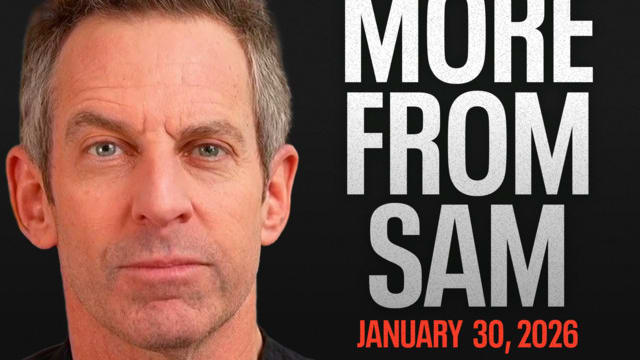
In an era where artificial intelligence reshapes our understanding of consciousness and global conflicts challenge our deepest spiritual convictions, how do we maintain clarity and compassion? The recent conversation between philosopher Sam Harris and computer scientist Judea Pearl offers profound insights that transcend mere intellectual discourse, touching the very core of what it means to live consciously in our interconnected world.
This dialogue represents more than an academic exchange—it's a spiritual inquiry into the nature of understanding, causality, and the human condition. For those on a path of , their exploration reveals how ancient wisdom principles can illuminate our most pressing contemporary challenges.
Pearl's insights into AI and consciousness offer a unique perspective for spiritual seekers. His assertion that Large Language Models (LLMs) won't spawn Artificial General Intelligence isn't merely a technical observation—it's a profound statement about the nature of consciousness itself.
From a spiritual perspective, this distinction reminds us that true intelligence isn't just pattern recognition or data processing. It requires what spiritual traditions have long recognized: the capacity for genuine understanding, causality, and conscious awareness. This aligns with that emphasize present-moment awareness over mechanical responses.
The Spiritual Dimension of Causality
Pearl's work on causality offers profound implications for spiritual development. Understanding cause and effect—not just as mechanical processes, but as conscious choices—forms the foundation of many . When we truly grasp how our thoughts, intentions, and actions create ripple effects in consciousness, we begin to embody the responsibility that comes with awakened awareness.
The conversation's exploration of complex global conflicts provides a masterclass in maintaining spiritual equilibrium while engaging with difficult realities. The transcript reveals a particularly poignant moment where Pearl describes encounters with moderate Muslim scholars:
"We came there with the idea that they would like American help in getting modernized and progressive... their idea was, if you want us to modernize, we'll give you that favor. We are going to do you the favor of modernizing yourself on one condition. We want Israel's head on a silver platter."
This exchange illuminates how even well-intentioned dialogue can become entangled in conditional thinking—a pattern that spiritual traditions warn against. The lesson for conscious individuals is clear: true transformation cannot be conditional or transactional.
The Practice of Unconditional Understanding
Harris and Pearl's discussion demonstrates how we can maintain compassionate awareness even when confronting challenging perspectives. This mirrors the spiritual practice of —the ability to hold space for truth and understanding without compromising our own integrity.
For practitioners of , this conversation offers a template for engaging with difficult topics while maintaining inner peace. It's not about avoiding conflict, but about approaching it from a place of centered awareness rather than reactive emotion.
Developing Discernment Without Judgment
The dialogue's nuanced exploration of complex social and political issues demonstrates the spiritual skill of discernment—the ability to see clearly without falling into judgment. This is particularly relevant for those practicing in their daily lives.
Pearl's scientific approach to causality offers spiritual practitioners a framework for understanding how consciousness creates reality. By examining the causes behind our experiences, we can make more conscious choices about how we respond to life's challenges.
Transforming Personal Trauma into Universal Wisdom
Pearl's journey following his son Daniel's murder demonstrates the profound spiritual principle of transforming personal suffering into universal wisdom. This aligns with many that help individuals find meaning and purpose in their deepest challenges.
His ability to engage with complex global issues while carrying this personal grief shows how spiritual maturity allows us to hold multiple realities simultaneously—a key aspect of .
The discussion of challenges in university settings offers insights into how consciousness operates in collective environments. Universities, like consciousness itself, should ideally be spaces of open inquiry and genuine dialogue. When they become echo chambers or spaces of ideological conformity, they mirror the ways our own minds can become closed to new understanding.
This parallels the spiritual work of keeping our inner universities—our minds and hearts—open to truth from all directions while maintaining discernment about what serves our highest good.
The conversation between Harris and Pearl ultimately points toward the integration of intellectual rigor with spiritual wisdom. They demonstrate how we can engage with the world's complexity while maintaining our center in consciousness.
For those on a spiritual path, their dialogue offers several practical principles:
- Maintain curiosity over certainty
- Seek understanding beyond surface positions
- Hold space for multiple perspectives without losing clarity
- Transform personal challenges into wisdom for others
- Engage with difficult topics from a place of centered awareness
This profound conversation reminds us that spiritual growth isn't about retreating from the world's complexity—it's about engaging with it more consciously. Harris and Pearl model how we can maintain our spiritual center while addressing the challenging questions of our time.
Their insights call us to a higher form of engagement: one that combines intellectual honesty with spiritual wisdom, personal healing with universal service, and individual awakening with collective transformation.
As you reflect on these teachings, consider how you might apply their approach to the challenging conversations in your own life. How can you maintain your spiritual center while engaging with difficult realities? What would it look like to approach conflict with the clarity and compassion these thinkers demonstrate?
The path of requires us to be both deeply rooted in spiritual truth and courageously engaged with the world as it is. This conversation shows us how that integration can unfold in real time, offering hope for more conscious dialogue in our often polarized world.
- True intelligence transcends pattern recognition, requiring conscious awareness and understanding of causality
- Spiritual growth involves engaging with difficult realities while maintaining inner equilibrium and compassion
- Personal trauma can be transformed into universal wisdom through conscious processing and spiritual maturity
- Discernment without judgment allows us to see clearly while maintaining openness to truth from all directions
- Conscious dialogue requires holding multiple perspectives while staying centered in awareness rather than reactive emotion
- Universities and minds alike function best as open spaces for genuine inquiry rather than ideological echo chambers
- Integration of intellectual rigor with spiritual wisdom enables more effective engagement with complex global challenges
How can spiritual practitioners engage with difficult political or social topics?
Spiritual practitioners can engage by maintaining their center in consciousness while approaching topics with curiosity rather than certainty. The key is to seek understanding beyond surface positions, hold space for multiple perspectives without losing clarity, and respond from awareness rather than reactive emotion.
What does this conversation teach us about the nature of consciousness and AI?
The discussion reveals that true consciousness involves more than pattern recognition or data processing—it requires genuine understanding, causality, and aware choice-making. This understanding helps spiritual seekers appreciate the unique nature of human consciousness and its role in creating reality.
How can personal trauma be transformed into spiritual wisdom?
Personal trauma can become wisdom through conscious processing that seeks meaning and purpose in suffering. This involves integrating the experience into a larger understanding of life while using insights gained to serve others and contribute to collective healing.
What is the difference between discernment and judgment in spiritual practice?
Discernment involves seeing clearly and making conscious choices based on truth and wisdom, while judgment typically involves condemnation or closure. Discernment maintains openness to new understanding while judgment shuts down further inquiry and connection.
How does understanding causality support spiritual development?
Understanding causality helps spiritual practitioners recognize how thoughts, intentions, and actions create ripple effects in consciousness. This awareness fosters greater responsibility for one's choices and deeper understanding of how consciousness creates reality.
What role should universities play in spiritual and intellectual development?
Universities should ideally function as spaces of open inquiry and genuine dialogue, mirroring how our own consciousness should remain open to truth from all directions while maintaining discernment. They serve best when they encourage exploration rather than ideological conformity.
How can we maintain spiritual center while engaging with world conflicts?
Maintaining spiritual center involves staying rooted in consciousness while engaging with external challenges. This means responding from awareness rather than reactivity, seeking to understand rather than to win, and holding compassion for all parties while maintaining clarity about truth and justice.