BrightStar

Browse All Events

Discover conscious gatherings

events

Yoga
Meditation
Breathwork
Qigong
Tai Chi
Sacred Music
World Music
Medicine Music
Sound Healing
Ecstatic Dance
Popular Destinations
BaliSedonaLos AngelesCosta RicaNew YorkSan FranciscoAustinMiamiJoshua TreeTulum
View All CategoriesView All Destinations

Explore All Features

Powerful tools to grow your events

Platform Features

Smart Dynamic Pricing
Ticket Categories
Assigned Seating
Abandoned Cart Recovery
Visitor Recovery
Donations & Sliding Scale
Affiliate Engine
Ticket Scanner
Coupon Codes
Custom Questions
Ticket Sharing
Upsells & Add-ons
Analytics & Reporting
Email Sequences
Waitlist / Notify / Remind
People & Places
Artists & TeachersEvent OrganizersVenues & StudiosKnowledge BaseGlossaryInspiration
View All FeaturesAbout Us
PricingBlog
Language
Saved events
Browse All Events

events

YogaMeditationBreathworkQigongTai ChiSacred MusicWorld MusicMedicine Music

Popular Destinations

BaliSedonaLos AngelesCosta RicaNew YorkSan Francisco

People & Places

Artists & TeachersEvent OrganizersVenues & StudiosKnowledge BaseGlossaryInspiration

Platform Features

Smart Dynamic PricingTicket CategoriesAssigned SeatingAbandoned Cart RecoveryVisitor RecoveryDonations & Sliding ScaleAffiliate EngineTicket ScannerCoupon CodesCustom QuestionsTicket SharingUpsells & Add-onsAnalytics & ReportingEmail SequencesWaitlist / Notify / Remind
View All FeaturesAbout Us
PricingBlog
Log inFind EventsHost Events
  • Browse All Events
  • For Seekers
  • Yoga
  • Meditation
  • Breathwork
  • Qigong
  • Tai Chi
  • Sacred Music
  • World Music
  • Medicine Music
  • Sound Healing
  • Ecstatic Dance
  • Retreats
  • Workshops
  • All Categories →
  • Bali
  • Sedona
  • Los Angeles
  • Costa Rica
  • Tulum
  • Byron Bay
  • San Francisco
  • Austin
  • New York
  • San Diego
  • Denver
  • Seattle
  • Portland
  • Miami
  • All Cities →
  • Join the Movement
  • Why we list
  • Sell Globally
  • For Creators
  • For Teams
  • For Writers
  • For Teachers
  • For Kirtan Artists
  • For Studios
  • For Festivals
  • For Retreat Centers
  • For Nonprofits
  • Brand Ambassador
  • Free Ticketing
  • Elevate
  • Amplify
  • 500K+ Buyer Network
  • Abandoned Cart Recovery
  • Smart Dynamic Pricing
  • Ticket Categories
  • Recurring Events
  • Assigned Seating
  • Affiliate Engine
  • Waitlist / Notify
  • Ticket Scanner
  • Embed Widget
  • Event Syndication
  • Message Center
  • Integrations
  • Reports
  • All Features →
  • About
  • The Ecosystem
  • Blog
  • Glossary
  • Inspiration
  • Help Center
  • Contact
  • API Docs
  • Brand Assets
  • Careers
  • Press
  • Terms of Service
  • Privacy Policy

Events

  • Browse All Events
  • For Seekers
  • Yoga
  • Meditation
  • Breathwork
  • Qigong
  • Tai Chi
  • Sacred Music
  • World Music
  • Medicine Music
  • Sound Healing
  • Ecstatic Dance
  • Retreats
  • Workshops
  • All Categories →

Destinations

  • Bali
  • Sedona
  • Los Angeles
  • Costa Rica
  • Tulum
  • Byron Bay
  • San Francisco
  • Austin
  • New York
  • San Diego
  • Denver
  • Seattle
  • Portland
  • Miami
  • All Cities →

For Creators

  • Join the Movement
  • Why we list
  • Sell Globally
  • For Creators
  • For Teams
  • For Writers
  • For Teachers
  • For Kirtan Artists
  • For Studios
  • For Festivals
  • For Retreat Centers
  • For Nonprofits
  • Brand Ambassador
  • Free Ticketing
  • Elevate
  • Amplify

Features

  • 500K+ Buyer Network
  • Abandoned Cart Recovery
  • Smart Dynamic Pricing
  • Ticket Categories
  • Recurring Events
  • Assigned Seating
  • Affiliate Engine
  • Waitlist / Notify
  • Ticket Scanner
  • Embed Widget
  • Event Syndication
  • Message Center
  • Integrations
  • Reports
  • All Features →

Company

  • About
  • The Ecosystem
  • Blog
  • Glossary
  • Inspiration
  • Help Center
  • Contact
  • API Docs
  • Brand Assets
  • Careers
  • Press
  • Terms of Service
  • Privacy Policy
BrightStar
Get the app
Download on theApp StoreGet it onGoogle Play
© 2026 BrightStar. All rights reserved.
Inspiration

Why Intelligence Needs a Warm Heart: A Short Teaching

Dalai Lama
Dalai Lama
Oct 23, 2026
7 min read
Watch · 7

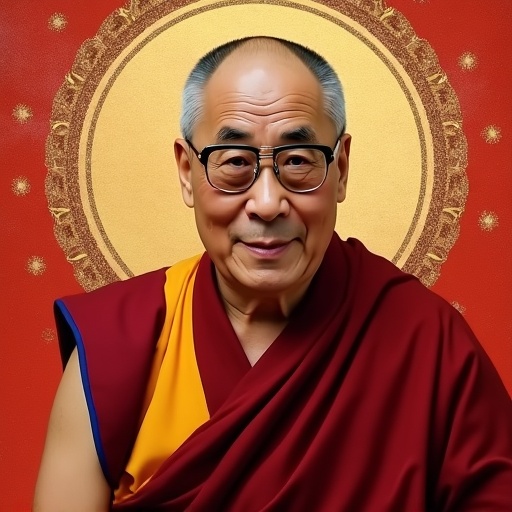
The clip runs one minute and forty-two seconds. Near the end, the speaker pauses on a phrase about intelligence and the room laughs, the way a room does when someone has said something true that also sounds a little alarming. The Dalai Lama, speaking in a teaching recorded on November 11, 2019, and later posted to YouTube, makes a argument that is easy to hear and harder to sit with: the faculty we most prize in ourselves, human intelligence, is not enough by itself. Without a warm heart, he says, it can become more dangerous, not less. What follows is a close reading of that short talk, drawn only from what he says in it, and an attempt to show why a brief remark carries more weight than its length suggests.

A note on the source: the auto-generated transcript is rough in places, with garbled words and filler. The quotations below are lightly cleaned for punctuation only. Nothing has been added to his meaning.

Read · 6 sections

What does a warm heart change about how we see the world?

He starts with perception rather than doctrine. "With warm-heartedness, the entire phenomena appears to you more positive," he says in the opening seconds. The idea is that the heart colors the lens. A person who is warm-hearted meets the same events, the same people, the same difficulties, and sees more that is hopeful in them.

The contrast he draws is stark. "Too much self-centered mind, just think me me me me me." The joke in that line is also the diagnosis. A mind organized entirely around its own concerns keeps returning to the same word, and the rest of the world arrives filtered through that word. The result, in his telling, is that "the entire phenomena appears something negative and fear." Fear is not described as a random feeling. It is what self-focus produces when everything is measured by whether it threatens me.

This is the part of the teaching that rewards slowing down. He is not saying that a warm heart denies difficulty. He is saying it changes what difficulty looks like. The same situation can be read as a threat to be defended against or as a shared condition that others also live inside. Which reading we adopt depends less on the facts than on where our attention is anchored.

Why does altruism matter beyond religion?

Around the twenty-seventh second, he widens the frame. Altruism, he says, is "not only something important according to religious sort of tradition." He names other registers in which it matters: a health viewpoint, a happy society, and finally "happy world, happy humanity."

That sequence is worth noticing. He moves outward, from the individual body to the household of a society to the whole species. The implication is that compassion is not a private virtue reserved for the devout. It is practical. A person who is anxious and defended tends to be less healthy in mind and body, a society built on suspicion tends to fray, and a world organized around narrow self-interest tends toward conflict. Each level is a consequence of the one below it.

Then he makes the claim that organizes the whole clip. "Warm-heartedness is the key factor." Not one factor among several, but the key one. The rest of the talk is an argument for why that is so and what follows from it.

How should intelligence and compassion work together?

The most original move comes in the middle of the talk. He does not set intelligence against compassion as rival faculties. He gives intelligence a job. "Human intelligence very helpful to analyze the self-centered attitude," he says. Intelligence can examine the self-centered mind and ask what it actually gains. His answer is that self-centeredness is "short-sighted, narrow-minded." It sees a small piece of the picture and mistakes it for the whole.

Intelligence, in other words, is the tool that can expose the limits of self-focus. It can see that caring only for oneself is a poor calculation, because it ignores how interdependent people are. He calls the alternative altruism, and he describes it as the thing "that really wise" minds recognize. The wisdom here is not cleverness. It is the capacity to see the larger context in which one's own life is embedded.

That is why he says the two must "combine." Intelligence without warm-heartedness has a direction problem. It is powerful, and power pointed by suspicion goes wrong. The phrase that closes the argument is the sharpest in the clip: "Sometimes without warm-heartedness and full suspicion, and then intelligence, wonderful human brain, wonderful human intelligence, they sometimes become more dangerous." He is not disparaging intelligence. He is describing what happens when it is trained on the wrong target.

"Warm-heartedness is the key factor."

— the Dalai Lama, in a teaching recorded November 11, 2019

Why does this brief teaching land so hard?

Part of the answer is compression. In under two minutes he links personal perception, religious ethics, public health, social cohesion, and the fate of humanity into a single line of reasoning. Part of it is the laughter, which is the audience recognizing that the speaker has just named something familiar in an unfamiliar way. Everyone has met a sharp, capable person who used that capability to defend a grievance. Everyone has also seen a warm person who was less clever and more useful.

The teaching does not ask the listener to abandon thought. It asks for a partnership. The analytical mind is invited to do what it does best, which is to test assumptions, weigh consequences, and notice when a self-centered story is failing on its own terms. The warm heart supplies the orientation, the sense of what the analysis is for. Without that orientation, intelligence becomes a more efficient way to pursue narrow goals.

What is the practical takeaway from a minute and forty-two seconds?

The talk offers no technique, no exercise, no timetable. What it offers is a diagnostic. When fear is the dominant color of your perception, he suggests, look at whether self-centeredness is driving the picture. When your reasoning is confident but suspicious, ask whether it has a warm heart at its center. The test is not whether you are clever. It is whether your cleverness is serving the wider good or only your own narrow view.

That is a demanding standard, and it is stated plainly. The Dalai Lama does not claim the warm heart is easy to cultivate, and the clip does not pretend otherwise. It simply insists, in a few sentences, that the question matters for individuals, for societies, and for humanity as a whole. For a talk this short, that is a considerable load to carry, and it is carried without ornament.

Where to go from here

Watch the original clip with the transcript open, and pay attention to the moments where his phrasing repeats: "warm-heartedness," "self-centered," "wonderful human brain." The repetition is deliberate. Then ask a simple question of your own week. Where has fear colored how you read a situation, and was self-focus doing the coloring? Where has a clever argument left out the people it would affect? The teaching does not answer those questions for you. It gives you the lens and asks you to use it.

Comments

Loading the conversation…

Transcript

[0:00] So, warm heartedness here,

[0:03] uh

[0:04] and then

[0:06] entire phenomena appears you more

[0:10] positive.

[0:12] Too much self-centered mind, just think

[0:15] me me me me me.

[0:17] Then entire phenomena

[0:20] appears something uh negative and fear.

[0:25] So, therefore

[0:26] the

[0:27] altruism is [clears throat] not only

[0:30] something important according to

[0:31] religious sort of tradition.

[0:34] But

[0:35] health viewpoint

[0:37] and happy society

[0:39] and finally

[0:41] happy world

[0:43] happy humanity

[0:45] warm heartedness is the key factor.

[0:48] And this human

[0:50] wonderful brain

[0:52] should cooperate with

[0:54] warm heartedness.

[0:57] Human intelligence very helpful

[1:00] to analyze

[1:02] the

[1:03] self-centered attitude, what's the

[1:05] benefit.

[1:08] Self-centered this short-sighted

[1:12] narrow-minded.

[1:14] Think other

[1:15] altruism

[1:17] that really wise. So, human intelligence

[1:22] must combine with warm heartedness.

[1:26] Sometimes without warm heartedness

[1:29] and full suspicion and then

[1:32] intelligence, wonderful human brain,

[1:35] wonderful human intelligence they

[1:37] sometimes become more dangerous.

[1:39] >> [laughter]

Dalai Lama
ArtistDalai Lama

Spiritual leader of Tibetan Buddhism and Nobel Peace Prize laureate (1989). Born Lhamo Thondup in 1935, recognized at age two as the reincarnation of the 13th Dalai Lama, he fled i…

View profileWebsite
Explore Topics
Warm-heartednessAltruismHuman-intelligenceSelf-centered-mindCompassion

Got Questions?

Frequently Asked Questions

In this 2019 teaching, warm-heartedness is the orientation of care toward others that changes how a person perceives the world. He says that with a warm heart, everything appears more positive, while a self-centered mind sees mostly negativity and fear.
He argues that intelligence without warm-heartedness, combined with suspicion, can serve narrow goals and become more dangerous. He describes intelligence as powerful but directionless unless it is paired with a compassionate heart.
No. He says altruism is important according to religious tradition, but also from a health viewpoint, and for a happy society, a happy world, and a happy humanity. He calls warm-heartedness the key factor across all of these.
He suggests intelligence is helpful for examining the self-centered attitude and asking what it actually benefits. He describes self-centeredness as short-sighted and narrow-minded, and says wise minds recognize altruism as the better path.
The teaching was recorded on November 11, 2019, and the clip is about one minute and forty-two seconds long. The auto-generated transcript is rough in places, so quotations should be checked against the original video.
The talk offers a diagnostic rather than a technique. When fear dominates your perception, check whether self-centeredness is driving it, and ask whether your reasoning has a warm heart at its center.

Continue Reading

More from Dalai

View All
A Child on a Mother's Shoulder: Lessons in Kindness
Inspire

A Child on a Mother's Shoulder: Lessons in Kindness

In a 90-second recollection, the Dalai Lama describes riding on his mother's shoulders in a poor village, pulling her ears and shouting, and…

1 min read
A Child on His Mother's Shoulder: Kindness Without Anger
Inspire

A Child on His Mother's Shoulder: Kindness Without Anger

A 90-second childhood memory shows a mother who carried her son through the fields and never once turned angry. Here is what the clip teache…

1 min read
Calling on Loving Presence: A Guided Path From Fear to Trust
Inspire

Calling on Loving Presence: A Guided Path From Fear to Trust

Tara Brach's guided meditation on calling on loving presence: find the place of fear, listen for its longing, and let a source of care answe…

1 min read
Staying Grounded When Overwhelm Shuts Down Practice
Inspire

Staying Grounded When Overwhelm Shuts Down Practice

Tara Brach answers the question many practitioners carry: what happens to the spiritual path when life overwhelms us? Her answer is small do…

1 min read

Keep exploring

Continue your journey

More wisdom and gatherings from across the BrightStar directory.

More Articles

Browse the full library of teachings, interviews, and guides.

Back to all articles →

Teachers & Artists

Explore the lineages, musicians, and guides of the conscious world.

Explore artists →

Find an Event

Kirtan, retreats, sound baths, breathwork, festivals — happening soon.

Browse events →