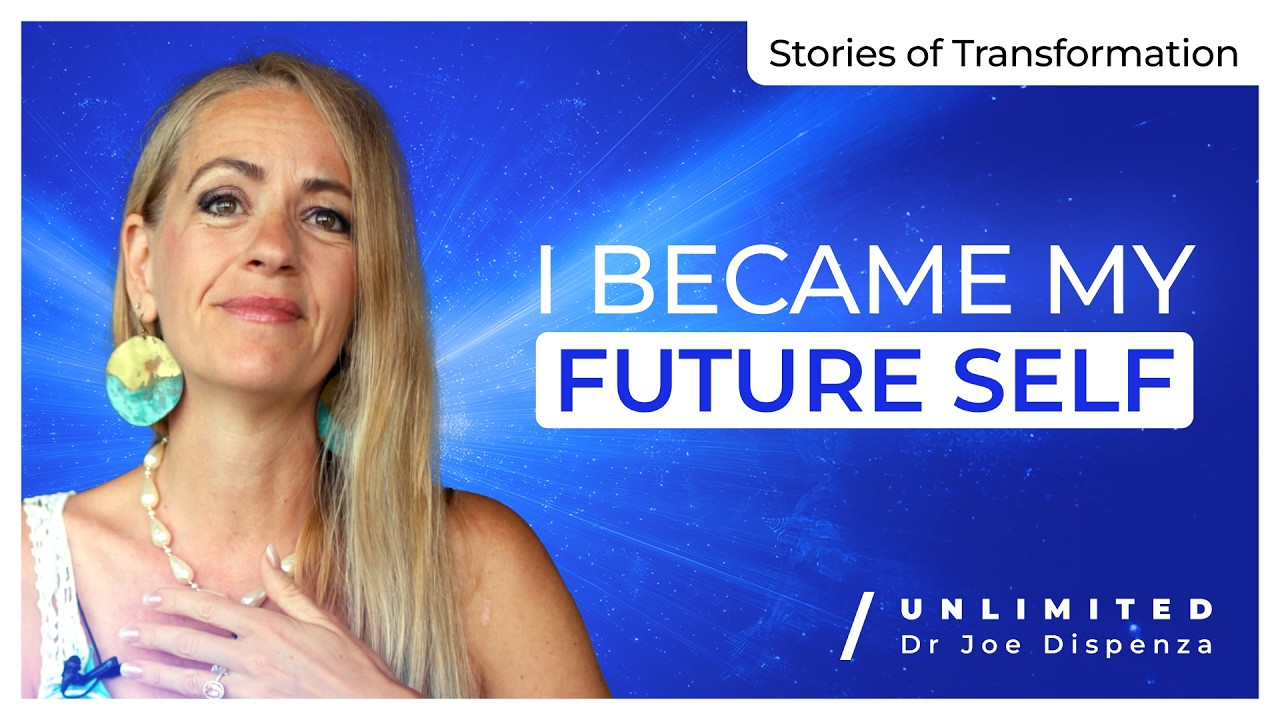
Anna was putting on her rings one ordinary morning when the absence hit her. She looked down at her hands—the same hands that had been raw and bleeding for years, that she'd wrapped in creams and ointments and desperate homemade concoctions, that she'd scratched until they bled from an itch that wouldn't quit. Where's my eczema? She thought. She hadn't been itchy. She hadn't been irritated. Nothing. After seventeen years of fighting a condition that had followed her since childhood, the battle had simply ended. Not because she'd sought an answer in meditation. Not because she'd intended to heal. But because something inside had shifted.
The Long Itch
For as long as Anna could remember, eczema was simply part of her life. A childhood allergy that covered her legs, that her family treated with Benadryl creams and whatever remedies they could find. It was annoying, painful enough sometimes that she'd scratch until she bled. She learned to live with it—the itch, the irritation, the endless cycle of treatment and temporary relief. Then, in 2007, something changed. A small itch appeared on her hand, the kind that might vanish in a day or two. It didn't. Weeks passed. And then, suddenly, it exploded. The eczema spread across both hands like wildfire, covering her skin in a way that demanded action.
She did what anyone would: she went to doctors. She visited Mexican pharmacies hunting for stronger creams. She created her own concoctions, formulas she mixed at home, convinced that if the commercial remedies didn't work, perhaps she could engineer something better. And in the moment, in that narrow window right after application, the creams seemed to help. The itching would subside. But the moment she stopped using them, the eczema would come roaring back. Years passed this way. Anna managed the condition rather than resolved it, cycling through treatments the way someone might cycle through a prescription they know isn't working but can't afford to abandon. By 2024, seventeen years into this particular chapter of her life, the eczema had simply become her reality.
Why She Came to Meditation
In 2024, Anna was scrolling TikTok—her favorite place—when she started seeing ads for Gaia, a network streaming meditation and consciousness content. The ads kept appearing. Weeks of nudging. Then one commercial was different: it featured Dr. Joe Dispenza's program called "Rewired," described as a foundational explanation of how the brain works. Something resonated. She subscribed and began watching. The teaching style clicked immediately. Dispenza breaks down neuroscience into accessible layers, and she watched "Rewired" twice to make sure she understood the architecture of her own mind.
But her real initiation came through "Becoming Supernatural." Each episode featured a meditation—brief practices ranging from seventeen to twenty-five minutes. She fell in love with them immediately. The meditations felt like an instrument she could actually play, a practice she could do from her couch at home with headphones, no retreat or special circumstances required. She began meditating in the mornings and at night, practicing consistently until she felt something shift in her consciousness. The meditations were teaching her how to access deeper states, how to quiet the constant noise of her own mind and step into something vaster.
What matters here is her original intention: Anna wasn't meditating to heal her eczema. She wasn't visualizing clear skin or declaring herself free of a lifelong condition. She was coming to meditation because her adult children were going through difficult life circumstances, and the stress of that—the worry, the emotional reactivity, the feeling of being a frantic, anxious presence in their lives—had become unbearable. She wanted emotional regulation. She wanted to be a better mother, capable of holding space for her children's journeys without turning it all into her own crisis. That was the real goal.
The Brain-Heart Coherence
Among the meditations available to her, Anna found herself drawn especially to one: the brain-heart coherence practice. Opening the heart had always felt natural to her—she'd been cultivating that capacity since childhood. So she gravitated toward a meditation that, for her, felt like coming home. She practiced it for an entire week straight, using it as her primary tool, letting it become the centerpiece of her meditation time.
And then one morning, while putting on her rings, the realization arrived: the itching had stopped. The eczema was gone. She hadn't been aware of a moment when it disappeared. There had been no crisis, no final flare-up followed by dramatic recovery. Simply an absence where there had always been presence. Seventeen years of eczema, of creams and remedies and the constant physical reminder that her body was fighting something, and then—nothing. The condition had simply released.
The Hip Pain and the Pineal Gland
But the eczema was only half the story. Anna had also been living with severe pain in both hips—pain so intense that walking up stairs became a choreography of baby steps, each one a negotiation with her own body. At fifty-five, she was moving like someone in their eighties, waddling, unable to drive without sharp pain radiating from her right hip. Sleeping was painful. Walking was painful. The pain had become the rhythm of her day.
Then came a week-long retreat where the teaching went deeper. During a pineal gland meditation—a practice focused on the tiny gland at the center of the brain—something happened that Anna describes in language that reaches for the mystical because the actual experience seemed to exceed ordinary sensation. She felt what she can only call a laser of light. Not visible with the eyes closed, but absolutely knowable, absolutely real. The laser moved from one side of her head directly into her pineal gland, and the gland itself began to pulse. She felt it, she says, lighting up like blue—a spark, an ignition of energy that continued for roughly forty-five seconds. The sensation was overwhelming enough that she found herself weeping as the meditation continued, tears flowing from the sheer intensity of whatever was moving through her.
When the meditation ended, exhaustion took over. She didn't take her usual ibuprofen. She simply went to sleep. She fell asleep quickly and slept so deeply that she woke the next morning startled by the realization that she hadn't woken once during the night to shift position because of pain. The hip pain was gone. A year and a half later, it has not returned.
The Emotional Transformation
The physical healing matters. The absence of eczema, the return of pain-free movement—these are undeniable shifts. But the transformation that seems to matter most to Anna is the emotional one. She came to meditation to regulate her reactivity, to stop being what she calls "wishy-washy and emotional," to find a way to be present with her adult children without drowning in anxiety about their lives.
The phone calls that used to devastate her—news about her children's struggles—now land differently. She can hear their pain without absorbing it as her own crisis. She can say, "You're going to be okay. This is your journey. I love you. I'm always going to be here for you." And mean it from a place of genuine groundedness rather than frantic concern. The transformation in how she relates to her own nervous system has rippled outward into how she relates to everyone around her.
What Anna discovered, without setting out to find it, is that the body and the mind and the emotional self are not separate systems running on different schedules. When you change one through consistent practice, the others follow. She came for peace of mind and got back the use of her body. She sought emotional stability and found that the conditions supporting physical healing were the same conditions supporting emotional resilience.
Where to go from here
If you're reading this and your first thought is skepticism—if you're wondering how meditation could possibly erase decades of eczema or heal chronic pain in a single night—that question is worth holding. The mechanisms by which consciousness affects physiology are still being mapped by neuroscience and epigenetics. What we know is that chronic stress, emotional dysregulation, and a nervous system stuck in fight-or-flight mode all suppress immune function and delay healing. What we know is that deep meditative states show measurable changes in brain activity, heart rate variability, and inflammation markers. What we know is that the relationship between mental state and physical health is real and profound, even if we don't yet fully understand how the connection works.
Anna's experience invites an experiment: What if you approached meditation not as a tool to fix what's broken in your body, but as a practice to transform what's happening in your emotional and mental life? What if healing became the side effect rather than the goal? For Anna, that shift in intention—from seeking physical cure to seeking emotional balance—seemed to unlock something that years of external remedies never could. The body, it turns out, knows how to heal when the mind finally gets quiet enough to listen.