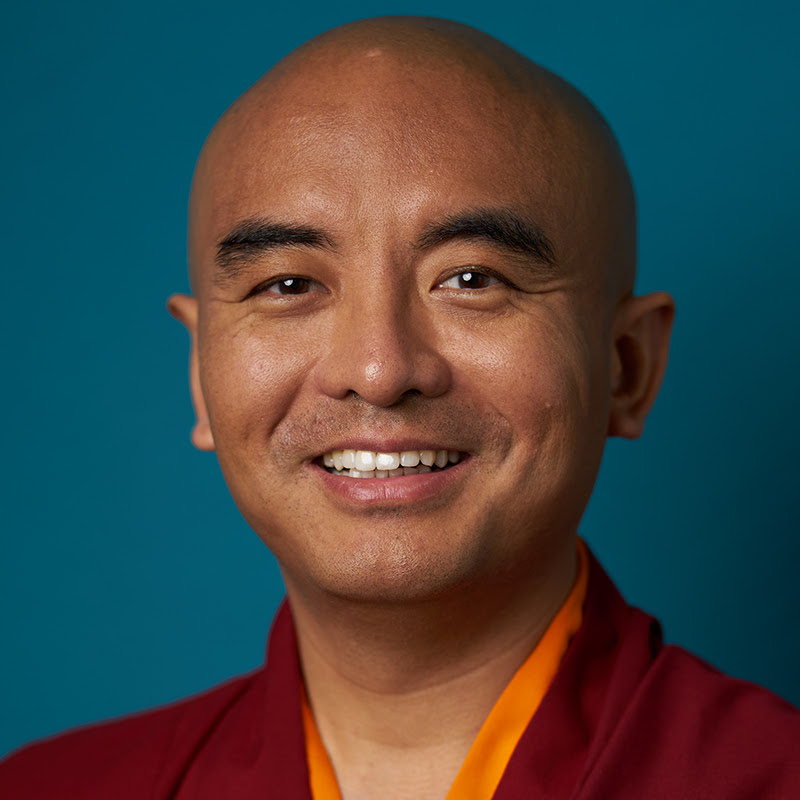
In 2002, Yongey Mingyur Rinpoche walked into a research lab at the University of Wisconsin-Madison and became what he calls a "guinea pig" for science. They fed him into a massive fMRI machine—a brain imaging device that reveals neural activity in real time—and strapped electrodes to his scalp. For three intense days, neuroscientists watched his brain light up in patterns they'd never seen before. The results would reshape how Western medicine understands meditation, revealing that the ancient practice doesn't just feel good; it physically restructures the organ that runs your life.
That moment marked a turning point in both Rinpoche's life and in consciousness research. In 1998, he had come west from Tibet and shared his story with Western scientists: he'd overcome severe panic attacks through meditation. The response he got was crushing. "They said, 'Once you have panic attacks, it's very difficult to recover. You can only work with the symptoms, but not the panic itself,'" he recalls. The implication was clear: you're stuck. Your baseline emotional state—the psychological ground you return to no matter what happens—was fixed at birth. Fame, money, marriage, even winning the lottery might lift your mood temporarily, scientists said, but after a few months you'd slide right back down. Hope was not on the menu.
What the Brain Scans Actually Revealed
When Rinpoche's scan results came back six months later, the neuroscientists were baffled. His brain showed what they called "gamma synchronization"—different regions firing together in coordinated activity at levels of 700 to 800. In a normal human brain, such synchronization typically maxes out around 100. "Or maybe you're totally crazy," the scientists joked, wondering if the machine was broken. But it wasn't. When they tested five other long-term meditators, they found nearly identical patterns. During meditation, these brains entered a state of profound coherence that lasted roughly four minutes—then shut down the moment the scientists asked them to stop.
The timing matters. In 2004, just as Rinpoche was grappling with these findings, neuroscientists announced a discovery that reframed everything: neuroplasticity. The brain wasn't hardwired. It could change. Not only that—researchers found neural pathways, meaning the brain could carve entirely new routes, like building fresh highways in gray matter. Later came neurogenesis, the revelation that even gene expression in the brain could shift. The prison door was opening.
But as Rinpoche points out, change cuts both ways. A brain can rewire itself toward happiness or toward despair. The real question became: can meditation steer that change in a positive direction? Can you consciously rewire your baseline?
Why Panic Attacks Don't Have to Be Forever
To understand the answer, consider what happens when you're waiting for pain. Rinpoche describes an experiment where scientists strapped a heating device to meditators' wrists. They'd beep a warning tone, then 10 seconds later, the device would pulse with nearly unbearable heat for 10 seconds, then vanish. Then it would repeat. For non-meditators, the moment they heard that first beep, the mind exploded into rumination: When will it burn? Where will it come? What will happen? The anticipation created suffering that blended with the actual heat, muddying the sensory clarity. Even after the heat disappeared, the mental burning continued.
The meditators showed a radically different pattern. When they heard the beep, their brains stayed calm. When the heat arrived, they experienced it with crystalline clarity—just heat, without the avalanche of story. When it ended, it ended. The rumination didn't follow them. Scientists called this capacity unstickness: the ability to meet experience without letting it stick, without carrying it into the next moment.
This is the secret sauce. You bring stress home from work because your mind refuses to unstick from it. Your baseline anxiety stays high because rumination—the mental reenactment of threat—keeps reinforcing the neural pathways that say danger is everywhere. But meditators, through deliberate practice, train themselves to notice the gap between sensation and the stories the mind spins around it. They develop what Rinpoche calls "freedom of your own mind"—the capacity to guide attention consciously rather than be dragged by habit.
Three Discoveries That Matter
From his years in the lab and in dialogue with Western neuroscientists, Rinpoche distilled three insights that moved him deeply. The first is simply this: there is hope. Your baseline is not your destiny. Even if you were born with depression, anxiety, or unhappiness hardwired into your neurology, you can change it.
The second is that meditation is among the most efficient ways to change your baseline consciously. Unlike the unconscious rewiring that happens when life buffets you around, meditation lets you grip the wheel. You sit and you deliberately cultivate awareness of awareness itself, or you connect with love and compassion, or you touch wisdom. These ancient practices function as a gym for the mind—repetitive training that carves new neural grooves.
The third is that this positive change doesn't stay locked in your skull. It ripples out. A calmer, clearer brain produces a healthier body. It improves your relationships because you're no longer projecting your unprocessed anxiety onto everyone around you. It changes how others relate to you. The transformation becomes contagious.
How Awareness Itself Becomes the Tool
The mechanism is elegant. In the fMRI, when Rinpoche and other meditators were asked to meditate, their gamma synchronization spiked. When told to stop, it dropped. This wasn't magic—it was demonstration of an observable truth: you have some degree of control over your own mind. You can direct it. Neuroscience confirmed what contemplatives have known for millennia: attention is a skill, and like any skill, it can be trained.
The second mechanism, unstickness, operates at a deeper level. Most of us believe our pain is permanent because we identify completely with it. When anxiety arises, we ARE anxiety. But meditation teaches you to recognize the difference between the sensation and the story, between the heat and the rumination about heat. That sliver of space—that moment of clear seeing—is where freedom lives. And when you practice living in that space, your brain physically reorganizes to make it your new baseline.
Rinpoche learned this not from a textbook but from his own nervous system. As a child in Tibet, he'd struggled with panic attacks and anxiety so severe that his teachers despaired he'd ever become a serious practitioner. But through meditation—specifically through training in awareness—he worked with those states directly. By the time he met Western neuroscientists, he had already proven, in his own body, that baseline change was possible. The fMRI scans were simply confirmation of what he already knew.
What "Lasting Well-Being" Actually Means
Rinpoche draws an important distinction. There's happiness that comes and goes—the joy of winning, the pleasure of a good meal, the rush of achievement. That's real, but temporary. What he means by lasting well-being is something different: a baseline peace that doesn't depend on circumstances changing. It's not about becoming emotionless or numb. It's about developing a kind of steadiness underneath life's fluctuations.
When he asks his students, "Do you feel really happy from the heart?"—not the kind of happiness that depends on external conditions, but happiness that springs from within—he's pointing toward something that neuroscience can measure but not manufacture. The gamma synchronization in the brains of long-term meditators suggests a state of profound integration, as if the disparate networks of the brain have learned to work as one coherent system. That coherence correlates with well-being that doesn't collapse when circumstances shift.
This is what makes the neuroscience so compelling. It's not that meditation is magic. It's that meditation, practiced consistently, tunes the instrument of your nervous system to a frequency where your default state shifts toward clarity, resilience, and connection. The brain, given proper training, naturally gravitates toward well-being.
Where to go from here
If you've been told your anxiety is unfixable, your depression permanent, your baseline unchangeable—you've been given old information. The science is different now. Neuroplasticity means your brain is malleable. Unstickness means you don't have to be glued to your painful thoughts. And meditation is a practical, time-tested technology for rewriting both. The lab work Rinpoche participated in didn't create meditation; it simply revealed what practitioners have been experiencing for thousands of years: that the mind can be trained, the brain can change, and a lasting sense of well-being isn't a luxury reserved for the lucky few. It's available to anyone willing to sit down and practice.


