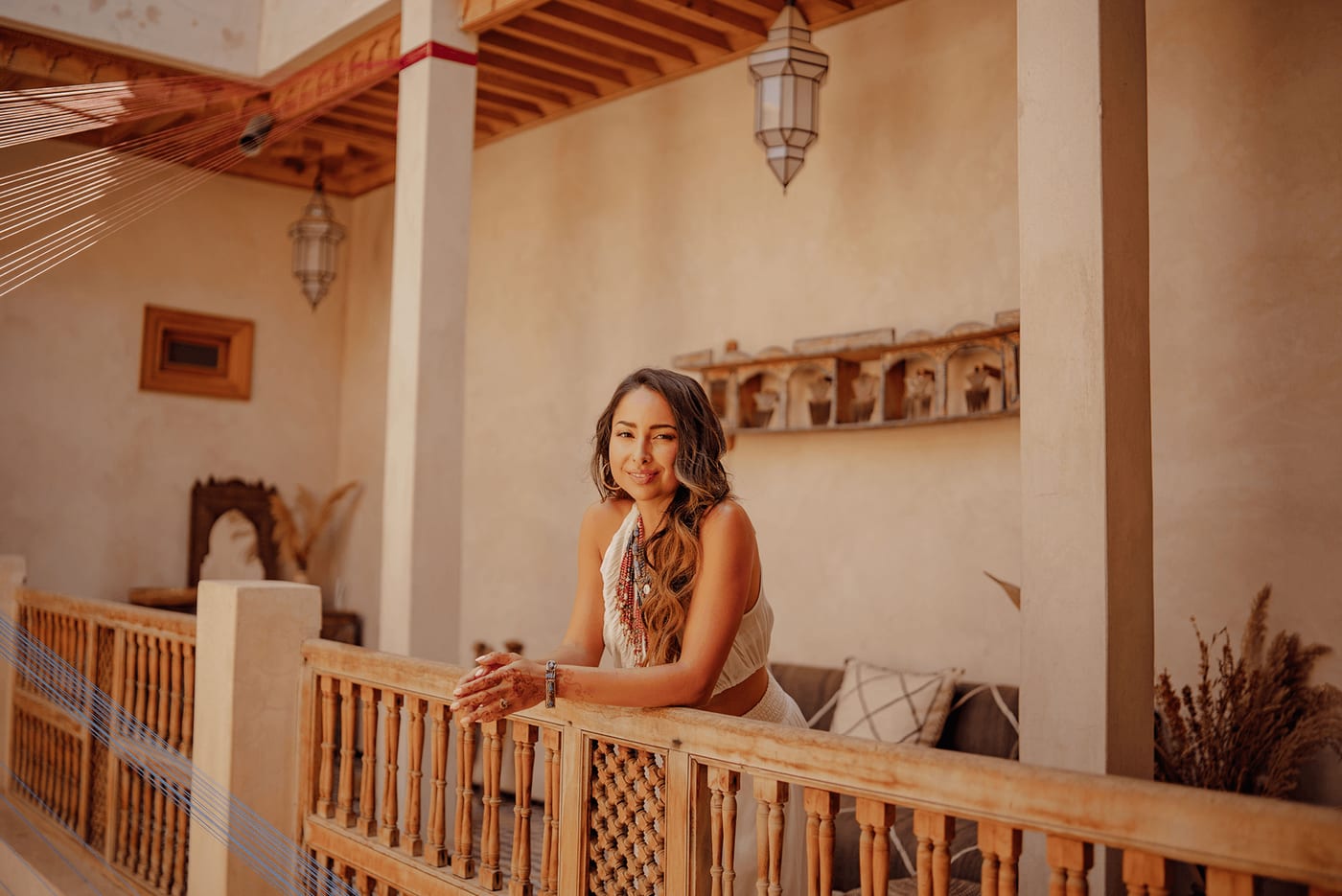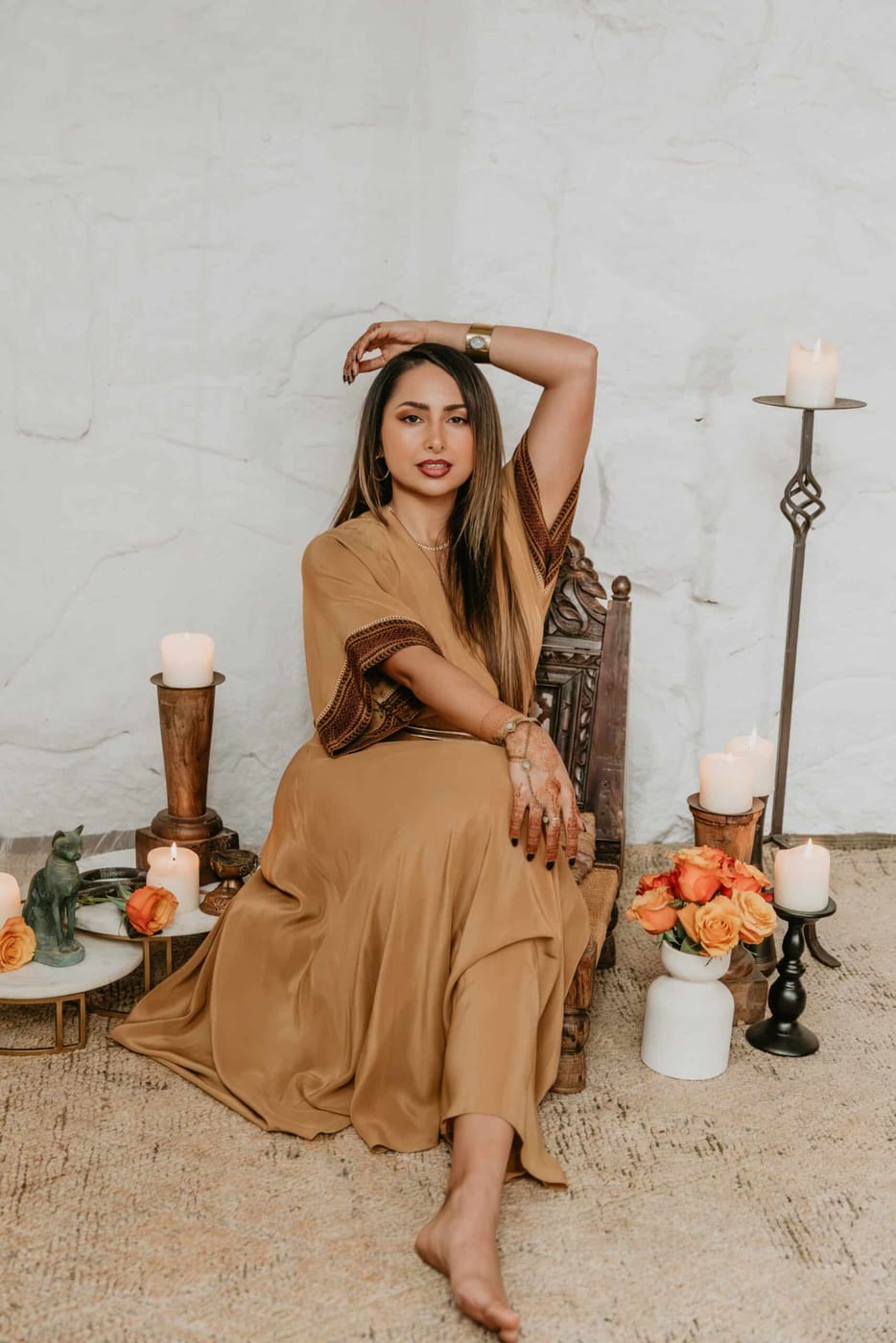

Trust Flow is a single, one track released on October 16, 2023. It arrived in the same year as two other singles, "Divaneh" and "Be The Vibe," and before her 2024 full-length My Body Is An Altar. Sahara Rose is best known as a bestselling author, speaker and spiritual teacher, and as host of the Highest Self Podcast. Her music extends that teaching into sound. Her work centers on lived wisdom over theory, and a track called "Trust Flow" reads as that idea condensed into two words: spirituality as something you practice by surrendering, not something you study.
Heard in sequence, the single belongs to the period when her musical practice was taking shape. It sits before the later "Trust The Path" and the album's focus on the body as sacred ground. The theme of trust runs through all of it.
Little detailed documentation exists on the production of Sahara Rose's music, and I won't invent specifics about instrumentation, arrangement or vocal technique that the record doesn't support. What can be said comes from context. Her catalog sits in contemporary territory that bridges pop accessibility with sacred themes. It is not traditional ambient, healing-genre or monastic chant work. The title points to an introspective, grounding quality, and her emphasis on embodiment suggests music meant to be felt in the body more than dissolved into.
Treat this guide as a framework for your own first listens. Notice the pacing and whether it moves you toward stillness or toward movement. Notice how her voice sits in the mix, and whether the mood reads as reverent or relaxed. Those details are best confirmed by ear.
With a one-track release, the signature track is the whole release: "Trust Flow." It lands for three reasons.
First, the title is a complete instruction. Trust is the stance and flow is the result, and the phrase carries the same pragmatic spirit as her teaching, where spiritual ideas become something you do.
Second, a single suits the subject. There is no album arc to follow and no sequencing to decode. You get one idea, one sitting, and one repeatable experience. A single track is easy to return to, and trust is a practice built on returning.
Third, it works as a doorway. For a listener who knows her through the podcast, it is a short, direct way to hear her teaching themes in a musical form. For a newcomer, it is a low-commitment sample of her creative voice before moving to My Body Is An Altar, which her own materials point to as the most cohesive entry into her musical vision.
It's tempting to file this under devotional or kirtan music, and that would mislead. Sahara Rose draws on the Ayurvedic and dharmic traditions of India, approached through the divine feminine and embodied practice. She does not claim bhakti devotionalism, and she doesn't present herself as part of a formal guru-shishya lineage. Her music is also not ambient or healing-genre work, and listeners seeking reverent chanting or monastic sound may find her approach more contemporary than they expect.
The better frame is a modern teacher practicing in sound what she teaches in text and on the podcast. Her wider catalog treats sensuality, heartbreak and desire as legitimate sacred subjects, not obstacles to transcendence. "Trust Flow" belongs to that conversation. It is spirituality as participation, not renunciation.
This single will resonate most with listeners already in a threshold moment: leaving something familiar, waiting on an outcome, recovering from heartbreak, or trying to act from intuition instead of control. Because she frames spirituality as felt and lived, it suits people who are tired of abstraction and want a practice they can use on an ordinary Tuesday.
It also suits Highest Self Podcast listeners who want to hear her themes carried by music. Those who want rigorous scriptural study, strictly classical ritual sound, or a teacher who keeps distance from contemporary pop forms should look elsewhere.
Because the release is a single track, give it your full attention.
- Listen once without doing anything else. Headphones help, and so does a quiet room, so you can hear the pacing and the voice clearly.
- Pick a transitional hour. Early morning or late evening, when you're moving between roles, suits the theme of trust.
- Notice your body. Her work treats the body as the place where spirituality happens. Pay attention to whether you want to sit, sway or move, and follow that.
- Replay it with a question in mind. Choose one thing you're gripping tightly and listen again with it in view. The repetition is the practice.
- Then widen out. After a few listens, move to My Body Is An Altar for the fuller picture, or to a solocast on the Highest Self Podcast for the teaching behind the sound.
A single track asks little of you. Its value comes from how you return to it.