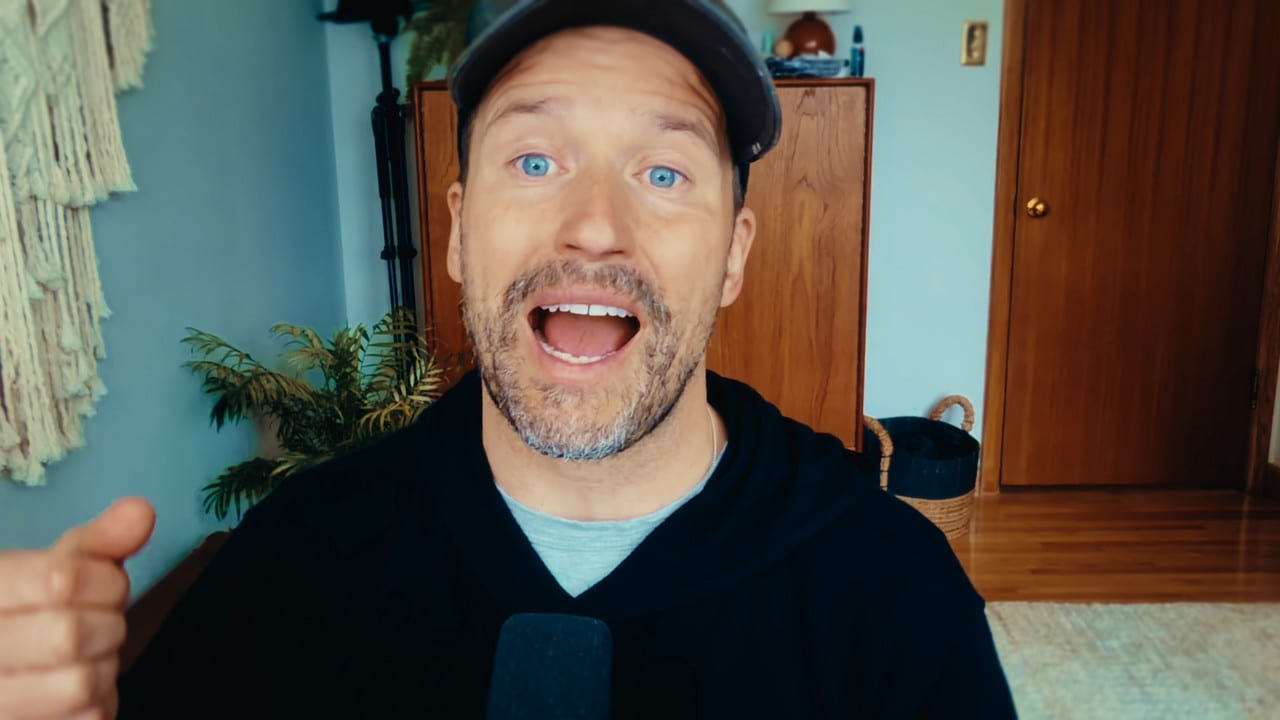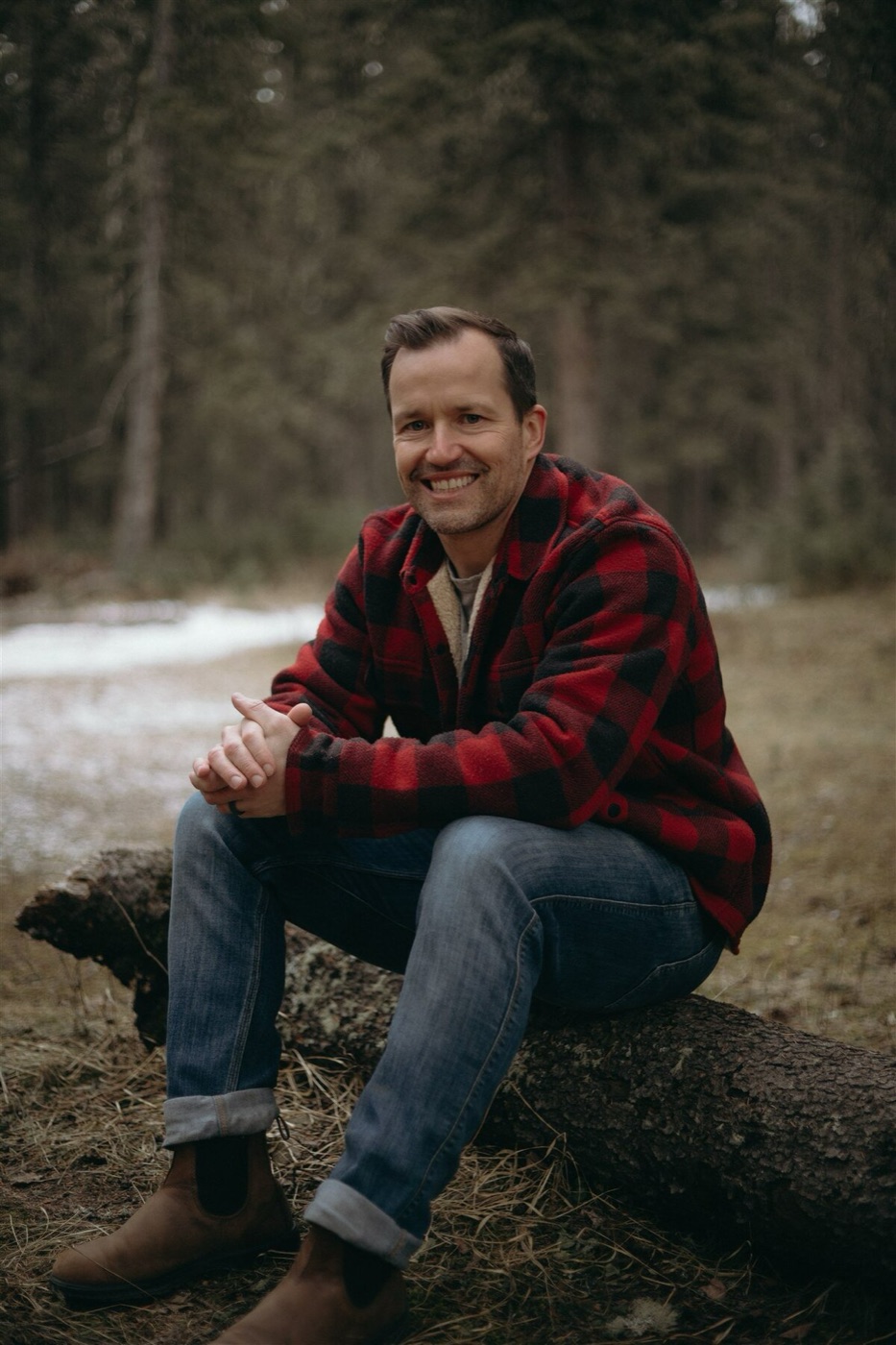

Mark Groves is often introduced as a human connection specialist, a keynote speaker and a writer. The titles are accurate, but they undersell the question that runs beneath all of it: what keeps people from living fully, and what moves them from knowing what they should do to actually doing it? He describes the last 25 years of his life as a study of exactly that. His work sits at the intersection of relationships, attention, and what it means to show up fully in your life, your leadership and everything you're in relationship to.
Groves did not come to this field through a contemplative path or a spiritual tradition. His lineage is secular and contemporary, grounded in psychology, neuroscience and the modern study of human behavior. The documented record of his early life is thin, and his hometown is not part of the public record this profile draws on, so what follows begins with his working life rather than his childhood.
For fourteen years he worked in pharmaceutical sales. It was an unlikely classroom, but a revealing one: a job built around understanding how people make decisions and what it takes to get them to change. That vantage point gave him a practical, almost clinical sense of how persuasion and behavior work, and a lasting skepticism toward inspiration that doesn't stick. He has said he grew up with a clear picture of what success was supposed to look like. The picture was convincing, which is part of why stepping out of it later proved so costly.
The break came when he was 27. He ended an engagement because the life he was living wasn't his. By his own account it was a decision made against the grain of the script he had inherited, and it became the seed of everything that followed. He began writing about relationships, and in particular about why people leave themselves in order to stay in things that aren't right.
It was during this period that he discovered Viktor Frankl's Man's Search for Meaning, a book that has remained his intellectual anchor. Frankl's emphasis on meaning and choice can be heard throughout Groves's later work, which keeps returning to the idea that people are not passive participants in their own lives. His thesis is simple to state and hard to live: choosing anyone or anything should never mean abandoning yourself.
Groves's core contribution is a way of treating relationships as foundational rather than peripheral. In his framing, relationships to a partner, to oneself, to work, and to technology form the architecture of a well-lived life, and learning to navigate them honestly is the master skill from which others follow. He is less interested in metaphor than in mechanism. He asks what a person is actually choosing, what they are sacrificing for it, and whether the trade is conscious or unconscious.
His YouTube channel describes the work as bridging the academic and the human, and that is a fair summary of his method. His keynotes draw on psychology and neuroscience, but are delivered with humor and directness. Questions tend to matter more than answers in his teaching, such as what would you do if you chose yourself? The listener is positioned as the agent of change rather than the recipient of wisdom.
He is also candid about the costs of speaking with integrity, including during COVID, and does not smooth that over into a tidy narrative. That willingness to name real friction is a large part of why his work reads as credible rather than polished.
Groves founded Create the Love, the platform under which much of his work operates. He hosts the Mark Groves Podcast, which has run past 500 episodes and is available on Spotify and YouTube. He is co-author of Liberated Love, a book-length treatment of relationships and partnership. And he writes long-form essays at Humaning on Substack, a more reflective, written counterpart to the conversational podcast.
Beyond media, he works with individuals through coaching and community, and he has emphasized phone-free, embodied gatherings as a complement to his stage work. The pairing is deliberate. Real change, in his view, does not happen at scale alone.
For newcomers, the podcast is the most accessible entry point, followed by the essays at Humaning and then Liberated Love for those drawn to the relationship material specifically. His website, markgroves.com, serves as a hub.
The present phase of his work is shaped by a lesson he learned the hard way. As his following grew past a million people, he noticed he was becoming automated in his own life: reaching for his phone, posting from performance rather than feeling. He has said the problem was never the platform but his relationship to it. That realization turned his attention toward presence, technology and what it means to stay human in a distracted world.
Today he speaks to hospitality groups, universities, sales organizations and wellness brands, writes at Humaning, hosts the podcast, and continues one-on-one coaching. He is based in North America. There is a quiet tension in a person with a large platform arguing for smaller, more direct forms of connection, and he does not pretend otherwise. His position is that choosing yourself doesn't have to mean choosing less.
Groves reaches corporate leaders, sales teams, university students, wellness professionals and couples. What they share is a sense that something in their lives has become automatic. His audience is not drawn by comfort. His voice is direct and often challenging, and it can feel bracing to anyone hoping to have their current choices simply affirmed.
It is also worth being clear about what his work is not. It is not meditation instruction or lineage-based spiritual teaching, though his emphasis on presence touches adjacent ground. It is closer to relationship psychology, leadership and contemporary coaching, shaped by a former salesman's practical interest in what actually changes people.
That is arguably why he matters. In a culture saturated with attention-harvesting technology and polished self-improvement, Groves offers a plain-spoken account of the cost of living on autopilot, told by someone who watched it happen to himself. His legacy, still being written, rests on a durable idea: that showing up fully, in love, in leadership and in daily life, is a choice that can be practiced, and that it begins with refusing to leave yourself behind.