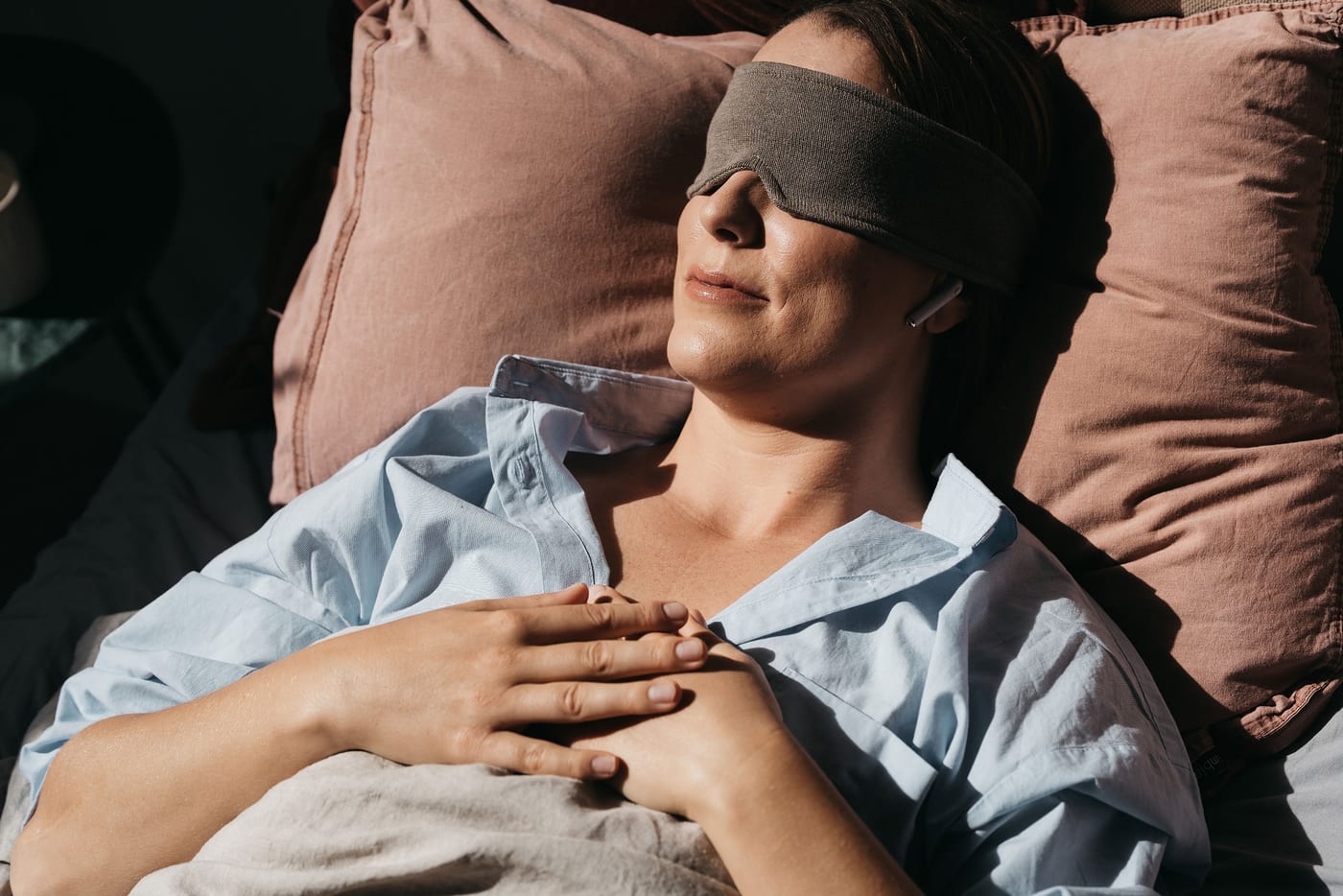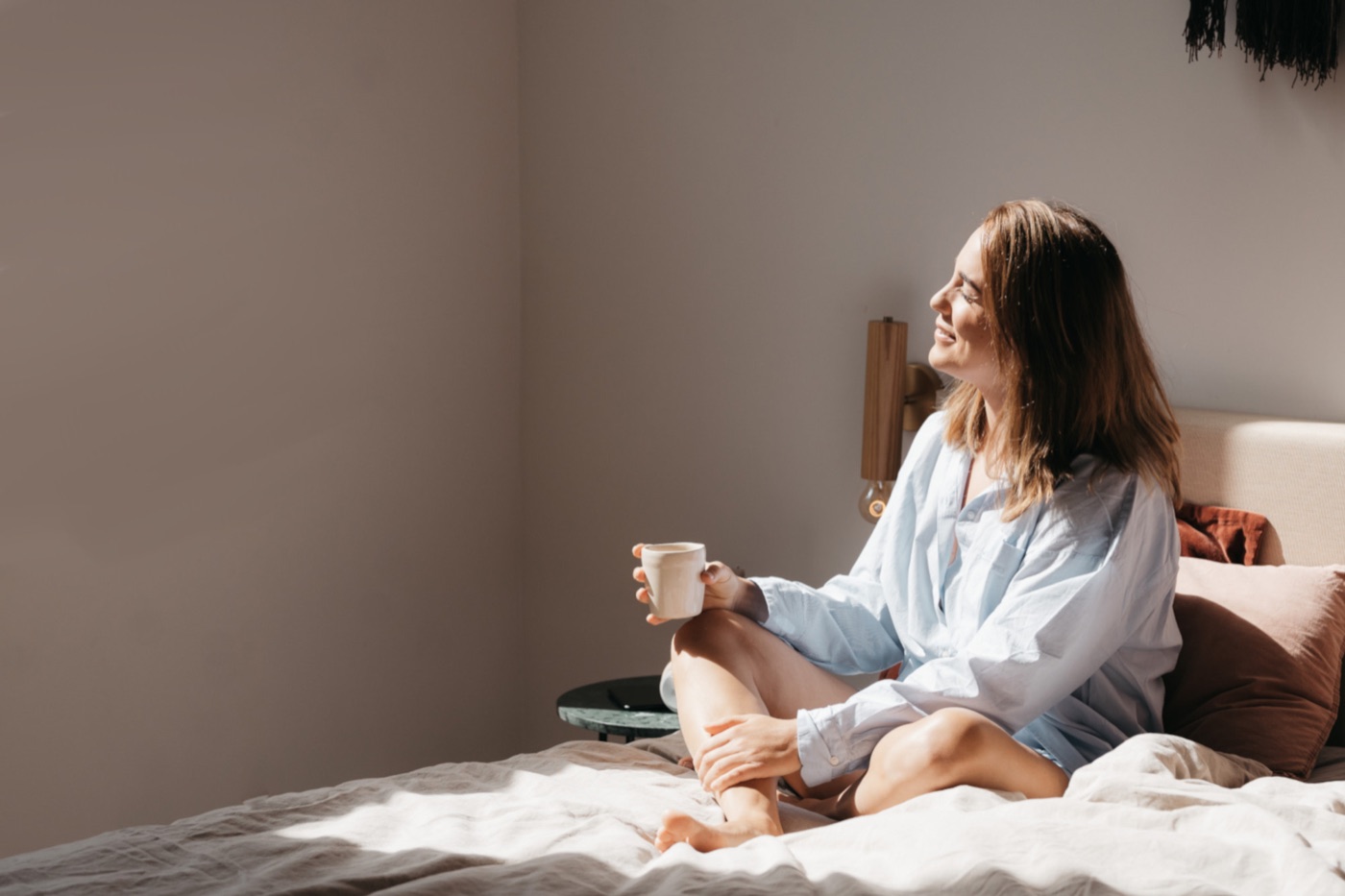

House of Deeprelax is a project more than a personality. Their teaching lives mostly inside a Dutch-language app, with the same approach carried onto a YouTube channel, and that shapes everything about how it feels. There is no room to enter, no stage and no scheduled retreat. A session happens wherever the listener already is: in bed, on a mat, at the stove, on a bike, at the ironing board.
The format is guided and step by step. In the central practice, Yoga Nidra, the listener lies down and is led through a sequence that the project presents as sitting somewhere between meditation and sleep. Per the project's own FAQ material, that usually means setting an intention, scanning the body, attending to the breath and following visualizations before being brought back to waking awareness. Sessions run from about three minutes to sixty-five. A three-minute reset and a full Nidra journey are the same teaching at different scales, built for a work break, an evening wind-down or a night of broken sleep.
The dominant theme is recovery. The stated aim is to help people unwind, discharge stress and recover, and the language stays close to that. There is little talk of transformation or awakening. Relaxation is treated as a daily portion, something taken regularly like a meal, not a peak experience reserved for a special occasion.
A second theme is fit. The library is organized around states and schedules: lying-down meditations, sitting ones, meditations for cooking, walking practices for contact with body and surroundings, short "boost talks" for cycling or ironing, self-hypnosis, and Nidra Breath sessions that pair breathwork with Yoga Nidra principles. The shake-it sessions, which use TRE-style shaking and dance, are the active counterweight, meant for releasing tension through movement before the quieter practices settle it.
A third is accessibility. The material is meant for beginners and for people who already meditate, and the framing assumes no prior skill and no already-quiet mind.
This is not a teaching that issues koans, and it would be inaccurate to describe it as one. The questions are practical and implied, not posed as inquiry. Where is tension sitting in the body right now? What happens when attention goes to the breath, or to the feet on the ground while walking? What changes when you stop trying to do the practice correctly? The FAQ material suggests the guidance explicitly lets go of performance: falling asleep is acceptable, and so is staying aware. The question underneath is more modest than most meditation traditions pose. Can you let yourself be rested without earning it?
The delivery is clear, practical and sparing. The project's own material describes the guidance as instructional and not "warm and personally chatty," and that is a fair reading of the design. Expect measured pacing, direction over rapport, and room left for the listener's own experience. Humor and storytelling are not features of the approach as described, and nothing in the source material points to scripture or devotional language. Silence matters in a functional way, as the space in which the body does the work, but it is not presented as a spiritual object in itself.
What does stand out is the use of ordinary settings as the frame. Offering a meditation to be done while cooking or ironing is a quiet argument that practice need not be set apart from daily life.
It lands for people who want daily, repeatable relief: those winding down after work, lying awake at night, or trying to recover clarity in the middle of a workday. It suits people who are put off by the idea of a dedicated twenty-minute sit, and those who prefer a secular, body-centered register to a spiritual one.
It is a poorer fit for several groups. The full library is in Dutch, aimed at listeners in the Netherlands and Belgium, which rules out many potential students. People looking for high-energy or activating practice, for charismatic teacher presence, philosophical depth, music-driven soundscapes or a community to practice alongside, may find it austere. Anyone committed to a particular lineage or devotional path will not find that framework here. And it is a relaxation and recovery tool, not a clinical treatment for sleep or mental health conditions.
The bio places the project within mental relaxation, and it names Yoga Nidra as a central practice, alongside meditation, breathwork, mindfulness-style walking and TRE-style shaking. It names no teacher, guru or lineage, and none should be assumed. The project's own materials describe Yoga Nidra as a technique from the yoga tradition and frame the overall sensibility as pragmatic and body-centered, not devotional. That is the honest extent of what can be said: a contemporary, Dutch-language relaxation platform drawing on yoga-derived and somatic techniques, with no stated lineage behind it.