
What is documented, and what is not
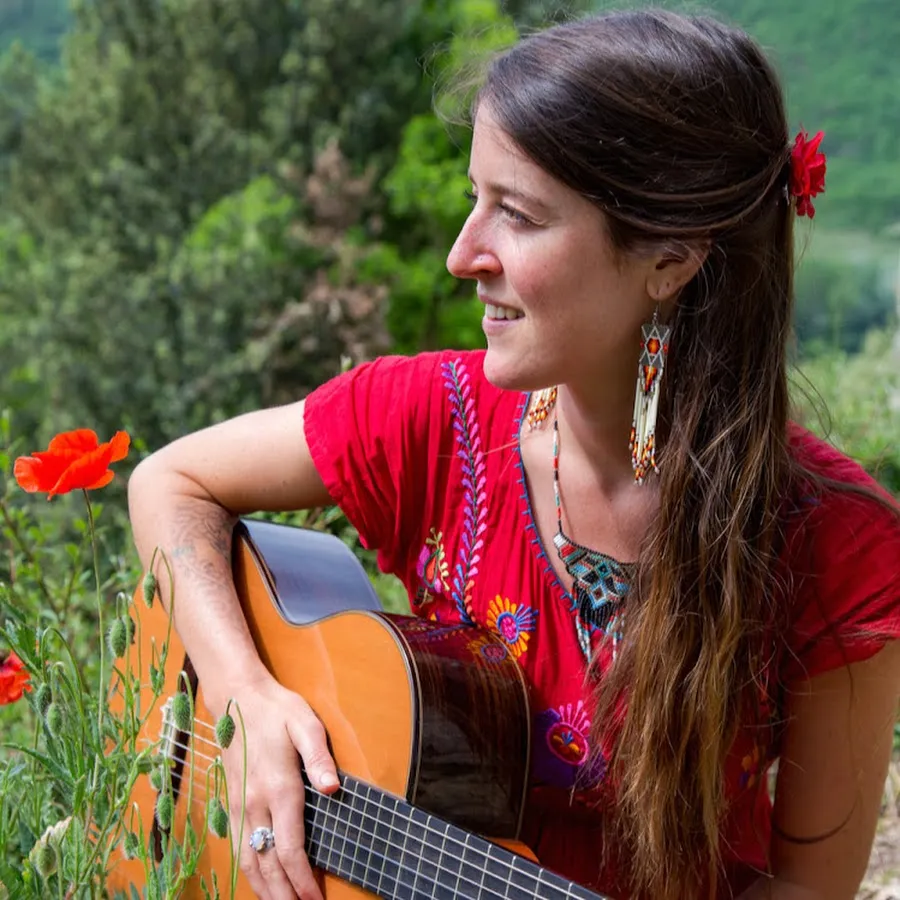
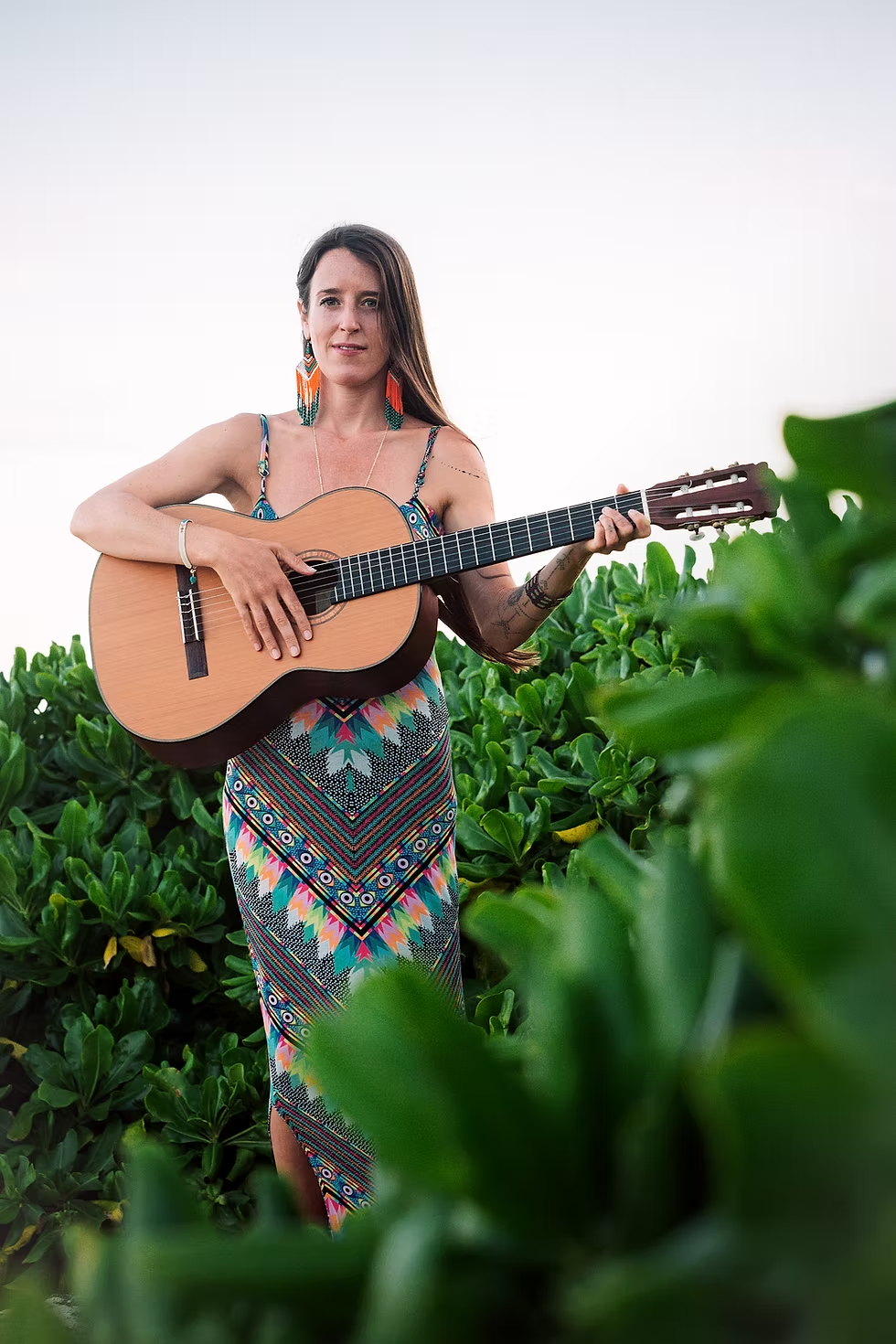
Ayla Schafer is first a performer. She is a multilingual "world folk" singer-songwriter and ceremonial musician, and her teaching grows out of that. The available biography says she shares the voice "as a tool for healing, release and self-knowledge," but the text breaks off before naming the formats. Her listed role includes voice workshop facilitator, so the workshop is the likeliest container. There is no documented schedule, exercise sequence or retreat structure, and this profile does not invent one. What can be said comes from her songs, her stated purposes and the path that shaped them.
The shape of the work
The evidence points to teaching that follows her music rather than a technical curriculum. Her repertoire is sung in Spanish, English and Proto-Celtic, the reconstructed ancestral language of the Bronze Age. Anyone working with her material meets song as something carried across time, not only as a skill to polish. She calls her songs "medicinal," and her description of voice work (healing, release, self-knowledge) puts the emphasis on what singing does to the person singing. She describes herself as a ceremonial musician, so a gathering with her probably has the character of ceremony rather than a lesson. That is an inference from her role, not a reported account.
Recurring themes
Four ideas run through the biography and the music:
- Memory and remembrance. Her songs "carry memory, remembrance and power." Ancestry is the clearest case. Mâtîrja (Ancestral Mothers), made with Tara Brading and Carolyn Hillyer, is named for it, and the choice of a Bronze Age language belongs to the same impulse.
- The earth. She is billed as a "Voice of the Earth," lives on Dartmoor, and speaks of earth consciousness as a commitment.
- Presence. She invites listeners to reconnect with "the quiet power of presence."
- The full human range. Her compositions hold "the beauty, shadow and rawness of human experience." Nothing in this suggests a teaching that stays only with comfort or uplift. The shadow is named as part of the material.
The questions she leaves students with
She has not published a set of teaching questions, and none should be attributed to her. Her stated aims imply where the inquiry goes. What does the voice hold that the speaking self does not say? What is being carried in the body or the family line that wants to be released? What changes when attention rests on sound and breath rather than on performance? The titles of her recordings point the same way: Dive into Water, Ima Adama and Silent Voices all suggest descent, earth and what goes unspoken. These are readings of her work, not reported instructions.
Delivery and aesthetic
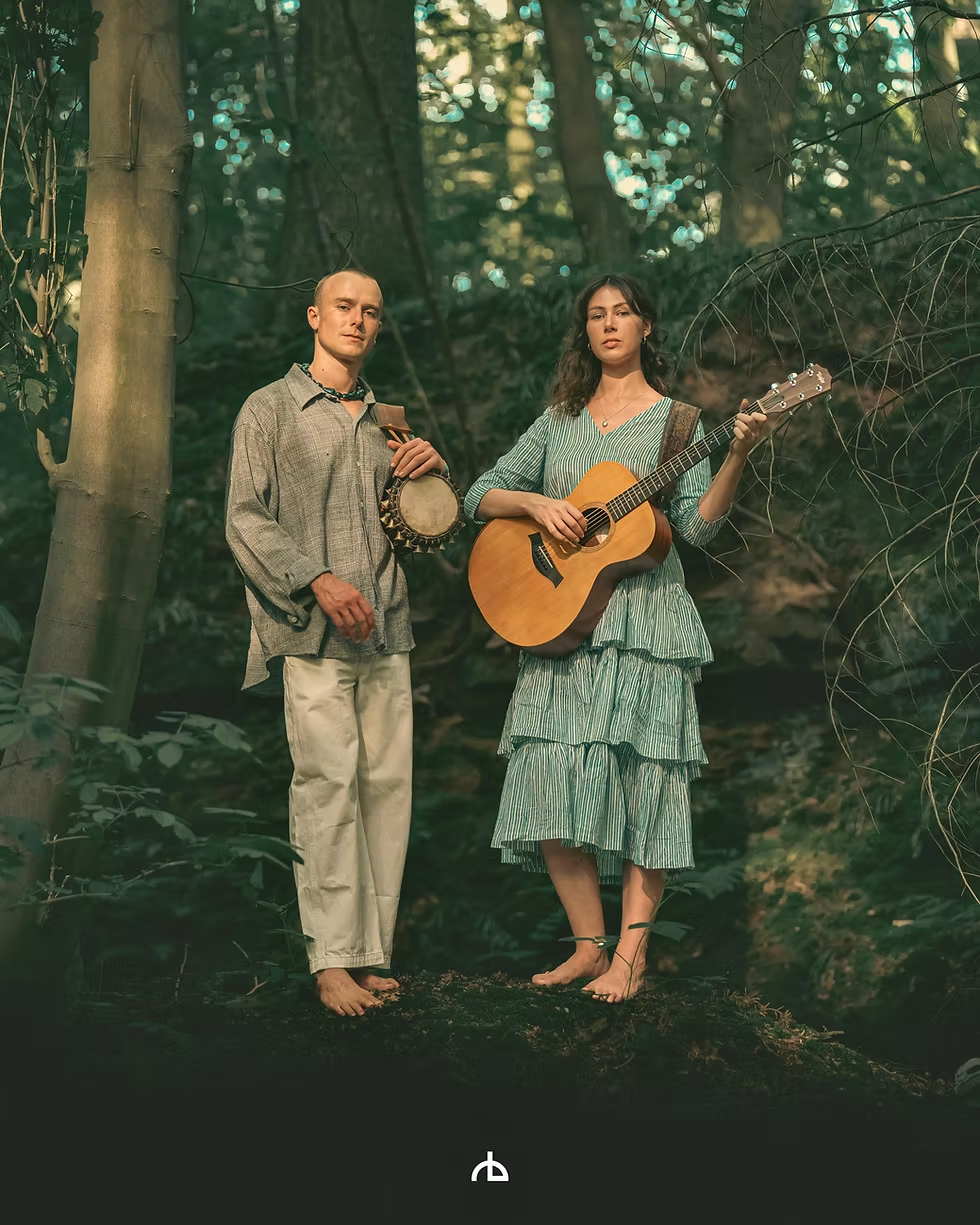
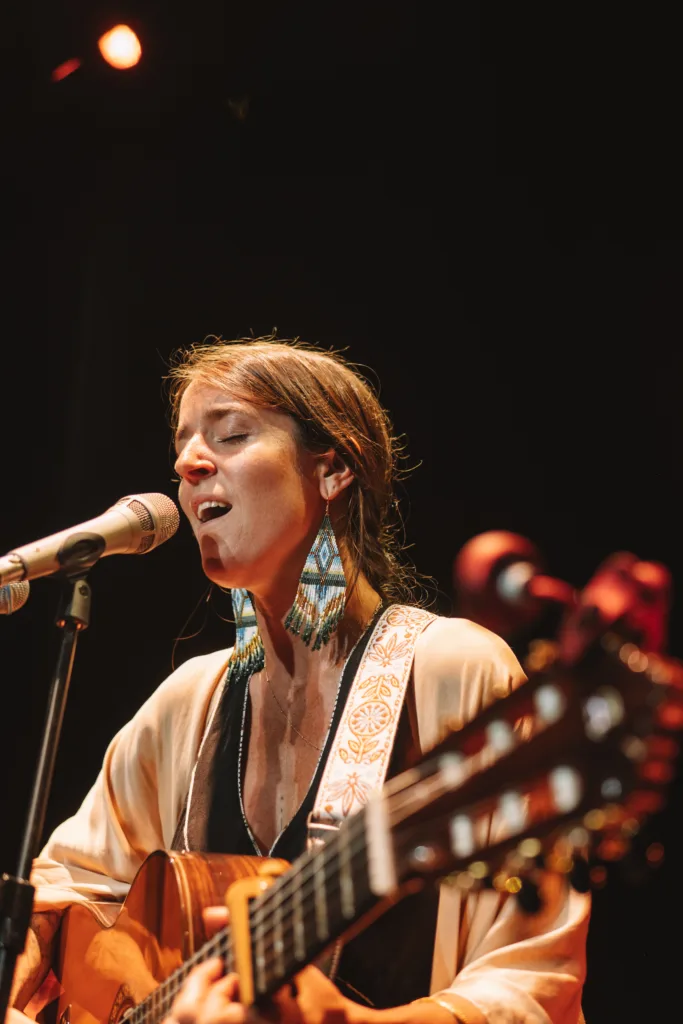
Her songs are acoustic, poetic and multilingual, and her press describes them in terms of "strength and clarity" (Folk Radio) and beauty (Higher Plains Music). That points to a plain, direct delivery in which the song does most of the work. She began performing at sixteen and spent years on the UK festival scene. She has worked in the folk-soul duo Susie Ro and Ayla and collaborated with Brit Award winner Ben Howard. Festival experience tends to produce a performer comfortable holding a room, though the biography does not say how she uses humor, silence, story or scripture in teaching. It cites no scripture, and no specific texts should be assumed. Her use of ancestral language is the nearest thing to a textual practice.
The tradition behind it
The biography places her in no named lineage and credits no guru or teacher. It does say that after a turning point in 2010, when she travelled through South America and spent years away from home, she "learned from various indigenous traditions about the healing power of song." It names none of them. The honest description is a practice shaped by travel and listening across several traditions and then rendered in her own songwriting. It sits in the broader field of world folk, sacred and conscious music, but it is not presented as a transmission from a specific school. Anyone expecting a formal lineage will not find one in the record.
Who it lands for, and who may not stay
It is most likely to land for people who already hear music as a way of remembering: those drawn to ancestral themes, nature-centred spirituality and song as emotional release. The invitation to reconnect with self and earth suits people who want to feel more than analyse, and the acknowledgment of shadow and rawness should reach those who find purely uplifting spiritual music thin.
It may not suit several kinds of student. Anyone seeking a codified technical system, such as a graded vocal pedagogy, defined repertoire or credentialed lineage, will find no such structure in the record. Skeptics of "medicinal" song, or of reconstructed ancestral language, may find the claims larger than the evidence can support, since Proto-Celtic is a scholarly reconstruction. And because the specifics of her sessions are undocumented, a newcomer cannot predict the pace, the level of vulnerability asked for or how much singing happens in front of others.
A fair summary
Schafer is a working songwriter whose teaching extends her art and her travels, with an emphasis on healing, memory and presence. She is a serious musician with a clear sensibility and a good collaborative record. The documentation of her teaching is thin, and a prospective student should ask directly how a session runs before assuming anything beyond what her songs already show.