




What is Dharma Yoga?
Dharma Yoga is a comprehensive system of classical Hatha-Raja Yoga developed by Brazilian-born master Sri Dharma Mittra. Founded in New York City in 1975, this tradition integrates physical postures (asanas), breathwork (pranayama), meditation, and yogic philosophy with particular emphasis on the ethical foundations outlined in Patanjali’s Yoga Sutras. The practice derives its name from the Sanskrit word dharma, meaning “duty,” “righteous path,” or “law”—signaling its orientation toward spiritual purpose rather than mere physical fitness.
Unlike many contemporary yoga styles, Dharma Yoga maintains that the yamas and niyamas (ethical restraints and observances) are non-negotiable prerequisites for authentic practice. The cornerstone of Mittra’s teaching is the first of The Eight Limbs of Yoga, yama, or the ethical rules, with ahimsa (non-violence) standing paramount. This commitment extends beyond interpersonal conduct to dietary choices—Mittra advocates veganism—and a fundamental compassion toward all sentient beings.
Origins & Lineage
Dharma Mittra was born on May 14, 1939, in Pirapora, Minas Gerais, Brazil, into modest circumstances. He was raised Catholic in a poor family of 5 children and first encountered yoga as a teenager through esoteric texts his younger brother was studying. He started studying Yoga in 1958. In 1964, he left the Brazilian Air Force and moved to New York City, to study under his new guru, Swami Kailashananda, known in America as Yogi Gupta.
Yogi Gupta, recognized as one of the early Hatha yoga pioneers in the United States, transmitted a rigorous classical tradition. After intensive study of Ashtanga and Karma Yoga, in 1966 he was accepted and initiated as a sannyasi (one who renounces the world in order to realize God). Dharma began teaching in 1967, after spending a decade as a full-time yogi and brahmachari (a celibate religious student who lives with his teacher and devotes himself to the practice of spiritual disciplines).
With Yogi Gupta’s blessings, Sri Dharma left the ashram in 1974 to found the Yoga Asana Center in 1975, known of now as the Dharma Yoga Center. This institution became one of the first independent yoga schools on the East Coast, predating the commercialization of yoga in America.
How It’s Practiced
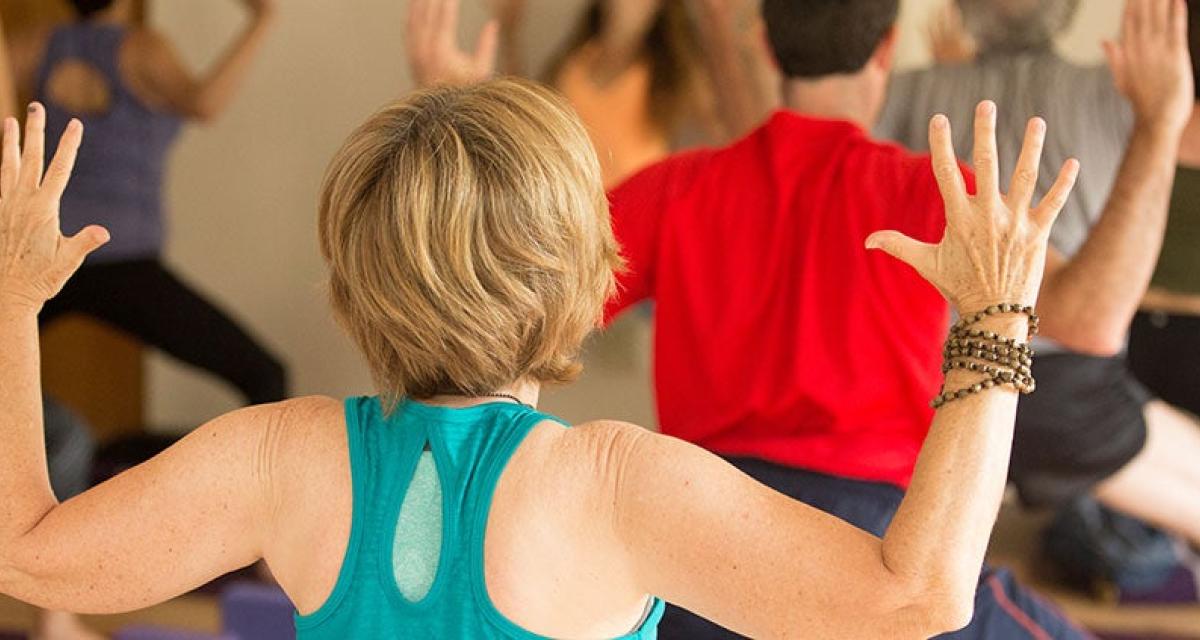
A typical Dharma Yoga class synthesizes flowing sequences with sustained holds, inversions, backbends, and meditative stillness. Classes commonly begin with Surya Namaskara (sun salutations) to generate heat, then transition into Shiva Namaskara—a sequence incorporating standing poses, balancing postures, twists, and chest openers. Unlike alignment-focused styles, Dharma Yoga encourages students to attempt challenging asanas from the outset, cultivating courage and equanimity with imperfection.
The practice builds upon six foundational pose families: forward bends, backbends, spinal twists, inversions, arm balances, and seated postures (often Lotus Pose). Each session includes pranayama breathing exercises and concludes with meditation and often Yoga Nidra, a guided relaxation practice. The pace is deliberate, with longer holds designed to deepen flexibility, strengthen the spine, and train concentration.
Physically, Dharma Yoga is demanding. Mittra is known for his Master Yoga Chart of 908 Postures, each asana illustrated with a photograph of Mittra performing the pose, including over 300 variations he created. Yet the physical rigor serves a contemplative end: postures prepare the body and mind for the deeper work of self-inquiry.
Dharma Yoga Today
The Dharma Yoga Center remains headquartered in Manhattan’s Flatiron District, offering daily classes, workshops, and the Life of a Yogi (LOAY) teacher training program. Sri Dharma has been teaching classes continuously almost every day since he first started in 1967, and though now in his eighties, he continues to teach regularly at the center.
The tradition has spread internationally through certified instructors trained directly by Mittra. Students can access Dharma Yoga through local studios with certified teachers, online platforms (including streaming classes on Alo Moves and Yoga Journal), and annual retreats and workshops led by Mittra and senior students. Dharma Mittra completed the Master Yoga Chart of 908 Postures in 1984, after having photographed himself in 1300 Yoga postures, then cut and pasted the pictures to create the work; by 2003, it had sold over 50,000 copies. This chart remains an iconic teaching tool in yoga studios worldwide.
Key resources include Mittra’s book Asanas: 608 Yoga Poses, the Life of a Yogi Teachers’ Manual, and the Maha Sadhana DVD series (Levels I and II: “A Shortcut to Immortality” and “Stairway to Bliss”).
Common Misconceptions
Dharma Yoga is not merely an asana practice. While the physical postures are sophisticated and sometimes acrobatic, the emphasis is squarely on ethical conduct and meditation. Mittra has stated unequivocally that without the yamas, yoga practice is incomplete.
It is not a “gentle” or “beginner-friendly” style in the conventional sense. Students are encouraged to attempt advanced poses regardless of experience level, though modifications are offered. The philosophy privileges effort and humility over perfect execution.
Dharma Yoga is not eclectic or fusion-oriented. It remains loyal to the classical Hatha-Raja framework transmitted through Yogi Gupta, resisting the trend toward branded, hybridized yoga forms that emerged in the late 20th century.
The practice is not synonymous with “dharma” in the broader Buddhist or Hindu sense. While the term evokes duty and cosmic order, Dharma Yoga specifically refers to Mittra’s codified system, not a general category of spiritually oriented yoga.
How to Begin
Prospective students should start by locating a certified Dharma Yoga teacher through the Dharma Yoga Center website or attending a class at the New York flagship location. For those unable to access in-person instruction, streaming platforms offer recorded classes taught by Mittra and senior instructors.
Beginners are advised to approach the practice with patience and non-attachment to immediate results. Mittra recommends daily practice—even if brief—and consistent meditation. Reading the Life of a Yogi Teachers’ Manual or watching the Maha Sadhana Level I DVD provides foundational context for the philosophy and sequencing.
Those serious about the path may consider the Life of a Yogi teacher training, a multi-level certification program that transmits not only technical skills but the ethical and devotional dimensions central to the tradition. Above all, Dharma Yoga asks practitioners to cultivate ahimsa, beginning with kindness toward one’s own body and extending outward to all living beings.