
The Spiritual Dimensions of Artificial Intelligence
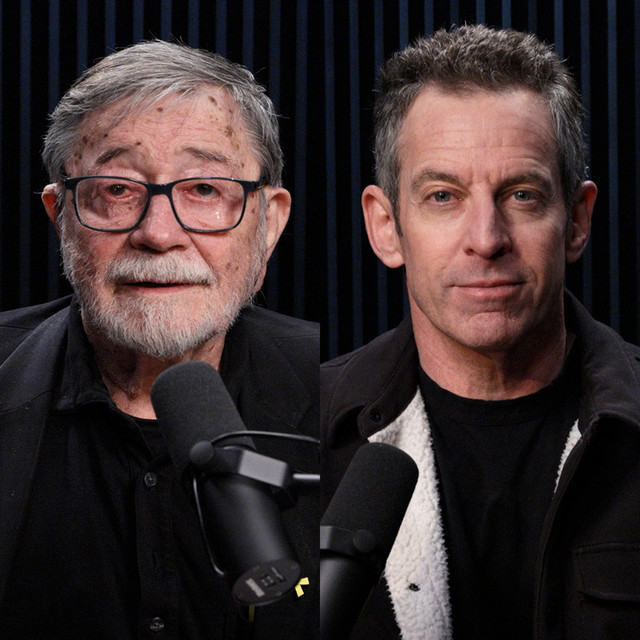
In our rapidly evolving technological landscape, few conversations are as profound as those that examine the intersection of artificial intelligence, human consciousness, and spiritual wisdom. The recent dialogue between philosopher Sam Harris and AI pioneer Judea Pearl offers extraordinary insights into not just the future of technology, but the very nature of consciousness, understanding, and human transformation.
As conscious beings navigating an age of artificial intelligence, we're called to examine fundamental questions about intelligence, awareness, and what it truly means to understand. Pearl's groundbreaking work in causality and AI, combined with his profound personal journey through loss and meaning-making, provides a unique lens through which to explore these essential questions.
Beyond Computational Thinking: The Nature of True Intelligence
One of the most fascinating aspects of Pearl's perspective on AI concerns the limitations of current large language models (LLMs) in achieving artificial general intelligence (AGI). From a consciousness perspective, this observation reveals something profound about the nature of intelligence itself.
True intelligence—whether artificial or human—requires more than pattern recognition or sophisticated data processing. It demands the ability to understand causality, to perceive the deeper relationships between events, and to grasp the fundamental interconnectedness of existence. This mirrors ancient teachings that emphasize understanding over mere knowledge accumulation.
The Wisdom of Causal Understanding
Pearl's revolutionary work on causality offers spiritual practitioners a powerful metaphor for . Just as AI systems must move beyond correlation to true causal understanding, our spiritual growth requires us to perceive the deeper causes and effects in our lives—not just the surface patterns.
This causal awareness extends to understanding how our thoughts, intentions, and actions create ripple effects throughout the interconnected web of existence. When we develop this deeper perception, we naturally begin to live with greater intentionality and wisdom.
Transformation Through Adversity: A Spiritual Journey
Pearl's personal journey following the tragic loss of his son Daniel Pearl reveals one of the most powerful aspects of human consciousness: our capacity for . Rather than allowing grief to close his heart, Pearl channeled his experience into meaningful action through the Daniel Pearl Foundation.
This transformation exemplifies what many spiritual traditions teach about the alchemical nature of human consciousness—our ability to transmute even the most challenging experiences into wisdom, compassion, and service. Pearl's work demonstrates how personal tragedy can become a catalyst for greater awareness and positive impact in the world.
The Practice of Meaning-Making
Pearl's response to loss illustrates a fundamental spiritual principle: we always have the power to choose how we interpret and respond to life's events. This meaning-making capacity may be one of the most distinctly human aspects of consciousness—something that current AI systems cannot truly replicate.
For conscious practitioners, this highlights the importance of cultivating our meaning-making abilities through practices like:
- Regular reflection and
- Journaling about life experiences and their deeper significance
- Seeking to understand how challenges contribute to personal growth
- Finding ways to transform personal pain into service to others
Navigating Division with Conscious Awareness
The discussion of post-October 7th shifts in public discourse around complex geopolitical issues reveals another crucial aspect of conscious living: how we navigate division and conflict with awareness and wisdom.
In our polarized world, the tendency is often to retreat into tribal thinking—us versus them mentalities that obscure our fundamental interconnectedness. Pearl and Harris's nuanced exploration of these sensitive topics models a different approach: one that seeks understanding over righteousness, complexity over simplification.
The Spiritual Challenge of Holding Multiple Truths
Advanced often requires the ability to hold apparent contradictions in conscious awareness—to recognize that multiple perspectives can contain elements of truth simultaneously. This capacity for non-dual thinking becomes essential when addressing complex social and political issues.
Rather than immediately choosing sides, conscious practitioners can:
- Pause and examine their emotional reactions to controversial topics
- Seek to understand multiple perspectives before forming opinions
- Recognize the humanity in those who hold different views
- Focus on contributing to healing rather than deepening divisions
AI Alignment as a Mirror for Human Alignment
The technical discussion of AI alignment—ensuring that artificial intelligence systems behave in accordance with human values—offers a profound metaphor for our own spiritual alignment. Just as we're concerned about AI systems operating in harmony with human wellbeing, we must continually examine whether our own thoughts, words, and actions align with our deepest values and highest aspirations.
This alignment challenge becomes particularly acute in our current technological age, where the pace of change can disconnect us from our and authentic values. The race to develop AGI mirrors our own internal race to keep up with external demands while maintaining connection to what truly matters.
Practical Alignment Practices
To maintain spiritual and ethical alignment in an AI-dominated world, consider these practices:
- Regular exercises to stay connected to your core principles
- Mindful engagement with technology, using it as a tool rather than allowing it to use you
- Cultivating human connections that ground you in authentic relationship
- Developing discernment about information sources and digital influences
The University of Life: Learning Through Challenge
The discussion of confronting difficult ideologies in university settings provides insight into how we can approach all of life as a university for . Every challenging situation—whether it's encountering opposing viewpoints, dealing with technological disruption, or facing personal adversity—becomes an opportunity for growth and deeper understanding.
Pearl's academic background and personal journey demonstrate that true education involves both intellectual rigor and emotional wisdom. In our spiritual development, we need both the analytical capacity to understand complex issues and the heart wisdom to respond with compassion and skill.
Technology and Spiritual Evolution
As we stand at the threshold of potentially revolutionary advances in artificial intelligence, we're also called to accelerate our own spiritual evolution. The challenges posed by AI—questions of consciousness, intelligence, values, and meaning—are ultimately spiritual questions that require spiritual answers.
The development of AI technology offers us a unique mirror for examining our own consciousness. What makes human intelligence special? How do we define understanding? What role does wisdom play in true intelligence? These questions, raised by AI development, point us back to fundamental .
Preparing for the Future Through Inner Work
As we navigate an uncertain technological future, our most important preparation may be inner preparation. This includes:
- Cultivating unshakeable inner peace through
- Developing emotional intelligence and resilience
- Strengthening our capacity for ethical reasoning and decision-making
- Building communities based on wisdom and mutual support
- Maintaining connection to timeless spiritual principles amidst rapid change
Conclusion: Integrating Technology and Spirit
The conversation between Sam Harris and Judea Pearl reminds us that the most important questions about artificial intelligence are ultimately questions about human consciousness and values. As we shape the future of AI, we must simultaneously cultivate our own wisdom, compassion, and understanding.
Pearl's journey from computational scientist to meaning-maker, from academic researcher to spiritual advocate, shows us that true intelligence—whether human or artificial—must be grounded in values that serve life and promote human flourishing.
The challenges ahead require us to be both technologically literate and spiritually mature. We need the technical understanding to participate meaningfully in discussions about AI development, and the wisdom to ensure that technology serves humanity's highest aspirations.
As conscious beings in an age of artificial intelligence, we're called to become more fully human—more aware, more compassionate, and more aligned with our deepest values. In doing so, we contribute to creating a future where technology and spirit work together in service of all life.
The path forward requires both outer engagement and . By developing our own consciousness while thoughtfully engaging with technological development, we help ensure that the future reflects humanity's highest potential rather than its greatest fears.
Key Takeaways
- True intelligence requires causal understanding beyond pattern recognition, mirroring spiritual wisdom about perceiving deeper interconnections
- Personal transformation through adversity demonstrates consciousness's unique ability to create meaning from challenging experiences
- Navigating complex social issues requires holding multiple perspectives simultaneously, a key aspect of advanced spiritual development
- AI alignment challenges mirror our need for inner alignment between actions and deepest values
- Every challenging situation becomes an opportunity for consciousness expansion and spiritual growth
- The development of AI technology offers a mirror for examining the nature of human consciousness and intelligence
- Preparing for an AI-dominated future requires both technological literacy and spiritual maturity
Frequently Asked Questions
How can spiritual practitioners approach the development of artificial intelligence?
Spiritual practitioners can approach AI development by focusing on values alignment, ensuring technology serves human flourishing, and using AI advancement as an opportunity for deeper self-inquiry about consciousness and intelligence.
What can we learn spiritually from limitations of current AI systems?
Current AI limitations remind us that true intelligence involves more than data processing—it requires causal understanding, wisdom, and the ability to create meaning, highlighting uniquely human aspects of consciousness.
How does personal transformation through adversity relate to spiritual growth?
Adversity becomes a catalyst for spiritual growth when we consciously choose to transform pain into wisdom and service, demonstrating consciousness's ability to create meaning from any experience.
What role does meaning-making play in conscious living?
Meaning-making is a fundamental human capacity that allows us to transform any experience into wisdom and growth. It represents our power to choose how we interpret and respond to life's events.
How can we maintain spiritual alignment in a technological world?
Maintain spiritual alignment by regularly clarifying your values, using technology mindfully, cultivating authentic human connections, and developing discernment about digital influences on your consciousness.
What does it mean to hold multiple truths in complex situations?
Holding multiple truths involves developing the capacity to see validity in different perspectives simultaneously, moving beyond binary thinking to embrace the complexity that characterizes most real-world situations.
How can spiritual practice prepare us for an uncertain technological future?
Spiritual practice builds inner resilience, emotional intelligence, ethical reasoning capacity, and connection to timeless principles that remain stable amidst rapid technological change.