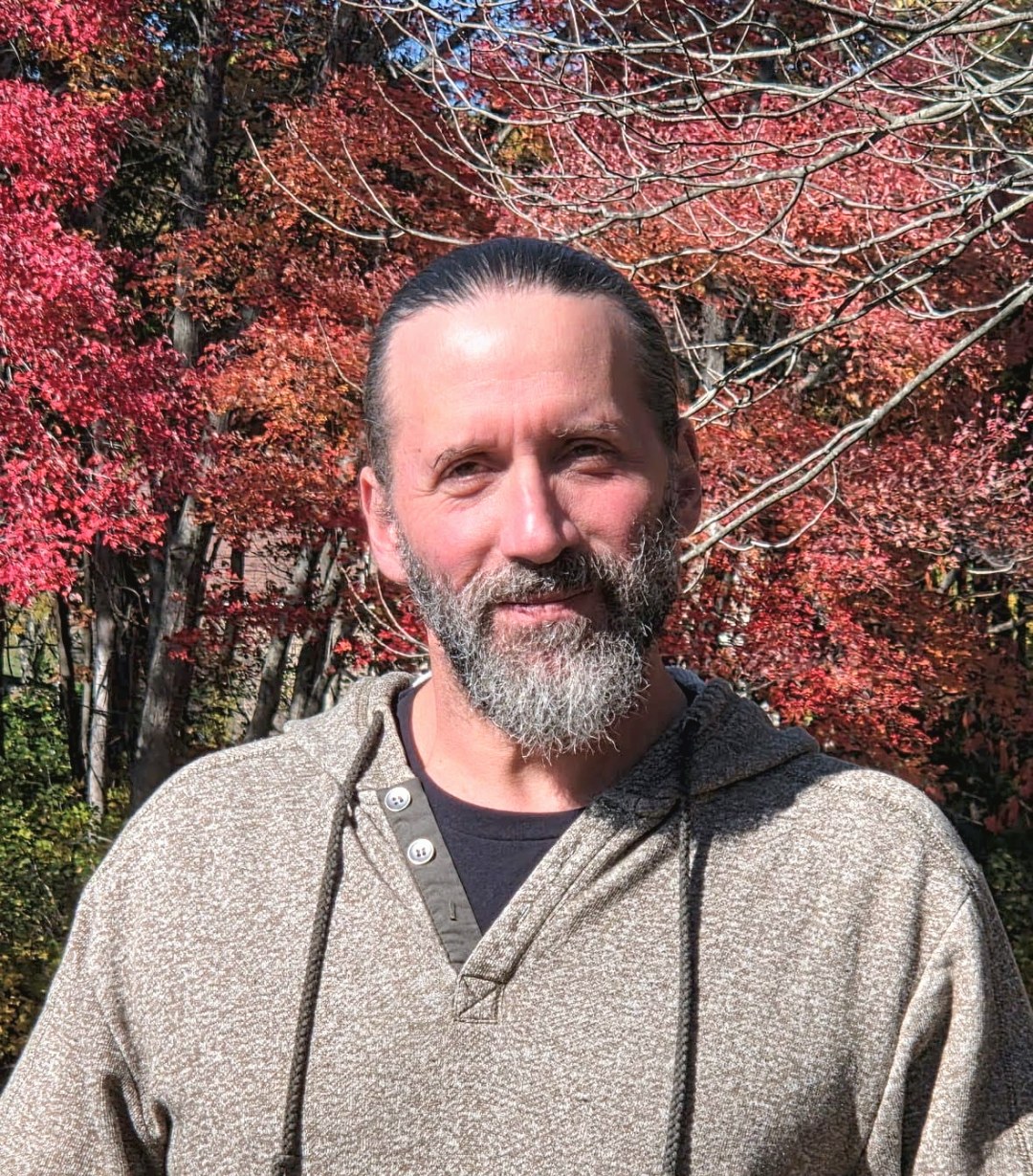

Mark Zelinsky
Meditation Teacher
About
Mark Zelinsky is a meditation teacher who shares guided meditations and writing on spiritual philosophy. His study of spiritual philosophy grew alongside his own meditation practice. He began to wonder how his voice might help others in their practice, as the voices of his teachers had helped him. Several years ago he started sharing his meditations on his website and on Insight Timer.
Mark Zelinsky is a meditation teacher who shares guided meditations and writing on spiritual philosophy. His study of spiritual philosophy grew alongside his own meditation practice. He began to wonder how his voice might help others in their practice, as the voices of his teachers had helped him. Several years ago he started sharing his meditations on his website and on Insight Timer.
He is informed by many traditions, with a particular interest in the natural world and in living an honest day-to-day life. He describes meditation as a means to that end: becoming less distracted by what is contrived and false, especially in our own hearts, and more open to what is good, natural and true.
His guided meditations range from one-minute practices to longer sessions. They include breath and body awareness, metta (good will), compassion practices written for children and older listeners, and a series on the four frames of reference from the Buddhist teaching of Satipatthana. Some were recorded in front of a live online audience. He also recites wisdom teachings from various sources and writes reflections he calls Dharma Ramblings. He names Thanissaro Bhikkhu as his teacher.
He writes that he listened to dharma talks for a long time before he settled into a steady practice. He describes meditation as taking full responsibility for his mind and, with it, his life. His YouTube channel describes its contents as guided meditations, music and inquiry into the yet unknown. He is open to consultation and collaboration, and he notes that he is not a medical professional, counselor or therapist.
FAQ
Questions
Mark Zelinsky is a meditation teacher and writer who creates guided meditations and reflections on spiritual philosophy, drawing from multiple traditions with a particular emphasis on Buddhist teaching and the Theravada lineage. He shares his work primarily through Insight Timer and YouTube, offering practices that range from one-minute meditations to longer guided sessions, along with written Dharma Ramblings on how spiritual philosophy applies to everyday life. What distinguishes his following is his grounding in serious practice: he describes his own turn to meditation not as a wellness trend but as taking full responsibility for his mind and, with it, his life—a shift that reframes meditation from self-optimization to existential accountability. Rather than promising transcendence or bliss, Zelinsky's teaching aims at clarity and honesty, becoming less distracted by what is contrived and false, especially in our own hearts, and more open to what is good, natural and true. His approach appeals particularly to practitioners skeptical of spiritual materialism and attracted to teachers who emphasize lived practice over inspirational rhetoric. Students and listeners care about his work because it refuses the softness and empty affirmation that characterizes much contemporary meditation culture; instead, Zelinsky offers precise instruction rooted in a living Buddhist lineage.
Mark Zelinsky is a student of Thanissaro Bhikkhu, a respected teacher in the Thai Forest tradition who has shaped a generation of Western Buddhist practitioners through rigorous teaching on the Dhamma and an emphasis on direct investigation rather than dogma. While Zelinsky draws from many traditions, as his bio states, his work is most clearly shaped by Theravada Buddhism, particularly the Satipatthana teaching—also called the four foundations of mindfulness—which is the primary systematic map in that lineage for developing insight through meditation. This connection is not merely academic: Zelinsky has created a dedicated series of guided meditations on Satipatthana that moves students through breath awareness, body sensation, the qualities and patterns of mind, and finally the nature of phenomena themselves, offering practitioners an actual path rather than isolated techniques. His own journey mirrors this lineage's emphasis on direct practice; he describes listening to dharma talks from teachers for an extended period before settling into his own steady practice, suggesting he values the tradition's gradual, investigation-based approach over instant revelation. The result is teaching that honors the precision and technical vocabulary of Buddhist psychology—mindfulness, metta, dharma—while remaining accessible to Western practitioners with little or no background in Buddhism. His alignment with the Forest tradition, known for its emphasis on simplicity and authentic practice, shows in his aesthetic: clear voice, minimal mysticism, direct instruction.
The best entry point depends on your available time and what draws you to meditation in the first place. If you have only five minutes or less, start with one of his one-minute guided meditations available on Insight Timer or YouTube—these demonstrate the quality of his voice and instruction without overwhelming a beginner or requiring long commitment. If you have 15 to 30 minutes available, listen to one of his breath awareness or body awareness meditations, which form the foundation of his teaching and show how he guides attention using simple somatic anchors rather than elaborate visualization or spiritual concepts. For those curious about the philosophical dimensions of his work, his written Dharma Ramblings offer accessible reflections on how Buddhist teaching applies to ordinary life—these read more like thoughtful essays from a practicing student than formal dharma books or academic philosophy. His YouTube channel at @markzelinskymeditations provides an overview of his full range: guided meditations, wisdom teachings, and inquiry into the yet unknown, which signals his openness to exploration beyond fixed teachings. If you're working with grief, trauma, or acute psychological distress, see a therapist first; Zelinsky's meditations can support practice, but they're not clinical interventions. Avoid starting with his compassion practices for children unless you're teaching or parenting; begin with breath work instead, then branch into metta and other practices as your practice matures.
Several factors separate Zelinsky from the broader landscape of meditation apps, teachers, and wellness platforms. First, his training under Thanissaro Bhikkhu connects him to a rigorous, living Buddhist lineage rather than to pop-psychology wellness culture or rebranded secularized mindfulness; his meditations are informed by decades of Buddhist scholarship, practice, and transmission rather than borrowed from corporate stress-reduction programs. Second, his commitment to both brevity and depth is unusual: while many teachers specialize in either quick sessions or extended retreats, Zelinsky has designed practices across a full spectrum, plus a structured Satipatthana series that provides an actual map for progressive deepening. Third, his voice and delivery carry intellectual clarity without condescension or performance—he speaks directly, often with the tone of someone reasoning through practice in real time rather than delivering authority from on high, which creates permission for students to trust their own investigation. Fourth, his grounding in the natural world and in living an honest day-to-day life, rather than seeking transcendence or altered states, edges him away from the transcendental-bypass spirituality that colors much contemporary spiritual teaching; he's not promising escape from ordinariness but clarity within it. Finally, his transparency about his limits is refreshing: he explicitly notes he is not a medical professional, counselor, or therapist, which immediately differentiates him from teachers who overreach their scope and expertise. This combination—lineage training, range, intellectual honesty, grounding in ordinary life, and clarity about limits—creates teaching that feels both serious and accessible.
Zelinsky's meditations won't suit practitioners seeking elaborate visualization, energy work, kundalini techniques, or devotional chanting; his aesthetic is consistently spare and grounded in breath and body, not imagination or mantra. They are explicitly not a replacement for therapy, psychiatric medication, or medical care—though his meditations may support mental health, his clear disclaimer about not being a counselor or medical professional is crucial; if you're in acute distress or have a diagnosed mental health condition, you need a licensed clinician first, not a meditation teacher. Those seeking rapid transcendence, mystical experiences, or peak states will likely find his emphasis on ordinary awareness and everyday clarity less glamorous than teachers promising kundalini awakening or dissolution of the self; Zelinsky's teaching is aimed at clear seeing, not bliss-chasing. His focus on Buddhist philosophy and the Satipatthana framework, while accessible, requires some intellectual engagement with technical concepts and lineage teaching; practitioners who want zero philosophical context and only secular stress-reduction techniques may feel his approach too rooted in tradition. If you prefer constant live interaction, residential retreats, or a guru-student relationship with regular contact, his current model—primarily self-directed practice through recordings and writing—won't provide that intimacy; though he notes openness to consultation and collaboration, he isn't currently running a teaching center or daily sangha. Additionally, practitioners from traditions that view Buddhism or Theravada teaching as contradictory to their own faith may experience conflict with the explicitly Buddhist framework of his work.
The primary way to stay current with Mark Zelinsky's work is through his website at markzelinsky.com, which functions as his central hub and the most reliable source for new announcements and releases. His YouTube channel at @markzelinskymeditations is the second essential platform; subscribing there will notify you of new guided meditations, recorded teachings, and inquiry content as he uploads them, and the channel's description offers an accurate picture of his full range of offerings. Insight Timer is his third major platform, where many of his guided meditations are hosted; if you practice on that app, subscribing to his teacher profile there will alert you to new meditations uploaded to that ecosystem. Unlike many contemporary teachers, Zelinsky does not maintain an active Instagram, Twitter, or other social media presence, which reflects his stated interest in honest day-to-day life and skepticism toward mediated celebrity-culture forms of teaching; this means the three platforms above are your reliable channels rather than checking multiple social accounts. At present, he has no announced upcoming retreats, workshops, or live teaching events in his public calendar, though his bio notes he is open to consultation and collaboration, suggesting he may undertake special teaching engagements if approached directly through his website. Word-of-mouth remains a significant way his work spreads, which aligns with his emphasis on authenticity over marketing; if you discover him through a friend or fellow practitioner, that reflects the organic way his teaching circulates. Given the modest scale of his current work, he appears more focused on depth and quality than expansion or aggressive promotion.
Zelinsky's central teaching is captured in his statement that meditation means taking full responsibility for one's mind and, with it, one's life—a framing that rejects both the fantasy that meditation will fix you without your agency and the therapeutic framing that treats awareness as merely instrumental for stress reduction or performance. His core insight is that meditation functions as a tool for clarity and honesty: becoming less distracted by what is contrived and false, especially in our own hearts, and more open to what is good, natural and true. This means his teaching is not primarily aimed at relaxation, wellness, or the kind of secular mindfulness marketed by commercial apps, but at a deeper recalibration of attention and ethics grounded in Buddhist psychology. He is drawn to the natural world and to living an honest day-to-day life, which surfaces in his meditations as a consistent preference for somatic awareness—breathing, bodily sensation, direct perception—over conceptual, visualized, or imaginary experiences, keeping practitioners anchored in immediate reality. His invocation of the Satipatthana teaching as a core framework shows he trusts Buddhist systematic psychology; he is not inventing novel techniques but mapping onto a tested path refined over 2,500 years of practice and transmission. What unites all this is a kind of philosophical seriousness and intellectual integrity: he listens to what his teacher Thanissaro Bhikkhu has taught, he takes the Buddhist analysis of mind and suffering seriously, and he assumes his students are capable of doing the same rather than seeking entertainment or comfort. His teaching emerges from genuine practice, not theory.
The most foundational theme is breath awareness, which anchors many of his meditations as the primary object of attention—this honors the Theravada Buddhist emphasis on the breath as an accessible, always-available focal point that requires no props, imagination, or belief. A second major arc is the Satipatthana framework—the four foundations of mindfulness—where he guides students through breath, body sensation, the qualities and patterns of mind, and the nature of phenomena themselves; this represents his most structured and comprehensive teaching, offering practitioners a map that unfolds over time rather than isolated, unconnected sessions. Metta and compassion practices form a third pillar; he has specifically created meditations on loving-kindness and compassion calibrated for children and older listeners, which reveals his understanding that these practices are developmental and age-appropriate rather than one-size-fits-all. His written Dharma Ramblings address how Buddhist philosophy intersects with ordinary life and ethical living—themes like responsibility, honesty, and how meditation supports clear seeing in day-to-day situations rather than escaping from them. There is also an implicit thread of philosophical inquiry running through his work; his YouTube channel explicitly includes inquiry into the yet unknown, signaling that he's not offering fixed doctrine but inviting students into direct investigation and questioning of their own experience. Finally, the theme of natural goodness—the idea that clear awareness reveals what is already good and true—recurs across his teaching without being marketed as transformation or healing; instead, it emphasizes clarification and deeper access to what's already present. None of these themes promise rapid change; they unfold through consistent, humble practice.
The immediate experience varies depending on the length and focus of the particular meditation, but across his offerings, practitioners report a distinctive quality: clear-eyed, precise instruction without the affectation or mystical performance that colors much contemporary meditation teaching. His voice is steady, conversational, and grounded—not the breathy whisper of commercial meditation apps, nor the theatrical inflection of some spiritual teachers—which creates a sense of guidance from a thoughtful, competent peer rather than an authority dispensing wisdom from above. In breath awareness meditations, he typically opens by anchoring attention in natural, already-present breathing, then gradually refines and narrows the focus over time, sometimes moving into subtler dimensions of breath sensation—the texture of the inhale, the coolness of air entering the nostrils—until the mind settles through direct contact rather than enforced concentration. His body awareness practices similarly work with systematic attention and noting without trying to change or improve sensation; this accords with the Buddhist emphasis on clear seeing rather than manipulation or visualization. What often surprises newcomers is the lack of affirmation and congratulation—he doesn't congratulate you for meditating or promise you'll feel better afterward, which paradoxically creates the space for genuine observation and authentic experience rather than performance of wellness or achievement. In his compassion practices, especially those created for children, the language becomes warmer and more intimate without losing precision or clarity, showing how the same teacher-voice can modulate across different meditations. The overall arc is one of progressive refinement and investigation, not climactic breakthrough or mystical opening—which deeply appeals to serious practitioners but may feel austere or insufficient to those seeking transcendence or relaxation.
Yes, Satipatthana—the four foundations of mindfulness or frames of reference in Buddhist psychology—is a cornerstone of Zelinsky's teaching and distinguishes his work from teachers offering random, disconnected practices. He has created a dedicated series of guided meditations on Satipatthana that work through the framework systematically: beginning with breath awareness and the natural breath, progressing into direct attention to body sensation and bodily phenomena, then investigating the qualities and patterns of the mind itself—what thoughts arise, how emotions move, the textures of attention—and finally exploring the nature of phenomena more broadly, how things arise and pass. This isn't taught as abstract philosophy or intellectual study; instead, Zelinsky guides students through direct meditation practice on each foundation, which is the traditional Theravada approach and ensures practitioners are learning through experience rather than memorization. The beauty and power of Satipatthana is that it provides both structure and depth: a beginner can work productively with breath awareness indefinitely, deepening their understanding through repeated practice, while an experienced practitioner can progress through the later foundations and explore increasingly subtle dimensions of mind and phenomenon. His alignment with Thanissaro Bhikkhu, who has written and taught extensively on Satipatthana and the Pali Canon, ensures his teaching remains grounded in textual tradition, scholarly understanding, and lived practice spanning decades. The Satipatthana series represents his most comprehensive and rigorous offering, closest to providing a full curriculum or systematic path rather than a collection of unrelated techniques. For practitioners seeking an actual map through Buddhist meditation rather than isolated, disconnected practices, his Satipatthana series is the ideal and deepest entry into his work.


Is this you? Claim this page ›
There's more where this came from.
BrightStar is the global directory of artists, teachers, and healers in the wellness and spiritual movement. Find your next experience — or add yourself.
Discover More Artists
Browse 14,000+ curated profiles across kirtan, yoga, meditation, and beyond.
Explore directory →Find an Event Near You
Kirtan, retreats, sound baths, breathwork, ceremonies — happening this week.
Browse events →Add Your Profile
Are you an artist, teacher, or healer? Get listed — free, AI-assisted, live in minutes.
Get started →