Books
Bibliography coming soon.


Meditation Teacher
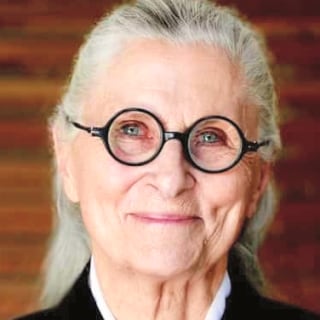
Catherine Ingram is an international dharma teacher with communities in the U.S., Europe, and Australia. Since 1992 she has led Dharma Dialogues, public events that encourage the intelligent use of attention within one's personal life and in one's community. She also leads numerous silent retreats each year in conjunction with Dharma Dialogues, and she is president of Living Dharma, an educational non-profit organization founded in 1995.
Catherine Ingram is an international dharma teacher with communities in the U.S., Europe, and Australia. Since 1992 she has led Dharma Dialogues, public events that encourage the intelligent use of attention within one's personal life and in one's community. She also leads numerous silent retreats each year in conjunction with Dharma Dialogues, and she is president of Living Dharma, an educational non-profit organization founded in 1995.
A former journalist specializing in issues of consciousness and activism, she began publishing in 1982 and over fifteen years wrote approximately 100 articles on empathic activism. She served on the editorial staffs of New Age Journal, East West Journal, and Yoga Journal, and wrote the Life Advice column for Alternatives Magazine for four years. Her books are In the Footsteps of Gandhi: Conversations with Spiritual/Social Activists (Parallax Press, 1990), Passionate Presence: Seven Qualities of Awakened Awareness (Penguin Putnam, 2003), and the novel A Crack in Everything (Diamond Books, 2006). Some main points of her long-form essay "Facing Extinction" appear in her 2021 TED talk.
Since 1976 she has helped organize and direct institutions dedicated to meditation and self-inquiry and, more recently, human and animal rights. She is a co-founder of Insight Meditation Society in Barre, Massachusetts, and of the Unrepresented Nations and Peoples Organization in The Hague, and a member of the Committee of 100 for Tibet. Her work today also includes a podcast of dialogues and reflections, webcasts, and private sessions.
Catherine Ingram is an international dharma teacher whose work spans four decades of meditation teaching, activism, and rigorous inquiry into consciousness. Since 1992, she has led Dharma Dialogues—public events that position meditation and intelligence as tools for both personal awakening and community change—across the United States, Europe, and Australia. Her influence draws partly from her earlier work as a journalist: over fifteen years beginning in 1982, she published approximately 100 articles on consciousness and activism in publications including Yoga Journal, East West Journal, and New Age Journal, establishing credibility as someone who writes about spiritual practice with the rigor of an investigative reporter rather than a true believer. What sets her apart is the explicit fusion: she refuses the Western spiritual bifurcation between inner work and outer work, insisting that dharma—direct understanding of reality—must inform how we show up in the world. Her 2019 essay "Facing Extinction" downloaded over a million times, and she delivered a 2021 TED talk; these reach beyond her retreat communities to a much broader audience. People care about Catherine Ingram's work because she brings intellectual seriousness, historical grounding in activism, and unflinching honesty about what meditation is and isn't.
Catherine Ingram's primary lineage is Theravada Buddhism, particularly Insight Meditation (Vipassana), the lineage that established roots in the West through foundational teachers. She is a co-founder of Insight Meditation Society in Barre, Massachusetts (1976), one of the foundational institutions for bringing Theravada practice into American secular and contemplative contexts. Her dharma teaching builds on this lineage's emphasis on direct observation of mind and the cultivation of awakened awareness through rigorous self-inquiry. Alongside her Buddhism, Ingram has long engaged with social activism and human rights—a commitment rooted in Buddhist ethical precepts (Sila) and exemplified by figures like Gandhi, whom she interviewed for her book "In the Footsteps of Gandhi: Conversations with Spiritual/Social Activists." Her work therefore sits within a specific American Dharma lineage: pragmatic, intellectually engaged, and explicitly oriented toward liberation and justice. She draws on the Theravada emphasis on personal insight while rejecting the apolitical spirituality that sometimes accompanies Western Buddhism, integrating instead a prophetic activist stance informed by both Buddhist ethics and her experience documenting social movements.
For someone entirely new to Catherine Ingram, the entry point depends on whether you arrive through personal practice or intellectual curiosity. If meditation is already part of your life, or if you're curious about it, her website at catherineingram.com and YouTube channel offer recorded talks and Dharma Dialogues that demonstrate her teaching live—you get the texture of how she works with questions and intelligence in real time. If you're drawn to her activism and writing first, begin with the 2019 essay "Facing Extinction" (which she released free online and which accumulated over a million downloads) or her 2021 TED talk; both give access to her voice and concerns without requiring retreat commitment. For readers who prefer books, "Passionate Presence: Seven Qualities of Awakened Awareness" (2003) is her clearest articulation of her dharma teaching, written in accessible prose that doesn't require Buddhist background. If you're interested in the intersection of spirituality and social action, "In the Footsteps of Gandhi: Conversations with Spiritual/Social Activists" (1990) remains a unique oral history—less about her own teachings than about documenting spiritual figures engaged in social movements. Her podcast on Spotify shows the range of her current thinking. Most newcomers benefit from browsing one talk or essay first to sense whether her intellectual rigor and activist orientation match their own inquiry.
Catherine Ingram stands out for her refusal to separate meditation practice from social and ecological crisis. Most Western dharma teachers position inner work and outer activism as complementary; Ingram treats them as inseparable—awakened awareness without engagement in justice and human rights is, in her view, incomplete and potentially complicit. Her background as a journalist who documented consciousness and activism for fifteen years gave her credibility in both worlds before she became primarily known as a teacher, so she doesn't arrive at activism from theory alone but from years of interviewing spiritual teachers doing justice work. Her Dharma Dialogues format is also distinctive: rather than pure meditation instruction or dharma talks, they're public events structured as dialogues that invite intelligent inquiry from participants, treating the audience as thinking adults capable of rigorous examination rather than passive receivers. Additionally, Ingram's intellectual tone is notably uncompromising—she doesn't soften dharma into self-help platitudes or spiritual reassurance. Her 2019 "Facing Extinction" essay, which addressed climate catastrophe and civilizational collapse from a Buddhist perspective, was unflinching about existential risk in ways most spiritual teachers avoid. She is also deeply involved in organizational work (founding or co-founding Insight Meditation Society, Living Dharma, and UNPO shows long-term commitment to institutions, not just personal teaching).
Catherine Ingram's work is not suited for seekers looking for spiritual comfort or reassurance. Her teaching and writing are grounded in unflinching honesty about suffering, impermanence, and—in her later work—civilizational and ecological crisis. If you're drawn to spirituality as a refuge from difficult truths, her approach will feel heavy and demanding rather than liberating. Similarly, her activism-integrated dharma teaching may not align with practitioners who prefer strict separation between meditation practice and political engagement, or who see politics as a distraction from "real" spiritual work. Her intellectual rigor—the expectation that you'll think critically rather than simply absorb teachings—can also create friction for people seeking a more devotional, teacher-centered, or faith-based spiritual path where the guru or lineage provides answers rather than structures for inquiry. Newcomers expecting music, chanting, or devotional components to meditation will find her teaching purely secular and pragmatic. Because her Dharma Dialogues and retreats are genuinely demanding (they ask for sustained attention and engagement), people seeking weekend wellness retreats or light meditation introductions should look elsewhere. Lastly, those uncomfortable with intersectional activism—her work on behalf of unrepresented nations, animal rights, Tibet, and other justice issues—may find her public presence misaligned with their spiritual preferences.
The most direct source is her website at catherineingram.com, which should list current retreat schedules, Dharma Dialogue dates, and any publishing or media announcements. She maintains an active YouTube channel (available at youtube.com/channel/UCtXkH9jUtTexK4tZZcvXVcg or through her profile) where recorded talks and past Dharma Dialogues provide both current and archival content. Her Spotify presence—she has a podcast/show with 4,310 followers—is another way to stay updated on audio content and new recordings. Because her Dharma Dialogues and retreats occur across the United States, Europe, and Australia, attendance sometimes requires travel, so checking her website for geographic schedules is essential if you're looking for events in your region. If you want to stay connected between public events, her website likely includes an email newsletter or mailing list signup, which is the traditional way these organizations keep communities informed of retreats, new essays, or talks. Living Dharma, the nonprofit organization she founded and still serves as president, may also be a resource for finding structured practice opportunities and educational events aligned with her teaching. Given that her 2019 essay "Facing Extinction" was self-published as a free link that then went viral, she also occasionally releases essays and reflections outside traditional publishing channels, so checking her website periodically for new writing is worthwhile.
Catherine Ingram's teaching style is Socratic and intellectually demanding—she leads Dharma Dialogues that function more as structured inquiries with an audience than as delivered lectures. Rather than positioning herself as the sole authority dispensing wisdom, she holds space for rigorous questioning and invites participants to examine their own direct experience and assumptions. Her retreats are silent meditation-based, consistent with Insight Meditation tradition (Vipassana), but combined with dialogue sessions where participants can explore questions arising from their practice. The overall texture is serious, non-coddling, and explicitly rooted in the Theravada Buddhist framework of awakened awareness, ethics (Sila), and liberation (Nirvana)—not repackaged as feel-good spirituality. What makes her retreats distinctive is the integration of social consciousness: while a typical Vipassana retreat is internally focused, hers weave discussions about how awakened awareness relates to activism, suffering in the world, and our responsibility to collective liberation. She doesn't shield students from hard truths about impermanence, injustice, or ecological crisis; instead, she uses them as doorways for practice. Participants often report that her teaching is clarifying but unsentimental—she doesn't provide affirmations or encourage spiritual fantasy, but rather offers tools for direct seeing. The atmosphere in her events is contemplative but never passive; intelligence and integrity are expected.
Several themes thread through Catherine Ingram's three decades of teaching: the centrality of awakened awareness as a capacity for seeing things as they actually are, rather than as our conditioning tells us they are; the inseparability of personal liberation and collective responsibility; the ethical imperative of activism grounded in meditation and compassion; and the necessity of unflinching honesty about suffering, impermanence, and death. In her books, particularly "Passionate Presence: Seven Qualities of Awakened Awareness," she articulates specific qualities—presence, clarity, compassion, integrity, and others—as markers of deepening insight. Her 2019 essay "Facing Extinction" introduces a newer theme: the need to integrate ecological and civilizational collapse into our spiritual practice, refusing to retreat into meditation as escape from these realities. Throughout her work, there's a consistent emphasis on what she calls "intelligent use of attention"—the idea that how we direct awareness is not a private spiritual matter but has implications for society. Her writing on activism repeatedly draws on interviews with spiritual/social figures (a theme from "In the Footsteps of Gandhi"), suggesting that authentic practice always manifests in some form of engagement with human suffering and injustice. Another recurring concern is the critique of Western spirituality's individualism—she pushes against the commodification of dharma into self-help and instead positions awakening as necessarily relational and collective. The combination of these themes—awakened awareness, ethics, activism, ecological realism, and community—defines her distinctive teaching voice.
Yes, significantly. Catherine Ingram has published three books—"In the Footsteps of Gandhi: Conversations with Spiritual/Social Activists" (1990), "Passionate Presence: Seven Qualities of Awakened Awareness" (2003), and a novel "A Crack in Everything" (2006)—all available through standard publishing channels and searchable through major booksellers. Her essay "Facing Extinction" (2019) was released as a free link and accumulated over a million downloads, making it perhaps her most widely-read contemporary work on the intersection of Buddhism, activism, and ecological reality. She delivered a TED talk in 2021 that offers condensed access to some of these themes. For audio and video content, her YouTube channel hosts recorded Dharma Dialogues and talks, allowing independent study of her teaching method and current work. Her podcast on Spotify (available at open.spotify.com/show/13uhkFCuF8oWaqnTOhsNLO) provides ongoing audio access to her teaching and reflections. This range of formats means that people without access to live retreats or events can study her work asynchronously—through books for deep conceptual engagement, essays for urgent contemporary thinking, videos for the experience of her teaching presence and style, and podcast content for ongoing connection. Her former role as a journalist also means some of her published articles on consciousness and activism in outlets like Yoga Journal, East West Journal, and New Age Journal remain in archives, though these are less directly focused on her personal teaching than her later authored works.
No formal prerequisite exists, but different backgrounds facilitate different entry points. If you have an established meditation practice, particularly in Vipassana or Insight Meditation, you'll find her dharma teaching immediately accessible—she assumes you understand basic practices like mindfulness and have some familiarity with Buddhist vocabulary. However, if you're new to meditation entirely, her teaching is still intelligible; she doesn't require dogmatic belief in Buddhism and approaches dharma as a pragmatic exploration of mind available to anyone willing to pay attention. Her books, especially "Passionate Presence," are written for general readers and don't assume prior Buddhist study. The activist-oriented works like "In the Footsteps of Gandhi" and "Facing Extinction" are accessible to people with no meditation background, though they deepen if you understand how Buddhist ethics inform her activism. What is helpful is intellectual curiosity and a willingness to sit with uncertainty; her Socratic teaching style and her refusal to provide easy answers means that passive spiritual consumers may find her work frustrating. If you struggle with rigorous self-examination or prefer teachers who offer clear prescriptions and reassurance, you may want to develop some groundwork elsewhere first. Her later work on ecological crisis and extinction assumes a degree of familiarity with climate realities, making it less an introduction to Buddhism and more a meditation-informed response to collective trauma. So the honest answer: start wherever you are, but understand that her teaching demands active engagement, critical thinking, and a tolerance for difficult truths.
Is this you? Claim this page ›
BrightStar is the global directory of artists, teachers, and healers in the wellness and spiritual movement. Find your next experience — or add yourself.
Browse 14,000+ curated profiles across kirtan, yoga, meditation, and beyond.
Explore directory →Kirtan, retreats, sound baths, breathwork, ceremonies — happening this week.
Browse events →Are you an artist, teacher, or healer? Get listed — free, AI-assisted, live in minutes.
Get started →