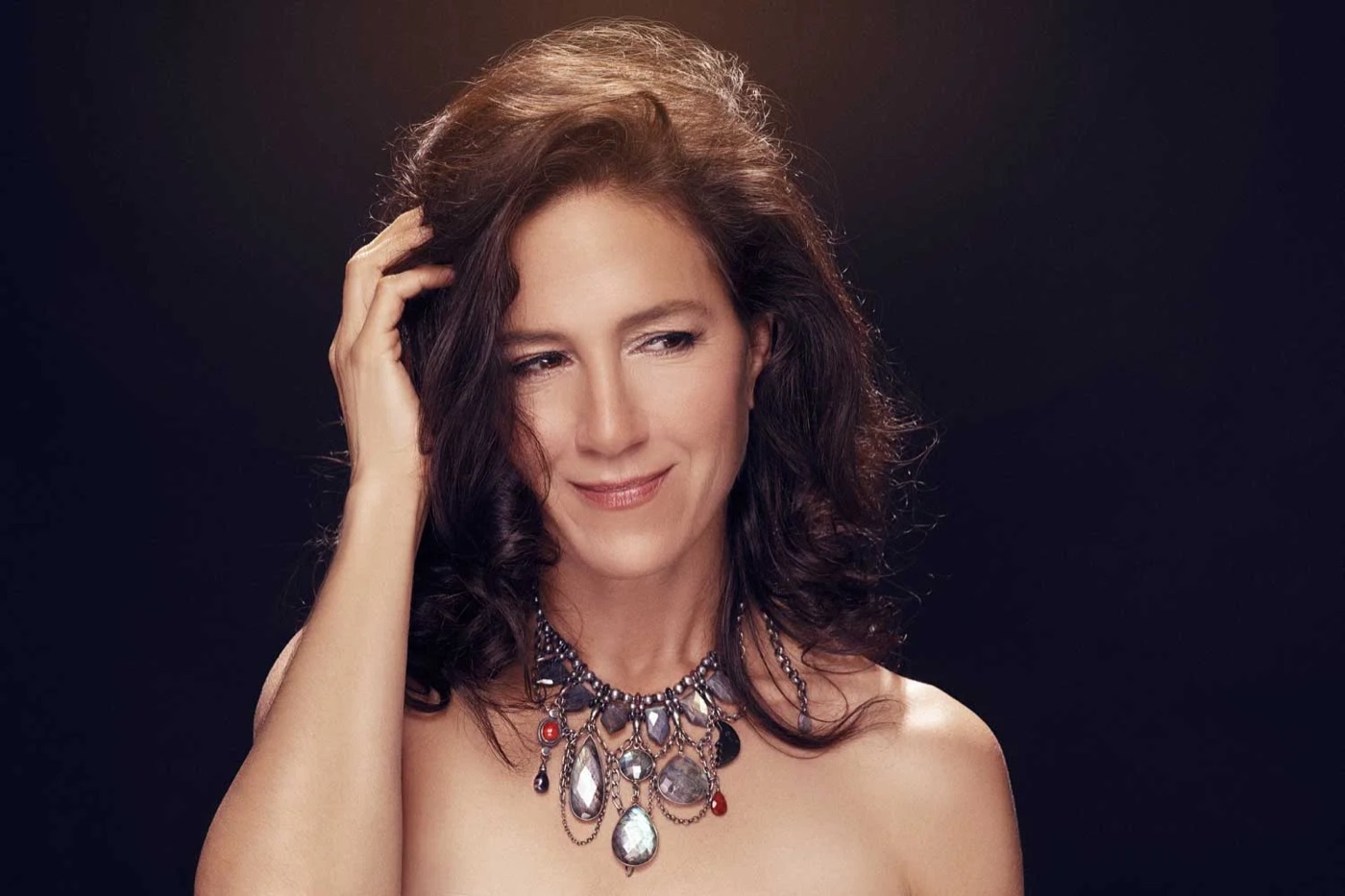

The center of Donna De Lory's devotional music is the harmonium. She taught herself to play it after her solo debut and has used it ever since, and it sits beneath most of her arrangements as a sustained, breathing drone. That reed-organ hum gives the records a hymn-like floor, and everything else is placed on top of it with care.
Her voice is the other anchor. It is supple and soaring, and on the devotional albums it moves over sparse arrangements where the words are clearly placed. The pacing is unhurried. Phrases repeat and settle, in the manner of seated listening rather than performance spectacle. The aesthetic is built on restraint, not exuberance. Listeners who want rhythmic drive or dense layering will find the space demanding. Those who value stillness will find it is the point.
As a multi-instrumentalist, arranger and producer, she plays more than the harmonium, though the public profile does not name the other instruments on each release. Specific tempos are likewise undocumented here, so the honest description is general: slow, spacious, repetitive, and clear.
Her work sits within the bhakti tradition of devotional song, in which devotion to the divine is expressed through sung names and sacred texts. She is regarded as a leading artist in the world devotional and yoga music genre. The Sanskrit material makes the connection plainest: The Lover & The Beloved is sung in Sanskrit and English and draws on mantra and chanting. Elixir: Songs of the Radiance Sutras points toward tantra, since the Radiance Sutras are a tantric text, and that places the record in a view of song as a method of practice rather than only entertainment.
What the public record does not show is a named guru or formal initiatory line. Her lineage is best described as textual and formal rather than personal: it runs through the texts and song forms she works with, not through a teacher she has publicly named.
Most artists in this field arrive through chant practice or ethnomusicology. De Lory arrived from session work, years of touring, and a pop debut on MCA Records. That route is audible. Her arrangements keep the clarity of pop production while leaving room for mantra and sacred text. The harmonium gives the records a drone-based center that differs from the guitar and tabla textures common in many devotional recordings.
Because she also arranges and produces, the sparse quality of her albums reflects one consistent vision. The tradeoff is real: purist devotional listeners sometimes hear pop craft in the arrangements and wonder whether it dilutes the sacred material. Others find that craft is exactly the appeal, because it opens the chants to people who would never otherwise enter the genre.
Her background shaped her ear. She toured as a backing vocalist and dancer with Madonna from the Who's That Girl Tour in 1987 through the Confessions Tour in 2006, and Niki Haris, a fellow backup singer, formed a vocal trio with her and Madonna on those tours. Patrick Leonard, Madonna's producer, hired De Lory and co-wrote her debut singles. Her voice also appears on recordings by Bette Midler, Carly Simon, Santana, Selena and Belinda Carlisle.
On the devotional side, the cellist and co-producer Cameron Stone has worked on all her albums since 1997, which suggests the low, bowed warmth of a cello as a natural companion to the harmonium, though that is an inference about sound, not a documented detail. The guitarist James Harrah appears on multiple albums, including Here in Heaven. The electronic producer Mac Quayle worked with her from 2003 to 2010 on projects including Sky Is Open and the remix releases. The profile does not name other band members or co-writers on the devotional records, so liner notes and her official site are the place to check.
Start with The Lover & The Beloved. The bilingual structure lets you hear her voice carry untranslated sacred text alongside lyrics you can follow line by line. Next, try Elixir: Songs of the Radiance Sutras for the tantric side and a sense of how far she has traveled from pop. Then move to The Unchanging, Here in Heaven and Gone Beyond, which reward listeners who already know the harmonium-centered style. Save the self-titled MCA debut for last, as context rather than entry point.
Expect slowness. Expect repetition. Give a record a full sitting rather than a short sample, because the arrangements reveal more over sustained listening.
What may surprise you is how clean everything sounds. The production is pop-trained, so the words are placed with clarity, and the Sanskrit does not blur into atmosphere. A second surprise is how far the later albums sit from the debut. Fans who came for the pop songs may not recognize this territory.
This is not music for listeners who want high-BPM, club or beat-driven sound, or who want spoken teaching. The songs are devotion first and entertainment second.
In the conscious-music landscape, De Lory occupies a distinct position: a pop veteran who made a deliberate turn toward sacred song and built a catalogue of Sanskrit and English devotional music that few from her background have attempted. She shares ground with yoga and kirtan-adjacent artists through the harmonium and mantra, but her studio polish and arranger's discipline set her apart from rawer, call-and-response congregational styles.
Her music is made to be sung and heard inside a practice. For anyone who already enjoys mantra, yoga or meditative listening, and who is willing to let slow, repetitive forms do their work across several listens, her records offer a rare meeting of sacred text and pop-honed craft.