BrightStar
ブログマイチケット
ブログマイチケット
Saved events
ヘルプ・お問い合わせ新規登録ログイン
イベント
  • すべてのイベントを見る
  • ヨガ
  • 瞑想
  • ブレスワーク
  • 気功
  • 聖なる音楽
  • ワールドミュージック
  • メディスンミュージック
  • サウンドヒーリング
  • エクスタティックダンス
  • セレモニー
  • プラントメディスン
  • エネルギーヒーリング
  • サットサンと智慧
  • タントラ
  • リトリート
  • すべてのカテゴリ →
目的地
  • Bali
  • Sedona
  • Los Angeles
  • Costa Rica
  • Tulum
  • Byron Bay
  • San Francisco
  • Austin
  • New York
  • San Diego
  • Denver
  • Seattle
  • Portland
  • Miami
  • London
  • Maui
  • Boulder
  • すべての都市 →
プラットフォーム
  • 主催者向け
  • ムーブメントに参加
  • Sell Globally
  • クリエイター向け
  • チーム向け
  • ライター向け
  • 講師向け
  • キルタンアーティスト向け
  • スタジオ向け
  • フェスティバル向け
  • リトリートセンター向け
  • 非営利団体向け
  • ブランドアンバサダー
  • 無料チケット販売
  • Pro
  • Amplify
  • エコシステム
機能

チケット販売と購入

  • Ticket categories
  • Assigned seating
  • Custom questions
  • Coupon codes
  • Smart pricing
  • Ticket sharing
  • Waitlist
  • Flexible refunds
  • Digital waivers
  • Tip jar
  • Donations and sliding scale
  • Embed widget
  • Mindful checkout
  • Recurring events
  • Private sessions
  • Online courses
  • Summits
  • Rooms and stays
  • Ticket scanner

マーケティングと成長

  • Abandoned cart recovery
  • Visitor recovery
  • Upsells and add-ons
  • Affiliate engine
  • Upsell affiliate network
  • Brand ambassador
  • Meta retargeting
  • Verified buyer network
  • Outbound email marketing
  • Email sequences
  • SMS and WhatsApp
  • Event upsell network
  • Direct mail campaigns
  • SEO engine
  • Syndication
  • Event sharing
  • Custom event pages
  • Artist profiles
  • Link in bio
  • Event blog
  • Blog newsletter

決済

  • Payments, powered by Stripe
  • Buy now, pay later
  • Apple Wallet
  • Multi currency

データと運営

  • Team access
  • Message center
  • Reports
  • Analytics reporting
  • Performance reporting
  • Customer data
  • Integrations
  • Switch from another platform

AI

  • Assistant
  • AI FAQ assistant
  • すべての機能 →
会社
  • 概要
  • よくある質問
  • お問い合わせ
  • ブログ
  • 用語集
  • Guides
  • インスピレーション
  • ヘルプセンター
  • APIドキュメント
  • ブランドアセット
  • プレス
  • 利用規約
  • プライバシーポリシー

イベント

  • すべてのイベントを見る
  • ヨガ
  • 瞑想
  • ブレスワーク
  • 気功
  • 聖なる音楽
  • ワールドミュージック
  • メディスンミュージック

目的地

  • Bali
  • Sedona
  • Los Angeles
  • Costa Rica
  • Tulum
  • Byron Bay
  • San Francisco
  • Austin

プラットフォーム

  • 主催者向け
  • ムーブメントに参加
  • Sell Globally
  • クリエイター向け
  • チーム向け
  • ライター向け
  • 講師向け
  • キルタンアーティスト向け

機能

  • コミュニティネットワーク
  • カート放棄リカバリー
  • チケットカテゴリ
  • 定期イベント
  • 座席指定
  • アフィリエイトシステム
  • ウェイトリスト / 通知
  • すべての機能 →

会社

  • 概要
  • よくある質問
  • お問い合わせ
  • ブログ
  • 用語集
  • Guides
  • 利用規約
  • プライバシーポリシー
続きを読む

イベント

  • サウンドヒーリング
  • エクスタティックダンス
  • セレモニー
  • プラントメディスン
  • エネルギーヒーリング
  • サットサンと智慧
  • タントラ
  • リトリート
  • すべてのカテゴリ →

目的地

  • New York
  • San Diego
  • Denver
  • Seattle
  • Portland
  • Miami
  • London
  • Maui
  • Boulder
  • すべての都市 →

プラットフォーム

  • スタジオ向け
  • フェスティバル向け
  • リトリートセンター向け
  • 非営利団体向け
  • ブランドアンバサダー
  • 無料チケット販売
  • Pro
  • Amplify
  • エコシステム

会社

  • インスピレーション
  • ヘルプセンター
  • APIドキュメント
  • ブランドアセット
  • プレス

チケット販売と購入

  • Ticket categories
  • Assigned seating
  • Custom questions
  • Coupon codes
  • Smart pricing
  • Ticket sharing
  • Waitlist
  • Flexible refunds
  • Digital waivers
  • Tip jar
  • Donations and sliding scale
  • Embed widget
  • Mindful checkout
  • Recurring events
  • Private sessions
  • Online courses
  • Summits
  • Rooms and stays
  • Ticket scanner

マーケティングと成長

  • Abandoned cart recovery
  • Visitor recovery
  • Upsells and add-ons
  • Affiliate engine
  • Upsell affiliate network
  • Brand ambassador
  • Meta retargeting
  • Verified buyer network
  • Outbound email marketing
  • Email sequences
  • SMS and WhatsApp
  • Event upsell network
  • Direct mail campaigns
  • SEO engine
  • Syndication
  • Event sharing
  • Custom event pages
  • Artist profiles
  • Link in bio
  • Event blog
  • Blog newsletter

決済

  • Payments, powered by Stripe
  • Buy now, pay later
  • Apple Wallet
  • Multi currency

データと運営

  • Team access
  • Message center
  • Reports
  • Analytics reporting
  • Performance reporting
  • Customer data
  • Integrations
  • Switch from another platform

AI

  • Assistant
  • AI FAQ assistant
アプリを入手
App StoreからApp StoreGoogle Playで手に入れようGoogle Play
© 2026 BrightStar. 全著作権所有. BrightStar Selection · 写真クレジット · 変更履歴 ·
Inspiration

From Logic to Magic: Why Creativity Needs More Than Thought

Sadhguru
Sadhguru
Nov 25, 2026
読了 約9分

出典:Sadhguru

視聴 · 7

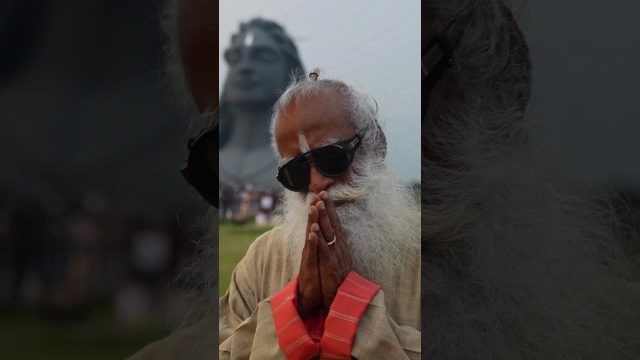
Somewhere in the first minute of this short talk, a man hears a sound he does not recognize, and without deciding to, he rolls toward it. That is the scene Sadhguru returns to in the episode "From Logic to Magic: Art, Music & Mysticism," the eighth installment of the series Sadhguru 360. The talk is brief, running a little over ninety seconds, but it packs in a complete argument: that human beings waste enormous energy inside data-driven logic, that thought itself is recycled information, that creativity depends on something outside that loop, and that the source of that something is life lived with enough depth to be worth expressing. The moment of the unfamiliar sound, the Rudra Veena heard for the first time, is where the argument turns from theory into experience.

読む · 7セクション

Is the move from logic to magic a reversal or something larger?

The talk opens with a claim that is easy to misread. "Logic to magic is not 180 degree turn," Sadhguru says at the top of the video (0:02). "It is a 360." A reversal would simply swap one pole for its opposite, trading reason for superstition or the rational for the irrational. A full rotation keeps everything in view. Logic is not thrown out; it is carried through a complete cycle and comes back to a larger place where it is no longer the only instrument.

That distinction matters for anyone who has ever tried to be both an analytical person and a creative one. The usual story is that artists must silence the critic, abandon the spreadsheet, and jump into feeling. Sadhguru's framing suggests something more demanding. The mind has to go all the way around, through its own cleverness, before it can arrive somewhere that cleverness alone cannot reach.

What is wrong with a mind that runs on data?

The sharpest line in the talk is also the most uncomfortable. "Tremendous amount of human time and energy is wasted in data driven logic," he says (0:11), adding that "much of human experience does not fit into logical explanation." He presses the point with a plain account of how thinking works: "Our thoughts arise from information and impressions we have already accumulated" (0:24). Then comes the phrase that will stick: "You are just a silly data center" (0:29).

Read closely, this is not an attack on intelligence. It describes what most thought actually is. A thought, in this account, is a reshuffling of what has already been stored: memories, opinions, borrowed phrases, the residue of past experience. A person who only thinks is, in a sense, replaying an archive. The archive can be enormous and still produce nothing new, because nothing new has entered it.

From there he draws the consequence that gives the talk its spine. "Creativity requires something beyond this constant activity of thought" (0:33). The problem is not that thinking is bad, but that a mind constantly occupied with its own stored material has no room left for anything that has not been stored yet. Creativity, on this reading, begins where the internal chatter stops long enough for something unfamiliar to get in.

What happened when an unfamiliar sound took over?

The turn of the talk is autobiographical, and it is short. "I heard an unfamiliar sound," Sadhguru recounts (0:39). "Without even thinking about it, I simply rolled towards the sound" (0:42). The detail that matters is the absence of deliberation. He did not weigh whether the sound was worth investigating, and he did not compare it to anything he knew. The sound had no file to be filed under, so the usual categorizing machinery had nothing to do.

He identifies the source: "Someone was playing what is today known as Rudra Veena" (0:46). The phrase "what is today known as" is worth noticing. It hints at a name that has shifted over time, and it signals that he is speaking about an instrument, and a sound, rather than a brand or a category. Then he names what changed in him: "I shifted to experience something deeper" (0:48). The verb is experience, not understanding. He did not come away with a theory of the instrument. He came away with a different state of being.

The video description goes further than the spoken excerpt, saying the full episode includes a personal encounter with the Rudra Veena that moved him to tears, alongside his poems and the story of the musicians Tansen and Swami Haridas. Those passages are not reproduced in the excerpt available here, so this article does not attempt to reconstruct them. What the spoken portion makes clear is the structure of the experience: attention pulled outward, thinking suspended, and a deeper register opened.

Why is a raga more than the notes on the page?

Having described the shift, Sadhguru makes a claim about music that many listeners will recognize from their own experience. "A raga is far more than a collection of notes" (0:55). It is a simple sentence with a demanding implication. If a raga were only its notes, it could be written out, memorized, and reproduced by anyone with the technique. The sense that a performance carries something the notation cannot hold is exactly the gap he is pointing at.

This is the same logic as the 360 turn applied to sound. The notes are the logical scaffolding, the part that can be analyzed and transmitted. The raga is what happens when that scaffolding is inhabited by a player or listener who has become absorbed in it. The music is not a set of data points to be decoded; it is a field that changes the person who enters it.

  • Logic handles what can be explained, measured, and repeated.
  • Thought recombines what has already been accumulated.
  • Raga, in Sadhguru's telling, is a whole that exceeds its parts.
  • Experiencing that whole, rather than analyzing it, is the doorway he describes.

Can art come from someone who has not lived enough?

The talk then widens from the individual to the family and to the present moment. "The two closest members of my family I have invested fully in music and dance" (0:59). Sadhguru does not elaborate in this excerpt, but the sentence positions music and dance not as hobbies beside an ordinary life but as commitments of the kind that shape a household. It is a reminder that the arts, in this view, are not an add-on to serious living. They are one of the forms serious living takes.

Then he turns to the question that gives the talk its urgency. "Now that we are coming to a time when artificial intelligence is even beginning to create music, we really need to look at this" (1:06). A machine can generate notes, patterns, and arrangements from the enormous archive of human music it has absorbed. In the terms he has already set out, that is a very large data center producing very fluent recombinations. The unanswered question is what it lacks.

"What is there to express if we have not experienced life profoundly enough?" (1:17)

Sadhguru, in the video

The line is less a rejection of machine-made music than a test applied to anyone making music. Expression needs something to express. If a person's life has been thin, reactive, and mostly a matter of stored impressions, what comes out will be a rearrangement of other people's expression. If a life has been lived with real depth, the art has a source that no archive contains. The question is directed at artists, but it works just as well for listeners deciding what moves them.

What does it mean to bring life back into art?

The talk closes with its shortest and most open sentence: "It's time to bring back life" (1:28). It arrives after the music cue that the transcript marks, which is fitting, since the sentence is less a conclusion than an instruction. The argument has moved from a 360-degree turn, through the data center, through an unfamiliar sound, to a raga that exceeds its notes and an AI that can imitate them. Each step returns to the same point. Art is not produced by the mind's accumulated material alone. It needs an encounter that the mind did not script.

For a practicing musician, dancer, or writer, the practical reading is uncomfortable but useful. Technique matters, and so does study, but the talk suggests that technique is only the logical half of the loop. The other half is letting attention be taken by something larger than the self's running commentary, the way Sadhguru was taken by a sound he did not recognize. For a listener, the reading is parallel: notice when a piece of music moves you beyond what its notes can explain, and treat that as information about what you are actually responding to.

Where to go from here

This talk is a compact entry point rather than a complete treatise, and the best way to test its claims is to bring them to your own listening and making. Watch the full episode of Sadhguru 360 for the poems, the story of Tansen and Swami Haridas, and the longer account of the Rudra Veena encounter that the description mentions. Then try the experiment the talk implies: put on a raga or a piece of music you know well, set aside the urge to analyze it, and notice whether a deeper register opens. When you make something yourself, ask the question the talk leaves hanging. What have you actually lived that you are trying to say?

The 360-degree turn is not a single leap. It is a practice of moving through the logical mind, past its archive, and back into experience, again and again. The talk's final instruction, to bring back life, is a standard as much as a call. It asks whether our art, and our attention, are fed by anything beyond what we already know.

コメント

会話を読み込み中…

Transcript

[0:00] Logic to magic

[0:02] is not 180 degree turn. It is a 360.

[0:11] Tremendous amount of human time and

[0:13] energy is wasted in data driven logic,

[0:17] but much of human experience does not

[0:20] fit into logical explanation.

[0:24] Our thoughts arise from information and

[0:27] impressions we have already accumulated.

[0:29] You are just a silly data center.

[0:33] Creativity requires something beyond

[0:36] this constant activity of thought.

[0:39] I heard an unfamiliar sound. Without

[0:42] even thinking about it, I simply rolled

[0:44] towards the sound.

[0:46] Someone was playing what is today known

[0:48] as Rudra Veena. I shifted to experience

[0:52] something deeper.

[0:55] A raga is far more than a collection of

[0:57] notes.

[0:59] The two closest members of my family I

[1:02] have invested fully in music and dance.

[1:06] Now that we are coming to a time when

[1:10] artificial intelligence is even

[1:12] beginning to create music, we really

[1:14] need to look at this.

[1:17] What is there to express

[1:19] if we have not experienced life

[1:20] profoundly enough?

[1:22] It's time to bring back life.

[1:28] >> [music]

Sadhguru

Sadhguru

アーティスト

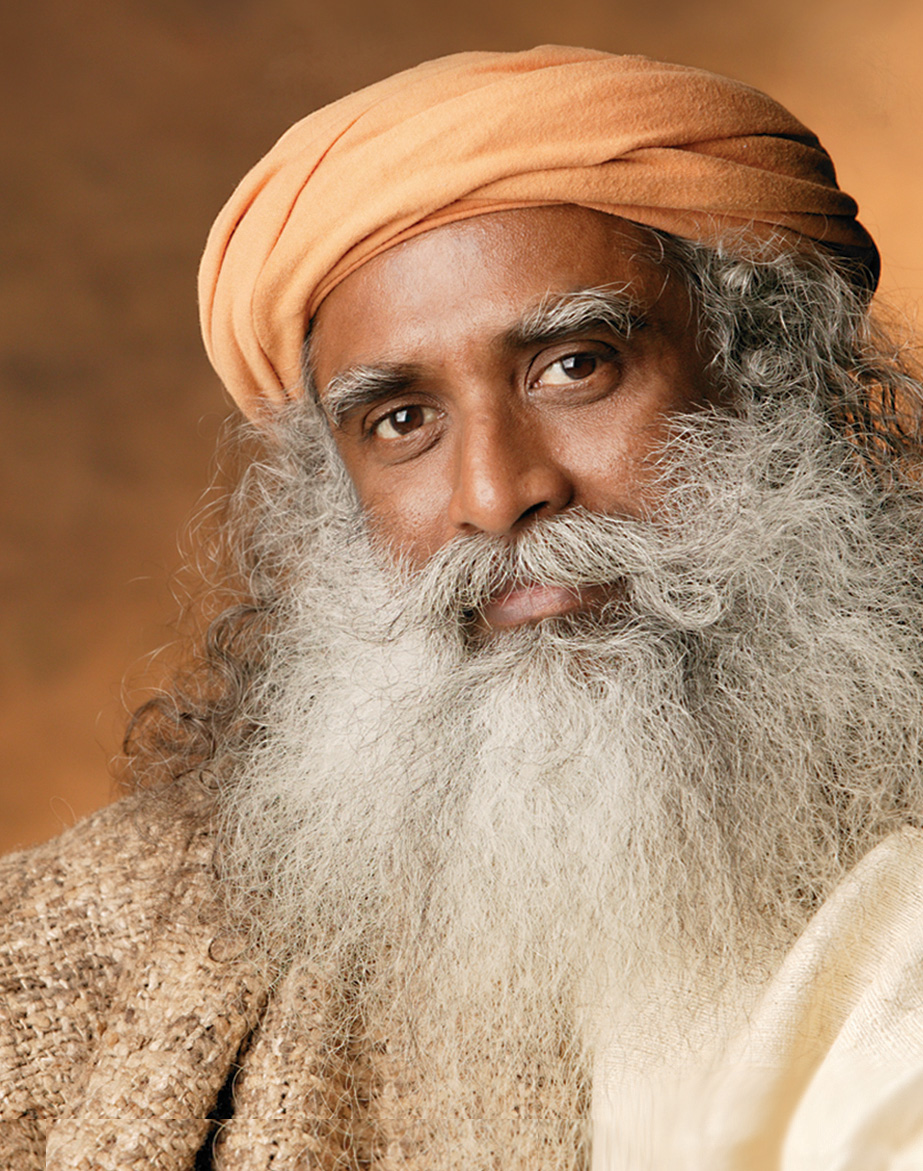
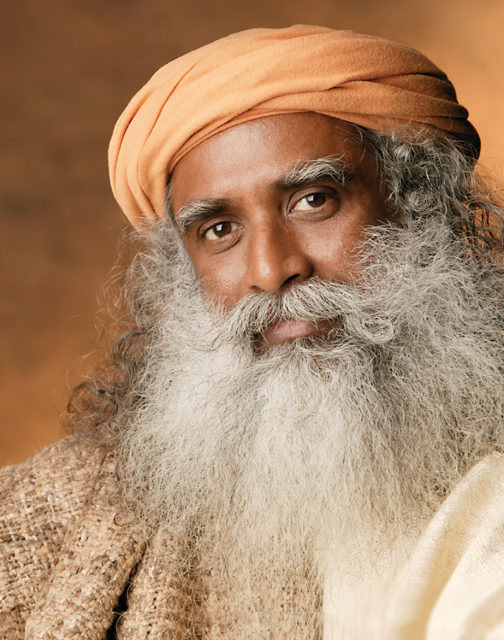
Indian yogi, mystic, and founder of the Isha Foundation. Through his programs (Inner Engineering, Bhava Spandana, Samyama) and books, he has introduced millions worldwide to a contemporary, intensely practical approach to yoga and inner transformation. His Save Soil and Conscious Planet campaigns extend his teaching into ecological action.

プロフィールを見る
トピックを見る
Logic to magicRudra veenaRaga musicSadhguru 360Creativity
よくある質問

よくある質問

Sadhguru argues that moving from logic to magic is not a reversal that swaps reason for its opposite. It is a full rotation in which logic is carried through a complete cycle and arrives at a larger place where it is no longer the only instrument. The rational mind is included in the journey rather than discarded.

In the talk, he says thoughts arise from information and impressions already accumulated, so a mind that only thinks is recombining stored material. He argues that creativity requires something beyond this constant activity of thought, because nothing new can enter a mind that is always replaying its own archive.

The Rudra Veena is the instrument Sadhguru describes hearing as an unfamiliar sound that drew him in without any deliberate thought. In the talk it serves as the turning point, the moment he says he shifted to experience something deeper. The video description adds that his encounter with it moved him to tears, though the spoken excerpt does not elaborate.

Sadhguru says a raga is far more than a collection of notes. The implication is that notes can be written and memorized, while a raga's fuller meaning is found in the experience of the music, which changes the person who enters it.

He says that as artificial intelligence begins to create music, we need to look at this seriously. His central test is whether a creator has experienced life profoundly enough to have something to express, a question that machines drawing on accumulated human music do not obviously answer.

The episode, titled From Logic to Magic: Art, Music & Mysticism, covers poetry, music, dance, and creativity as paths from logic toward inner transformation. The spoken excerpt focuses on the logic-to-magic framing, the Rudra Veena encounter, and the claim that life must be lived deeply before art can express anything.

こちらもおすすめ

すべて表示
War, Nuclear Risk & the Silence We Choose
Inspire

War, Nuclear Risk & the Silence We Choose

A spiritual teacher confronts the machinery of modern conflict and the hidden cost of celebrating others' suffering in a world armed with nu…

10 min read
Why Relationships Need Daily Work, Not Just Birth or Romance
Inspire

Why Relationships Need Daily Work, Not Just Birth or Romance

In a short YouTube talk, Sadhguru argues that birth, friendship and romance don't guarantee a lasting bond. Real steadiness, he says, comes …

7 min read
Medicine Buddha Practice: Feeling Beneath the Thinking
Inspire

Medicine Buddha Practice: Feeling Beneath the Thinking

Lama Rod Owens opens a Monday-night Medicine Buddha session six years into the practice, teaching how to feel an experience instead of think…

10 min read
Improvising Mantra: How Friday Night Songs Keep Changing
Inspire

Improvising Mantra: How Friday Night Songs Keep Changing

A violinist's daughter who never plays a song the same way twice explains why her Friday night chants keep changing. Here's what improvisati…

9 min read
すべて見るこちらもおすすめ→

旅をつづける

BrightStarのディレクトリから、さらなる智慧と集いを。

もっと記事を読む

教え、インタビュー、ガイドのライブラリ全体をご覧ください。

すべての記事に戻る →

講師とアーティスト

コンシャスな世界の系譜、音楽家、導き手を探しましょう。

アーティストを探す →

イベントを見つける

キルタン、リトリート、サウンドバス、ブレスワーク、フェスティバル — まもなく開かれます。

イベントを見る →