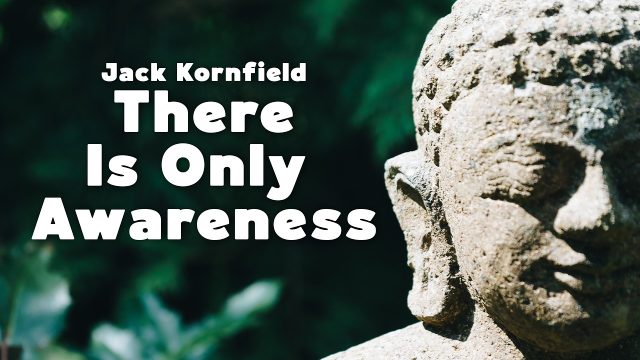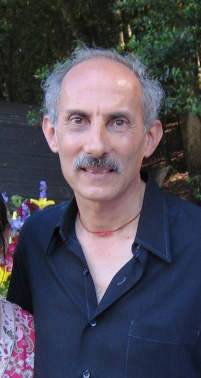
In this dharma talk, Jack Kornfield explores the fundamental nature of mind through Buddhist meditation practices, offering both theoretical understanding and playful, practical exercises to help practitioners recognize their capacity for freedom, compassion, and ease. Drawing from decades of monastic training in Thailand, India, and Burma, and his work bringing mindfulness to the West, Kornfield teaches that understanding the mind's nature is not an abstract philosophical pursuit but a direct, experiential discovery available to anyone willing to observe their own awareness with honesty and gentleness.
At the heart of Buddhist meditation lies a simple but profound purpose that often gets obscured by mystification or complexity. Kornfield emphasizes that meditation is not meant to produce altered states or exotic experiences, but rather to reveal what is already true about the nature of mind and our capacity for awareness itself. The practice begins with a basic recognition: the mind has the capacity to be aware, to observe itself, and through that observation, to understand its own nature.
The purpose of Buddhist practice, according to Kornfield's teaching, is fundamentally about awakening to freedom. Not freedom from circumstances (which is impossible) but freedom within experience—the freedom to choose our response, to meet life with compassion rather than reactivity, and to recognize our true home as a state of ease and openness rather than contraction and fear. This is not reserved for monastics or advanced practitioners; it is available to anyone willing to examine their own mind with curiosity and compassion.
Kornfield notes that much of Western spirituality has become focused on achievement or accumulation—collecting experiences, reaching certain states, becoming "enlightened." But Buddhist practice invites a different orientation: letting go rather than grasping, simplifying rather than complicating, and recognizing that what we seek is already present in our capacity to be aware.
One of Kornfield's key insights is that understanding the nature of mind is inseparable from cultivating compassion. When we observe the mind carefully through meditation, we begin to see the universal patterns underlying human suffering and behavior. We notice how the mind reacts to discomfort, how it grasps at pleasure, how it constructs narratives about who we are. These patterns are not personal failures or signs of brokenness; they are simply what minds do when not yet awake.
This recognition naturally generates compassion—both for ourselves and for all beings. If we can see that our own mind follows these patterns, we can recognize that others do too. The person who hurt us, the person we judge, the person we fear—all are operating within these same conditioned patterns of mind. Compassion arises not from moral effort or sentimentality, but from direct seeing.
Kornfield teaches that true compassion is rooted in understanding, not in trying harder to be nice. When meditation reveals how the mind actually works—how it creates suffering through its own patterns of reactivity—natural compassion emerges. We become gentler with ourselves because we understand the difficulty of the human condition, and we extend that same understanding to others.
Rather than remaining purely theoretical, Kornfield offers playful practices that allow practitioners to directly experience what he is teaching about mind nature. These are not complicated or requiring special conditions; they emerge from the basic capacity of awareness itself.
One foundational approach is simple mindfulness observation. Kornfield invites practitioners to sit quietly and notice what naturally arises in consciousness. Rather than trying to produce a particular state or eliminate unwanted thoughts, the practice is to observe: What is here now? What does the mind do when I simply pay attention to it? This is not effort toward a goal but relaxed, curious attention. As practitioners sit, they notice thoughts arising and passing, emotions shifting, sensations changing, moments of clarity alternating with moments of fog. The mind naturally shows its own nature when simply observed with gentle attention.
Another practice Kornfield emphasizes involves observing the habitual patterns of reactivity. The mind tends to meet pleasant experiences with grasping ("I want more of this"), unpleasant experiences with aversion ("I don't want this"), and neutral experiences with indifference or inattention. By simply noticing these three reactive patterns as they occur in daily life—not trying to change them, just recognizing them—practitioners begin to see the habitual nature of mind. This seeing is itself the beginning of freedom. Once we recognize a pattern, we have the possibility of choice; before recognizing it, we are simply identified with it.
Kornfield also teaches the importance of direct inquiry: turning the light of awareness back on itself. What is awareness itself? Can you find the one who is aware? This is not a riddle with a verbal answer but an invitation to genuine investigation. As practitioners sit with this question, they often discover that awareness cannot be captured or defined the way objects can be—awareness is the field in which all experience occurs, not another object within that field. This discovery has profound implications for how we understand ourselves.
A central teaching in Kornfield's talk is that our true home is characterized by ease. Not the ease that comes from avoiding difficulty, but the ease that comes from ceasing to fight reality. Most human suffering is not created directly by circumstances but by our resistance to circumstances—our mental struggle against what is.
When meditation reveals the nature of mind, one of the first discoveries is that the mind itself is naturally at ease when not agitated by reactivity. There is a basic okayness underlying experience that we often miss because we are too busy struggling against what is arising. A Buddhist metaphor describes this: we are like someone in water struggling to stay afloat, never noticing that the water itself would hold us if we simply relaxed.
Through practice, Kornfield teaches, we discover that we do not need to fix everything about ourselves or achieve a perfect state. We can simply recognize and ease up on the habitual tension we create through our resistance. This easing happens naturally when the mind understands its own patterns. It is not something we have to accomplish; it is something we uncover by ceasing unnecessary struggle.
The ease Kornfield points to is not passive or indifferent. Rather, it is the ground from which wise action naturally emerges. When we are not caught in reactivity and resistance, we can meet life with clarity and appropriate response. Actions taken from ease and understanding tend to be more helpful than actions taken from desperation or grasping.
A refreshing aspect of Kornfield's teaching is his emphasis on radical honesty about what is actually happening in mind and experience. Buddhism offers no promises to bypass difficulty or to attain a state where problems disappear. Instead, it invites practitioners to look clearly at what is true.
This honesty is itself liberating. Many spiritual traditions operate on the basis of pretense—pretending to be enlightened, pretending to have achieved states we have not, performing spirituality rather than practicing it. Kornfield's approach invites the opposite: meeting yourself exactly as you are, noticing without judgment what is actually present in consciousness right now.
This radical honesty extends to the observation that the mind is conditioned, habitual, and often not in our conscious control. Rather than denying this or trying to immediately transcend it, Buddhist practice says: notice it clearly. See how your mind works. Understand the patterns that control it. From that understanding, genuine freedom becomes possible. We cannot change what we do not clearly see.
Kornfield is known for emphasizing that awakening is not meant to be confined to meditation cushions. The insights discovered in formal practice must be integrated into daily living. This integration is not automatic; it requires intentional attention and gentle persistence.
One way to integrate these teachings is to notice moments throughout the day when the three reactive patterns arise: grasping, aversion, and indifference. In a business meeting, you notice yourself grasping for approval. During an uncomfortable conversation, you notice yourself avoiding. While scrolling your phone, you notice yourself in neutral inattention. Simply noticing these moments—without judgment or trying to fix them—brings the meditation practice into daily life.
Another integration practice involves pausing periodically to check in with the quality of mind. Am I at ease right now or struggling? If struggling, what am I resisting? Can I ease up even slightly? These questions bring the inquiry into ordinary moments, making daily life itself the practice ground.
Kornfield also emphasizes that integration happens through compassionate self-understanding. As you notice your own patterns of reactivity in daily life, you meet them with the same gentle attention you would offer a struggling friend. This gentleness is essential; harsh self-judgment only adds another layer of reactivity to work with.
Kornfield's teaching invites a fundamentally different relationship with your own mind—one of curious observation rather than identification or struggle. The practices he offers are simple but profound: sit quietly and notice what is present, observe how the mind reacts to experience, inquire into the nature of awareness itself. These practices require no special equipment, conditions, or belief system; they ask only that you turn your attention inward with honesty and gentleness.
To deepen engagement with this work, explore formal meditation practice with qualified teachers, particularly within the Buddhist contemplative traditions that Kornfield himself trained in. Consider joining a meditation sangha (community) where you can practice alongside others and receive guidance in working with the subtle dimensions of mind nature that are difficult to understand through intellectual study alone. Kornfield's own work, including his books and online courses, offers accessible frameworks for understanding Buddhist psychology and meditation practice in contemporary contexts.
Most importantly, begin where you are. The nature of mind is not distant or exotic—it is available right now in your own direct experience. The invitation is simply to look, with openness and curiosity, at what is actually present when you turn your attention inward.