BrightStar
BlogMeus ingressos
BlogMeus ingressos
Saved events
Ajuda e contatoCadastrarEntrar
Eventos
  • Ver todos os Eventos
  • Para buscadores
  • Yoga
  • Meditação
  • Respiração consciente
  • Qigong
  • Música sagrada
  • World music
  • Música de medicina
  • Terapia sonora
  • Dança extática
  • Cerimônia
  • Medicina das plantas
  • Cura energética
  • Satsang e sabedoria
  • Tantra
  • Retiros
  • Todas as categorias →
Destinos
  • Bali
  • Sedona
  • Los Angeles
  • Costa Rica
  • Tulum
  • Byron Bay
  • San Francisco
  • Austin
  • New York
  • San Diego
  • Seattle
  • Portland
  • Miami
  • London
  • Maui
  • Boulder
  • Oakland
  • Todas as cidades →
Plataforma
  • Para organizadores
  • Junte-se ao movimento
  • Sell Globally
  • Para criadores
  • Para equipes
  • Para escritores
  • Para professores
  • Para artistas de kirtan
  • Para estúdios
  • Para festivais
  • Para centros de retiro
  • Para organizações sem fins lucrativos
  • Embaixador da marca
  • Ingressos grátis
  • Elevate
  • Amplify
  • O ecossistema
Recursos

Bilheteira e compra

  • Ticket categories
  • Assigned seating
  • Custom questions
  • Coupon codes
  • Smart pricing
  • Ticket sharing
  • Waitlist
  • Flexible refunds
  • Digital waivers
  • Tip jar
  • Donations and sliding scale
  • Embed widget
  • Mindful checkout
  • Recurring events
  • Private sessions
  • Online courses
  • Summits
  • Rooms and stays
  • Ticket scanner

Marketing e crescimento

  • Abandoned cart recovery
  • Visitor recovery
  • Upsells and add-ons
  • Affiliate engine
  • Upsell affiliate network
  • Brand ambassador
  • Meta retargeting
  • Verified buyer network
  • Outbound email marketing
  • Email sequences
  • SMS and WhatsApp
  • Event upsell network
  • Direct mail campaigns
  • SEO engine
  • Syndication
  • Event sharing
  • Custom event pages
  • Artist profiles
  • Link in bio
  • Event blog
  • Blog newsletter

Pagamentos

  • Payments, powered by Stripe
  • Buy now, pay later
  • Apple Wallet
  • Multi currency

Dados e operações

  • Team access
  • Message center
  • Reports
  • Analytics reporting
  • Performance reporting
  • Customer data
  • Integrations
  • Switch from another platform

IA

  • Assistant
  • AI FAQ assistant
  • Todos os recursos →
Empresa
  • Sobre
  • Perguntas frequentes
  • Contato
  • Blog
  • Glossário
  • Guides
  • Inspiração
  • Central de ajuda
  • Documentação da API
  • Recursos da marca
  • Imprensa
  • Termos de Serviço
  • Política de Privacidade

Eventos

  • Ver todos os Eventos
  • Para buscadores
  • Yoga
  • Meditação
  • Respiração consciente
  • Qigong
  • Música sagrada
  • World music

Destinos

  • Bali
  • Sedona
  • Los Angeles
  • Costa Rica
  • Tulum
  • Byron Bay
  • San Francisco
  • Austin

Plataforma

  • Para organizadores
  • Junte-se ao movimento
  • Sell Globally
  • Para criadores
  • Para equipes
  • Para escritores
  • Para professores
  • Para artistas de kirtan

Recursos

  • Rede da comunidade
  • Recuperação de carrinho abandonado
  • Categorias de ingressos
  • Eventos recorrentes
  • Lugares marcados
  • Sistema de afiliados
  • Lista de espera / Notificar
  • Todos os recursos →

Empresa

  • Sobre
  • Perguntas frequentes
  • Contato
  • Blog
  • Glossário
  • Guides
  • Termos de Serviço
  • Política de Privacidade
Leia mais

Eventos

  • Música de medicina
  • Terapia sonora
  • Dança extática
  • Cerimônia
  • Medicina das plantas
  • Cura energética
  • Satsang e sabedoria
  • Tantra
  • Retiros
  • Todas as categorias →

Destinos

  • New York
  • San Diego
  • Seattle
  • Portland
  • Miami
  • London
  • Maui
  • Boulder
  • Oakland
  • Todas as cidades →

Plataforma

  • Para estúdios
  • Para festivais
  • Para centros de retiro
  • Para organizações sem fins lucrativos
  • Embaixador da marca
  • Ingressos grátis
  • Elevate
  • Amplify
  • O ecossistema

Empresa

  • Inspiração
  • Central de ajuda
  • Documentação da API
  • Recursos da marca
  • Imprensa

Bilheteira e compra

  • Ticket categories
  • Assigned seating
  • Custom questions
  • Coupon codes
  • Smart pricing
  • Ticket sharing
  • Waitlist
  • Flexible refunds
  • Digital waivers
  • Tip jar
  • Donations and sliding scale
  • Embed widget
  • Mindful checkout
  • Recurring events
  • Private sessions
  • Online courses
  • Summits
  • Rooms and stays
  • Ticket scanner

Marketing e crescimento

  • Abandoned cart recovery
  • Visitor recovery
  • Upsells and add-ons
  • Affiliate engine
  • Upsell affiliate network
  • Brand ambassador
  • Meta retargeting
  • Verified buyer network
  • Outbound email marketing
  • Email sequences
  • SMS and WhatsApp
  • Event upsell network
  • Direct mail campaigns
  • SEO engine
  • Syndication
  • Event sharing
  • Custom event pages
  • Artist profiles
  • Link in bio
  • Event blog
  • Blog newsletter

Pagamentos

  • Payments, powered by Stripe
  • Buy now, pay later
  • Apple Wallet
  • Multi currency

Dados e operações

  • Team access
  • Message center
  • Reports
  • Analytics reporting
  • Performance reporting
  • Customer data
  • Integrations
  • Switch from another platform

IA

  • Assistant
  • AI FAQ assistant
Baixe o app
Baixar naApp StoreDisponível noGoogle Play
© 2026 BrightStar. Todos os direitos reservados. BrightStar Selection · Créditos das fotos · Histórico de alterações ·
Inspiration

Body Identification: Why "My Body" Is a Mental Construct

Eckhart Tolle
Eckhart Tolle
Mar 14, 2026
7 min de leitura

De Eckhart Tolle

The phrase "my body" reflects a fundamental misidentification—a thought-based claim of ownership over a physical form that is inherently impermanent. The body ages, changes, and deteriorates, yet the thinking mind clings to it as a definition of self. This illusion of permanence and ownership generates much of the psychological suffering we experience, from aging anxiety to bodily shame. Understanding that the body is experienced *through* consciousness, rather than being who we are, is a crucial step toward freedom from this identification and toward recognizing the witnessing awareness that observes all change.

Leitura · 6 seções

What Does It Mean to Identify With "My Body"?

When someone says "my body," they are not making a literal statement of fact. They are unconsciously making a thought-based claim of ownership and identity. The body is being treated as a possession that belongs to an "I," and simultaneously, that "I" is being defined by the body itself. This is the circular logic of ego-identification: the mind creates a sense of self by attaching to the form.

This identification begins early in life, often without conscious awareness. A child learns to say "my body," "my hand," "my face" long before developing the cognitive capacity to question whether the body actually *is* the self, or whether it is simply an object the self inhabits or observes. The thought-statement "my body" becomes so habitual that it feels like truth rather than interpretation.

Yet the very language reveals the problem: if the body is truly "mine," then there must be an "I" that possesses it, something separate from the body that claims ownership. This logical structure suggests that identification with the body is inherently unstable—it rests on a presumed self that is not itself the body.

Why Does the Body Keep Changing if It's "Mine"?

The body is in constant flux. Cells die and regenerate. The skin changes texture and appearance. Hair grays. The posture shifts. Strength ebbs. The shape transforms across decades. For many people, these changes produce a low-level but persistent anxiety: if the body is who I am, then who am I becoming as my body deteriorates?

This anxiety reveals the fundamental instability of body-identification. The mind attempts to hold onto an identity ("I am this body") while the body itself refuses to stay the same. The result is a chronic, half-conscious struggle: clinging to the form while it inevitably changes. Cosmetics, exercise, surgery, and other body-modification practices often reflect this desperate attempt to freeze the form and preserve the identification.

The deeper issue is that the thinking mind creates a story about the body—a narrative of ownership and definition—but this narrative has no power to stop the body from aging, weakening, and ultimately returning to the elements. The mind is trying to impose permanence on something inherently temporary. This mismatch between the mind's attempt to fix identity and the body's natural impermanence is a major source of existential suffering.

How Does Thought Create the "My" in "My Body"?

Before there is the thought "my body," there is a direct sensory experience of the body—sensation, movement, breath. The body is simply present. But the moment the thought arises—the mental label "my body"—something shifts. A possessive relationship is created where there was only direct experience before. The body becomes an object that "I" own, rather than a living experience that is simply happening.

This thought-based appropriation has profound consequences. Once the body is claimed as "mine," the mind extends its protective, possessive energy toward it. The body is no longer just the body; it becomes a repository of identity, worth, and self-image. Aging becomes threatening because it is attacking "my" identity. Injury becomes traumatic not just physically but psychologically, because it is damaging "my" self-definition. Physical appearance becomes a marker of personal value because it is supposed to reflect "me."

The thought "my body" also creates a subtle sense of separation from the body. By claiming it as a possession, the thinking mind implicitly positions itself as other than the body. There is a subject ("I") and an object ("my body"). This subject-object split is itself a product of thought—the moment language and conceptual mind arise, the unified experience of being alive fragments into fragments of "me" observing "my" body.

What Happens When We Stop Identifying With the Form?

When identification with the body loosens, a different relationship to the body becomes possible. The body is still present, still functioning, still sensed and moved. But it is no longer being defended as "me." There is a relaxation of the possessive energy that usually surrounds it.

This shift does not mean becoming dissociated from the body or neglectful of its needs. Rather, it means relating to the body as something that is happening, something that is observed and inhabited, but not as the core of identity. The body can be cared for without the ego-driven desperation that comes from believing one's entire existence depends on maintaining its appearance or preventing its decline.

From this less identified perspective, aging is simply aging—cells changing, the face altering, the hair graying—without the additional layer of psychological suffering that comes from taking it personally as an attack on the self. Physical sensations are experienced directly without the filter of "this is happening to me, this affects my identity." The body can be appreciated for what it is—a temporary, miraculous vehicle for experience—without the illusion of permanent ownership.

Is There a Witnessing Awareness Beyond the Body?

The possibility of freedom from body-identification rests on recognizing that there is awareness present that is not itself the body. This awareness is not a thing; it is not another entity to be claimed as "mine." It is the witnessing presence that observes the body, sensations, thoughts, and emotions arising and passing away.

This witnessing awareness is often overlooked because we have been trained to identify exclusively with the content of experience—the body, emotions, thoughts—rather than with the space in which these arise. But if you pause and notice what is aware of your body right now, you may recognize a consciousness that is distinct from the body itself. This consciousness does not age, change, or fade. It is the eternal present moment in which the changing body is perceived.

Recognition of this aware presence is not a mystical revelation; it is available to direct experience. When the mind quiets and identification with thought temporarily loosens, what remains is the sense of being aware, present, alive—without the need for a story about who or what this aware presence is. In this state, the body is no longer the defining feature of existence. It is simply one aspect of the present moment.

Where to Go From Here

The illusion of "my body" cannot be dissolved by force or willpower. Attempting to reject the body or suppress identification through effort typically only reinforces the unconscious identification. Instead, the path is one of aware observation. Begin to notice, in moments of presence, how the thought "my body" arises and creates a sense of possession. Notice how the mind defends this possession, how it generates anxiety about the body's change and decline. This noticing itself is the beginning of freedom, because it creates distance between the witnessing awareness and the identified thought.

Meditation and presence practices are useful tools here, as they naturally shift attention from the content of experience (including body-identification) to the aware presence in which experience occurs. As identification loosens, the body is still there—but it is no longer the prison of identity. It is simply the form through which this present moment is experienced.

Comentários

Carregando a conversa…

O artista desta história

Eckhart Tolle

Eckhart Tolle

Spiritual Teacher

Eckhart Tolle is a spiritual teacher and author whose bestsellers The Power of Now and A New Earth have introduced millions to living in the present moment, and who sees awakened Presence as the essential next step in human evolution.

Ver perfil
Explorar temas
Body identificationEgo illusionImpermanenceConsciousnessEckhart tolle
Perguntas frequentes

Perguntas frequentes

Saying 'my body' is a thought-based claim of ownership that the ego uses to create a sense of self. The body appears to 'belong' to an 'I,' and simultaneously that 'I' is defined by the body—a circular identification that generates psychological suffering and anxiety about aging and change.

When the mind defines itself through the body, every change to the body—aging, illness, weakness—is experienced as a threat to the self. This creates chronic anxiety, shame about appearance, and existential dread about mortality, all stemming from the false belief that the body's decline means the self is disappearing.

The body is constantly changing—aging, weakening, transforming—while awareness is the unchanging presence that witnesses these changes. Recognizing that you are the aware presence observing the body, rather than identifying as the body itself, creates freedom from the anxiety and suffering bound up in body-identification.

Yes. When identification loosens, the body is still present and can be cared for naturally without the ego-driven desperation that comes from believing your entire identity depends on its appearance or functioning. Care becomes simpler and less psychologically charged.

Rather than forcing rejection of the body, the path is aware observation. Notice when the thought 'my body' arises and creates possessiveness and anxiety. This noticing creates distance between your awareness and the identification, gradually allowing identification to loosen naturally through presence practices and meditation.

No. Dissociation is an unconscious disconnection driven by trauma or fear. Releasing body-identification through awareness is a conscious shift toward being more present in the body without clinging to it as identity. The body is still fully inhabited and experienced, just without the illusion of ownership and definition.

Você também pode gostar

Ver Tudo
God Beyond the Sky: Rethinking Divine Nature
Inspire

God Beyond the Sky: Rethinking Divine Nature

God is not an external judge deciding human suffering. Suffering itself becomes the mechanism through which consciousness awakens to itself.…

6 min read
God, Suffering, and the One Life Across Traditions
Inspire

God, Suffering, and the One Life Across Traditions

Eckhart Tolle explores how Islam, Buddhism, and Greek philosophy all point to the same ultimate reality—and why the problem of suffering dis…

7 min read
Sacred Feminine Power: Chanting Devi Beyond the Mat
Inspire

Sacred Feminine Power: Chanting Devi Beyond the Mat

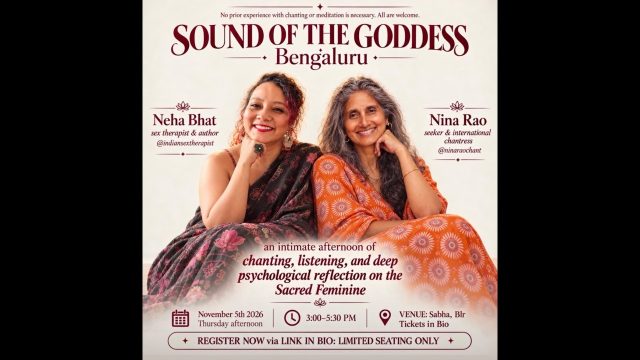
An in-person gathering in Bengaluru merges ancient devotional chanting with modern psychotherapy to explore how the Goddess archetype illumi…

8 min read
Zâhid Bizi Ta'n Eyleme: 400 Years of Turkish Devotion Reborn
Inspire

Zâhid Bizi Ta'n Eyleme: 400 Years of Turkish Devotion Reborn

Sami Yusuf performs a 16th-century Turkish spiritual masterpiece with a 50-piece ensemble, honoring four centuries of tradition while forgin…

6 min read
Ver tudoVocê também pode gostar→

Continue sua jornada

Mais sabedoria e mais encontros de todo o diretório BrightStar.

Mais artigos

Explore a biblioteca completa de ensinamentos, entrevistas e guias.

Voltar a todos os artigos →

Professores e artistas

Conheça as linhagens, os músicos e os guias do mundo consciente.

Explorar artistas →

Encontre um evento

Kirtan, retiros, banhos de som, breathwork, festivais — acontecendo em breve.

Ver eventos →