BrightStar
BlogMeus ingressos
BlogMeus ingressos
Saved events
Ajuda e contatoCadastrarEntrar
Eventos
  • Ver todos os Eventos
  • Para buscadores
  • Yoga
  • Meditação
  • Respiração consciente
  • Qigong
  • Música sagrada
  • World music
  • Música de medicina
  • Terapia sonora
  • Dança extática
  • Cerimônia
  • Medicina das plantas
  • Cura energética
  • Satsang e sabedoria
  • Tantra
  • Retiros
  • Todas as categorias →
Destinos
  • Bali
  • Sedona
  • Los Angeles
  • Costa Rica
  • Tulum
  • Byron Bay
  • San Francisco
  • Austin
  • New York
  • San Diego
  • Seattle
  • Portland
  • Miami
  • London
  • Maui
  • Boulder
  • Oakland
  • Todas as cidades →
Plataforma
  • Para organizadores
  • Junte-se ao movimento
  • Sell Globally
  • Para criadores
  • Para equipes
  • Para escritores
  • Para professores
  • Para artistas de kirtan
  • Para estúdios
  • Para festivais
  • Para centros de retiro
  • Para organizações sem fins lucrativos
  • Embaixador da marca
  • Ingressos grátis
  • Elevate
  • Amplify
  • O ecossistema
Recursos

Bilheteira e compra

  • Ticket categories
  • Assigned seating
  • Custom questions
  • Coupon codes
  • Smart pricing
  • Ticket sharing
  • Waitlist
  • Flexible refunds
  • Digital waivers
  • Tip jar
  • Donations and sliding scale
  • Embed widget
  • Mindful checkout
  • Recurring events
  • Private sessions
  • Online courses
  • Summits
  • Rooms and stays
  • Ticket scanner

Marketing e crescimento

  • Abandoned cart recovery
  • Visitor recovery
  • Upsells and add-ons
  • Affiliate engine
  • Upsell affiliate network
  • Brand ambassador
  • Meta retargeting
  • Verified buyer network
  • Outbound email marketing
  • Email sequences
  • SMS and WhatsApp
  • Event upsell network
  • Direct mail campaigns
  • SEO engine
  • Syndication
  • Event sharing
  • Custom event pages
  • Artist profiles
  • Link in bio
  • Event blog
  • Blog newsletter

Pagamentos

  • Payments, powered by Stripe
  • Buy now, pay later
  • Apple Wallet
  • Multi currency

Dados e operações

  • Team access
  • Message center
  • Reports
  • Analytics reporting
  • Performance reporting
  • Customer data
  • Integrations
  • Switch from another platform

IA

  • Assistant
  • AI FAQ assistant
  • Todos os recursos →
Empresa
  • Sobre
  • Perguntas frequentes
  • Contato
  • Blog
  • Glossário
  • Guides
  • Inspiração
  • Central de ajuda
  • Documentação da API
  • Recursos da marca
  • Imprensa
  • Termos de Serviço
  • Política de Privacidade

Eventos

  • Ver todos os Eventos
  • Para buscadores
  • Yoga
  • Meditação
  • Respiração consciente
  • Qigong
  • Música sagrada
  • World music

Destinos

  • Bali
  • Sedona
  • Los Angeles
  • Costa Rica
  • Tulum
  • Byron Bay
  • San Francisco
  • Austin

Plataforma

  • Para organizadores
  • Junte-se ao movimento
  • Sell Globally
  • Para criadores
  • Para equipes
  • Para escritores
  • Para professores
  • Para artistas de kirtan

Recursos

  • Rede da comunidade
  • Recuperação de carrinho abandonado
  • Categorias de ingressos
  • Eventos recorrentes
  • Lugares marcados
  • Sistema de afiliados
  • Lista de espera / Notificar
  • Todos os recursos →

Empresa

  • Sobre
  • Perguntas frequentes
  • Contato
  • Blog
  • Glossário
  • Guides
  • Termos de Serviço
  • Política de Privacidade
Leia mais

Eventos

  • Música de medicina
  • Terapia sonora
  • Dança extática
  • Cerimônia
  • Medicina das plantas
  • Cura energética
  • Satsang e sabedoria
  • Tantra
  • Retiros
  • Todas as categorias →

Destinos

  • New York
  • San Diego
  • Seattle
  • Portland
  • Miami
  • London
  • Maui
  • Boulder
  • Oakland
  • Todas as cidades →

Plataforma

  • Para estúdios
  • Para festivais
  • Para centros de retiro
  • Para organizações sem fins lucrativos
  • Embaixador da marca
  • Ingressos grátis
  • Elevate
  • Amplify
  • O ecossistema

Empresa

  • Inspiração
  • Central de ajuda
  • Documentação da API
  • Recursos da marca
  • Imprensa

Bilheteira e compra

  • Ticket categories
  • Assigned seating
  • Custom questions
  • Coupon codes
  • Smart pricing
  • Ticket sharing
  • Waitlist
  • Flexible refunds
  • Digital waivers
  • Tip jar
  • Donations and sliding scale
  • Embed widget
  • Mindful checkout
  • Recurring events
  • Private sessions
  • Online courses
  • Summits
  • Rooms and stays
  • Ticket scanner

Marketing e crescimento

  • Abandoned cart recovery
  • Visitor recovery
  • Upsells and add-ons
  • Affiliate engine
  • Upsell affiliate network
  • Brand ambassador
  • Meta retargeting
  • Verified buyer network
  • Outbound email marketing
  • Email sequences
  • SMS and WhatsApp
  • Event upsell network
  • Direct mail campaigns
  • SEO engine
  • Syndication
  • Event sharing
  • Custom event pages
  • Artist profiles
  • Link in bio
  • Event blog
  • Blog newsletter

Pagamentos

  • Payments, powered by Stripe
  • Buy now, pay later
  • Apple Wallet
  • Multi currency

Dados e operações

  • Team access
  • Message center
  • Reports
  • Analytics reporting
  • Performance reporting
  • Customer data
  • Integrations
  • Switch from another platform

IA

  • Assistant
  • AI FAQ assistant
Baixe o app
Baixar naApp StoreDisponível noGoogle Play
© 2026 BrightStar. Todos os direitos reservados. BrightStar Selection · Créditos das fotos · Histórico de alterações ·
Inspiration

Why You Never Feel Like Enough

Eckhart Tolle
Eckhart Tolle
May 12, 2026
7 min de leitura

De Eckhart Tolle

The persistent sense that you are not enough does not arise from genuine deficiency—it arises from the mental habit of constantly seeking a better version of yourself. This seeking creates a psychological split between your actual self and an imagined, improved self. The solution is not more self-improvement but recognition that you already are; the search for an alternate self is the mechanism that generates the felt sense of inadequacy. True sufficiency emerges when you stop looking for yourself elsewhere and recognize the presence you already embody.

Leitura · 6 seções

What Creates the "Never Enough" Loop?

One of the most pervasive experiences in modern life is the subtle but relentless feeling that something is missing—that you need to become someone different, better, or more complete to be acceptable. This feeling does not necessarily emerge from actual failure or objective lack. A person can accomplish significant goals, achieve social recognition, acquire wealth, and still carry the underlying current of inadequacy. Eckhart Tolle identifies the root cause not as external circumstance but as a fundamental misdirection of consciousness: the habitual seeking of a better version of yourself.

This seeking is not optional or temporary. It becomes the default operating mode of the thinking mind. The ego (in Tolle's usage, the constructed identity rather than narcissism) maintains itself through constant dissatisfaction. As long as you believe you need to become someone else to be acceptable, the thinking mind has a purpose—to measure, evaluate, and construct an improved self. The gap between where you are and where you imagine you should be becomes the source of its authority and relevance.

What makes this dynamic particularly subtle is that it disguises itself as self-help, ambition, and growth. The seeking appears noble and necessary. Yet beneath this appearance lies a core message: your current presence is insufficient. You are not acceptable as you are. This message, repeated thousands of times daily through thought, generates the felt sense of never being enough.

The Difference Between Looking for a Better Self vs. Looking for Yourself

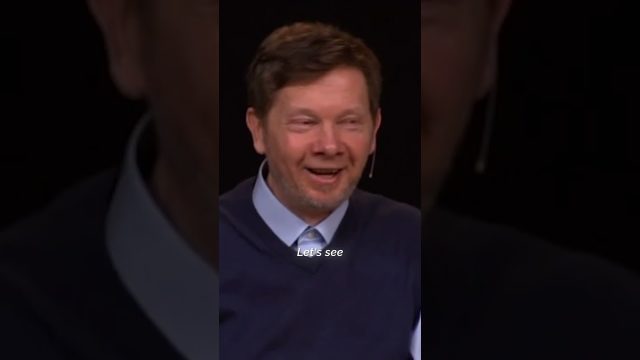
Tolle's distinction in the video's description is precise: "You are not looking for a better version of yourself. You are looking for yourself." This points to a fundamental confusion in how consciousness typically relates to identity.

Looking for a better version of yourself assumes there is a fixed, current self that needs improvement. It presupposes a deficiency in the existing structure. The mind then mobilizes to construct an alternate version—more accomplished, more attractive, more spiritual, more enlightened. This is a project of becoming. It is always future-oriented. The present moment is merely the launching pad for the self you will eventually construct.

Looking for yourself, by contrast, is not a project of improvement but of recognition. It is the discovery that there is already a fundamental presence, awareness, or being that does not require construction. This presence cannot be improved because it is not a thing that exists on a spectrum of quality. It simply is. The seeking in this case is the unraveling of the layers of false identity—the constructed persona, the ego, the mental image of self—to reveal what was never actually absent.

Most people spend their entire lives in the first mode, never recognizing the possibility of the second. The work of self-improvement can actually deepen the sense of inadequacy because it reinforces the premise that improvement is necessary. Each achievement, rather than closing the gap, simply extends the horizon of what could still be better. The treadmill becomes the condition itself.

How the Ego Perpetuates the Seeking

In Tolle's framework, the ego (the identified, thinking self) depends on the sense of lack for its survival. The ego is not a malevolent force but a mental structure that arose as a useful adaptation and has become habitual. When the mind identified exclusively with thought and personal history, the sense of separation from the present moment was born. This separate self then became the reference point from which all experience is filtered.

For the ego to maintain this authority, it must continually justify its existence. If you were completely satisfied with what you are, the ego's voice would become irrelevant. Why would you need its analysis, judgment, and planning? The ego therefore must maintain a background narrative of insufficiency. It whispers that you are not quite right as you are, that adjustment is always necessary. This narrative keeps the seeking alive and the ego in charge of consciousness.

This is why simply hearing "you are enough" does not typically resolve the feeling. That statement operates at the level of belief or concept, while the seeking operates at the level of habitual consciousness. The thought "I am not enough" may be replaced temporarily by "I am enough," but the underlying pattern—the assumption that evaluation of the self is necessary—remains intact. The mind has merely switched positions within the same framework.

The Role of the Present Moment in Breaking the Pattern

Tolle's central teaching points toward presence as the gateway out of this loop. When attention is genuinely rooted in the present moment—in direct sensory perception, breath, bodily sensation, or the immediate environment—the seeking stops. There is no time for it. The seeking requires a mental time horizon where the "improved self" exists in the future and the current self is measured against it. When consciousness collapses into now, that entire structure loses power.

Presence does not offer a better self. It offers something qualitatively different: being without comparison. When you are truly aware of your breath, you are not simultaneously judging your breathing technique. When you are present to sensation, you are not measuring your sensory apparatus against an ideal version. The comparison apparatus—the entire seeking mechanism—dissolves because it requires a split consciousness: one part judging, one part judged.

This is not passivity or resignation. Activities, choices, and changes can arise from presence, but they emerge from a different ground. They are not driven by the fuel of self-rejection. A person might change their behavior not because they are inadequate but because they recognize in the moment what is aligned with their being. This is not the frantic seeking of the inadequate; it is the natural adjustment of the whole.

The Sufficiency That Underlies All Experience

Embedded in Tolle's teaching is a recognition that presence—your actual awareness—is already complete. It is not incomplete or in need of development. What needs development is the recognition of what is already here. This is a subtle but crucial inversion. The work is not to build yourself into something better but to strip away the layers of false identity and the mental constructs that obscure the presence you already are.

This presence is not an achievement or a possession. It cannot be earned or lost. It is more fundamental than any character trait, accomplishment, or self-image. You do not need to become aware; you are aware. The only question is whether consciousness is identified with thought and story, or whether it recognizes itself as the space in which thought and story occur.

From this recognition, a different relationship with change becomes possible. You might still work on skills, address patterns, or pursue meaningful activities. But these would no longer be driven by the underlying conviction that your current being is deficient. They would arise from interest, from presence, or from recognition of what serves. The seeking stops because the fundamental seeking—for a self that is not yourself—is resolved.

Where to Go From Here

If this resonates, the invitation is to notice the seeking pattern directly in your own consciousness. Where and how does the mind construct a future, improved self? What is the emotional tone of this construction—is it hope or is it subtle desperation? What would change if that seeking paused for even a few minutes? Experimentation with presence—through meditation, through sensory awareness, through simple attention to breath or body—can reveal that the sufficiency you are seeking already exists. The deeper inquiry is whether you are willing to stop looking for yourself elsewhere and recognize what you already are.

Comentários

Carregando a conversa…

O artista desta história

Eckhart Tolle

Eckhart Tolle

Spiritual Teacher

Eckhart Tolle is a spiritual teacher and author whose bestsellers The Power of Now and A New Earth have introduced millions to living in the present moment, and who sees awakened Presence as the essential next step in human evolution.

Ver perfil
Explorar temas
Self acceptanceEgoConsciousnessSufficiencyEckhart tolle
Perguntas frequentes

Perguntas frequentes

Self-improvement assumes you are currently insufficient, which reinforces the underlying belief that you are not acceptable as you are. Each goal achieved simply extends the horizon of what could be better, perpetuating the sense of lack rather than resolving it. The seeking itself becomes the mechanism that generates inadequacy.

The ego is the constructed identity formed by thought, personal history, and mental comparison. It maintains itself through the narrative of insufficiency. The self, or true being, is the presence and awareness that exists prior to thought and does not require evaluation or improvement.

When consciousness is truly present in the moment—in direct sensation or awareness—the comparing mind is not active. The seeking for a better self requires a split between judge and judged, which dissolves in genuine presence. Without the comparison apparatus, the feeling of inadequacy loses its fuel.

Yes. Changes can arise from presence and recognition rather than from the desperate seeking of an inadequate self. When rooted in presence rather than self-rejection, actions emerge from interest, alignment, or what genuinely serves, rather than from the compulsion to prove your worth.

Looking for yourself is recognizing and unveiling the presence and awareness that is already here. It is not a project of construction but of revelation—removing the layers of false identity and thought to recognize your fundamental being, which cannot be improved because it is not a thing on a spectrum of quality.

The belief-level shift 'I am enough' still operates within the same framework of mental evaluation. The underlying pattern—that the self is something that can be judged and needs assessment—remains intact. True resolution requires a shift in the ground of consciousness itself, not just a change of thought content.

Você também pode gostar

Ver Tudo
God Beyond the Sky: Rethinking Divine Nature
Inspire

God Beyond the Sky: Rethinking Divine Nature

God is not an external judge deciding human suffering. Suffering itself becomes the mechanism through which consciousness awakens to itself.…

6 min read
God, Suffering, and the One Life Across Traditions
Inspire

God, Suffering, and the One Life Across Traditions

Eckhart Tolle explores how Islam, Buddhism, and Greek philosophy all point to the same ultimate reality—and why the problem of suffering dis…

7 min read
Sacred Feminine Power: Chanting Devi Beyond the Mat
Inspire

Sacred Feminine Power: Chanting Devi Beyond the Mat

An in-person gathering in Bengaluru merges ancient devotional chanting with modern psychotherapy to explore how the Goddess archetype illumi…

8 min read
Work Isn't Your Spiritual Problem—Attachment Is
Inspire

Work Isn't Your Spiritual Problem—Attachment Is

The Bhagavad Gita teaches that career and ambition aren't obstacles to spirituality—attachment, ego, and ownership are what bind us.…

2 min read
Ver tudoVocê também pode gostar→

Continue sua jornada

Mais sabedoria e mais encontros de todo o diretório BrightStar.

Mais artigos

Explore a biblioteca completa de ensinamentos, entrevistas e guias.

Voltar a todos os artigos →

Professores e artistas

Conheça as linhagens, os músicos e os guias do mundo consciente.

Explorar artistas →

Encontre um evento

Kirtan, retiros, banhos de som, breathwork, festivais — acontecendo em breve.

Ver eventos →