BrightStar
BlogMeus ingressos
BlogMeus ingressos
Saved events
Ajuda e contatoCadastrarEntrar
Eventos
  • Ver todos os Eventos
  • Yoga
  • Meditação
  • Respiração consciente
  • Qigong
  • Música sagrada
  • World music
  • Música de medicina
  • Terapia sonora
  • Dança extática
  • Cerimônia
  • Medicina das plantas
  • Cura energética
  • Satsang e sabedoria
  • Tantra
  • Retiros
  • Todas as categorias →
Destinos
  • Bali
  • Sedona
  • Los Angeles
  • Costa Rica
  • Tulum
  • Byron Bay
  • San Francisco
  • Austin
  • New York
  • San Diego
  • Denver
  • Seattle
  • Portland
  • Miami
  • London
  • Maui
  • Boulder
  • Todas as cidades →
Plataforma
  • Para organizadores
  • Junte-se ao movimento
  • Sell Globally
  • Para criadores
  • Para equipes
  • Para escritores
  • Para professores
  • Para artistas de kirtan
  • Para estúdios
  • Para festivais
  • Para centros de retiro
  • Para organizações sem fins lucrativos
  • Embaixador da marca
  • Ingressos grátis
  • Pro
  • Amplify
  • O ecossistema
Recursos

Bilheteira e compra

  • Ticket categories
  • Assigned seating
  • Custom questions
  • Coupon codes
  • Smart pricing
  • Ticket sharing
  • Waitlist
  • Flexible refunds
  • Digital waivers
  • Tip jar
  • Donations and sliding scale
  • Embed widget
  • Mindful checkout
  • Recurring events
  • Private sessions
  • Online courses
  • Summits
  • Rooms and stays
  • Ticket scanner

Marketing e crescimento

  • Abandoned cart recovery
  • Visitor recovery
  • Upsells and add-ons
  • Affiliate engine
  • Upsell affiliate network
  • Brand ambassador
  • Meta retargeting
  • Verified buyer network
  • Outbound email marketing
  • Email sequences
  • SMS and WhatsApp
  • Event upsell network
  • Direct mail campaigns
  • SEO engine
  • Syndication
  • Event sharing
  • Custom event pages
  • Artist profiles
  • Link in bio
  • Event blog
  • Blog newsletter

Pagamentos

  • Payments, powered by Stripe
  • Buy now, pay later
  • Apple Wallet
  • Multi currency

Dados e operações

  • Team access
  • Message center
  • Reports
  • Analytics reporting
  • Performance reporting
  • Customer data
  • Integrations
  • Switch from another platform

IA

  • Assistant
  • AI FAQ assistant
  • Todos os recursos →
Empresa
  • Sobre
  • Perguntas frequentes
  • Contato
  • Blog
  • Glossário
  • Guides
  • Inspiração
  • Central de ajuda
  • Documentação da API
  • Recursos da marca
  • Imprensa
  • Termos de Serviço
  • Política de Privacidade

Eventos

  • Ver todos os Eventos
  • Yoga
  • Meditação
  • Respiração consciente
  • Qigong
  • Música sagrada
  • World music
  • Música de medicina

Destinos

  • Bali
  • Sedona
  • Los Angeles
  • Costa Rica
  • Tulum
  • Byron Bay
  • San Francisco
  • Austin

Plataforma

  • Para organizadores
  • Junte-se ao movimento
  • Sell Globally
  • Para criadores
  • Para equipes
  • Para escritores
  • Para professores
  • Para artistas de kirtan

Recursos

  • Rede da comunidade
  • Recuperação de carrinho abandonado
  • Categorias de ingressos
  • Eventos recorrentes
  • Lugares marcados
  • Sistema de afiliados
  • Lista de espera / Notificar
  • Todos os recursos →

Empresa

  • Sobre
  • Perguntas frequentes
  • Contato
  • Blog
  • Glossário
  • Guides
  • Termos de Serviço
  • Política de Privacidade
Leia mais

Eventos

  • Terapia sonora
  • Dança extática
  • Cerimônia
  • Medicina das plantas
  • Cura energética
  • Satsang e sabedoria
  • Tantra
  • Retiros
  • Todas as categorias →

Destinos

  • New York
  • San Diego
  • Denver
  • Seattle
  • Portland
  • Miami
  • London
  • Maui
  • Boulder
  • Todas as cidades →

Plataforma

  • Para estúdios
  • Para festivais
  • Para centros de retiro
  • Para organizações sem fins lucrativos
  • Embaixador da marca
  • Ingressos grátis
  • Pro
  • Amplify
  • O ecossistema

Empresa

  • Inspiração
  • Central de ajuda
  • Documentação da API
  • Recursos da marca
  • Imprensa

Bilheteira e compra

  • Ticket categories
  • Assigned seating
  • Custom questions
  • Coupon codes
  • Smart pricing
  • Ticket sharing
  • Waitlist
  • Flexible refunds
  • Digital waivers
  • Tip jar
  • Donations and sliding scale
  • Embed widget
  • Mindful checkout
  • Recurring events
  • Private sessions
  • Online courses
  • Summits
  • Rooms and stays
  • Ticket scanner

Marketing e crescimento

  • Abandoned cart recovery
  • Visitor recovery
  • Upsells and add-ons
  • Affiliate engine
  • Upsell affiliate network
  • Brand ambassador
  • Meta retargeting
  • Verified buyer network
  • Outbound email marketing
  • Email sequences
  • SMS and WhatsApp
  • Event upsell network
  • Direct mail campaigns
  • SEO engine
  • Syndication
  • Event sharing
  • Custom event pages
  • Artist profiles
  • Link in bio
  • Event blog
  • Blog newsletter

Pagamentos

  • Payments, powered by Stripe
  • Buy now, pay later
  • Apple Wallet
  • Multi currency

Dados e operações

  • Team access
  • Message center
  • Reports
  • Analytics reporting
  • Performance reporting
  • Customer data
  • Integrations
  • Switch from another platform

IA

  • Assistant
  • AI FAQ assistant
Baixe o app
Baixar naApp StoreDisponível noGoogle Play
© 2026 BrightStar. Todos os direitos reservados. BrightStar Selection · Créditos das fotos · Histórico de alterações ·
Inspiration

Trusting Your Basic Nature: Beyond Sin and Goodness

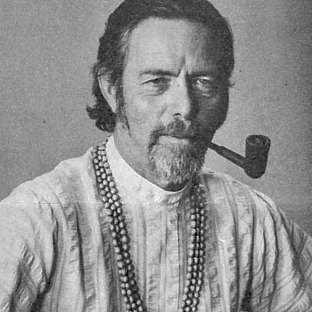
Alan Watts
Alan Watts
Sep 19, 2025
8 min de leitura

De Be Here Now Network

In this clip from "Being in the Way: Seeing Through the Net," Alan Watts argues that Western culture's inheritance of the Christian doctrine of original sin has created a fundamental distrust of human nature itself. Unlike Eastern religions, which generally assume humans have a basic goodness at their core, the Western worldview frames the human being as inherently flawed and requiring external control. Watts suggests that this theological inheritance shapes everything from child-rearing to social policy, and that recognizing our basic nature as fundamentally sound—rather than sinful—is essential to living authentically and freely.

Leitura · 6 seções

What Does Original Sin Do to Our Sense of Self?

The doctrine of original sin, central to Christian theology for nearly two thousand years, carries a specific psychological and spiritual claim: that humans are born tainted by the transgression of Adam and Eve, and that we must constantly work against our nature to become acceptable. This is not merely a theological abstraction. Watts points out that this doctrine has seeped into the cultural water of the West in ways that shape how we relate to ourselves at the deepest level.

When a child grows up in a culture shaped by this assumption, the message is clear: your basic nature—your desires, your impulses, your spontaneity—cannot be trusted. You are fundamentally broken and must be fixed through discipline, obedience, and external authority. This creates a split within the psyche: the ego must constantly police the self, monitoring and controlling what arises naturally. The result is a civilization of people at war with themselves, treating their own nature as an enemy to be subdued rather than a ground to be trusted.

Watts emphasizes that this isn't simply a matter of religious doctrine affecting "religious people." The assumption has become so embedded in Western culture—in education, law, economics, and parenting—that even secular people operate from this baseline distrust. We legislate as if people are inherently selfish and must be constrained. We educate children as if their natural curiosity must be channeled and controlled rather than honored. We build economic systems on the assumption that self-interest must be regulated from above.

How Does Eastern Philosophy Approach Human Nature Differently?

Watts contrasts this with the fundamental assumption underlying most Eastern religions, particularly Taoism and Hinduism: that the basic nature of humans is sound. This doesn't mean humans are perfect or never cause harm. Rather, it means that at the core, when we are not twisted by fear, conditioning, and neurotic self-policing, we are naturally inclined toward wisdom, compassion, and harmony with others.

In Taoist philosophy, this shows up in the concept of Wu Wei—"non-forcing" or "action through non-action." The assumption is that when you stop interfering with your own nature and trust the deeper intelligence at work in the organism, right action flows naturally. You don't need to constantly think about what the right thing to do is; it arises organically from a consciousness that is no longer split against itself.

Similarly, in Hindu and Buddhist frameworks, the recognition of basic Buddha-nature or Atman (the true Self) posits that beneath the conditioned personality lies something whole, intelligent, and fundamentally untainted. The spiritual work is not to create goodness where there is badness, but to remove the obscurations—the conditioning, the fear, the false beliefs—that cover over what is already there.

This philosophical orientation has profound practical implications. If you trust your basic nature, you can let yourself think, feel, and act more spontaneously. You don't need as much external control because you're not assuming you're naturally inclined toward destruction. Education can focus on awakening curiosity rather than suppressing impulse. Law can be based on the idea that people respond to fairness and community, not just punishment. Relationships can rest on trust rather than suspicion.

Why Does Western Culture Struggle with Self-Trust?

Watts suggests that the Western world is caught in a double bind created by this theological inheritance. On the one hand, there is constant pressure to achieve, improve, and become better—to transcend the flawed nature you're told you were born with. On the other hand, there is a pervasive anxiety that you can never fully succeed, because the basic defect goes all the way down. You are, by definition, sinful.

This creates what Watts would recognize as a neurotic pattern: the ego becomes hyperactive, constantly trying to prove itself, control itself, and monitor itself. The more you struggle against your nature, the more you become alienated from it. And the more alienated you become, the more you actually behave in destructive ways—not because you are inherently sinful, but because you've learned to distrust yourself and have become psychologically fragmented.

There's a cruel irony here: the doctrine meant to inspire moral behavior often creates the very conditions for immoral behavior, because it severs people from the source of genuine ethics—which, from an Eastern perspective, flows naturally from an integrated, trusting relationship with one's own being.

What Changes When We Start Trusting Our Basic Nature?

Watts invites a practical experiment: what would happen if you assumed, for a moment, that your basic nature is sound? Not that you're perfect, not that you never make mistakes, but that at the core, you are oriented toward life, toward connection, toward wisdom. What shifts?

First, there is a relaxation of the constant vigilance. You don't need to monitor yourself so rigorously because you're not assuming malice is lurking just beneath the surface. This relaxation itself is therapeutic—the nervous system downregulates, anxiety decreases, and you become more present.

Second, decision-making becomes less fraught. Instead of asking "What should I do to be a good person?" (which presumes you're naturally not good), you can ask "What does the situation call for?" and trust that when you're not interfering with yourself, the right response arises. This is not recklessness; it's the difference between playing music while worrying constantly about hitting the wrong note versus playing music and allowing the body's intelligence to guide the fingers.

Third, your relationship to others changes. If you trust yourself, you're less likely to need to control others or assume malevolent intent. You can meet people as fundamentally whole beings rather than as potential threats to be managed. This is the basis for genuine community and cooperation.

How Does This Apply to Modern Life?

Watts' argument carries particular weight in contemporary contexts. Consider parenting: a parent operating from the assumption that the child is basically good will create very different conditions than one operating from the assumption that the child's nature must be constantly corrected. The first parent might focus on providing a secure environment and awakening curiosity; the second might focus on discipline and compliance.

Or consider mental health: therapies that help people befriend themselves, accept themselves, and trust their organism's wisdom show different results than those that frame the psyche as fundamentally broken and in need of external fixing. Cognitive-behavioral therapy combined with somatic and mindfulness practices often works because it helps people trust their own awareness rather than constantly fighting it.

Or consider social policy: Laws and systems built on the assumption that people are naturally selfish will look very different from those built on the assumption that people naturally care about fairness and community. The first leads to punitive and controlling structures; the second can foster genuine cooperation.

The deepest application, though, is to your moment-to-moment consciousness. Right now, as you read this, notice: are you trusting yourself? Are you assuming your impulses toward understanding, rest, connection, and growth are basically sound? Or are you monitoring yourself, assuming something needs to be fixed or improved? What would it feel like to relax that vigilance, just slightly, and trust the intelligence that is already operating through your being?

Where to Go from Here

Exploring this teaching invites several directions. You might investigate the history of original sin and how it shaped Western culture through sources like James Hollis' "Why Good People Do Bad Things" or William Irwin Thompson's work on cultural history. You could also explore Eastern philosophical frameworks directly—the Bhagavad Gita's discussion of dharma (right action flowing from nature), the Taoist texts on Wu Wei, or contemporary teachers like Thich Nhat Hanh who bridge Eastern and Western understanding of human nature. Practically, you might experiment with self-compassion meditation, which directly challenges the assumption that you are fundamentally flawed and invites trust in your own capacity for wisdom. Finally, consider how the assumption of basic goodness might reshape one area of your life—how you parent, how you manage yourself, how you relate to someone you've been struggling with—and notice what changes.


Comentários

Carregando a conversa…

O artista desta história

Alan Watts

speaker and lecturer

Speaker and lecturer Alan Watts, whose hundreds of hours of talks recorded from 1960 to 1973 on vinyl, tape reels, and cassettes continue to be shared today through the Alan Watts Org.

Ver perfil
Explorar temas
Original sinHuman natureEastern philosophySelf trustConsciousness
Perguntas frequentes

Perguntas frequentes

Original sin is a Christian doctrine claiming humans are born tainted by Adam and Eve's transgression. Watts argues this belief has permeated Western culture so deeply that even secular people operate from an assumption that human nature is fundamentally flawed and must be controlled—affecting everything from parenting and education to law and economics.

Yes, most Eastern religions like Taoism, Buddhism, and Hinduism assume humans have a basic goodness or Buddha-nature at their core. Rather than needing to create goodness, the spiritual work is removing the conditioning and fear that obscures what is already whole and wise within us.

Wu Wei, or 'non-forcing,' is a Taoist concept meaning that right action flows naturally when you stop interfering with your own nature and trust the deeper intelligence at work in your organism. It assumes that when you're not split against yourself by self-doubt and hypervigilance, wisdom arises spontaneously.

Instead of constantly asking 'What should I do to be good?' (which presumes you're naturally not good), you can ask 'What does this situation call for?' and trust that when you're not interfering with yourself, the right response naturally emerges. This reduces anxiety and allows your embodied wisdom to guide you.

No—Watts distinguishes between recklessness and genuine spontaneity. Trust in basic nature doesn't mean ignoring consequences; it means responding naturally to situations without the constant internal policing that creates neurosis. A person trusting their nature is actually more likely to act ethically because they're not fragmented against themselves.

A parent assuming the child is basically good creates conditions that foster curiosity and autonomy, while one assuming the child's nature must be corrected focuses on discipline and compliance. The first awakens intrinsic motivation; the second often creates rebellion or passive obedience.

You'd likely experience less anxiety and hypervigilance, more spontaneous joy and connection, clearer decision-making, and better relationships built on trust rather than control or suspicion. The nervous system would downregulate, and you'd have access to the intelligence that's always operating beneath conscious thought.

No—he's distinguishing between self-improvement rooted in self-rejection versus growth rooted in self-acceptance. The second is organic and alive; the first is driven by anxiety and often creates the very neurosis it tries to fix. Real development happens when you trust your nature while remaining open to learning and refinement.

Você também pode gostar

Ver Tudo
Why Predictability Is an Illusion: Embracing Uncertainty
Inspire

Why Predictability Is an Illusion: Embracing Uncertainty

Predictability is a fundamental illusion that constrains how we live. Exploring uncertainty and the nature of control reveals deeper wisdom …

8 min read
Alan Watts' Veil of Thoughts: Money, Work & Civilization
Inspire

Alan Watts' Veil of Thoughts: Money, Work & Civilization

Alan Watts examines how abstract thinking obscures our relationship with money and work, and how civilization perpetuates illusions that dis…

7 min read
Liberation Through Grief and Self-Worth in Buddhist Practice
Inspire

Liberation Through Grief and Self-Worth in Buddhist Practice

Br. Phap Huu explores how recognizing our inherent goodness and learning to grieve openly within community liberates us from suffering and s…

11 min read
Living Gems Archive: Preserving Thích Nhất Hạnh's Dharma for the World
Inspire

Living Gems Archive: Preserving Thích Nhất Hạnh's Dharma for the World

Living Gems is a searchable digital archive of Thích Nhất Hạnh's teachings, built by Plum Village to preserve and share the dharma globally …

10 min read
Ver tudoVocê também pode gostar→

Continue sua jornada

Mais sabedoria e mais encontros de todo o diretório BrightStar.

Mais artigos

Explore a biblioteca completa de ensinamentos, entrevistas e guias.

Voltar a todos os artigos →

Professores e artistas

Conheça as linhagens, os músicos e os guias do mundo consciente.

Explorar artistas →

Encontre um evento

Kirtan, retiros, banhos de som, breathwork, festivais — acontecendo em breve.

Ver eventos →