BrightStar
BlogMeus ingressos
BlogMeus ingressos
Saved events
Ajuda e contatoCadastrarEntrar
Eventos
  • Ver todos os Eventos
  • Yoga
  • Meditação
  • Respiração consciente
  • Qigong
  • Música sagrada
  • World music
  • Música de medicina
  • Terapia sonora
  • Dança extática
  • Cerimônia
  • Medicina das plantas
  • Cura energética
  • Satsang e sabedoria
  • Tantra
  • Retiros
  • Todas as categorias →
Destinos
  • Bali
  • Sedona
  • Los Angeles
  • Costa Rica
  • Tulum
  • Byron Bay
  • San Francisco
  • Austin
  • New York
  • San Diego
  • Denver
  • Seattle
  • Portland
  • Miami
  • London
  • Maui
  • Boulder
  • Todas as cidades →
Plataforma
  • Para organizadores
  • Junte-se ao movimento
  • Sell Globally
  • Para criadores
  • Para equipes
  • Para escritores
  • Para professores
  • Para artistas de kirtan
  • Para estúdios
  • Para festivais
  • Para centros de retiro
  • Para organizações sem fins lucrativos
  • Embaixador da marca
  • Ingressos grátis
  • Pro
  • Amplify
  • O ecossistema
Recursos

Bilheteira e compra

  • Ticket categories
  • Assigned seating
  • Custom questions
  • Coupon codes
  • Smart pricing
  • Ticket sharing
  • Waitlist
  • Flexible refunds
  • Digital waivers
  • Tip jar
  • Donations and sliding scale
  • Embed widget
  • Mindful checkout
  • Recurring events
  • Private sessions
  • Online courses
  • Summits
  • Rooms and stays
  • Ticket scanner

Marketing e crescimento

  • Abandoned cart recovery
  • Visitor recovery
  • Upsells and add-ons
  • Affiliate engine
  • Upsell affiliate network
  • Brand ambassador
  • Meta retargeting
  • Verified buyer network
  • Outbound email marketing
  • Email sequences
  • SMS and WhatsApp
  • Event upsell network
  • Direct mail campaigns
  • SEO engine
  • Syndication
  • Event sharing
  • Custom event pages
  • Artist profiles
  • Link in bio
  • Event blog
  • Blog newsletter

Pagamentos

  • Payments, powered by Stripe
  • Buy now, pay later
  • Apple Wallet
  • Multi currency

Dados e operações

  • Team access
  • Message center
  • Reports
  • Analytics reporting
  • Performance reporting
  • Customer data
  • Integrations
  • Switch from another platform

IA

  • Assistant
  • AI FAQ assistant
  • Todos os recursos →
Empresa
  • Sobre
  • Perguntas frequentes
  • Contato
  • Blog
  • Glossário
  • Guides
  • Inspiração
  • Central de ajuda
  • Documentação da API
  • Recursos da marca
  • Imprensa
  • Termos de Serviço
  • Política de Privacidade

Eventos

  • Ver todos os Eventos
  • Yoga
  • Meditação
  • Respiração consciente
  • Qigong
  • Música sagrada
  • World music
  • Música de medicina

Destinos

  • Bali
  • Sedona
  • Los Angeles
  • Costa Rica
  • Tulum
  • Byron Bay
  • San Francisco
  • Austin

Plataforma

  • Para organizadores
  • Junte-se ao movimento
  • Sell Globally
  • Para criadores
  • Para equipes
  • Para escritores
  • Para professores
  • Para artistas de kirtan

Recursos

  • Rede da comunidade
  • Recuperação de carrinho abandonado
  • Categorias de ingressos
  • Eventos recorrentes
  • Lugares marcados
  • Sistema de afiliados
  • Lista de espera / Notificar
  • Todos os recursos →

Empresa

  • Sobre
  • Perguntas frequentes
  • Contato
  • Blog
  • Glossário
  • Guides
  • Termos de Serviço
  • Política de Privacidade
Leia mais

Eventos

  • Terapia sonora
  • Dança extática
  • Cerimônia
  • Medicina das plantas
  • Cura energética
  • Satsang e sabedoria
  • Tantra
  • Retiros
  • Todas as categorias →

Destinos

  • New York
  • San Diego
  • Denver
  • Seattle
  • Portland
  • Miami
  • London
  • Maui
  • Boulder
  • Todas as cidades →

Plataforma

  • Para estúdios
  • Para festivais
  • Para centros de retiro
  • Para organizações sem fins lucrativos
  • Embaixador da marca
  • Ingressos grátis
  • Pro
  • Amplify
  • O ecossistema

Empresa

  • Inspiração
  • Central de ajuda
  • Documentação da API
  • Recursos da marca
  • Imprensa

Bilheteira e compra

  • Ticket categories
  • Assigned seating
  • Custom questions
  • Coupon codes
  • Smart pricing
  • Ticket sharing
  • Waitlist
  • Flexible refunds
  • Digital waivers
  • Tip jar
  • Donations and sliding scale
  • Embed widget
  • Mindful checkout
  • Recurring events
  • Private sessions
  • Online courses
  • Summits
  • Rooms and stays
  • Ticket scanner

Marketing e crescimento

  • Abandoned cart recovery
  • Visitor recovery
  • Upsells and add-ons
  • Affiliate engine
  • Upsell affiliate network
  • Brand ambassador
  • Meta retargeting
  • Verified buyer network
  • Outbound email marketing
  • Email sequences
  • SMS and WhatsApp
  • Event upsell network
  • Direct mail campaigns
  • SEO engine
  • Syndication
  • Event sharing
  • Custom event pages
  • Artist profiles
  • Link in bio
  • Event blog
  • Blog newsletter

Pagamentos

  • Payments, powered by Stripe
  • Buy now, pay later
  • Apple Wallet
  • Multi currency

Dados e operações

  • Team access
  • Message center
  • Reports
  • Analytics reporting
  • Performance reporting
  • Customer data
  • Integrations
  • Switch from another platform

IA

  • Assistant
  • AI FAQ assistant
Baixe o app
Baixar naApp StoreDisponível noGoogle Play
© 2026 BrightStar. Todos os direitos reservados. BrightStar Selection · Créditos das fotos · Histórico de alterações ·
Inspiration

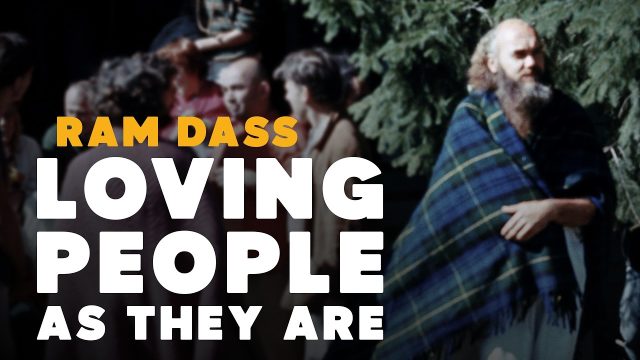
Psychedelics and Innocent Consciousness: Ram Dass on Inner Work

Ram Dass
Ram Dass
Jun 2, 2025
7 min de leitura

De Be Here Now Network

In a 1977 interview, Ram Dass discusses psychedelics as a means to experience the "innocence of consciousness"—a state of pristine awareness unconditioned by ego and mental habit. He reflects on the LSD generation, his interactions with pioneers like Timothy Leary and Albert Hofmann, and the importance of having proper guidance for such experiences. Critically, he warns that seeing is not enough: the real work of transformation happens in the integration that follows, requiring disciplined inner practice to anchor and embody the insights gained.

Leitura · 9 seções

What is the innocence of consciousness?

Ram Dass describes the innocence of consciousness as a fundamental state of awareness untainted by learned conditionings, ego-driven narratives, and habitual thought patterns. This is not a state one achieves through force or striving, but rather a return to what consciousness naturally is when freed from the overlays of self-image and protective mechanisms accumulated over a lifetime. Psychedelics, in his view, can act as a tool that temporarily clears away these accretions, offering the mind a "free slate" to experience what awareness looks like in its most basic, undefended form. This innocence is not naivety; it is clarity—a direct perception without the filtering system of the conditioned self.

How do psychedelics function in spiritual practice?

Rather than treating psychedelics as recreational substances or escape mechanisms, Ram Dass contextualizes them within a deliberate spiritual framework. Drawing on his guru's teachings, he refers to them as "yogi medicine"—tools that can be used within a disciplined, intentional practice. The distinction matters: in this model, psychedelics are not consumed passively or recreationally, but as part of a structured inquiry into consciousness. They are medicines in the sense that they serve a healing or clarifying function within a larger spiritual project. The experience itself becomes a window into the nature of mind, but only when approached with proper intention and, importantly, with guidance from someone who understands the terrain.

Why is a guide important for psychedelic experiences?

The interview touches on the necessity of having a guide—someone with knowledge and experience of inner states—during psychedelic work. This is not merely for safety in the conventional sense, though that matters. A guide serves to help orient the explorer through experiences that can be destabilizing to the ordinary self-concept, and to offer frameworks for understanding what unfolds. Without such guidance, the mind can become lost in the novelty and intensity of the experience, missing the teachings embedded within it. A guide acts as an anchor and interpreter, helping the explorer maintain coherence and extract meaning from states that can otherwise feel fragmentary or overwhelming.

What does Ram Dass say about the LSD culture of the 1970s?

Speaking from the vantage point of 1977, Ram Dass reflects on the culture that had grown around LSD and psychedelics in the decade prior. He had recently participated in a conference called "LSD – A Generation Later," where he engaged with other luminaries of the psychedelic movement, including Timothy Leary, Ralph Metzner, and Albert Hofmann himself—the Swiss chemist who first synthesized LSD. Rather than advocating for or against the use of psychedelics as a societal or legal matter, Ram Dass makes clear he has no desire to legislate how others choose to live. This is a crucial statement: it distinguishes between his own recognition of psychedelics' potential and any impulse to impose or enforce that view on others. The culture question, for him, is not about control but about understanding how consciousness itself is evolving through exposure to these experiences.

Why is getting high and seeing not enough?

One of Ram Dass's most important cautions is that "getting high and seeing" represents only one phase of a larger process. The experience of expanded consciousness, no matter how vivid or profound, does not automatically translate into lasting change in one's life or character. This is a critical distinction often overlooked in psychedelic discourse: the vision or insight gained in an altered state must be integrated into daily consciousness and embodied through sustained practice. Without this integration work, the experience remains isolated—a peak moment that fades, leaving the underlying patterns and conditioning intact. Change requires what Ram Dass calls "inner processes"—the unglamorous, persistent work of meditation, self-inquiry, ethical refinement, and behavioral transformation.

What inner processes are necessary after a psychedelic experience?

The inner work that follows a psychedelic experience involves several dimensions. First, there is the process of understanding and integrating the insights gained: translating the non-ordinary perception into conceptual language and lived understanding. This requires reflection, journaling, and discussion with others who can serve as sounding boards. Second, there is the work of meditation and contemplative practice, which stabilizes the insights and deepens one's capacity to access the states of consciousness touched during the experience without chemical assistance. Third, there is the ethical and behavioral dimension: examining how the widened perspective informs one's relationships, choices, and way of being in the world. Finally, there is the surrender of attachment to the experience itself—recognizing that clinging to the memory of the insight or trying to recreate the state can become its own subtle obstacle. The psychedelic experience opens a door, but sustained spiritual practice is what actually walks through it.

How do psychedelics relate to cultural consciousness shifts?

Ram Dass observes that psychedelics have catalyzed wider shifts in consciousness within culture—movements in how people relate to authority, spirituality, social structures, and the nature of reality itself. The LSD generation, broadly speaking, experienced something that challenged their received worldviews and opened alternative possibilities. However, he is clear-eyed about the fact that exposure to these experiences does not automatically create wisdom or virtue. The culture evolves, but individuals must do the inner work to embody the consciousness that the experience revealed. Cultural shifts happen when enough individuals undergo their own transformations and begin to operate from an expanded perspective in their daily lives.

"Getting high and seeing is only one part of the process of change, and there are inner processes necessary to bring about change in life."

What was the state of psychedelic research in 1977?

At the time of this 1977 interview, the psychedelic movement had faced legal suppression, but there remained active dialogue among the pioneers and early explorers of these substances. The "LSD – A Generation Later" conference, at which Ram Dass had recently spoken, brought together figures like Timothy Leary (who had become a controversial figure in mainstream culture), Ralph Metzner (who worked on set and setting theory), and Albert Hofmann (the discoverer of LSD, now an elder figure reflecting on his own creation's impact). This gathering represented an effort to take stock of what had been learned, the cultural impact of widespread psychedelic use, and the ongoing spiritual and scientific questions the substances raised. Ram Dass's participation in such a conference reflects his position as neither a cheerleader nor a condemner of psychedelics, but rather as a practitioner working to understand their role within genuine spiritual development.

Where to go from here

For those interested in exploring psychedelics in a conscious and responsible way, Ram Dass's core teaching points toward establishing a proper container: intention, guidance, and most importantly, a commitment to the inner work that follows the experience. This might involve finding a qualified facilitator or therapist trained in psychedelic integration, developing a steady meditation practice to access non-ordinary consciousness without chemical means, and connecting with a community or lineage that can support genuine transformation. The exploration of consciousness is not a destination to reach through a single experience, but a lifelong inquiry that psychedelics can illuminate but never replace. For those curious about the broader history and philosophy of psychedelics in consciousness exploration, seeking out Ram Dass's other teachings on meditation, guru devotion, and service can deepen understanding of how he integrated psychedelic insights into a comprehensive spiritual path.

Comentários

Carregando a conversa…

O artista desta história

Ram Dass

Ram Dass

Spiritual Teacher

Ram Dass (born Richard Alpert, 1931-2019) was an American spiritual teacher, psychologist, and author whose 1971 book Be Here Now helped popularize Eastern spirituality in the West. A Harvard psychologist turned Hindu devotee, he bridged psychedelic research, yoga, and conscious living for millions.

Ver perfil
Explorar temas
PsychedelicsConsciousnessLsdInner workSpiritual integration
Perguntas frequentes

Perguntas frequentes

According to Ram Dass, psychedelics provide a window into consciousness but cannot create lasting change by themselves. The experience of seeing and expanded awareness must be followed by sustained inner work—meditation, self-inquiry, and behavioral integration—to truly transform one's life and embodiment.

Innocence of consciousness refers to awareness in its purest form, unconditioned by ego, learned patterns, and mental habit. Psychedelics can temporarily clear away these overlays, allowing direct perception of what consciousness naturally is before the self-protective narratives take over.

A guide with knowledge of inner states helps orient the explorer through potentially disorienting experiences, provides frameworks for understanding what unfolds, and acts as an anchor to maintain coherence. Without guidance, one can become lost in the intensity of the experience and miss its teachings.

Ram Dass has no desire to legislate how others live their lives regarding psychedelics. His focus is on their potential within intentional spiritual practice rather than on advocating for or against their use as a social policy matter.

Integration work includes understanding and translating insights gained, meditation practice to stabilize the experience, ethical examination of how it informs daily life, and releasing attachment to the experience itself so it doesn't become an obstacle.

Yes, Ram Dass participated in a 1977 conference called 'LSD – A Generation Later' where he interacted with Timothy Leary, Ralph Metzner, and Albert Hofmann, the Swiss chemist who discovered LSD, reflecting on the substances' cultural and spiritual impact.

Você também pode gostar

Ver Tudo
Love People As They Are: Responsive vs. Reactive
Inspire

Love People As They Are: Responsive vs. Reactive

Learn how to love people unconditionally by shifting from reactive patterns to responsive presence, keeping your heart open in the face of s…

9 min read
Freedom Without Connection: Why Liberation Feels Empty
Inspire

Freedom Without Connection: Why Liberation Feels Empty

External freedom without spiritual connection leaves the heart hollow. Explore why liberation requires more than just the absence of constra…

7 min read
First Meeting with a Living Guru: Recognition and Transformation
Inspire

First Meeting with a Living Guru: Recognition and Transformation

Krishna Das reflects on his first encounters with his teacher Maharaj-ji and Ram Dass, describing the moment he recognized something real ab…

7 min read
Rumi's Teaching Story: Presence and Spiritual Wisdom
Inspire

Rumi's Teaching Story: Presence and Spiritual Wisdom

Ram Dass shares a timeless Rumi story on presence and spiritual awakening. A brief but potent lesson in mindfulness and the heart's capacity…

6 min read
Ver tudoVocê também pode gostar→

Continue sua jornada

Mais sabedoria e mais encontros de todo o diretório BrightStar.

Mais artigos

Explore a biblioteca completa de ensinamentos, entrevistas e guias.

Voltar a todos os artigos →

Professores e artistas

Conheça as linhagens, os músicos e os guias do mundo consciente.

Explorar artistas →

Encontre um evento

Kirtan, retiros, banhos de som, breathwork, festivais — acontecendo em breve.

Ver eventos →