BrightStar

Ver todos os Events

Descubra encontros conscientes

events

Yoga
Meditation
Breathwork
Qigong
Tai Chi
Sacred Music
World Music
Medicine Music
Sound Healing
Ecstatic Dance
Destinos populares
BaliSedonaLos AngelesCosta RicaNew YorkSan FranciscoAustinMiamiJoshua TreeTulum
Ver todas as categoriasVer todos os destinos

Explorar todos os recursos

Ferramentas poderosas para expandir seus eventos

Recursos da plataforma

Precificação dinâmica inteligente
Categorias de ingressos
Lugares marcados
Recuperação de carrinho abandonado
Recuperação de visitantes
Doações e preço variável
Sistema de afiliados
Scanner de ingressos
Códigos de desconto
Perguntas personalizadas
Compartilhamento de ingressos
Upsells e adicionais
Análises e relatórios
Sequências de e-mail
Lista de espera / Notificar / Lembrar
Pessoas e Lugares
Artists & TeachersEvent OrganizersVenues & StudiosKnowledge BaseGlossaryInspiration
Ver todos os recursosSobre nós
PreçosBlog
Language
Saved events
Ver todos os eventos

events

YogaMeditationBreathworkQigongTai ChiSacred MusicWorld MusicMedicine Music

Destinos populares

BaliSedonaLos AngelesCosta RicaNew YorkSan Francisco

Pessoas e Lugares

Artists & TeachersEvent OrganizersVenues & StudiosKnowledge BaseGlossaryInspiration

Recursos da plataforma

Precificação dinâmica inteligenteCategorias de ingressosLugares marcadosRecuperação de carrinho abandonadoRecuperação de visitantesDoações e preço variávelSistema de afiliadosScanner de ingressosCódigos de descontoPerguntas personalizadasCompartilhamento de ingressosUpsells e adicionaisAnálises e relatóriosSequências de e-mailLista de espera / Notificar / Lembrar
Ver todos os recursosSobre nós
PreçosBlog
EntrarBuscadoresCriadores
  • Ver todos os Eventos
  • Para buscadores
  • Yoga
  • Meditação
  • Respiração consciente
  • Qigong
  • Tai chi
  • Música sagrada
  • World music
  • Música de medicina
  • Terapia sonora
  • Dança extática
  • Retiros
  • Workshops
  • Todas as categorias →
  • Bali
  • Sedona
  • Los Angeles
  • Costa Rica
  • Tulum
  • Byron Bay
  • San Francisco
  • Austin
  • New York
  • San Diego
  • Denver
  • Seattle
  • Portland
  • Miami
  • Todas as cidades →
  • Join the Movement
  • Why we list
  • Sell Globally
  • Para criadores
  • Para equipes
  • Para escritores
  • Para professores
  • Para artistas de kirtan
  • Para estúdios
  • Para festivais
  • Para centros de retiro
  • Para organizações sem fins lucrativos
  • Embaixador da marca
  • Ingressos grátis
  • Elevate
  • Amplify
  • Rede de 500K+ compradores
  • Recuperação de carrinho abandonado
  • Precificação dinâmica inteligente
  • Categorias de ingressos
  • Eventos recorrentes
  • Lugares marcados
  • Sistema de afiliados
  • Lista de espera / Notificar
  • Scanner de ingressos
  • Widget incorporável
  • Distribuição de eventos
  • Central de mensagens
  • Integrações
  • Relatórios
  • Todos os recursos →
  • Sobre
  • O ecossistema
  • Blog
  • Glossário
  • Inspiração
  • Central de ajuda
  • Contato
  • Documentação da API
  • Recursos da marca
  • Carreiras
  • Imprensa
  • Termos de Serviço
  • Política de Privacidade

Eventos

  • Ver todos os Eventos
  • Para buscadores
  • Yoga
  • Meditação
  • Respiração consciente
  • Qigong
  • Tai chi
  • Música sagrada
  • World music
  • Música de medicina
  • Terapia sonora
  • Dança extática
  • Retiros
  • Workshops
  • Todas as categorias →

Destinos

  • Bali
  • Sedona
  • Los Angeles
  • Costa Rica
  • Tulum
  • Byron Bay
  • San Francisco
  • Austin
  • New York
  • San Diego
  • Denver
  • Seattle
  • Portland
  • Miami
  • Todas as cidades →

Para criadores

  • Join the Movement
  • Why we list
  • Sell Globally
  • Para criadores
  • Para equipes
  • Para escritores
  • Para professores
  • Para artistas de kirtan
  • Para estúdios
  • Para festivais
  • Para centros de retiro
  • Para organizações sem fins lucrativos
  • Embaixador da marca
  • Ingressos grátis
  • Elevate
  • Amplify

Recursos

  • Rede de 500K+ compradores
  • Recuperação de carrinho abandonado
  • Precificação dinâmica inteligente
  • Categorias de ingressos
  • Eventos recorrentes
  • Lugares marcados
  • Sistema de afiliados
  • Lista de espera / Notificar
  • Scanner de ingressos
  • Widget incorporável
  • Distribuição de eventos
  • Central de mensagens
  • Integrações
  • Relatórios
  • Todos os recursos →

Empresa

  • Sobre
  • O ecossistema
  • Blog
  • Glossário
  • Inspiração
  • Central de ajuda
  • Contato
  • Documentação da API
  • Recursos da marca
  • Carreiras
  • Imprensa
  • Termos de Serviço
  • Política de Privacidade
BrightStar
Baixe o app
Baixar naApp StoreDisponível noGoogle Play
© 2026 BrightStar. Todos os direitos reservados.
Inspiration

Layers of Efforting: Why Seeking Freedom Deepens the Trap

Adyashanti
Adyashanti
Oct 5, 2026
8 min de leitura
Assistir · 7

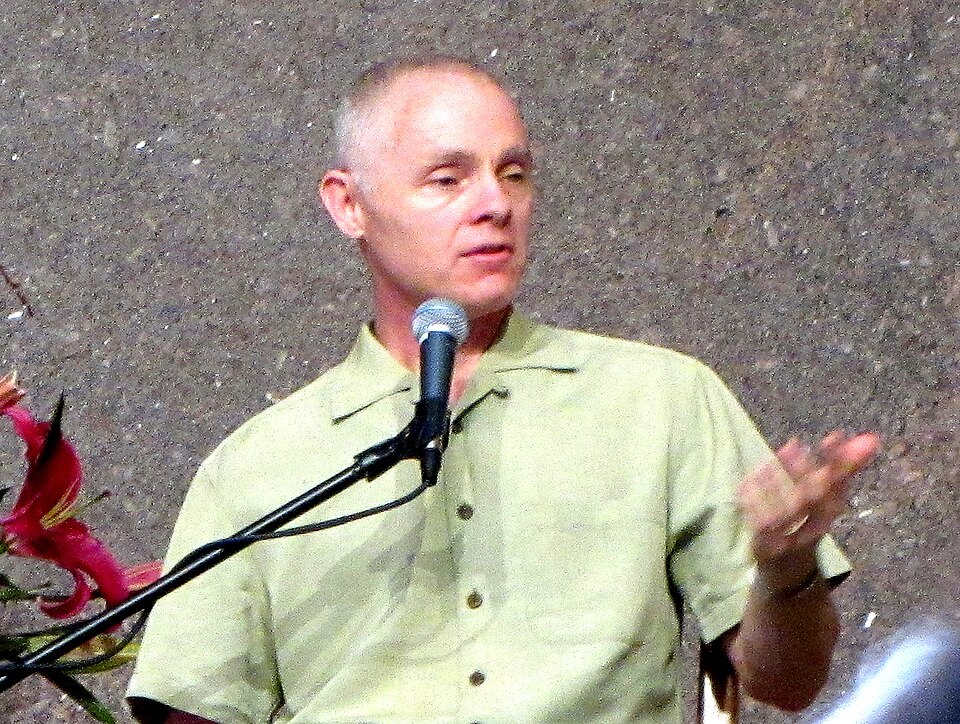
A student sits across from a spiritual teacher, exhausted. She has spent years on what she calls "the path"—endless effort, endless striving, endless layers. "There's just another layer to uncover, another layer," she says, her voice carrying the weight of accumulated disappointment. The teacher leans in and asks a simple question that reframes everything: "What's under the layers? More layers."

This isn't meant as a joke, though both laugh. It's a direct pointing at something most seekers discover only after years of dismantling themselves: the belief in layers is what creates them. The architecture of spiritual seeking—the idea that there is a mountain of psychological or emotional material to work through, layer by layer, until one finally reaches freedom—is itself the prison. "Part of the illusion is you must get through all these layers, and eventually I'll get to this point where there are no more layers and then I will be free," the student articulates, naming the core myth that has driven her practice. The teacher's response cuts to the mechanism: "The belief in layers just keeps creating layers. Layers and layers and layers and layers."

Leitura · 5 seções

How Belief Manufactures Experience

This isn't mysticism dressed up in psychology. The teacher is describing a concrete feedback loop. When someone adopts the framework that their freedom depends on processing infinite layers of experience, they unconsciously train their attention to find those layers. The mind, which is exquisitely designed to confirm what it already believes, becomes a layer-detection machine. Every emotion, every sensation, every memory gets sorted into the taxonomy of "work to do." The more a person believes in the necessity of layers, the more real and urgent those layers feel.

The student describes this perfectly: "After the retreat, I felt like layers were taken off. I felt very light." But then what? The teacher responds with a statement that deserves to sit with you: "You get what you want in life. We all get what we want, right? So, if you get to a place where you are very light and you go, you know, I'm still kind of interested in that layer thing. You'll find something that'll give you more layers."

This isn't punishment from the universe. It's not that the seeker is doing something wrong. It's that consciousness, or life itself, is responsive. When someone reaches a state of lightness or ease but then mentally re-engages with the framework of "there's more work to do," life provides fresh material that fits that belief. The student will find (or life will provide) new psychological content, new emotional material, new layers to process. "It'll all be very innocent, but it'll happen. You'll find it. Life will give it to you."

The Body Knows Better Than the Belief

As the conversation deepens, the teacher guides the student to distinguish between what is actually happening in the body and what the mind makes of what is happening. The student admits, "My body feels like it has to struggle to continue." The teacher then asks something that seems almost offensively simple: "Does it actually have to? In this moment. Right now."

The student sits with this. The honest answer comes back: "No."

This is where the conversation pivots from abstract philosophy to lived practice. "So, how does this body respond when it realizes it doesn't need to struggle in this moment to continue?" The student discovers: "It feels more effortless. It feels like I'm not struggling here. The body has a lot of stuff going on in it. That's all. Just stuff happening."

This distinction is everything. Sensations, emotions, and energetic movements continue to occur in the body. Nothing is suppressed or denied. But there is a crucial gap between stuff happening and the story about the stuff happening. "You can make something out of it or you can not make something out of it," the teacher explains. "It doesn't mean you ignore it, it just means you don't make more out of it than is actually happening."

When the mind stops manufacturing a narrative of struggle around the body's natural processes, energy can move freely. The stuff still happens, but it is no longer trapped in a framework of "I must process this," "This means something about my progress," or "This is another layer I need to work through." The body gets to be what it is without being conscripted into a project.

The Trap of External Authority

What begins as a conversation about layers opens into something larger: the machinery of spiritual authority and how it dismantles a person's internal compass. The teacher makes a stunning admission: "There will always be a thousand people that are going to tell you what's important about your life. What you should or should not pay attention to." He pauses. "Most of all, which will seem like great authority figures. LIKE ME."

Then he flips it: "EXCEPT THIS AUTHORITY FIGURE IS SAYING, 'I have no idea what you should or shouldn't do.'"

This is not false modesty or rhetorical humility. It's a direct statement about harm. "What I've seen is every time somebody gets a new concept of what they should or shouldn't do from somebody else, it's damaging. Even if they get it from me. It's damaging. It doesn't help them."

The damage is specific: adopting someone else's concept of what you should do "takes away from something vital, which is yourself, what you really know. Your sense of what's appropriate for you, not somebody else's sense. That's your freedom."

The student pushes back. "That sense seems to be so hard to find right now. That's when I depend on other people." The teacher acknowledges this with compassion, then diagrams the trap: "This reaching out for other people, this has been part of the programming, right? Over and over and over, and there's just new forms of it. Right? New forms, new authority figures, on and on and on."

Each time someone discounts their own sense of what is true or necessary for them and instead adopts an external framework—whether from a spiritual teacher, a therapist, a text, or a tradition—they lose a bit more trust in themselves. They lose their internal guide. And because the internal guide becomes harder to access, they reach out more. Because they reach out more, the internal guide becomes even harder to find. The cycle deepens. "This terrible you know, circular pattern just continues and continues and continues."

Breaking the Pattern: Listening to What's Actually Here

The teacher offers something radical: the only way out is to see this pattern clearly and choose, in the moment, to stop recharging it. Not through more effort, but through recognition. "At any point there can be seen through this. This hasn't worked for me. You just keep sort of recharging the pain body."

What makes this teaching so sharp is that it doesn't offer a new technique, a new layer to work through, or a new authority to follow. It points directly at the mechanism of the trap and invites the student to look for themselves. Do you actually have to struggle? In this moment, is that struggle real or is it a story? What does it feel like to stop making something out of what is simply happening?

The student's shift is palpable. From "It seems like so much efforting" to "It feels more effortless. It feels like the body has a lot of stuff going on in it. That's all." From dependency on external guidance to recognition: "I can choose to not pay attention to it or just be aware of it or notice it."

This is not dissociation or spiritual bypassing. It is the body being allowed to be what it is—a dynamic system with sensations, energies, and movements—without being trapped in a narrative that demands it prove something or work toward something or become something other than what it already is.

Where to go from here

If you find yourself in a pattern of endless spiritual seeking, endless processing of layers, endless reaching out to authorities (teachers, therapists, texts, traditions) for what you should do next, the teaching here is to pause. Not to stop seeking entirely, but to stop and listen: What do I actually know? What does my body actually need right now? Is this thing I'm struggling with something that truly requires my struggle, or am I manufacturing struggle around something that could simply be noticed and allowed?

This doesn't mean ignoring difficulty or denying real pain. It means the difference between feeling pain and making a spiritual project out of pain, between having emotions and being convinced those emotions are "layers" that require professional excavation. Your internal compass—your actual sense of what's true for you, what matters, what's worth your attention—is not broken. It's been obscured by too many external frameworks. The path forward may not be learning a new technique. It may be as simple as trusting yourself enough to listen.

Comments

Loading the conversation…

Transcript

[0:05] It just seems like so much efforting.

[0:09] Like it seems like my path has been

[0:12] just this amount of efforting,

[0:13] efforting, efforting.

[0:14] >> Path is effort. There is no path without

[0:17] effort.

[0:20] That's what paths are for.

[0:22] Efforting beings.

[0:26] >> [sighs]

[0:27] >> And I'm tired.

[0:28] >> Very good.

[0:31] >> But the body keeps on trying to

[0:34] or

[0:35] I'm just still trying to control the

[0:37] stuff.

[0:40] And it's ridiculous and

[0:42] just

[0:44] I just want to get out of bed.

[0:45] >> Just not working out, is it?

[0:50] >> I just want to go back to

[0:52] emptiness. Well, it wasn't really

[0:54] emptiness. It was It was It was just

[0:56] like

[0:57] It was just

[0:59] It was just even.

[1:01] >> Uh-huh.

[1:02] >> And now it just feels this whole I just

[1:04] feels like it's never ending not yet.

[1:06] There's just another layer to uncover,

[1:08] another layer.

[1:09] >> Uh-huh.

[1:09] >> Another layer.

[1:10] >> Yeah.

[1:12] That's kind of what layers are all

[1:13] about, you know.

[1:16] >> And generation, it feels like

[1:19] >> layer after the other, after the other,

[1:20] after the other, after the other, after

[1:22] the other. Yeah. What's under the

[1:24] layers?

[1:25] More layers.

[1:27] Yeah.

[1:32] >> So, I'm stuck in this

[1:33] >> No end to layers.

[1:36] >> No end to layers.

[1:37] >> No end to layers. They just keep going

[1:39] forever.

[1:44] Not very good news, is it?

[1:46] >> [laughter]

[1:55] >> Because the part of the illusion is is I

[1:58] must get through all these layers

[2:00] and eventually I'll get to this point

[2:02] where there are no more layers and then

[2:03] I will be free.

[2:05] >> Mhm.

[2:05] >> And I'll be free cuz there will be no

[2:06] more layers, right?

[2:09] But you see

[2:10] the belief in layers just keeps creating

[2:12] layers. Layers and layers and layers and

[2:14] layers and layers and layers. And it can

[2:16] go on as long as you're interested in

[2:19] the next layer.

[2:20] >> If [snorts] I go into

[2:23] you know, just realizing, you know,

[2:25] seeing the truth of who I am, then

[2:27] that's an escape from getting into

[2:30] the stuff that's confronting me.

[2:32] >> And it's How so?

[2:33] Like what's confronting you that you

[2:35] would escape?

[2:37] >> If I don't It feels like if I don't

[2:41] just um

[2:42] it feels like I have a choice.

[2:46] The choice is

[2:50] to

[2:54] to

[2:55] real um not realize who I am, but be in

[2:58] that place of

[3:01] of awareness.

[3:02] >> Okay, yeah.

[3:03] >> Mhm.

[3:04] Which the layers don't exist.

[3:07] >> Yes.

[3:12] >> But you can't I can't stay there for I

[3:15] mean that's just a moment. It's still

[3:17] there, the other

[3:24] >> Is it Is it just a moment?

[3:26] The illusion is is that it's just a

[3:28] moment. And it really I understand it

[3:30] really feels at times like it's just a

[3:32] moment. It really feels that way, very

[3:34] convincing.

[3:36] And that it really does feel like it's

[3:37] just gone.

[3:39] Right?

[3:41] This look Look again. Look for yourself.

[3:44] Is this that's awake really Is it gone?

[3:48] Is it really true?

[3:49] >> And I have the sense that it's it's

[3:51] there.

[3:52] >> Mhm.

[3:53] >> That it's always here.

[3:54] >> Mhm.

[3:56] >> And the body's over

[3:59] taking any

[4:01] >> Is it actually?

[4:05] >> What's winning? It feels like it's

[4:07] winning.

[4:08] >> Feels okay. Feels like it's winning.

[4:11] >> Feels very heavy.

[4:13] >> Yes.

[4:13] >> After the retreat, I felt like layers

[4:15] were taken off. I felt very light.

[4:17] >> Yes. Yes.

[4:29] So, you get what you want in life. We

[4:31] all get what we want, right?

[4:33] So, if you get to a place where you are

[4:35] very light and you go, you know,

[4:37] I'm still kind of interested in that

[4:38] layer thing.

[4:42] >> Well,

[4:43] >> you'll find something that'll give you

[4:44] more layers. I mean, it'll all be very

[4:46] innocent, but it'll happen. You'll find

[4:48] it. Life will give it to you.

[4:51] >> Well, I'm going to have to deal with

[4:53] whatever I'm going to have to deal

[4:54] whether I'm

[4:55] before awakeness or during

[4:57] >> Yeah, you still got to deal with I mean,

[4:58] you're still living living your life.

[5:01] Right?

[5:02] >> Right.

[5:14] >> [sighs]

[5:19] >> What's struggling to to continue?

[5:23] What's really here? What is really

[5:26] struggling to continue?

[5:49] Can you find anything?

[5:52] >> Yeah, it feels my body.

[5:54] >> Your body is struggling to continue.

[5:56] >> like it.

[5:57] >> It

[5:58] >> I mean, I feel every, you know, usually

[6:00] when I'm up here talking to you, I don't

[6:01] feel my They don't feel anything. I feel

[6:05] so dense.

[6:07] >> [laughter]

[6:08] >> So, what does it feel like to have your

[6:09] body struggling to continue, this

[6:11] struggle? What's the experience of it?

[6:14] >> It feels it has to.

[6:15] >> It has to.

[6:18] Does it have to? Let's look at it. Does

[6:20] it actually have to?

[6:23] Body, do you actually have to struggle

[6:26] to continue?

[6:29] Now,

[6:31] in this moment.

[6:33] >> No, no.

[6:34] >> Current time.

[6:34] >> No.

[6:40] >> So, how does this body respond when it

[6:42] realizes it doesn't need to struggle in

[6:44] this moment to continue?

[6:49] >> It feels

[6:55] It feels um

[6:57] more effortless. It feels like I'm not

[7:00] struggling here.

[7:03] It's just

[7:05] You know, it it feels like the body has

[7:06] a lot of stuff going on in it.

[7:09] That's all. Just stuff happening.

[7:11] >> Stuff happening.

[7:15] >> And I can choose to I feel I can choose

[7:18] to not pay attention to it or just be

[7:20] aware of it or

[7:22] notice it.

[7:23] >> You can make something out of it or you

[7:25] can not make something out of it. It

[7:27] doesn't mean you ignore it, it just

[7:28] means you don't make more out of it.

[7:30] >> Okay.

[7:32] >> That's all. You did You don't make more

[7:34] out of it than it than is actually

[7:36] happening, which means you your body

[7:37] gets to at energy actually gets to move

[7:40] through your system.

[7:42] It gets to happen.

[7:45] But it's seeing that it's unnecessary

[7:47] and untrue what the mind makes of that

[7:49] experience.

[7:57] >> Yeah, it

[7:58] what the actually the experience I went

[8:01] into is layers of

[8:04] you know,

[8:05] past that was before I was born. And I

[8:08] do I need to know this? I mean, it's

[8:10] like

[8:12] >> That's a good Do you need to know this?

[8:13] You know, do you need to know this or do

[8:15] you not?

[8:23] >> On some level, no.

[8:27] >> So, what are you going to listen to?

[8:31] This is your life.

[8:36] See, this is a very important thing. You

[8:38] realize that this is your life.

[8:41] There will always be a thousand people

[8:43] that are going to tell you what's

[8:45] important about your life. What you

[8:47] should or should not pay attention to.

[8:50] What you what you need to do or not to

[8:52] do. There'll be an endless number of

[8:54] people

[8:56] throughout your whole life they're going

[8:57] to be telling you what you need to do or

[8:59] what you don't need to do. Most of all

[9:00] which will seem like great authority

[9:02] figures.

[9:04] LIKE ME.

[9:06] >> [laughter]

[9:13] [laughter]

[9:15] >> EXCEPT THIS AUTHORITY FIGURE IS SAYING,

[9:17] "I have no idea what you should or

[9:19] shouldn't do. I don't have a concept of

[9:21] what you should or shouldn't do."

[9:23] You see what I mean? What I've seen is

[9:25] every time somebody gets a new concept

[9:27] of what they should or shouldn't do from

[9:28] somebody else, it's damaging.

[9:31] Even if they get it from me.

[9:34] It's damaging. It doesn't help them.

[9:38] You see, cuz it takes away from

[9:39] something vital, which is yourself, what

[9:42] you really know.

[9:45] Right? What your sense of what's

[9:47] appropriate for you, not somebody else's

[9:49] sense.

[9:52] You see, that's your freedom.

[9:56] >> And that sense seems to be so hard to

[9:59] find right now. That's when I depend on

[10:02] other people.

[10:03] >> Mhm.

[10:06] Right. And so, this reaching out for

[10:08] other people, this has been part of the

[10:10] programming, right? Over and over and

[10:12] over, and there's just new forms of it.

[10:14] Right? New forms, new authority figures,

[10:17] on and on and on. And you tell me, how

[10:19] has it worked out every time?

[10:23] Not so good, huh?

[10:27] Even when you make me the authority

[10:29] figure and then trying to follow that

[10:31] out, how's that worked out?

[10:33] >> Pretty good.

[10:33] >> Pretty good?

[10:35] >> [laughter]

[10:35] >> Doesn't look like it right now.

[10:39] >> Well, a couple layers came off.

[10:43] >> [laughter]

[10:49] [laughter]

[10:52] >> I'm not going to argue with you, man.

[10:53] You're

[10:54] You're the authority.

[10:56] >> [laughter]

[10:58] >> You see what I'm trying to point out,

[11:00] though? That the this this this the this

[11:04] real pattern, this underlying pattern,

[11:08] is [snorts and clears throat]

[11:09] reaching out, you know, going to the

[11:11] next

[11:12] thing, which is discounting yourself.

[11:15] You know, you do that long enough, and I

[11:17] understand you start to lose trust in

[11:19] yourself. You start to lose your sort of

[11:21] compass, internal guide, which causes us

[11:24] to what? Reach out more. But the problem

[11:27] when we reach out more, what happens to

[11:29] the teeny bit of internal guide that we

[11:31] have?

[11:32] It It's even harder to find, and since

[11:34] it's harder to find it we can't find it

[11:35] we reach out again more. And so this

[11:38] terrible

[11:40] you know, circular pattern just

[11:42] continues and continues and continues.

[11:48] And there can be

[11:50] see at any point there can be seen

[11:52] through

[11:54] uh this this hasn't worked for me.

[11:57] You know, this you just keep sort of

[12:03] recharging

[12:05] the the the pain body.

[12:08] Right?

[12:19] And so the only way to start to find

[12:22] that sense within yourself

[12:24] of appropriateness for yourself

[12:27] is the first step is to realize that

[12:28] nobody can give it to you.

[12:31] That's the first step. Nobody can give

[12:33] it to you. And what one cannot give it

[12:35] to another.

[12:38] You know?

[12:40] And then of course the first thing that

[12:41] you feel inside is that sense of

[12:43] lostness, like I don't know where my

[12:45] internal radar is. It's it doesn't seem

[12:47] available or not very consistently

[12:49] available.

[12:51] And since it hasn't been that's why you

[12:54] reach out again.

[12:57] Just stay there. You might surprise

[12:58] yourself.

Adyashanti
ArtistAdyashanti

American spiritual teacher in the Zen and non-dual traditions, sanctioned by his Zen teacher Arvis Justi to teach in 1996. His teaching is unusually direct: pointing past method, i…

Ver perfilSite
Explorar temas
Layers-seekingSpiritual-authorityInternal-compassEffortless-awakeningBelief-creates-reality

Tem perguntas?

Perguntas frequentes

According to this teaching, the belief in layers creates the layers themselves. When someone adopts the framework that they must process infinite emotional or psychological material to reach freedom, their mind unconsciously finds and confirms those layers. The more deeply someone believes in this structure, the more real and pressing those layers feel.
No. The teaching distinguishes between what is actually happening—sensations, energies, emotions moving through the body—and the story the mind constructs about those happenings. Stuff happens in the body naturally. The trap is in making that stuff mean something requires processing, which keeps the cycle of effort going.
When you catch yourself thinking, 'I should do this because someone told me I should,' or 'This is what's supposed to happen next,' you're likely following external authority. Your own sense of what's true or necessary for you tends to feel like simple knowing, without the friction of adopted concepts. Every time you discount your own sense in favor of external guidance, you weaken your internal compass.
Yes. The teaching suggests that your internal compass isn't broken—it's been buried under external frameworks and programming. As you stop reaching out for the next authority and practice noticing what is actually true for you in the moment, that sense of internal knowing begins to resurface and strengthen.
No. The teaching is about not making more out of what's happening than is actually happening. Emotions and energies move through the body. You can notice them without constructing a narrative that they're layers requiring spiritual processing. This isn't denial; it's allowing the body to be dynamic without trapping it in a project of self-improvement.
Every time you adopt a new concept about what you should work on spiritually, or follow a new authority's guidance about your inner life, you're essentially recharging the belief that something is wrong with you and needs fixing. Stopping this means recognizing the pattern and, in each moment, choosing to listen to yourself instead of the next authority figure.

Continuar lendo

More from Adyashanti

Ver Tudo
Perceiving the Present Moment Through Head, Heart and Gut
Inspire

Perceiving the Present Moment Through Head, Heart and Gut

Adyashanti's two-minute experiment asks where you perceive from, not whether you are present. Looking out a window from the eyes, heart, or …

1 min read
Plant Medicine and Ego Death: Preparation Over Shortcuts
Inspire

Plant Medicine and Ego Death: Preparation Over Shortcuts

Spiritual teacher explores why plant medicine can unlock profound insight—or overwhelm the unprepared psyche. The difference lies in readine…

1 min read
Why Does God Allow Suffering? A Reframing of the Argument
Inspire

Why Does God Allow Suffering? A Reframing of the Argument

A therapist's question about suffering becomes a lesson on why the classic argument against God rests on a flawed picture. Here is Tolle's r…

1 min read
Awareness Beyond the Person: The Direct Path to Universal Consciousness
Inspire

Awareness Beyond the Person: The Direct Path to Universal Consciousness

At Monte Sahaja, a seeker discovers that consciousness itself—not the person—is the unchanging witness of all experience. A radical shift in…

1 min read

Continue explorando

Continue sua jornada

Mais sabedoria e mais encontros de todo o diretório BrightStar.

Mais artigos

Explore a biblioteca completa de ensinamentos, entrevistas e guias.

Voltar a todos os artigos →

Professores e artistas

Conheça as linhagens, os músicos e os guias do mundo consciente.

Explorar artistas →

Encontre um evento

Kirtan, retiros, banhos de som, breathwork, festivais — acontecendo em breve.

Ver eventos →