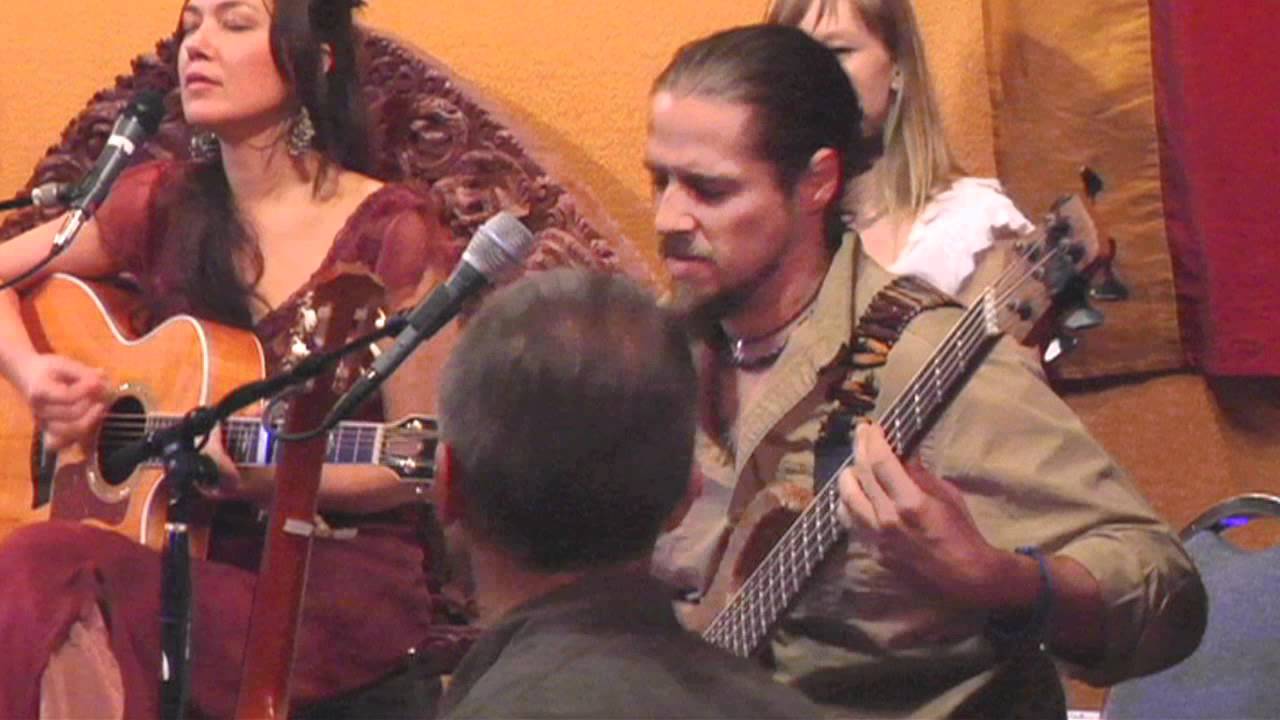
On a night in Los Angeles, the Nate Holden Performing Arts Center filled with an audience waiting for India.Arie and Idan Raichel to premiere their new collaboration, "Open Door." Before either headliner appeared, a voice at the microphone asked the room to understand the evening as something larger than a concert. The singer who followed, Tina Malia, took that framing and answered it with a choice: she would open not in English but in Hebrew, singing "Kol Galgal" to honor the artists she had been asked to share a bill with. The video of that set, posted in October 2010, runs about seven minutes and is a short, unusually pointed piece of stagecraft, the kind of opening number that tells a room what the night is about before the headliners arrive.
The clip opens with the introduction, delivered by Ron Gillyard, identified in the video as India.Arie's manager. He told the crowd they were "in for a great concert" but that it was "a musical experience that you will remember for years to come." He then described Malia in terms that are worth reading closely, because they shape how the audience is primed to listen: "Tina is emerging as one of the most phenomenal artists of our time her music mirrors the unique unconditional approach to life a love of Adventure tireless commitment an expression of beauty."
That is the language of a billing, not a biography. It establishes a mood, a set of values, and a sense of occasion. For an opener, that matters. A performer walking out after a manager's introduction of this kind has to earn the room's attention in the first bars, not in the first minute of talking.
Malia's own remarks, at about 1:16 in the video, are the most direct explanation the material offers. "When India first called me and asked me to be a part of this evening, of course I was thrilled, because she's one of my favorite musicians and people in the whole world," she said from the stage. She then described what changed her view of the booking once she read about the concert: "I looked and saw what this concert was about, and I realized she was collaborating with another one of my longtime favorite artists, Idan Raichel, from Israel."
Her next line, at roughly 1:58, is the hinge of the whole performance: "I would like to honor their amazing collaboration by starting with a song in Hebrew. This is called Kol Galgal."
The decision reads as an act of hospitality as much as a musical one. Idan Raichel is Israeli; India.Arie is American; the premiere was an encounter between two sets of musical references and audiences. Malia didn't deliver a speech about bridging those worlds. She put the bridge into the set list, opening in the language of one of the collaborators and letting the rest of the night answer.
The video's own description says to fast-forward to 2:03 for the beginning of "Kol Galgal," and that is where the song properly starts after Malia's spoken introduction. The live captions show a performance that moves in sections, with instrumental passages, sung lines, and audible applause breaks in between. Two features stand out.
- Repetition as a doorway. The captioned lyrics repeat short phrases several times, including passages that run "so go so go" and "so God so God" near the song's close. For a room that may not speak Hebrew, repeated refrains are the most reliable way in. The audience doesn't need to parse every line to follow the shape of the song.
- Space for the room. The applause markers in the captions cluster at points where the singing pauses. Those gaps are where an opening act hands the room back to itself, and where the audience's response becomes part of the performance.
A caution is in order. The captions render the Hebrew text inconsistently, so this piece won't quote the sung lyrics or offer translations. Anything a reader wants to know about the words should come from a verified lyric source, not from auto-generated captions.
The clip is a single live performance with a short introduction, and it does not include a history of "Kol Galgal," a description of its recording, or a career timeline for Malia. The material also doesn't say whether the song appears on a studio release. Where the video does give information, it is about the occasion: the venue, the headliners, the manager's introduction, and Malia's stated reason for opening in Hebrew. Those details are solid. Anything beyond them would be speculation.
What the video does offer is a compact lesson in opening a show. Malia reads the room, names the collaboration on stage, chooses a language that signals respect for the artists involved, and then gets out of the way of the music. The set is short, and it doesn't need to be more than that.
Watch the performance from the 2:03 mark, where "Kol Galgal" begins, and pay attention to the applause breaks and the moments where the vocal line repeats. Then listen to the collaboration the set was built to honor: India.Arie and Idan Raichel's "Open Door," which the concert premiered. If you want to follow Malia's own work, the video's description lists her official Facebook page and her Twitter account, @tinamaliamusic. For Hebrew lyrics, look for a verified transcription or a translation from a source credited by name, rather than relying on the auto-captions in the video.