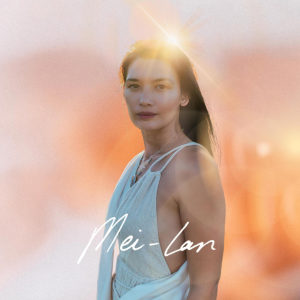
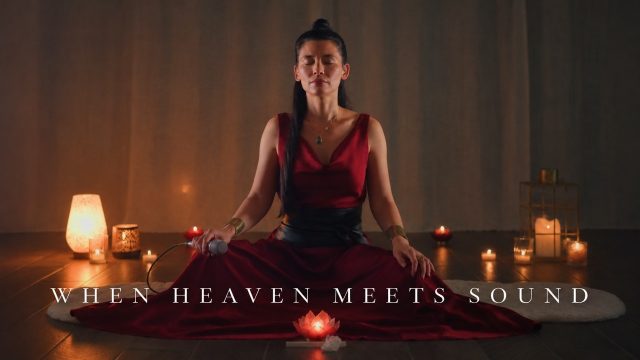
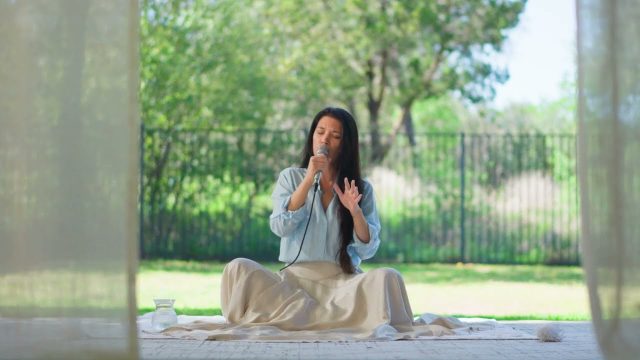
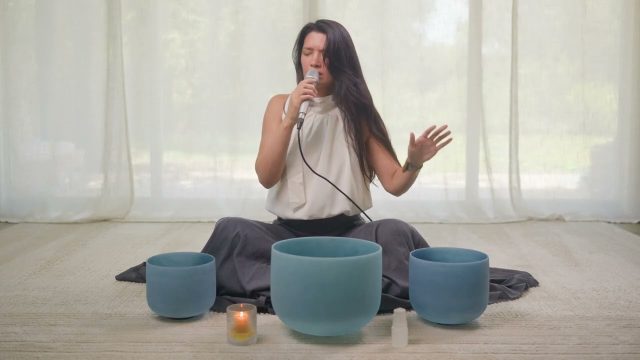
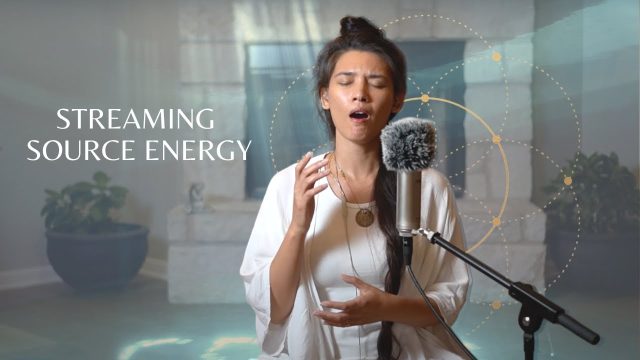
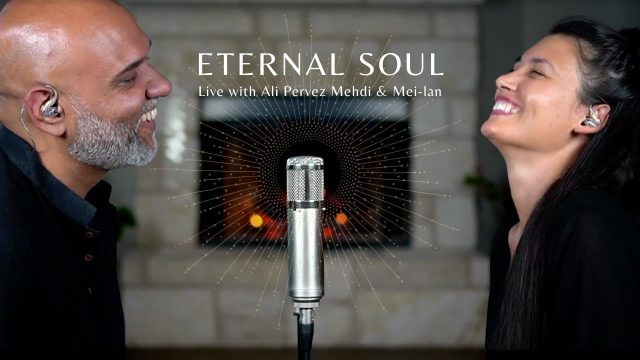
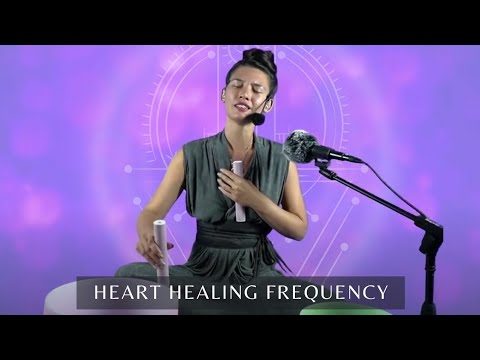
Mei-lan is an artist and teacher dedicated to exploring the transformative power of art through music and courses. She offers a variety of musical compositions that resonate with audiences seeking deeper connections to themselves and the universe.
Sobre
Mei-lan is an artist and teacher dedicated to exploring the transformative power of art through music and courses. She offers a variety of musical compositions that resonate with audiences seeking deeper connections to themselves and the universe.
Her courses, such as the Soul Sanctuary and Healing through Sound, support individuals in connecting to their center and raising their vibration. Mei-lan's music is described as soulful and angelic, with listeners expressing feelings of enlightenment and emotional release through her work.
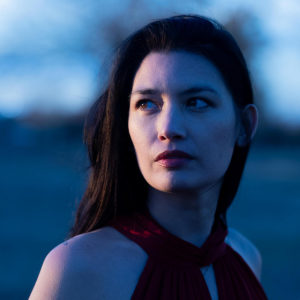
Mei-lan Maurits is a multicultural artist and spiritual teacher working across painting, music composition, and performance art—a rare convergence of practices that reflects a serious commitment to exploring how creativity functions as a spiritual discipline. Born into a family that prioritized both artistic expression and contemplative life, she has spent her career investigating what she calls the intersection of spirituality and creativity, treating this not as New Age sentiment but as a rigorous inquiry into how making art and spiritual practice inform each other. Her work attracts audiences who are fatigued by generic wellness content and instead seek artists with genuine lineage, philosophical depth, and a willingness to work across multiple mediums. What distinguishes her in a crowded field is that she refuses to compartmentalize: her paintings, compositions, and teaching all emerge from the same contemplative foundation, grounded in mindfulness and a profound connection to the natural world. Her discography—which includes the 2022 album *Moving Elements* and the recent 2025 release *Cradle For The Sacred*—demonstrates a sustained commitment to musical composition as spiritual practice, while her teaching work extends these investigations into live workshops and classes.
Mei-lan Maurits's lineage is deliberately syncretic, drawing from multiple spiritual traditions and artistic movements rather than claiming allegiance to a single school. Her bio emphasizes influences from ancient philosophies alongside contemporary artistic practice, suggesting an approach that honors depth in particular traditions while refusing dogmatic boundaries. What's notable is her emphasis on the natural world as a primary teacher—a current that runs through contemplative traditions from Taoism to Western Romanticism, and which shapes how she frames both her creative process and her teaching. Her work reflects what might be called an eclectic spirituality grounded in direct observation and mindfulness practice, where presence and attention function as spiritual disciplines rather than belief systems. The presence of her composition *Moving Elements*—which takes its title from classical elemental philosophy—suggests engagement with both Eastern and Western esoteric frameworks, integrated through artistic practice rather than theoretical study alone.
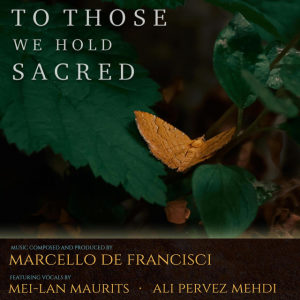
Start with *Moving Elements* (2022), her full-length album, which functions as a representative overview of her musical aesthetic and serves as an accessible entry point to her compositional approach. This album demonstrates her capacity to blend traditional and contemporary influences in ways that don't require prior knowledge of her lineage or teaching—the work speaks directly through sound and structure. From there, listen to her most recent release, *Cradle For The Sacred* (2025), a five-track single that shows her current direction and suggests where her thinking has evolved. If you're drawn to her visual practice, her website (mei-lanmaurits.com) offers entry into her painting work, though the primary digital archive of her output currently centers on her discography. Her YouTube channel (youtube.com/c/Meilanmaurits) may offer performance documentation or teaching content that contextualizes the compositional work. The progression from *Moving Elements* to *Cradle For The Sacred* reveals her development over roughly three years, making it a natural pedagogical arc.
Mei-lan Maurits refuses the compartmentalization that plagues most contemporary spiritual artists—she doesn't make art *about* spirituality or teach spirituality through art, but rather treats painting, music, and performance as equal expressions of a single contemplative inquiry. Where many spiritual practitioners dabble in art as a secondary practice, her training and output in multiple mediums suggests genuine mastery across disciplines, a rarity that lends her work intellectual and aesthetic credibility. Her emphasis on nature connection and mindfulness as foundational practices distinguishes her from more abstract or symbol-heavy spiritual art traditions; her work appears grounded in direct observation and sensory presence rather than inherited iconography. The specific titles of her recent compositions—*Moving Elements*, *Cradle For The Sacred*—suggest a philosophical rigor that avoids the vagueness that often characterizes spiritual art marketing. Her multicultural background, which she identifies as formative, appears to prevent the cultural appropriation that sometimes mars Western spiritual art practice; her syncretic approach is presented as personal lineage rather than exoticist borrowing.
Her work is not suited to listeners or students seeking high-energy, ecstatic spiritual experiences or devotional intensity in the bhakti or Pentecostal register. If you're looking for explicitly instructional spiritual teaching with clear dogma, step-by-step practices, or defined outcomes, her contemplative and open-ended approach may feel frustratingly vague. Audiences accustomed to genre-specific music—those who want either dance music or classical composition, not their fusion—may find her compositions uncomfortably liminal. Visual art collectors seeking decorative or investment-grade work may be unmoved by a practice centered on process and spiritual inquiry rather than market positioning. Additionally, anyone seeking clear biographical narrative or publicly available teaching documentation will find the information landscape sparse; much of her work exists in direct experience (workshops, live performance) rather than widely distributed recorded teaching. Her refusal to flatten her practice into a single marketable identity means she will never achieve the accessibility of more commercially streamlined spiritual teachers.
Her official website (mei-lanmaurits.com) is the primary source for announcements, upcoming workshops, retreat information, and release news. Her YouTube channel (youtube.com/c/Meilanmaurits) appears to host performance documentation and potentially teaching content, making it worth subscribing if you want visual documentation of her work. Her Spotify profile (open.spotify.com/artist/1gzbrELblrN27iICBC3vLc) will reflect new musical releases as they arrive; her most recent output, *Cradle For The Sacred* (2025), represents her current trajectory. While no upcoming tour dates are currently publicly available through standard channels, her website is likely to be the announcement venue for any retreat centers, performance venues, or teaching locations she works with. Following her directly through her web presence is more reliable than third-party festival or venue listings, given that much of her teaching and performance work may operate in smaller, curated contexts rather than mainstream festival circuits. Email subscription through her site (if available) is typically the fastest way to learn of new releases or events.
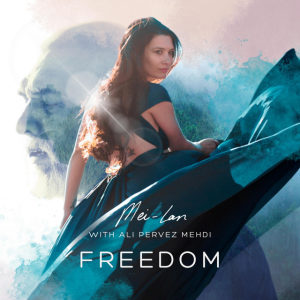
Her discography—particularly *Moving Elements* (2022) and *Cradle For The Sacred* (2025)—suggests a compositional aesthetic that blends electronic and acoustic elements, abstract and accessible sensibilities. The titles and framing suggest she works with elemental, nature-inspired sonic palettes rather than maximalist production; her approach appears to value clarity and space over density. With sixteen tracks on *Moving Elements* and five on *Cradle For The Sacred*, the shorter track lengths suggest she works in concentrated compositional statements rather than extended ambient journeys or song-based structures. Her presence on the *Essential Secrets of Deep House, Vol. 6* compilation (2022) indicates some relationship to electronic music traditions, though the inclusion suggests her work sits at the more contemplative or experimental edge of house music rather than dancefloor functionality. The arc from *House Head EP* (2020) through her more recent work suggests an evolution toward more spacious, less rhythmically propulsive compositions—a movement from electronic energy toward compositional restraint. The complete audio experience is best assessed by listening directly on Spotify, where both albums are available in full.
The available data does not specify her instrumental lineup or production collaborators with the detail necessary for a substantive answer. Her discography titles suggest engagement with elemental and nature-inspired sonic aesthetics—the album *Moving Elements* implies compositional thinking around natural forces and perhaps acoustic or organic sound sources—but specific instrumentation is not documented in the available sources. Her presence in the deep house compilation context might suggest some electronic production work, though this could reflect curation rather than her actual methods. The best way to understand her instrumental and production approach is to listen to the full albums *Moving Elements* and *Cradle For The Sacred*, where the sonic palette reveals itself directly. If you're seeking detailed production notes or instrumentation credits, her website or direct contact may provide more specificity than is currently available through standard biographical channels.
Her teaching approach centers on the intersection of spirituality and creativity, with particular emphasis on the natural world and mindfulness as foundational practices. Rather than transmitting doctrine or predetermined knowledge, her workshops and classes appear structured to help students access their own creative voices and spiritual insights through guided exploration and artistic practice. Her multicultural background and syncretic lineage suggest a teaching style that honors multiple traditions without claiming exclusive truth; she positions herself as a facilitator of self-discovery rather than an authority dispensing wisdom. The framing of her work emphasizes personal transformation through direct experience—working with paint, sound, presence—rather than intellectual study or belief adoption. Her teaching extends principles she embodies in her own practice: reverence for the natural world, commitment to mindfulness, and the understanding that art-making itself is a spiritual discipline. The specific structure, duration, and location of workshops or retreats are not detailed in available sources; her website is the appropriate resource for current offerings and registration details.
Nature connection and natural philosophy emerge as central threads across her painting, composition, and teaching—evident in album titles like *Moving Elements*, which invokes classical elemental theory, and in her stated reverence for the natural world. Mindfulness and presence function as both artistic practice and spiritual discipline; her approach treats sustained attention as the foundational skill for both creative work and inner development. The integration of spirituality and creativity itself is perhaps her most sustained theme—she refuses the false division between sacred practice and artistic expression, instead proposing them as inseparable dimensions of conscious living. Multicultural and syncretic approaches characterize her lineage work; rather than claiming exclusive tradition, she draws from diverse philosophical and artistic streams and synthesizes them through her own practice. The concept of transformation through creative practice appears throughout her bio and artistic framing, though notably not in the language of salvation or redemption, but rather as gradual deepening of presence and authenticity. These themes recur across mediums—painting, music, performance, teaching—suggesting a coherent artistic philosophy rather than disparate projects.
BrightStar is the global directory of artists, teachers, and healers in the wellness and spiritual movement. Find your next experience — or add yourself.