BrightStar
ブログマイチケット
ブログマイチケット
Saved events
ヘルプ・お問い合わせ新規登録ログイン
イベント
  • すべてのイベントを見る
  • ヨガ
  • 瞑想
  • ブレスワーク
  • 気功
  • 聖なる音楽
  • ワールドミュージック
  • メディスンミュージック
  • サウンドヒーリング
  • エクスタティックダンス
  • セレモニー
  • プラントメディスン
  • エネルギーヒーリング
  • サットサンと智慧
  • タントラ
  • リトリート
  • すべてのカテゴリ →
目的地
  • Bali
  • Sedona
  • Los Angeles
  • Costa Rica
  • Tulum
  • Byron Bay
  • San Francisco
  • Austin
  • New York
  • San Diego
  • Denver
  • Seattle
  • Portland
  • Miami
  • London
  • Maui
  • Boulder
  • すべての都市 →
プラットフォーム
  • 主催者向け
  • ムーブメントに参加
  • Sell Globally
  • クリエイター向け
  • チーム向け
  • ライター向け
  • 講師向け
  • キルタンアーティスト向け
  • スタジオ向け
  • フェスティバル向け
  • リトリートセンター向け
  • 非営利団体向け
  • ブランドアンバサダー
  • 無料チケット販売
  • Pro
  • Amplify
  • エコシステム
機能

チケット販売と購入

  • Ticket categories
  • Assigned seating
  • Custom questions
  • Coupon codes
  • Smart pricing
  • Ticket sharing
  • Waitlist
  • Flexible refunds
  • Digital waivers
  • Tip jar
  • Donations and sliding scale
  • Embed widget
  • Mindful checkout
  • Recurring events
  • Private sessions
  • Online courses
  • Summits
  • Rooms and stays
  • Ticket scanner

マーケティングと成長

  • Abandoned cart recovery
  • Visitor recovery
  • Upsells and add-ons
  • Affiliate engine
  • Upsell affiliate network
  • Brand ambassador
  • Meta retargeting
  • Verified buyer network
  • Outbound email marketing
  • Email sequences
  • SMS and WhatsApp
  • Event upsell network
  • Direct mail campaigns
  • SEO engine
  • Syndication
  • Event sharing
  • Custom event pages
  • Artist profiles
  • Link in bio
  • Event blog
  • Blog newsletter

決済

  • Payments, powered by Stripe
  • Buy now, pay later
  • Apple Wallet
  • Multi currency

データと運営

  • Team access
  • Message center
  • Reports
  • Analytics reporting
  • Performance reporting
  • Customer data
  • Integrations
  • Switch from another platform

AI

  • Assistant
  • AI FAQ assistant
  • すべての機能 →
会社
  • 概要
  • よくある質問
  • お問い合わせ
  • ブログ
  • 用語集
  • Guides
  • インスピレーション
  • ヘルプセンター
  • APIドキュメント
  • ブランドアセット
  • プレス
  • 利用規約
  • プライバシーポリシー

イベント

  • すべてのイベントを見る
  • ヨガ
  • 瞑想
  • ブレスワーク
  • 気功
  • 聖なる音楽
  • ワールドミュージック
  • メディスンミュージック

目的地

  • Bali
  • Sedona
  • Los Angeles
  • Costa Rica
  • Tulum
  • Byron Bay
  • San Francisco
  • Austin

プラットフォーム

  • 主催者向け
  • ムーブメントに参加
  • Sell Globally
  • クリエイター向け
  • チーム向け
  • ライター向け
  • 講師向け
  • キルタンアーティスト向け

機能

  • コミュニティネットワーク
  • カート放棄リカバリー
  • チケットカテゴリ
  • 定期イベント
  • 座席指定
  • アフィリエイトシステム
  • ウェイトリスト / 通知
  • すべての機能 →

会社

  • 概要
  • よくある質問
  • お問い合わせ
  • ブログ
  • 用語集
  • Guides
  • 利用規約
  • プライバシーポリシー
続きを読む

イベント

  • サウンドヒーリング
  • エクスタティックダンス
  • セレモニー
  • プラントメディスン
  • エネルギーヒーリング
  • サットサンと智慧
  • タントラ
  • リトリート
  • すべてのカテゴリ →

目的地

  • New York
  • San Diego
  • Denver
  • Seattle
  • Portland
  • Miami
  • London
  • Maui
  • Boulder
  • すべての都市 →

プラットフォーム

  • スタジオ向け
  • フェスティバル向け
  • リトリートセンター向け
  • 非営利団体向け
  • ブランドアンバサダー
  • 無料チケット販売
  • Pro
  • Amplify
  • エコシステム

会社

  • インスピレーション
  • ヘルプセンター
  • APIドキュメント
  • ブランドアセット
  • プレス

チケット販売と購入

  • Ticket categories
  • Assigned seating
  • Custom questions
  • Coupon codes
  • Smart pricing
  • Ticket sharing
  • Waitlist
  • Flexible refunds
  • Digital waivers
  • Tip jar
  • Donations and sliding scale
  • Embed widget
  • Mindful checkout
  • Recurring events
  • Private sessions
  • Online courses
  • Summits
  • Rooms and stays
  • Ticket scanner

マーケティングと成長

  • Abandoned cart recovery
  • Visitor recovery
  • Upsells and add-ons
  • Affiliate engine
  • Upsell affiliate network
  • Brand ambassador
  • Meta retargeting
  • Verified buyer network
  • Outbound email marketing
  • Email sequences
  • SMS and WhatsApp
  • Event upsell network
  • Direct mail campaigns
  • SEO engine
  • Syndication
  • Event sharing
  • Custom event pages
  • Artist profiles
  • Link in bio
  • Event blog
  • Blog newsletter

決済

  • Payments, powered by Stripe
  • Buy now, pay later
  • Apple Wallet
  • Multi currency

データと運営

  • Team access
  • Message center
  • Reports
  • Analytics reporting
  • Performance reporting
  • Customer data
  • Integrations
  • Switch from another platform

AI

  • Assistant
  • AI FAQ assistant
アプリを入手
App StoreからApp StoreGoogle Playで手に入れようGoogle Play
© 2026 BrightStar. 全著作権所有. BrightStar Selection · 写真クレジット · 変更履歴 ·
Inspiration

Music's Transformative Power: Ritual, Trance, and Drone

Steve Gorn
Steve Gorn
Mar 21, 2017
読了 約9分

出典:Steve Gorn

視聴 · 7

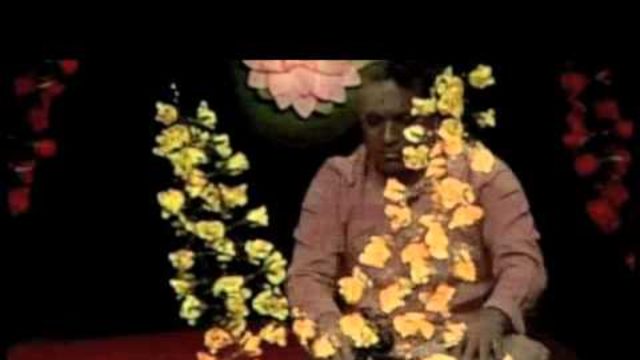
What happens when a single held note starts to organize everything around it? Over the course of a roughly 24-minute talk at Rensselaer Polytechnic Institute in Troy, New York, the Indian bamboo flute player Steve Gorn sets out to answer that question, moving from Krishna's flute in the Hindu tradition to Victorian-era parlor assumptions about the arts, from Iranian passion theater to Australian song lines, and finally to a live performance built on a single sustained tone. His thesis is that music is a transformative modality, a portal between the visible and invisible worlds, and that its deepest function is to synchronize. Read as a teaching rather than a lecture, the talk asks listeners to take sound seriously as a practice of integration, and it gives a clear map for why music has always been bound up with ritual, danger, healing, and land.

読む · 6セクション

Why does sound pull us into another world?

Gorn opens with a run of images that would be familiar to anyone who has felt a song land in the chest. A song can instantly recall a time, a place, or a person. Rhythm invites the body to move. He ran through the examples quickly: the gopis in Hindu devotional stories who heard Krishna's flute and abandoned their husbands and their world to lean as close as they could to the divine; the body-moving pulse of Afro-Cuban salsa and James Brown; John Coltrane, where one note brings on goosebumps; a phrase of a Brahms symphony on the radio that opens a childhood emotion. The point of the catalog was not nostalgia. It was to establish that music's pull is physical, emotional, and social all at once.

From there he pushes toward the edge. "Music is really a transformative modality," he says, and he lists its range: it can sweep us away, shift moods, settle us, excite us, awaken us, or alter the mind. "It's a portal," he continues, "it's crossing boundaries into ecstasy, intoxication, possession." He is not romanticizing this. He points to nationalist and patriotic fervor that has run amok to music, to Elvis Presley's movements alarming white American parents in the 1950s, and to the tritone, the "devil in music," which early church authorities forbade and which later became central to jazz and blues. The same interval that once looked dangerous turns out to be the engine of an entire vocabulary. That reversal is one of the talk's quiet arguments: the things that unsettle us are often the things that carry energy.

Why have musicians been feared and needed at the same time?

This is the most striking strand of the talk, and it grows out of Gorn's own history. Years ago, he recounts, he became fascinated with Indian music and began playing the shehnai, a double-reed instrument, in Banaras. That led him to the low social status of the professional musicians who play it, and to a doctoral project on what he called the subject of "you wouldn't want your daughter to marry a musician." He draws on the anthropologist Victor Turner, who identified musicians as often liminal, meaning kept separate, held at the threshold of ordinary social life.

The paradox he describes is precise. In India, shehnai players traditionally came from communities considered untouchable, yet their music was indispensable to any auspicious occasion. Weddings, births, and circumcisions had to be accompanied by these musicians, as if they held a power or potency that also had to be kept at a distance. In West Africa, he describes the griot, the singer and genealogist who sang the praise of kings. Kings needed that praise, but if they underpaid, the same singers would sing about their family in ways they did not want to hear.

"It's really the wild untamable live energy of the Dionysian which is always threatening the Apollonian stability and order."

Steve Gorn, talk at Rensselaer Polytechnic Institute, Troy, NY (published on YouTube, 2017)

Gorn's Dionysian-Apollonian framing gives the tension a name. Order, form, and stability need something live and unruly to keep them vital, and that unruly thing has to be managed, placed on the threshold, or it breaks the frame. This is why, in his account, music so often sits at the edge of rites of passage. He calls it a bardo, "something between two worlds." Musicians are powerful because they stand in that between-space, and that is also why societies both honor and fence them in.

What is music's real function?

The center of the talk is a claim he attributes to a samurai-era Japanese source, which he came across while thinking about the arts. In his words: "the function of the arts is to synchronize the mind and body in individual and society and society in nature." He then stops to note how different this is from the Western default. "On Sunday I get my New York Times and you open section 2 and it's called arts and leisure." Leisure is fine, he says, but calling music's function leisure misses something. The function he describes is integration.

He breaks that integration into three relationships. The first is between mind and body, which he illustrates with meditation, yoga, musical practice, and both Hindu Vedic and Native American chanting. The second is between the individual and society, where music enlivens or placates the gods of a culture, carries mythology forward, passes on tradition, or provides catharsis. The third is between society and nature, where a people's relationship to the land is itself sung.

His examples for that last one are vivid. In present-day Iran, he describes a form of passion theater in which audience members effectively join the family of Hussain Ali, whose family was slain at Karbala, and where crowds wail, grieve, and whip themselves in shared suffering. He treats this as cathartic and even healing: music, he says, "can be a cure," lifting people out of despair. He also links music to what a Buddhist perspective might call our basic goodness, a sense of balancing good and evil. Then he turns to the Aboriginal people of Australia, whose song lines function as road maps that honor the natural world and show a way through it. And he describes the Hopi twins who sing a song down the spine of the earth, activating the land, and Kokopelli-style fertility figures keeping the land alive. Whatever one makes of the specific mythologies, the argument is consistent: song is how a people keeps its relationship to place in motion.

How does a single drone become a whole music?

Gorn then shifts from ideas to practice, which is where the talk earns its title. He first studied the bamboo flute in India, and he calls Indian music in many ways a yoga, which he describes as nada yoga, the yoga of sound. The practice he offers is contemplative. It begins with a drone, an ostinato, a fundamental tone that is the ground out of which the music arises. He notes the traditional instrument is a tambora, and that in the modern age he used an electronic drone. When he sits down, he says, he hears that ground and lets the flute join it.

What follows is a demonstration of how melody forms in relation to a fixed point. Over time, he says, shapes begin to emerge: notes that resolve back to the fundamental. He plays a few notes in a way that gives them real shape, and he describes beginning to hear the relationship of every tone to the fundamental, which in Indian music is the sa (his word is rendered as "Psalm" in the transcript, and the scale is the basic reference). Later he returns to the flat fifth, the note he calls too unstable, which has to be resolved somewhere. The principle is familiar to any musician: tension wants release, and the listener's ear knows where it is going before the phrase gets there.

For a reader who has never sat with a drone, the most useful takeaway is the method itself. You do not start by trying to play something interesting. You start by listening until the ground is audible, then let each note answer the ground. The meditative quality Gorn describes comes from that listening, not from any particular scale. The music is literally the ear and body settling into a relationship.

Where does this leave the modern listener?

The talk ends where it began, with the question of why music holds us. Gorn's answer does not reduce music to a mood-setting background. It treats sound as a tool for alignment: between breath and body, between a person and their community, between a community and the land it lives on. The dangers he names are real, and so are the healing claims. What unites them is a sense that music is powerful precisely because it stands at a threshold, and that taking it seriously means respecting both its pull and its potential to overwhelm.

Where to go from here

If this talk has you curious, the most productive next step is to listen differently rather than to read more about it. Pick one recording you love and try to hear its fundamental tone before you hear its melody. Notice where tension gathers and where it resolves. Then, if you want the historical context, look for the threads Gorn names: Victor Turner's work on liminality, the social history of hereditary musicians in South Asia and West Africa, and the ethnographic literature on Australian song lines. You can also watch the full talk on YouTube, where Gorn plays the live demonstration that the transcript only partly captures. The argument is best heard, not just summarized.

コメント

会話を読み込み中…

Transcript

[0:06] so what is it about sound about music

[0:10] that holds us that can draw us into

[0:13] another world a song creates instant

[0:18] recall of a time a place or a person

[0:22] rhythm invites the body to move and

[0:25] breath goes out with the sound

[0:33] [Music]

[0:49] krsna's flute the gopis the cowherd

[0:55] girls heard that sound and they dropped

[0:58] everything they abandoned their husbands

[1:00] and this world to lean as close as they

[1:03] could to the divine salsa afro-cuban

[1:08] rhythm james brown irresistible and the

[1:11] full body is moving and dancing john

[1:15] coltrane for me one note and I get

[1:18] goosebumps or why is it that driving one

[1:25] day catching one phrase of a Brahms

[1:27] Symphony on the radio and I feel

[1:30] emotions of being a small child that's

[1:33] just kind of well up in my heart the

[1:36] sound of the shakuhachi from Japan

[1:38] breath becomes sound becomes music a

[1:42] bell ringing in the empty sky

[1:47] why does song sometimes get stuck in

[1:50] your head and you can't get them out

[1:54] music is really a transformative

[1:56] modality it can sweep us away it can

[2:00] shift our moods it can settle us it can

[2:02] excite us awaken us or be mind altering

[2:05] it's a portal it's crossing boundaries

[2:09] into ecstasy intoxication possession

[2:14] what about sex drugs and rock and roll

[2:17] Elvis Presley his moves really

[2:21] frightened white American parents in the

[2:23] 50s or the Diabolus in musica a tritone

[2:28] the devil stone that was forbidden in

[2:31] early church music and now it's

[2:34] interesting that that note what we call

[2:36] the flat 5th which jazz musicians called

[2:38] a flat fifth is at the heart of jazz and

[2:40] blues as well as the excesses of music

[2:43] of southern Italy and that note is

[2:47] really on fire with energy we'll hear it

[2:50] in Indian classical music and

[2:52] moment music really joins what I call

[2:58] the visible and the invisible world

[3:00] there's so much to hear when we really

[3:03] listen and feel when we're present and

[3:07] yet there's an edge there's an element

[3:11] of intoxication entrainment possession

[3:14] danger we have all seen how nationalism

[3:18] and patriotic fervor run amok to the

[3:21] sound of music and it's because music

[3:25] has always been associated with rites of

[3:28] passage a Bardo something between two

[3:30] worlds and as such often the musicians

[3:35] are seen as powerful and dangerous years

[3:39] ago when I first became fascinated with

[3:42] Indian music I began to play a double

[3:46] reed instrument called the shehnai in

[3:48] Banaras and I was fascinated with

[3:51] learning about the low social status of

[3:55] the professional musicians who played

[3:57] that instrument actually started a PhD

[4:00] years ago on this subject with the

[4:04] subheading you wouldn't want your

[4:05] daughter to marry a musician now the

[4:09] anthropologist sociologist Victor Turner

[4:13] identifies musicians as often being

[4:15] liminal that is kept separate and in

[4:19] India the musicians the shinai players

[4:22] traditionally came from the untouchable

[4:26] group and yet their music is

[4:29] indispensable for any auspicious

[4:31] occasion weddings births circumcisions

[4:34] must be accompanied by these musicians

[4:37] as if they hold a power a certain

[4:39] potency and yet it must be kept at a

[4:43] distance in West Africa we have the

[4:48] grift the singer the genealogist who

[4:52] sang the songs of kings the kings needed

[4:55] them to sing praise songs but if you

[4:57] don't pay them enough they'll sing

[4:59] things about your family that you don't

[5:00] want to hear so it's really the wild

[5:06] untamable live energy of the dianna

[5:11] psious which is always threatening the

[5:14] Apollonian stability and order those two

[5:17] mixes so how do we really understand

[5:20] this alive vital aspect of music music

[5:24] which can realign ourselves and bring

[5:29] some kind of healing breath of sacred

[5:31] into our demanding lives from medieval

[5:37] Japan from samurai era Japan I came upon

[5:40] this wonderful observation that the

[5:44] function of the arts the arts certainly

[5:48] and certainly including music the

[5:49] function of the arts is to synchronize

[5:51] the mind and body in individual and

[5:54] society and society in nature the

[5:58] function of the arts is to synchronize

[6:01] the mind and body in individual and

[6:04] society and society in nature now this

[6:10] is a very different take on the function

[6:14] of music than what we're accustomed to

[6:17] in the Western world on Sunday I get my

[6:20] New York Times and you open section 2

[6:22] and it's called arts and leisure and

[6:25] there's nothing wrong with music being

[6:28] something that is leisure relaxing

[6:31] settle back with but it's something

[6:33] quite different to say that the function

[6:35] is to bring about this integration the

[6:39] synchronization this way of feeling in

[6:42] the live quality within ourselves in the

[6:45] relationship that music can have with

[6:47] one another between the mind and body

[6:49] examples are fairly obvious meditation

[6:55] yoga music as a musical practice that

[6:58] you'll hear in a moment chanting both

[7:01] Hindu Vedic chanting and Native American

[7:04] chanting this is all mind and body a

[7:07] connection that we have and then between

[7:10] an individual and society it's really a

[7:13] question of how music enlivens perhaps

[7:19] supple

[7:19] cating or placating the gods of a

[7:21] culture enlivening mythology passing on

[7:25] traditions or perhaps some kind of

[7:27] catharsis music and theater you know

[7:32] that even in present-day Iran music and

[7:38] theater transform an audience there's a

[7:41] form of theater cult Asya and members

[7:45] rather people in the audience

[7:48] literally join the family of hussain ali

[7:52] whose family was slained in the plains

[7:54] of Karbala in 688 d which created the

[7:58] split between Shia and Sunni Muslims and

[8:00] you'll see an entire crowd of people

[8:04] there are films in the 30s 40s and 50s

[8:07] where thousands of people are wailing

[8:10] and grieving and suffering their fate

[8:12] and whipping themselves because they are

[8:14] indeed drawn into being part of hussain

[8:18] Ali's family and this cathartic

[8:21] experience of music and theatre just

[8:23] taking people into that world and music

[8:26] can be a cure it can be a healing art

[8:30] that actually just brings people out of

[8:33] a state of despair and music can also

[8:38] give us a sense of what in in a kind of

[8:42] a Buddhist perspective would be our

[8:44] basic goodness our essential good self

[8:48] and the sense of balancing good and evil

[8:51] in the world these are all ways in which

[8:53] music can activate something and then

[8:56] just finally this session the question

[8:59] of how a culture how a people can relate

[9:04] to the land around them the wonderful

[9:07] example as the Aboriginal people of

[9:10] Australia having song lines that are

[9:13] actually road maps honoring the natural

[9:15] world celebrating life and showing a way

[9:18] through and in the southwest of this

[9:21] country the Hopi Indians have a myth of

[9:24] the twins that sing a song down the

[9:27] spine of the earth and actually

[9:29] activates the land as

[9:31] Kapila The Hunchback flute player just

[9:34] fertilizes the land and keeps everything

[9:36] alive so all of these ways or examples

[9:41] show us how music can enliven something

[9:46] give us something that is genuine is

[9:48] heartfelt and what I'd like to do now is

[9:52] play a little bit I had the opportunity

[10:04] many years ago to begin studying the

[10:07] bamboo flute in India ba Sri and Indian

[10:13] music in many ways is in fact a yoga

[10:17] what we called Nadi yoga the yoga of

[10:20] sound and it becomes a practice becomes

[10:26] a musical practice that allows us to

[10:29] explore I think that first element the

[10:32] synchronization between mind and body

[10:33] and what I'd like to do is play for you

[10:36] and as I play speak about what I hear

[10:41] which draws me further into this music

[10:44] as a contemplative practice it starts

[10:49] with a drone ostinato now the

[10:52] traditional instrument of course is a

[10:54] Tambora but we we are in the modern age

[11:00] so we have the tumbler here I make it a

[11:08] little louder

[11:11] and what we hear is a fundamental tone

[11:14] the ground out of which this music is

[11:17] going to arise and when I sit down to

[11:19] play and I take my seat I hear that

[11:23] ground and I just let the sound of the

[11:26] flute join it

[11:27] [Music]

[11:44] and as that sound settles in over a

[11:47] period of time I begin to hear shapes

[11:51] musical notes that resolve back to that

[11:56] fundamental

[11:58] [Music]

[12:05] [Music]

[12:13] so if I just took those three notes

[12:18] [Music]

[12:25] but I'll play them in such a way that

[12:27] they begin to take on a real shape

[12:29] [Music]

[12:52] Inessa Playa begin to hear the

[12:55] relationship of every note to the

[12:58] fundamental what we call Psalm in the

[13:00] music system word or very my facility

[13:02] dose at I got my pad inside

[13:06] [Music]

[13:13] [Music]

[13:23] and then I mentioned that flat 5th note

[13:27] idea bullish

[13:37] you know the way that note has to be

[13:39] resolved somewhere it's too unstable

[13:50] [Music]

[14:07] [Music]

[14:14] finally a pillow some stability

[14:24] [Music]

[14:33] I've now developed in my mind the

[14:36] scaffold the architecture of a

[14:38] particular raga displayed in the late

[14:40] afternoon mode Avanti

[14:43] [Music]

[14:56] [Music]

[14:57] in closing that idea of those same three

[15:01] nuts

[15:08] I'm now gonna scaffold to really

[15:11] improvise on but following this

[15:15] classical form using just those notes

[15:18] [Music]

[15:31] feel like I want to expand the colors

[15:33] going down

[15:36] [Music]

[16:07] [Applause]

[16:09] and you know after playing a few minutes

[16:11] the weight or the tension of a

[16:16] particular note begins to take on a

[16:18] little more dimension so now I could

[16:20] just play with the leading tone up to

[16:24] this drone son

[16:26] [Music]

[16:46] [Applause]

[16:47] [Music]

[16:55] it seems that as the music goes on

[16:57] there's a quality of going down into the

[17:02] possibility the color of every new

[17:07] [Music]

[17:26] now this process is very elastic it

[17:30] could go on a long time but I'm moving

[17:32] up in the scale

[17:33] [Music]

[18:02] [Music]

[18:13] [Applause]

[18:18] [Music]

[18:26] and I'm reaching up towards the higher

[18:29] octave

[18:30] [Music]

[18:40] [Music]

[18:45] [Applause]

[18:49] see you shapes playing a variation on

[18:56] that shirt

[18:56] [Music]

[18:58] [Applause]

[18:59] [Music]

[19:01] [Applause]

[19:10] [Music]

[19:18] just while we're waiting for them

[19:20] [Music]

[19:31] so to complete this arc this picture

[19:42] [Applause]

[19:55] [Music]

[19:56] [Applause]

[19:57] [Music]

[20:05] [Music]

[20:08] [Laughter]

[20:18] [Music]

[20:21] [Applause]

[20:31] [Music]

[20:39] [Applause]

[20:41] [Laughter]

[20:45] [Music]

[21:00] [Music]

[21:07] and in a way it's always beginning over

[21:11] and over again so now that architect

[21:13] architecture is complete there's a sense

[21:16] of just moving through that material

[21:24] [Music]

[21:56] [Music]

[22:10] [Music]

[22:11] [Applause]

[22:20] [Applause]

[22:30] [Music]

[23:04] so I'd like to close with

[23:07] [Applause]

[23:07] [Music]

[23:14] because this is way

[23:17] I started with those three notes and

[23:19] ended goofus this comes from DT Suzuki

[23:21] in John Cage worthless before study

[23:25] exempt men are men and mountains

[23:27] hormones while studying zone things

[23:30] become confused after studying Zen many

[23:36] nominees are members after telling this

[23:39] dr. Suzuki was asked what is the

[23:42] difference between before and after

[23:46] he said no difference only the feet are

[23:51] a little bit off the ground

[23:53] [Music]

[23:54] thanks very much

[23:57] [Music]

Steve Gorn

Steve Gorn

アーティスト

Steve Gorn is a bansuri player, clarinetist, and soprano saxophonist with over 60 years as a seeker, student, and creator, blending raga tradition, Nada Yoga, and the Dharma of Sound.

プロフィールを見る
トピックを見る
Music and ritualNada yogaDrone practiceLiminalityIndian bamboo flute
よくある質問

よくある質問

Gorn argues that music is a transformative modality and a portal between worlds, and that its deeper function is to synchronize mind and body, individual and society, and society and nature. He supports this with examples from Hindu devotion, Iranian passion theater, Aboriginal song lines, and live drone-based performance.

Gorn cites a samurai-era Japanese idea that the function of the arts is to synchronize mind and body. He gives meditation, yoga, and chanting as examples, where sound draws breath, attention, and the body into a shared rhythm rather than serving only as leisure.

Gorn describes musicians as liminal, kept at the threshold of social life, a idea he draws from anthropologist Victor Turner. He points to shehnai players in India, who were needed for weddings and births yet kept at a distance, and to West African griots, whose praise songs kings needed but could turn against them.

Gorn describes Indian music as a form of yoga, which he calls nada yoga, the yoga of sound. In his practice, a sustained drone provides the fundamental tone, and the player lets melody take shape by listening to how each note relates to that ground.

Gorn calls the tritone the diabolus in musica, the devil in music, and notes it was forbidden in early church music. He observes that this same interval, which jazz musicians call the flat fifth, later became central to jazz and blues.

Gorn describes audiences in present-day Iran who join the family of Hussain Ali, whose family was slain at Karbala, and who wail, grieve, and whip themselves in shared suffering. He presents this as a cathartic experience in which music and theater draw people out of despair.

こちらもおすすめ

すべて表示
Chimera Quartet: Genre-Defying Music at the Crossroads
Inspire

Chimera Quartet: Genre-Defying Music at the Crossroads

Four master musicians merge avant-garde jazz, Indian raga, and folk traditions into something entirely new. A live session at Omega Institut…

4 min read
Rag Bhairavi: Notes on a Five-Minute Raga Recording
Inspire

Rag Bhairavi: Notes on a Five-Minute Raga Recording

A short look at Steve Gorn's five-minute "Rag Bhairavi" video, posted in January 2011. The auto-generated transcript is mostly unreadable, s…

3 min read
Medicine Buddha Practice: Feeling Beneath the Thinking
Inspire

Medicine Buddha Practice: Feeling Beneath the Thinking

Lama Rod Owens opens a Monday-night Medicine Buddha session six years into the practice, teaching how to feel an experience instead of think…

10 min read
Improvising Mantra: How Friday Night Songs Keep Changing
Inspire

Improvising Mantra: How Friday Night Songs Keep Changing

A violinist's daughter who never plays a song the same way twice explains why her Friday night chants keep changing. Here's what improvisati…

9 min read
すべて見るこちらもおすすめ→

旅をつづける

BrightStarのディレクトリから、さらなる智慧と集いを。

もっと記事を読む

教え、インタビュー、ガイドのライブラリ全体をご覧ください。

すべての記事に戻る →

講師とアーティスト

コンシャスな世界の系譜、音楽家、導き手を探しましょう。

アーティストを探す →

イベントを見つける

キルタン、リトリート、サウンドバス、ブレスワーク、フェスティバル — まもなく開かれます。

イベントを見る →