BrightStar

Ver Todos los Events

Descubre encuentros conscientes

events

Yoga
Meditation
Breathwork
Qigong
Tai Chi
Sacred Music
World Music
Medicine Music
Sound Healing
Ecstatic Dance
Destinos Populares
BaliSedonaLos AngelesCosta RicaNew YorkSan FranciscoAustinMiamiJoshua TreeTulum
Ver Todas las CategoríasVer Todos los Destinos

Explorar Todas las Características

Herramientas poderosas para hacer crecer tus eventos

Características de la Plataforma

Precios Dinámicos Inteligentes
Categorías de Entradas
Asientos Asignados
Recuperación de Carritos
Recuperación de Visitantes
Donaciones y Escala Móvil
Motor de Afiliados
Escáner de Entradas
Códigos de Cupón
Preguntas Personalizadas
Compartir Entradas
Ventas Adicionales
Análisis e Informes
Secuencias de Email
Lista de Espera / Notificar / Recordar
Personas y Lugares
Artists & TeachersEvent OrganizersVenues & StudiosKnowledge BaseGlossaryInspiration
Ver Todas las CaracterísticasSobre Nosotros
PreciosBlog
Language
Saved events
Ver Todos los Eventos

events

YogaMeditationBreathworkQigongTai ChiSacred MusicWorld MusicMedicine Music

Destinos Populares

BaliSedonaLos AngelesCosta RicaNew YorkSan Francisco

Personas y Lugares

Artists & TeachersEvent OrganizersVenues & StudiosKnowledge BaseGlossaryInspiration

Características de la Plataforma

Precios Dinámicos InteligentesCategorías de EntradasAsientos AsignadosRecuperación de CarritosRecuperación de VisitantesDonaciones y Escala MóvilMotor de AfiliadosEscáner de EntradasCódigos de CupónPreguntas PersonalizadasCompartir EntradasVentas AdicionalesAnálisis e InformesSecuencias de EmailLista de Espera / Notificar / Recordar
Ver Todas las CaracterísticasSobre Nosotros
PreciosBlog
Iniciar sesiónBuscadoresCreadores
  • Ver Todos los Eventos
  • Para Buscadores
  • Yoga
  • Meditación
  • Respiración consciente
  • Qigong
  • Tai chi
  • Música sagrada
  • Música del mundo
  • Música medicina
  • Sanación con sonido
  • Danza extática
  • Retiros
  • Talleres
  • Todas las Categorías →
  • Bali
  • Sedona
  • Los Angeles
  • Costa Rica
  • Tulum
  • Byron Bay
  • San Francisco
  • Austin
  • New York
  • San Diego
  • Denver
  • Seattle
  • Portland
  • Miami
  • Todas las Ciudades →
  • Join the Movement
  • Why we list
  • Sell Globally
  • Para Creadores
  • Para equipos
  • Para Escritores
  • Para Maestros
  • Para Artistas de Kirtan
  • Para Estudios
  • Para Festivales
  • Para Centros de Retiros
  • Para Organizaciones Sin Fines de Lucro
  • Embajador de Marca
  • Entradas sin costo
  • Elevate
  • Amplify
  • Red de +500K Compradores
  • Recuperación de Carritos
  • Precios Dinámicos Inteligentes
  • Categorías de Entradas
  • Eventos Recurrentes
  • Asientos Asignados
  • Motor de Afiliados
  • Lista de Espera / Notificar
  • Escáner de Entradas
  • Widget Embebido
  • Sindicación de eventos
  • Centro de mensajes
  • Integraciones
  • Reportes
  • Todas las Características →
  • Acerca de
  • El ecosistema
  • Blog
  • Glosario
  • Inspiración
  • Centro de Ayuda
  • Contacto
  • Documentación API
  • Recursos de Marca
  • Carreras
  • Prensa
  • Términos de Servicio
  • Política de Privacidad

Eventos

  • Ver Todos los Eventos
  • Para Buscadores
  • Yoga
  • Meditación
  • Respiración consciente
  • Qigong
  • Tai chi
  • Música sagrada
  • Música del mundo
  • Música medicina
  • Sanación con sonido
  • Danza extática
  • Retiros
  • Talleres
  • Todas las Categorías →

Destinos

  • Bali
  • Sedona
  • Los Angeles
  • Costa Rica
  • Tulum
  • Byron Bay
  • San Francisco
  • Austin
  • New York
  • San Diego
  • Denver
  • Seattle
  • Portland
  • Miami
  • Todas las Ciudades →

Para Creadores

  • Join the Movement
  • Why we list
  • Sell Globally
  • Para Creadores
  • Para equipos
  • Para Escritores
  • Para Maestros
  • Para Artistas de Kirtan
  • Para Estudios
  • Para Festivales
  • Para Centros de Retiros
  • Para Organizaciones Sin Fines de Lucro
  • Embajador de Marca
  • Entradas sin costo
  • Elevate
  • Amplify

Características

  • Red de +500K Compradores
  • Recuperación de Carritos
  • Precios Dinámicos Inteligentes
  • Categorías de Entradas
  • Eventos Recurrentes
  • Asientos Asignados
  • Motor de Afiliados
  • Lista de Espera / Notificar
  • Escáner de Entradas
  • Widget Embebido
  • Sindicación de eventos
  • Centro de mensajes
  • Integraciones
  • Reportes
  • Todas las Características →

Empresa

  • Acerca de
  • El ecosistema
  • Blog
  • Glosario
  • Inspiración
  • Centro de Ayuda
  • Contacto
  • Documentación API
  • Recursos de Marca
  • Carreras
  • Prensa
  • Términos de Servicio
  • Política de Privacidad
BrightStar
Descarga la app
Descárgalo en elApp StoreDisponible enGoogle Play
© 2026 BrightStar. Todos los derechos reservados.
Inspiration

Savasana Opening Chant: How to Listen to Its Sanskrit Call

Wah!
Wah!
Aug 8, 2017
7 min de lectura
Ver · 6

Nearly twenty seconds pass before a voice enters. The first sound is a tone, then a second tone, and then, at 0:21, a single syllable: Om. It arrives without announcement, and the rest of "Savasana – Opening" follows the same logic. A devotional phrase is sung, folded back on itself, lengthened, interrupted, and then sung again until the listener stops expecting a destination. Across 5 minutes and 44 seconds, the video makes a case that the closing rest of a yoga session can be entered through sound rather than instruction. The material available here is the video's title, its description, and its auto-generated caption track, not a spoken explanation from the singer. What follows is an attempt to read that material carefully and to explain the practice it points toward.

Leer · 7 secciones

What happens in the first twenty seconds?

The caption track is unusually sparse at the start. Two bracketed music markers appear at 0:08 and 0:18, then the Devanagari syllable for Om at 0:21. The sequence matters. A chant that opens with a sung syllable asks the listener to commit to the voice before any text has been established. Nothing is being explained. The phrases that follow, beginning around 0:27, are long compound words that a listener cannot parse on first hearing, and that is part of the design. You are not meant to translate your way into the room. You are meant to be in it.

The title sets the frame. "Savasana" is the name of the practice at the end of most yoga classes, the pose of lying flat and letting the body stop. The video's title places this chant at its beginning, and the description points listeners to an album called Savasana, available as a download on iTunes and as a CD on CDBaby. So the chant is best understood as an entry point, a threshold for a longer listening experience, and not a standalone lecture.

Why does a chant belong in corpse pose?

Savasana is the pose most people rush through. It looks like nothing: a body on the floor, eyes closed, a few minutes of stillness. Yet many teachers treat it as the most demanding part of practice because the mind, freed from the structure of postures, tends to get busy. A chant offers a different kind of structure. Where a posture gives the body a shape to hold, a repeated phrase gives attention something to return to.

That is the logic underneath this recording. The phrases recur. A line that appears at 0:27 comes back in altered form at 1:20, then again at 2:44 and at 4:26. The repetition is not a loop designed to hypnotize. It works more like a handrail. A listener who drifts can come back to the next recognizable cluster of syllables, the way a student in a savasana can return to the breath without needing to remember a whole instruction set. Chant is, among other things, a discipline of returning.

How does the chant build across five minutes?

The caption track shows a clear arc, even allowing for the imperfections of automatic transcription. The early section, roughly 0:21 to 0:50, is sparse and fragmented, with the singer moving through single words and short cells. By 0:50 the phrasing begins to widen, and lines such as "श्रीमुखी वात्सल्य अमृत वर्षे" (shrimukhi vatsalya amrit varshe) at 0:44 run longer than anything before them. The middle of the piece, around 1:50 to 2:20, is where the texture thickens. Here the caption track records a bracketed [प्रशंसा], the Devanagari word for praise, at 2:03, 2:09, and 2:13, with music markers between. That tag suggests an audience or a moment of collective response, though the material does not settle the question.

The text then broadens. At 2:44 the caption records गुणनावती (gunanavati), a word that did not appear earlier, and the phrasing expands into a longer line that runs into the name-like epithets भगवती (bhagavati) and मंदास्मित (mandasmit). The later passages, around 4:25 to 5:20, return to the earlier material, now sung in longer cycles. The ending is not a resolution in the musical sense. It is a return to where the piece began, carried a few steps further.

Anyone trying to follow the words should be cautious. The caption engine misspells repeated words in ways that suggest it is guessing. The same epithet appears as सक्ती, सुक्ती, and a truncated सुक् across different passages. That is a limitation of automatic captioning, not a reliable guide to the lyric. Treat the caption as a rough map, not a score.

What is the Arabic word doing at the end?

The final caption line, at 5:29, ends with the Arabic-script word اللہ, which in Arabic is the name of God. The caption track does not indicate whether the singer sang this word or whether the auto-captioner rendered a sung syllable as the closest word it recognized. The material cannot resolve that. What it does show is that the chant's devotional vocabulary is not confined to a single script or tradition at the level of the captions, and the closing word is the caption engine's last attempt to name what is being sung. Whether that reflects intention, mishearing, or chance is left to the listener.

How can you use this chant in practice?

A few suggestions follow from the structure rather than from anything the speaker says in the video. Play the recording at the start of a savasana, lying flat with the lights low, and let the first ninety seconds be simple listening. Do not try to catch every word. When the phrase repeats, notice when your attention wanders and return it to the next recognizable cluster. If you find yourself analyzing the Sanskrit, stop and let the sound do its work. Some people find it useful to play the recording at a low volume so that it sits under the breath rather than over it.

For a longer session, the five-and-a-half-minute length is a natural fit for a short closing rest. It is long enough to settle into and short enough that it does not require you to decide when to stop. The return to the opening phrases near the end gives a built-in sense of closure.

Where can you hear the full album?

The description lists two ways to hear the full Savasana release: a download from iTunes and a CD through CDBaby, with the artist's own site, wahmusic.com, listed alongside. The video has accumulated roughly 195,689 views since its upload on August 8, 2017, a figure that suggests the recording has found a lasting audience among people looking for something to play at the end of a practice. For anyone encountering the chant for the first time, the album is the natural next step, because a single five-minute opening can only introduce a recording that is meant to be heard as a whole.

Where to go from here

Start with the video at a low volume during a closing rest, and listen once without trying to understand the words. Then listen again and notice the moments the phrase returns. If the chant draws you in, the full album is the logical place to continue, and the caption track is worth reading only as a rough guide to the sounds. The most useful thing this recording offers is not information. It is a repeatable way to arrive at stillness, one phrase at a time.

Comments

Loading the conversation…

Transcript

[0:08] [संगीत]

[0:18] [संगीत]

[0:21] ओम

[0:24] [संगीत]

[0:27] द्यायला तेजोमे

[0:31] [संगीत]

[0:33] स्निग्ता पंगा विलोकनी

[0:37] भगवती मंदा स्मिता

[0:44] श्रीमुखी वात्सल्य अमृत वर्षे

[0:48] [संगीत]

[0:50] सुमधुरम

[0:55] संकीर्तनपिनी

[0:57] श्यामंगी

[0:58] मधुसता सक्ती

[1:03] अमृतानंद

[1:08] [संगीत]

[1:15] आत्मिका

[1:20] तेजोमयी स्निग्ता पंगा विलोकनी

[1:26] भगवती मंदा स्मिता श्रीमुखी

[1:33] वात्सल्य अमृत वर्ष

[1:39] सुमधुरम

[1:41] [संगीत]

[1:44] संकीर्तनपिनी श्याम

[1:48] [संगीत]

[1:50] मधुसिकता अमृतानंदात्मिकामेश्वरी

[1:56] [संगीत]

[2:03] [प्रशंसा]

[2:08] [संगीत]

[2:09] [प्रशंसा]

[2:10] [संगीत]

[2:13] [प्रशंसा]

[2:14] [संगीत]

[2:31] [संगीत]

[2:34] [प्रशंसा]

[2:36] [संगीत]

[2:44] गुणनावती

[2:47] [संगीत]

[2:49] तेजोमयी स्निग्ता पंगा विलोकनी

[2:55] भगवती

[2:56] मंदास्मित श्रीमुखी

[3:03] वात्सल्यमृत वर्ष

[3:05] [संगीत]

[3:07] सुमधुर

[3:12] संकीर्तनपिनी

[3:14] श्याम मधुसिकता

[3:18] सुक्ती अमृतानंदात्मिकामेश्वरी

[3:25] [संगीत]

[3:45] वात्सल्यमृत वर्ष

[3:49] सुमधुरम

[3:53] संकीर्तन श्याम

[3:56] मधुसिकता

[3:59] सुक्

[4:02] [संगीत]

[4:25] अमृतानंदात्मिकामेश्वरी

[4:29] गुणनावती तेजोमय

[4:34] नैष्टिकी स्मिता पंगा विलोकनी

[4:39] भगवती

[4:41] मंदास्मित

[4:46] श्रीमुखी

[4:47] वात्सल्यमृत वर्ष

[4:52] सुमधुर संकीर्तन

[4:57] लापनी शामि

[4:59] [संगीत]

[5:09] अमृतानंदात्मिकामेश्वरी

[5:15] अमृतानंदात्मिकामेश्वरी

[5:19] [संगीत]

[5:29] अमृतानंदात्मिकामेश्वरी اللہ

Wah!
ArtistWah!

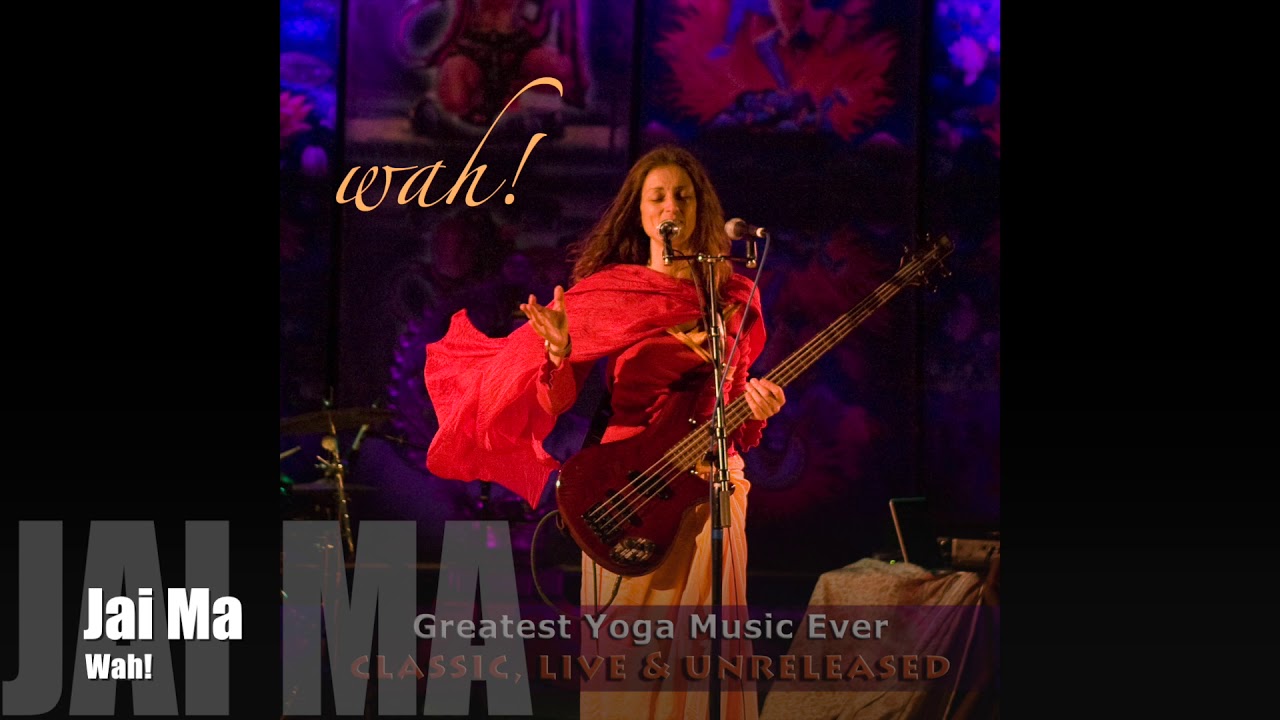
Wah! is a musician who brings healing through sound and yoga teachings, known as the first female to bring kirtan call-and-response chanting to the West in the 1990s.

Ver perfilSitio web
Explorar temas
SavasanaSanskrit-chantDevotional-musicCorpse-poseMeditation-music

¿Tienes Preguntas?

Preguntas Frecuentes

The video, titled "Savasana – Opening," is a roughly five-and-a-half-minute devotional chant built from repeated Devanagari phrases. Its description points listeners to an album called Savasana, and the chant works as an entry point into a longer listening experience for the closing rest of a yoga practice.
Savasana is the closing pose of most yoga sessions, in which the body lies flat and rests while the breath and mind settle. Many teachers regard it as one of the most important parts of practice because it asks the practitioner to be still without instruction.
A repeated phrase gives attention something to return to when the mind drifts, similar to how a posture gives the body a shape to hold. The recurring structure of this chant lets a listener come back to a familiar cluster of syllables instead of trying to track every word.
The caption track is written in Devanagari script and uses Sanskrit-derived devotional epithets, though the material does not include a spoken translation from the singer. Because the auto-generated captions misspell repeated words, the exact lyrics should be checked against the official album.
The video description lists a download from iTunes and a CD available through CDBaby, with the artist's website wahmusic.com also linked. Those sources are the most direct way to hear the complete recording beyond the opening chant.
The final caption line, around 5:29, includes the Arabic-script word for God. The transcript does not show whether this was sung or was the auto-captioner's rendering of a sung syllable, so it should be treated as unresolved rather than as a confirmed lyric.

Seguir leyendo

More from Wah!

Ver Todo
Opening to Bliss: Listening Notes on an Anusara Prayer
Inspire

Opening to Bliss: Listening Notes on an Anusara Prayer

Opening to Bliss is a meditation recording by the musician Wah!, and this short video is labeled an Anusara prayer. Here is what the materia…

1 min read
Jai Ma Yoga Music: What the Devotional Chant Means Today
Inspire

Jai Ma Yoga Music: What the Devotional Chant Means Today

"Jai Ma" is a devotional phrase meaning victory to the Divine Mother, and this short video from the Everything Wah! channel is built around …

1 min read
Sacred Music for Sacred Forests: Chanting for Trees in Rishikesh
Inspire

Sacred Music for Sacred Forests: Chanting for Trees in Rishikesh

A short kirtan clip from Rishikesh ties chanting to forest protection. Proceeds from the 19 October concert support GoDharmic's Dharma Fores…

1 min read
Om Namah Shivaya Live Kirtan: Call, Response and the Shiva Chant
Inspire

Om Namah Shivaya Live Kirtan: Call, Response and the Shiva Chant

A live kirtan of Om Namah Shivaya, recorded at Medicine Festival 2026 in Reading, moves from slow mantra into ecstatic chant. Here is what t…

1 min read

Sigue explorando

Continúa tu camino

Más sabiduría y encuentros de todo el directorio de BrightStar.

Más artículos

Recorre la biblioteca completa de enseñanzas, entrevistas y guías.

Ver todos los artículos →

Maestros y artistas

Explora los linajes, músicos y guías del mundo consciente.

Explorar artistas →

Encuentra un evento

Kirtan, retiros, baños de sonido, breathwork, festivales — muy pronto.

Ver eventos →