BrightStar
BlogMeine Tickets
BlogMeine Tickets
Saved events
Hilfe & KontaktRegistrierenAnmelden
Events
  • Alle Events durchsuchen
  • Yoga
  • Meditation
  • Breathwork
  • Qigong
  • Heilige Musik
  • Weltmusik
  • Medicine Music
  • Klangheilung
  • Ecstatic Dance
  • Zeremonie
  • Pflanzenmedizin
  • Energieheilung
  • Satsang & Weisheit
  • Tantra
  • Retreats
  • Alle Kategorien →
Reiseziele
  • Bali
  • Sedona
  • Los Angeles
  • Costa Rica
  • Tulum
  • Byron Bay
  • San Francisco
  • Austin
  • New York
  • San Diego
  • Denver
  • Seattle
  • Portland
  • Miami
  • London
  • Maui
  • Boulder
  • Alle Städte →
Plattform
  • Für Veranstalter
  • Werde Teil der Bewegung
  • Sell Globally
  • Für Kreative
  • Für Teams
  • Für Autoren
  • Für Lehrer
  • Für Kirtan-Künstler
  • Für Studios
  • Für Festivals
  • Für Retreat-Zentren
  • Für gemeinnützige Organisationen
  • Markenbotschafter
  • Kostenloses Ticketing
  • Pro
  • Amplify
  • Das Ökosystem
Funktionen

Ticketverkauf und Checkout

  • Ticket categories
  • Assigned seating
  • Custom questions
  • Coupon codes
  • Smart pricing
  • Ticket sharing
  • Waitlist
  • Flexible refunds
  • Digital waivers
  • Tip jar
  • Donations and sliding scale
  • Embed widget
  • Mindful checkout
  • Recurring events
  • Private sessions
  • Online courses
  • Summits
  • Rooms and stays
  • Ticket scanner

Marketing und Wachstum

  • Abandoned cart recovery
  • Visitor recovery
  • Upsells and add-ons
  • Affiliate engine
  • Upsell affiliate network
  • Brand ambassador
  • Meta retargeting
  • Verified buyer network
  • Outbound email marketing
  • Email sequences
  • SMS and WhatsApp
  • Event upsell network
  • Direct mail campaigns
  • SEO engine
  • Syndication
  • Event sharing
  • Custom event pages
  • Artist profiles
  • Link in bio
  • Event blog
  • Blog newsletter

Zahlungen

  • Payments, powered by Stripe
  • Buy now, pay later
  • Apple Wallet
  • Multi currency

Daten und Betrieb

  • Team access
  • Message center
  • Reports
  • Analytics reporting
  • Performance reporting
  • Customer data
  • Integrations
  • Switch from another platform

KI

  • Assistant
  • AI FAQ assistant
  • Alle Funktionen →
Unternehmen
  • Über uns
  • Häufige Fragen
  • Kontakt
  • Blog
  • Glossar
  • Guides
  • Inspiration
  • Hilfe-Center
  • API-Dokumentation
  • Marken-Assets
  • Presse
  • Nutzungsbedingungen
  • Datenschutzrichtlinie

Events

  • Alle Events durchsuchen
  • Yoga
  • Meditation
  • Breathwork
  • Qigong
  • Heilige Musik
  • Weltmusik
  • Medicine Music

Reiseziele

  • Bali
  • Sedona
  • Los Angeles
  • Costa Rica
  • Tulum
  • Byron Bay
  • San Francisco
  • Austin

Plattform

  • Für Veranstalter
  • Werde Teil der Bewegung
  • Sell Globally
  • Für Kreative
  • Für Teams
  • Für Autoren
  • Für Lehrer
  • Für Kirtan-Künstler

Funktionen

  • Community-Netzwerk
  • Warenkorbabbruch-Wiederherstellung
  • Ticket-Kategorien
  • Wiederkehrende Veranstaltungen
  • Sitzplatzreservierung
  • Affiliate-System
  • Warteliste / Benachrichtigen
  • Alle Funktionen →

Unternehmen

  • Über uns
  • Häufige Fragen
  • Kontakt
  • Blog
  • Glossar
  • Guides
  • Nutzungsbedingungen
  • Datenschutzrichtlinie
Mehr lesen

Events

  • Klangheilung
  • Ecstatic Dance
  • Zeremonie
  • Pflanzenmedizin
  • Energieheilung
  • Satsang & Weisheit
  • Tantra
  • Retreats
  • Alle Kategorien →

Reiseziele

  • New York
  • San Diego
  • Denver
  • Seattle
  • Portland
  • Miami
  • London
  • Maui
  • Boulder
  • Alle Städte →

Plattform

  • Für Studios
  • Für Festivals
  • Für Retreat-Zentren
  • Für gemeinnützige Organisationen
  • Markenbotschafter
  • Kostenloses Ticketing
  • Pro
  • Amplify
  • Das Ökosystem

Unternehmen

  • Inspiration
  • Hilfe-Center
  • API-Dokumentation
  • Marken-Assets
  • Presse

Ticketverkauf und Checkout

  • Ticket categories
  • Assigned seating
  • Custom questions
  • Coupon codes
  • Smart pricing
  • Ticket sharing
  • Waitlist
  • Flexible refunds
  • Digital waivers
  • Tip jar
  • Donations and sliding scale
  • Embed widget
  • Mindful checkout
  • Recurring events
  • Private sessions
  • Online courses
  • Summits
  • Rooms and stays
  • Ticket scanner

Marketing und Wachstum

  • Abandoned cart recovery
  • Visitor recovery
  • Upsells and add-ons
  • Affiliate engine
  • Upsell affiliate network
  • Brand ambassador
  • Meta retargeting
  • Verified buyer network
  • Outbound email marketing
  • Email sequences
  • SMS and WhatsApp
  • Event upsell network
  • Direct mail campaigns
  • SEO engine
  • Syndication
  • Event sharing
  • Custom event pages
  • Artist profiles
  • Link in bio
  • Event blog
  • Blog newsletter

Zahlungen

  • Payments, powered by Stripe
  • Buy now, pay later
  • Apple Wallet
  • Multi currency

Daten und Betrieb

  • Team access
  • Message center
  • Reports
  • Analytics reporting
  • Performance reporting
  • Customer data
  • Integrations
  • Switch from another platform

KI

  • Assistant
  • AI FAQ assistant
Hol dir die App
Laden imApp StoreJetzt beiGoogle Play
© 2026 BrightStar. Alle Rechte vorbehalten. BrightStar Selection · Bildnachweise · Änderungsprotokoll ·
Inspiration

Krishna Arati Kirtan: Inside Nectar of Devotion

Kirtan Lounge
Kirtan Lounge
Nov 12, 2019
8 Min. Lesezeit

Von KirtanLounge

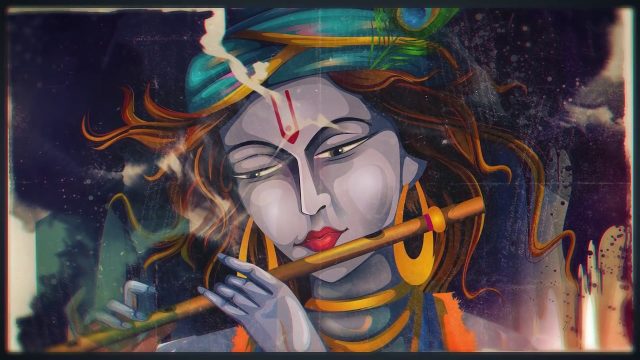
Some devotional recordings ask you to sit still and listen; others ask you to lean in and count. "Krishna Arati," the track from the 2013 album Kirtan Lounge Vol. 1, "Nectar of Devotion," belongs to the first kind, even though it runs only about six and a half minutes and its text fits in four short lines. The melody is a traditional one, sung in temples for the daily worship of Lord Krishna, and this version carries it through a harmonium-led arrangement in which a small ensemble answers itself, thickens into call-and-response, and returns to a drone that seems to hold the room in place. What follows is a listener's guide to what is happening in that sound, drawn from the recording's published credits, its description, and its lyrics and translation.

Lesen · 6 Abschnitte

What is the Krishna Arati melody, and where does it come from?

The description accompanying the YouTube upload gives the most direct context: this is a traditional melody, performed in temples for the daily worship of Lord Krishna. That phrase matters. An arati is a devotional ritual, and the sung portion accompanies the act of worship rather than standing apart from it as a concert piece. The recording's job, then, is to carry a temple melody into a studio without losing the sense that it was made for a specific daily act. The credits suggest the producers understood that job well; they kept the text short and repetitive, the way a melody used in worship tends to be, and let the arrangement do the expanding.

The sung text is compact. In the Sanskrit as printed in the description:

Shri Krishna Govind Hare Murari / Hey Nath Narayan Vasudeva

The description's translation, which it presents as the English rendering for the track, reads:

"The Great Krishna, the Liberator / Wonderful Krishna / O Lord God, In-dweller of the heart / Great Krishna / Wonderful Krishna"

Those names do a lot of work in very few syllables. Govinda, Hari, Murari, Nath, Narayana, Vasudeva: each is a name for the divine, and the chant moves through them like a rosary. The repetition is the point. A listener who does not read Sanskrit can still follow the shape of the phrase, the way the same couplet returns with a slightly different weight each time it comes around.

Who is playing on the recording?

The credits list an unusually wide cast for a six-minute track, and reading them against the sound is the best way to hear the recording's architecture. The lead vocal belongs to Karnamrita Dasi. Gopi Kallayil is credited with vocals and tanpura. Ananta Govinda Das plays harmonium, piano, percussion and karatals, sings, and is credited with the musical arrangement; the description also names Ananta Govinda and Vedic Renaissance Productions as producers.

The rest of the lineup is where the texture comes from:

  • John Wubbenhorst on bansuri, the bamboo flute, which gives the melody its breath and its upper line.
  • Ken Becker on dilruba, a bowed Indian instrument, credited on the second track, and on cello, credited on the fifth.
  • Vijay Krishna on mridanga, the barrel-shaped double-headed drum of the kirtan tradition, credited on tracks two and eight.
  • Eswar Iyer on tabla, credited on track three.
  • Mila Kronik and Irina Pastukhova, who supply response vocals on tracks two and eight.
  • Damjan Cirilovic on bass guitar and background vocals.

Two things stand out. The first is that the credits themselves describe a recording built from track-by-track choices: different instruments enter at different points across the album, and "Krishna Arati" is one movement in a larger set rather than a standalone single. The second is how much of the sound depends on people who are not the lead singer. Response vocals, a bowed string, a flute, and a bass line each take a role the melody would otherwise have to carry alone.

Why does the tanpura matter so much in a track like this?

Listeners often describe a kirtan's sound by its melody, but the drone is what makes the melody feel settled. The tanpura is a long-necked plucked instrument that sounds a continuous set of open strings. It does not play a tune. It plays the floor beneath the tune, a sustained pitch cluster that keeps every other note in relation to a fixed center. Gopi Kallayil is credited with tanpura alongside vocals, which places the drone in the same hands as the voice that will not stop moving. That is a practical choice as much as an aesthetic one: a singer who also holds the drone can breathe and phrase without having to hand off the pitch reference.

The harmonium works in a similar way, but it is a melodic instrument as well. Its bellows-driven reeds can sustain chords and carry a line, which is why it has become the central keyboard of much devotional singing in the Indian tradition and its diaspora. Here it is credited to Ananta Govinda Das, who also arranged the piece. The arrangement, in other words, is built largely around the harmonium's ability to hold a chord under a singer's line while the percussion keeps time underneath.

How do the drums and response voices shape the call and answer?

Kirtan is a participatory form, and the call-and-response structure of its phrases is what invites a room to join in. On this recording the response voices of Mila Kronik and Irina Pastukhova, credited on tracks two and eight, do the work that a congregation would do in a live setting. The lead sings a phrase; the responders return it. Vijay Krishna's mridanga, credited on the same tracks, supplies the rhythmic pulse that makes the exchange feel like movement rather than recitation.

Karatals, the small hand cymbals that Ananta Govinda Das also plays, add a bright metallic edge on top of the drum. Together with the tabla on track three, they show how the recording layers different percussion families: a drum with a deep body, a pair of cymbals with a sharp attack, and a tabla that brings a different kind of articulation. Each enters for a specific reason, and the album's credits make clear that the percussion was chosen rather than stacked.

What does a listener gain from hearing this track closely?

The most useful thing about "Krishna Arati" is that it demonstrates how much devotional music rests on restraint. The text is four lines. The melody is traditional. The rhythmic cycle is simple enough to clap along to. What makes the piece land is the density of its sound: a drone that never leaves, a harmonium that bends chords under the voice, a flute that breathes between phrases, strings that add color without taking focus, and response voices that turn a solo into a chorus. None of that is decoration. Each part is doing the job a worshipper would do in a temple, which is to keep returning the name of the divine to the air until the room itself starts to sound like the prayer.

For a listener new to kirtan, a good way in is to play the track once for the melody and once for the layers. On the first pass, follow the lead voice and the way it rises and settles. On the second, try to find the drone, then the flute, then the response voices, and notice what changes when each one enters. The track is short enough to do both in a single sitting.

Where to go from here

If this track has drawn you in, the next steps are straightforward. Listen to the full Kirtan Lounge Vol. 1 "Nectar of Devotion" album, where "Krishna Arati" sits alongside other arrangements that use the same core ensemble in different combinations. Pay attention to the credits, which tell you exactly who is playing on which track and make it possible to hear how a single arranger shapes a set. Read the lyric and translation in the description again after a few listens, and notice how the names of the divine change the feel of the same melody. And if you want to understand the ritual context more fully, look for sources on arati itself, the lamp-waving act of worship this melody was made to accompany; the recording makes most sense when you hear it as a piece of daily devotion rather than a performance alone.

The track is a small piece of music with a large job. It asks for patience, rewards close listening, and shows how a traditional melody can be carried into a new recording without losing the temple it came from.


Kommentare

Gespräch wird geladen…

Kirtan Lounge

Kirtan Lounge

Künstler:in

Jahnavi Harrison, also known by her spiritual name, Jahnavi Jivana dasi, is a British musician known for her Hindu mantra meditation music (kirtan). She regularly appears as a presenter on BBC Radio 4's Something Understood programme and BBC Radio 2's Pause for Thought. She received her first Grammy nomination for the 2026 awards.

Profil ansehen
Themen erkunden
Krishna aratiKirtanNectar of devotionHarmoniumTanpura
Häufig gestellte Fragen

Häufig gestellte Fragen

Krishna Arati is a traditional melody performed in temples for the daily worship of Lord Krishna, according to the description of this recording. This version appears on the 2013 album Kirtan Lounge Vol. 1, "Nectar of Devotion," and sets a short sung text of Krishna names to a layered arrangement.

The sung text is "Shri Krishna Govind Hare Murari / Hey Nath Narayan Vasudeva." The English translation given in the recording's description reads "The Great Krishna, the Liberator / Wonderful Krishna / O Lord God, In-dweller of the heart / Great Krishna / Wonderful Krishna."

The credits list Karnamrita Dasi on lead vocals, Gopi Kallayil on vocals and tanpura, and Ananta Govinda Das on harmonium, piano, percussion, karatals, vocals and arrangement. Other credited players include John Wubbenhorst on bansuri, Ken Becker on dilruba and cello, Vijay Krishna on mridanga, Eswar Iyer on tabla, Mila Kronik and Irina Pastukhova on response vocals, and Damjan Cirilovic on bass.

The tanpura provides a continuous drone rather than a melody, sounding sustained open strings that anchor every other note to a fixed center. In this recording Gopi Kallayil is credited with playing tanpura while also singing, which lets the drone and voice come from the same performer.

The harmonium in this recording, played by Ananta Govinda Das, can sustain chords and carry a melodic line, which lets it hold harmony under the singer. Ananta Govinda Das is also credited with the musical arrangement of the track.

Call and response is what invites a listening room to join in, because a lead phrase is answered by a group. On this recording the response vocals of Mila Kronik and Irina Pastukhova, credited on tracks two and eight, take that congregational role.

A useful approach is to listen twice: once following the lead voice and melody, then again listening for the drone, flute, drums and response voices as each one enters. The track runs about six and a half minutes, so both passes fit in one sitting.

Das könnte dir auch gefallen

Alle anzeigen
Kirtan Lounge's "He Gopal Radha Krishna Govinda": Devotional Music Craft
Inspire

Kirtan Lounge's "He Gopal Radha Krishna Govinda": Devotional Music Craft

Kirtan Lounge explores devotional chanting through rich instrumentation and collaborative musicianship, blending traditional Sanskrit invoca…

6 min read
Gopi Gopala Kirtan: Inside the Call-and-Response Chant
Inspire

Gopi Gopala Kirtan: Inside the Call-and-Response Chant

A listener's guide to Gopi Gopala from Kirtan Lounge's Nectar of Devotion: the call-and-response form, the Krishna names it repeats, and the…

7 min read
Zâhid Bizi Ta'n Eyleme: 400 Years of Turkish Devotion Reborn
Inspire

Zâhid Bizi Ta'n Eyleme: 400 Years of Turkish Devotion Reborn

Sami Yusuf performs a 16th-century Turkish spiritual masterpiece with a 50-piece ensemble, honoring four centuries of tradition while forgin…

6 min read
Kirtan as Sacred Thirst: A Closing Ceremony with Krishna Das
Inspire

Kirtan as Sacred Thirst: A Closing Ceremony with Krishna Das

Krishna Das closes NYC's annual kirtan weekend with a final ceremony of devotional chanting, blending musical innovation with timeless Hindu…

6 min read
AlleDas könnte dir auch gefallen→

Setze deinen Weg fort

Mehr Weisheit und Zusammenkünfte aus dem BrightStar-Verzeichnis.

Mehr Artikel

Durchstöbere die ganze Bibliothek an Lehren, Interviews und Leitfäden.

Zu allen Artikeln →

Lehrer & Künstler

Entdecke die Linien, Musiker und Wegbegleiter der bewussten Welt.

Künstler erkunden →

Event finden

Kirtan, Retreats, Klangbäder, Atemarbeit, Festivals — bald in deiner Nähe.

Events ansehen →