BrightStar

Alle Events durchsuchen

Bewusste Zusammenkünfte entdecken

events

Yoga
Meditation
Breathwork
Qigong
Tai Chi
Sacred Music
World Music
Medicine Music
Sound Healing
Ecstatic Dance
Beliebte Reiseziele
BaliSedonaLos AngelesCosta RicaNew YorkSan FranciscoAustinMiamiJoshua TreeTulum
Alle Kategorien anzeigenAlle Reiseziele anzeigen

Alle Funktionen entdecken

Leistungsstarke Tools für Ihre Veranstaltungen

Plattform-Funktionen

Intelligente dynamische Preisgestaltung
Ticket-Kategorien
Sitzplatzreservierung
Warenkorbabbruch-Wiederherstellung
Besucher-Wiedergewinnung
Spenden & Staffelpreise
Affiliate-System
Ticket-Scanner
Rabattcodes
Individuelle Fragen
Ticket-Teilen
Upsells & Extras
Analysen & Berichte
E-Mail-Sequenzen
Warteliste / Benachrichtigen / Erinnern
Menschen & Orte
Artists & TeachersEvent OrganizersVenues & StudiosKnowledge BaseGlossaryInspiration
Alle Funktionen anzeigenÜber uns
PreiseBlog
Language
Saved events
Alle Veranstaltungen durchsuchen

events

YogaMeditationBreathworkQigongTai ChiSacred MusicWorld MusicMedicine Music

Beliebte Reiseziele

BaliSedonaLos AngelesCosta RicaNew YorkSan Francisco

Menschen & Orte

Artists & TeachersEvent OrganizersVenues & StudiosKnowledge BaseGlossaryInspiration

Plattform-Funktionen

Intelligente dynamische PreisgestaltungTicket-KategorienSitzplatzreservierungWarenkorbabbruch-WiederherstellungBesucher-WiedergewinnungSpenden & StaffelpreiseAffiliate-SystemTicket-ScannerRabattcodesIndividuelle FragenTicket-TeilenUpsells & ExtrasAnalysen & BerichteE-Mail-SequenzenWarteliste / Benachrichtigen / Erinnern
Alle Funktionen anzeigenÜber uns
PreiseBlog
AnmeldenSuchendeKreative
  • Alle Events durchsuchen
  • Für Suchende
  • Yoga
  • Meditation
  • Breathwork
  • Qigong
  • Tai Chi
  • Heilige Musik
  • Weltmusik
  • Medicine Music
  • Klangheilung
  • Ecstatic Dance
  • Retreats
  • Workshops
  • Alle Kategorien →
  • Bali
  • Sedona
  • Los Angeles
  • Costa Rica
  • Tulum
  • Byron Bay
  • San Francisco
  • Austin
  • New York
  • San Diego
  • Denver
  • Seattle
  • Portland
  • Miami
  • Alle Städte →
  • Be Found
  • Sell Globally
  • Für Kreative
  • Für Teams
  • Für Autoren
  • Für Lehrer
  • Für Kirtan-Künstler
  • Für Studios
  • Für Festivals
  • Für Retreat-Zentren
  • Für gemeinnützige Organisationen
  • Markenbotschafter
  • Fallstudien
  • Kostenloses Ticketing
  • Elevate
  • Amplify
  • 350.000+ Käufernetzwerk
  • Warenkorbabbruch-Wiederherstellung
  • Intelligente dynamische Preisgestaltung
  • Ticket-Kategorien
  • Wiederkehrende Veranstaltungen
  • Sitzplatzreservierung
  • Affiliate-System
  • Warteliste / Benachrichtigen
  • Ticket-Scanner
  • Einbettungs-Widget
  • Event-Syndication
  • Nachrichten
  • Integrationen
  • Berichte
  • Alle Funktionen →
  • Über uns
  • Das Ökosystem
  • Blog
  • Glossar
  • Inspiration
  • Hilfe-Center
  • Kontakt
  • API-Dokumentation
  • Marken-Assets
  • Karriere
  • Presse
  • Nutzungsbedingungen
  • Datenschutzrichtlinie

Events

  • Alle Events durchsuchen
  • Für Suchende
  • Yoga
  • Meditation
  • Breathwork
  • Qigong
  • Tai Chi
  • Heilige Musik
  • Weltmusik
  • Medicine Music
  • Klangheilung
  • Ecstatic Dance
  • Retreats
  • Workshops
  • Alle Kategorien →

Reiseziele

  • Bali
  • Sedona
  • Los Angeles
  • Costa Rica
  • Tulum
  • Byron Bay
  • San Francisco
  • Austin
  • New York
  • San Diego
  • Denver
  • Seattle
  • Portland
  • Miami
  • Alle Städte →

Für Kreative

  • Be Found
  • Sell Globally
  • Für Kreative
  • Für Teams
  • Für Autoren
  • Für Lehrer
  • Für Kirtan-Künstler
  • Für Studios
  • Für Festivals
  • Für Retreat-Zentren
  • Für gemeinnützige Organisationen
  • Markenbotschafter
  • Fallstudien
  • Kostenloses Ticketing
  • Elevate
  • Amplify

Funktionen

  • 350.000+ Käufernetzwerk
  • Warenkorbabbruch-Wiederherstellung
  • Intelligente dynamische Preisgestaltung
  • Ticket-Kategorien
  • Wiederkehrende Veranstaltungen
  • Sitzplatzreservierung
  • Affiliate-System
  • Warteliste / Benachrichtigen
  • Ticket-Scanner
  • Einbettungs-Widget
  • Event-Syndication
  • Nachrichten
  • Integrationen
  • Berichte
  • Alle Funktionen →

Unternehmen

  • Über uns
  • Das Ökosystem
  • Blog
  • Glossar
  • Inspiration
  • Hilfe-Center
  • Kontakt
  • API-Dokumentation
  • Marken-Assets
  • Karriere
  • Presse
  • Nutzungsbedingungen
  • Datenschutzrichtlinie
BrightStar
© 2026 BrightStar. Alle Rechte vorbehalten.
Inspiration

Non-Duality Explained: Self-Knowledge as thePath to Lasting Peace

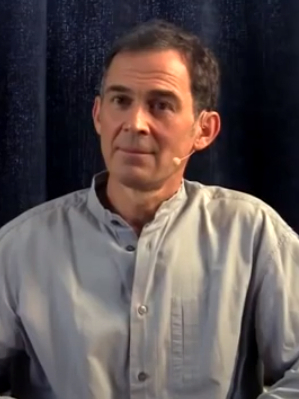
Rupert Spira
Rupert Spira
May 10, 2022
8 Min. Lesezeit
Ansehen · 7

Non-duality addresses two fundamental questions: how to find lasting peace and happiness, and what the nature of reality truly is. The non-dual understanding proposes that happiness is our essential nature—we already are happiness itself—but it remains unexperienced due to the absence of clear self-knowledge. This clarity requires investigating the essential nature of the mind, which is also the highest knowledge one can pursue. Reality, according to non-duality, is not a collection of separate things but an infinite, indivisible whole made of pure consciousness from which all apparent separation borrows its existence. This understanding lies at the heart of the world's great spiritual traditions and forms the foundation for both individual peace and collective harmony.

Lesen · 8 Abschnitte

What are the two core questions non-duality addresses?

The non-dual understanding begins by tackling two essential inquiries. First: how may we be free of suffering and find the lasting peace and happiness for which all people long? Second: what is the nature of reality itself? These questions are not merely intellectual exercises—they point to the deepest human longings and the most fundamental metaphysical puzzle. The non-dual approach does not treat these as separate tracks but rather as two aspects of a single investigation that ultimately converge. Understanding the nature of reality and understanding oneself turn out to be one and the same inquiry.

Why is happiness not experienced if it is our essential nature?

The non-dual teaching begins with a striking claim: happiness is not something we need to attain or create. It is our essential nature—we are happiness itself. This immediately raises a practical question: if this is true, why don't we experience it all the time? The answer lies in the quality of our self-knowledge. All people have a sense of being or knowing their self to some degree, but not all people know their self clearly. It is precisely this absence of clear self-knowledge that is responsible for the feeling of lack that accompanies most people's lives. This feeling of lack then drives the endless search for fulfillment in external things—objects, substances, activities, states of mind, and relationships. For those who have watched the video or engaged with similar teachings, the recognition often comes that this search has repeatedly failed. The peace and happiness sought in objective experience never seems to be permanently found there, no matter how much one acquires or achieves.

How does self-knowledge relate to finding lasting peace?

According to the non-dual understanding, self-knowledge is not merely one path among many toward peace—it is the only path that leads to lasting happiness. Moreover, self-knowledge is not only the means by which peace and happiness may be found; it is the very experience of happiness itself. This is a crucial distinction. It means that the goal and the path are not separate. When one knows oneself clearly, that clarity is itself the peace being sought. This is why the non-dual teaching makes an investigation into the essential nature of the self its primary focus. Rather than offering techniques to generate happiness or practices to accumulate merit, the teaching directs attention inward to discover what is already present but obscured by the lack of clear self-knowledge.

What is the relationship between mind and reality?

The non-dual understanding makes a crucial observation about the nature of knowledge itself: everything we know or experience is mediated through the mind. The mind's knowledge of anything can only ever be as good as its knowledge of itself. This creates a logical imperative: in order to know what anything truly is—and specifically, in order to know what reality truly is—the mind must first know its own essential nature. Therefore, the investigation into the nature of the mind is not an optional philosophical exercise but the highest endeavor upon which any mind can embark, and the knowledge of the mind's essential nature is the highest knowledge available.

This understanding has profound implications. It suggests that all knowledge of the external world depends on an accurate understanding of the medium through which that knowledge arises. Just as you cannot know the true color of an object if the lens through which you view it is distorted, you cannot know the true nature of reality if your understanding of mind—the lens of all experience—is unclear.

How is non-duality understood in different spiritual traditions?

The non-dual understanding is not a modern invention or the exclusive property of any single tradition. Rather, it appears at the heart of all the great religious and spiritual traditions, expressed in the particular language and cultural context of each time and place. In Christianity, this understanding is captured in the statement "I and my father are one"—meaning that the essence of our self and the ultimate reality of the universe are identical. In the Sufi tradition, it is expressed as "whosoever knows their self knows their Lord"—that is, whoever knows the essential nature of their self knows the ultimate reality of the universe. In Buddhism, this is articulated as "samsara and Nirvana are one," meaning the nature of the world and the essence of the mind are identical.

Even in ancient Western civilization, this wisdom was enshrined at the very entrance to knowledge itself. The words "Know Thyself" were carved above the entrance to the Temple of Apollo at Delphi, indicating that at the foundation of Western civilization lies the non-dual understanding that self-knowledge is not only the means by which lasting peace and happiness may be found within an individual but is also the basis for peace amongst individuals, communities, and nations.

What does it mean that reality is made of pure consciousness?

The non-dual understanding proposes that reality is not a collection of fundamentally separate, independent objects. Rather, reality is an infinite, indivisible whole made of pure consciousness from which all separate objects and selves borrow their apparently independent existence. This does not mean that the objects and selves we perceive do not exist—they do exist. But their existence is not independent; it is borrowed from and ultimately dependent upon the unified field of consciousness that is the true nature of reality.

This has radical implications for how we understand our relationship to everything else. If all things arise from and are ultimately expressions of pure consciousness, then the apparent separation between self and other, between mind and world, between observer and observed, is not ultimately real. The separation we perceive is real at one level of understanding but not at the deepest level. Understanding this transforms not only how we see ourselves but how we relate to others and to the world.

Why is self-knowledge considered the foundation of civilized society?

The non-dual understanding suggests that knowledge of oneself has implications far beyond the individual spiritual path. If our knowledge of ourself is the means by which lasting peace and happiness may be found within an individual, it is also the basis for peace amongst individuals, communities, and nations. In other words, inner peace through self-knowledge is not a luxury or a spiritual indulgence—it is foundational to any truly civilized society. A society built on the foundation of individuals who are driven by the feeling of lack, seeking fulfillment in external objects and constantly in competition with one another, will inevitably be marked by conflict and suffering. Conversely, a society where individuals have discovered their essential nature through self-knowledge would naturally be characterized by peace, compassion, and genuine cooperation.

This perspective suggests that the deepest political and social transformation begins not with external restructuring but with the shift in consciousness that comes through self-knowledge. When people know themselves clearly, they recognize that the peace and happiness they seek is not dependent on controlling or dominating others or accumulating more than others. They recognize that this peace is their shared nature and the nature of all beings.

Where to go from here

For those drawn to this introduction, the natural next step is to engage in self-inquiry—a direct investigation into the nature of the self. The speaker suggests that a dedicated video on self-inquiry can be found in the resource section. Self-inquiry is not merely an intellectual contemplation but a lived investigation that progressively clarifies the nature of consciousness and one's true identity. Additionally, exploring how these non-dual principles are taught through meditation practice, retreats, and ongoing dialogue with teachers can deepen both understanding and the direct recognition of what the teaching points to. The ultimate aim is not to accumulate more beliefs about non-duality but to embody the clarity of self-knowledge that non-duality describes and, in doing so, to realize the peace that is already one's essential nature.

Comments

Loading the conversation…

Transcript

[0:04] the Nal understanding addresses two

[0:08] essential

[0:09] questions one how may we be free of

[0:13] suffering and find the lasting peace and

[0:15] happiness for which all people long

[0:18] Above All

[0:20] Else and two what is the nature of

[0:25] reality in relation to the first

[0:28] question the Nal approach suggests that

[0:32] happiness is our essential nature or

[0:35] simply that we are happiness

[0:38] itself we might then ask if happiness is

[0:42] our essential nature why is it not

[0:45] experienced all the

[0:48] time and the answer is simply this that

[0:52] whilst all people have a sense of being

[0:54] or knowing their

[0:56] self not all people know their self

[0:59] clearly

[1:02] it is this absence of clear self-

[1:06] knowledge that is responsible for the

[1:08] feeling of lack that accompanies most

[1:11] people's

[1:13] lives and drives them to seek

[1:16] fulfillment in objects

[1:19] substances activities states of mind and

[1:25] relationships if you are watching this

[1:28] video the chances are that the search

[1:31] for happiness in objective experience

[1:33] has failed you sufficiently often to

[1:37] make you doubt that it can ever be truly

[1:40] found

[1:42] there the nondual understanding suggests

[1:46] not in fact it suggests that in order to

[1:50] find lasting peace and

[1:52] happiness one must know the nature of

[1:55] oneself as one essentially

[1:58] is as such self- knowledge is considered

[2:02] to be not only the means by which peace

[2:06] and happiness may be

[2:08] found but the very experience of

[2:11] Happiness

[2:13] itself it is for this reason that the

[2:17] Nal teaching starts with an

[2:19] investigation into the essential nature

[2:21] of our

[2:22] self and you can find a video giving an

[2:25] introduction to self- inquiry in this

[2:28] section of the website

[2:31] this clear knowledge of

[2:34] oneself is also the basis of the second

[2:38] aspect of the N understanding namely the

[2:42] recognition that reality is an infinite

[2:45] indivisible whole made of pure

[2:49] Consciousness from which all separate

[2:51] objects and selves borrow their

[2:54] apparently independent

[2:58] existence everything we know or

[3:01] experience is mediated through the

[3:05] mind and therefore the mind's knowledge

[3:08] of anything can only ever be as good as

[3:11] its knowledge of

[3:13] itself in order to know what anything

[3:17] truly is that is what reality truly is

[3:22] the Mind must first know its own

[3:24] essential

[3:27] nature therefore the investigation in to

[3:30] the nature of the Mind must be the

[3:33] highest Endeavor upon which any mind can

[3:37] Embark and the knowledge of its

[3:39] essential nature the highest

[3:45] knowledge thus whether we approach

[3:47] nonduality as a means of finding lasting

[3:51] peace and happiness or more

[3:54] philosophically as an answer to the

[3:56] ultimate question about the nature of

[3:59] reality

[4:01] we begin with an investigation into the

[4:03] nature of

[4:06] ourself this understanding is found at

[4:10] the heart of all the great religious and

[4:12] spiritual

[4:14] traditions and is expressed in the

[4:16] particular language of the time and

[4:19] place in which it

[4:23] arose for instance in Christianity it is

[4:26] said I and my father are one

[4:31] that is the essence of our self and the

[4:35] Ultimate Reality of the universe are the

[4:39] same in the Sufi

[4:42] tradition whosoever knows their self

[4:45] knows their

[4:47] Lord that is whoever knows the essential

[4:50] nature of their self knows the Ultimate

[4:53] Reality of the

[4:56] universe and in Buddhism samsar

[5:00] and Nana are

[5:03] one meaning the nature of the world and

[5:07] the essence of the Mind are

[5:11] identical indeed the words know

[5:15] thyself carved above the entrance to the

[5:18] Temple of Apollo at

[5:20] Deli indicate that at the very

[5:23] Foundation of Western

[5:25] Civilization lies the nondu

[5:28] understanding that our knowledge of

[5:31] ourself is not only the means by which

[5:34] lasting peace and happiness may be found

[5:37] within an

[5:38] individual but is also the basis for

[5:42] peace amongst individuals communities

[5:45] and

[5:46] Nations and must as such be the

[5:49] foundation of any truly civilized

[5:52] society

Rupert Spira
ArtistRupert Spira

British non-dual teacher and ceramic artist. His teaching, deeply influenced by Francis Lucille and the lineage of Atmananda Krishna Menon (Direct Path), is unusually clear and pre…

Profil ansehenWebsite
Themen erkunden
Non-dualitySelf-knowledgeConsciousnessAdvaitaLasting-peace

Hast du Fragen?

Häufig gestellte Fragen

Non-duality teaches that happiness is our essential nature—we already are happiness itself. The reason it is not experienced is not because we lack it but because we lack clear self-knowledge. When this clarity is gained, the peace sought is recognized as already present, our true nature.
According to non-duality, self-knowledge is not only the means to peace but the very experience of happiness itself. Since all knowledge of reality is mediated through the mind, the mind must first know its own essential nature to understand what anything truly is, making it the highest knowledge and endeavor available.
Non-duality teaches that everything we experience is mediated through the mind, so the mind's knowledge of anything can only be as good as its knowledge of itself. Therefore, investigating the essential nature of the mind is the highest pursuit, as this determines all other knowledge.
Non-duality appears at the heart of all great religious and spiritual traditions. Christianity expresses it as 'I and my father are one,' Sufism as 'whosoever knows their self knows their Lord,' Buddhism as 'samsara and Nirvana are one,' and it was foundational to ancient Western civilization, inscribed as 'Know Thyself' at the Temple of Apollo.
Non-duality teaches that reality is an infinite, indivisible whole of pure consciousness from which all apparently separate objects and selves borrow their existence. The apparent separation between self and other, observer and observed, is real at one level but not at the deepest level of reality.
Self-knowledge through non-duality suggests that inner peace is foundational to collective peace. A society where individuals have discovered their essential nature would naturally be characterized by peace and cooperation, rather than conflict born from the feeling of lack and competition.
The absence of clear self-knowledge creates a feeling of lack that drives endless seeking in objects, substances, activities, and relationships. Most people do not know their self clearly, so they do not recognize that the peace they seek is already their essential nature.

Weiterlesen

More from Rupert

Alle anzeigen
Finding Your True Nature Without Leaving Your Life
Inspire

Finding Your True Nature Without Leaving Your Life

Busy life doesn't prevent self-realization. Rupert Spira reveals how five-second pauses between thoughts, emails, and patients can awaken yo…

1 min read
Teaching Non-Duality: Finding Your Voice Beyond Imitation
Inspire

Teaching Non-Duality: Finding Your Voice Beyond Imitation

How spiritual teachers develop authentic language while sharing non-dual understanding—and why repeating the same concepts across generation…

1 min read
The Nocebo Effect: How Belief Manufactures Reality
Inspire

The Nocebo Effect: How Belief Manufactures Reality

A man overdoses on placebo and nearly dies—then recovers in minutes once the truth emerges. The science reveals how powerfully belief shapes…

1 min read
Your Personality Is a Trance: How Hypnosis Rewires the Self
Inspire

Your Personality Is a Trance: How Hypnosis Rewires the Self

Dr. David Spiegel reveals how hypnosis works as clinical therapy, not stage illusion—and why your fixed sense of self is far more malleable …

1 min read

Weiter erkunden

Setze deinen Weg fort

Mehr Weisheit und Zusammenkünfte aus dem BrightStar-Verzeichnis.

Mehr Artikel

Durchstöbere die ganze Bibliothek an Lehren, Interviews und Leitfäden.

Zu allen Artikeln →

Lehrer & Künstler

Entdecke die Linien, Musiker und Wegbegleiter der bewussten Welt.

Künstler erkunden →

Event finden

Kirtan, Retreats, Klangbäder, Atemarbeit, Festivals — bald in deiner Nähe.

Events ansehen →