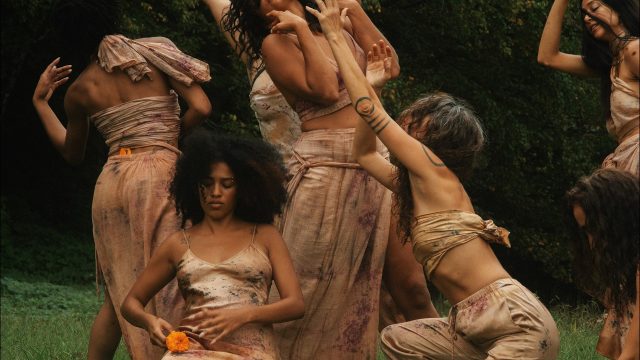
For most of human history, grief looked nothing like it does in the sterile silence of a modern funeral home or the solitary scroll through condolences on a phone screen. In Ghana, entire communities drummed together—the rhythm itself a vessel for sorrow. In New Orleans, people marched behind brass bands and danced their dead into the earth. In Indonesia, mourners stood in circles, their bodies linked, voices enchanted in collective lamentation. In Ireland, the women wailed—loud, rhythmic, unashamed—and nobody told them to quiet down or pull themselves together.
What changed? The answer, in Sah D'Simone's accounting, lies in a collision of colonial impositions and capitalist efficiency. When colonizers deemed the wailing "savage," when modernity moved death into hospitals and confined grief to 50 minutes a week in a therapist's office, when capitalism handed us three days off work and told us to process our loss on our own time, we lost something fundamental: permission to feel, move, and release together. In the silence that followed, grief didn't disappear. It got stored.
D'Simone grounds the case for why we need to move grief in a simple, embodied truth: "Grief is a feeling, and feelings live in the body, and if it doesn't move, it stays stored, and it gets loud." This isn't metaphorical. When emotion remains unexpressed through the body, it accumulates. It has to go somewhere. It has to be shared. It has to become rhythmic. Every culture on this planet, he observes, knew this ancient knowing before the machinery of modernity tried to teach us otherwise.
The modern Western approach to grief isolation is both recent and peculiar. You attend a funeral, wear appropriate clothes, accept casseroles with the right tone of voice, and when someone asks how you're holding up, you say fine—because "fine is the answer that lets everybody leave the room." Then the funeral ends, and you're back at your laptop with the grief still sitting in your chest with nowhere to go. Your boss doesn't want to hear about it. Your friends have their own problems. Your group chat moves on. So you learned to grieve quietly, to keep it contained, to never be "too much."
The cost of this suppression is paid in the body. D'Simone speaks from personal experience: when his mother died, he had 12 years of Buddhist practice behind him, yet he still didn't know where to put the grief. "I was terrified that if I let it out, it would never stop, that it would break me." The practice alone wasn't enough. What shifted him was access to a space where grief could move—where the body was invited to express what the throat couldn't articulate in polite conversation.
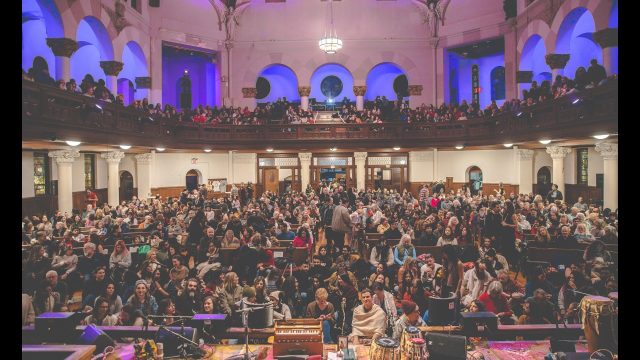
D'Simone's approach to grief ritual doesn't claim invention; it claims remembrance. "We did not invent this, honey. We just remembered it." What he's revived—and what he invites people into—is a grief ritual that, in his words, "looks like a rave." Drums. Bodies moving. Wailing. People allowed to fall apart in a room where nobody has asked them to hold it together. No pretense, no performance of okayness, no three-day deadline before life resumes.
The genius of framing it as "a grief ritual that looks like a rave" lies in its permission structure. A rave already sanctifies movement, embodied expression, and collective energy. By naming the grief dance floor in those terms, D'Simone gives participants cultural permission to do what their bodies already want to do: move, sound, release, and witness each other doing the same. It's not therapy. It's ritual. It's not individual processing. It's collective remembrance of how humans have always metabolized loss.
If grief has been stored in your body—and in modern life, whose hasn't been—the first step is recognition: that feeling is real, that it needs to move, and that keeping it quiet costs you. The second is finding or creating a space where expression is welcomed rather than managed. This might look like D'Simone's Somatic Dance Sunday sessions, or it might be a drum circle, a grief group that moves, or even a solo practice where you give yourself permission to sound and sway without explanation. The third is understanding that you're not broken for needing this. You're remembering what every ancestral culture knew: that the body grieves, and when it does, it needs rhythm, it needs to be held by community, and it needs to be allowed to move all the way through.