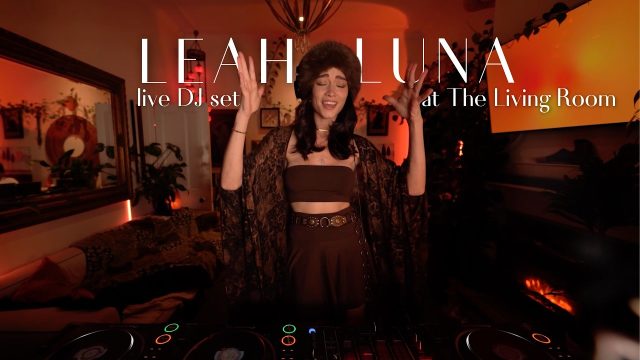
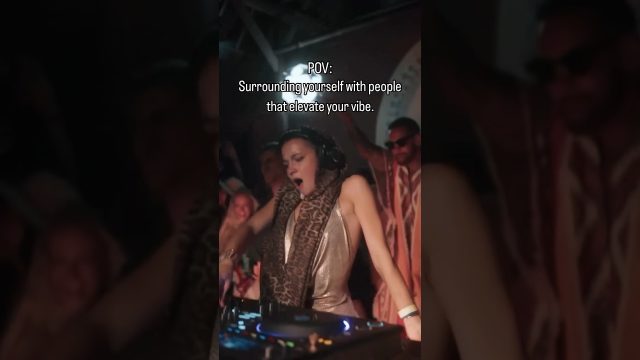
In a boiler room somewhere in New Zealand, the boundary between club night and conscious dance floor dissolves. Leah Luna stands at the turntables, threading together two worlds that most musicians keep deliberately separate: the high-octane euphoria of electronic dance music and the deliberate, embodied presence of ecstatic movement. The setup is minimal—no stage grandeur, no velvet rope separating performer from crowd. Just good music, people losing themselves completely in it, and an explicit permission to be as weird as you want.
The concept Luna names as her "version of an Ecstatic Boiler Room" speaks to something that has quietly animated the conscious music movement for years: the recognition that dancefloors and meditation cushions aren't opposites. Dance floors are prayer. Movement is presence. The body in motion is the body telling the truth. For years, this truth lived in two separate venues—the warehouse at 3 a.m., and the yoga studio at sunrise. Luna's approach is to stop pretending the division ever made sense.
The specificity matters. This isn't a DJ simply playing "conscious" or "ambient" music at a slower tempo. It's a deliberate architectural choice: take the production values, the sonic clarity, the hypnotic repetition that makes club music work neurologically, and pair it with an intentionality about space—room to move, permission to be authentically present, freedom from the performative codes that often govern nightlife. No need to look cool. No rules about how you're supposed to dance. The result is a rare kind of dance floor where people can surrender completely without splitting themselves into the person they are and the person they're supposed to be.
The venue for this set carries its own significance. MorphFest is not an established festival brand that Luna has been booked to play. It's a festival that Luna and her community have been building themselves. This distinction reshapes what the music means. When a DJ plays a festival where the sound system, the crowd curation, the whole holding environment has been shaped by the community itself, the set becomes something more than a performance—it becomes a reflection, a documentation of that community's values.
Festival-building is different from playing festivals. It requires vision about what space needs to exist, what experiences need protection, what frequencies need amplification. Luna's choice to anchor this festival with a set that explicitly bridges club culture and conscious dance suggests something about what the festival's builders believe is possible: that people can gather in full bodies, full volume, full authenticity, and emerge more themselves rather than less.
What Luna describes—"just good music, people getting completely lost in it, and the freedom to be as f*cking weird as you want"—is actually a sophisticated permission structure. Most dancefloors, even the ones that claim to be "conscious," maintain some baseline of social conformity. You can jump up and down, but you're probably not going to lie on the floor. You can move your hips, but you're probably still maintaining some awareness of how your body reads to others. That awareness fragments presence.
The ecstatic tradition—whether in Sufi whirling, African tribal movement, or modern contact improv—knows that full embodiment requires a kind of forgetting of the social mirror. The music has to be good enough and the container safe enough that the calculating mind can step back and let the body speak. Luna's insistence on no rules, no cool-looking, no codes, is actually the technical requirement for ecstasy to be possible. And positioning this explicitly within a DJ set—within club music, within a boiler room, within the vocabulary of electronic dance culture—makes it available to people who might never walk into a yoga studio but are hungry for exactly this kind of freedom.
If this set speaks to you, the invitation is to explore what your own body knows about freedom. Follow Luna's work through her socials and soundcloud to stay connected with her evolving approach to this bridge between worlds. And consider: where in your own life are you maintaining unnecessary separations between different parts of yourself? The dancefloor is just one place that permission structure can dissolve those boundaries. But it's a good place to start.