BrightStar
ブログマイチケット
ブログマイチケット
Saved events
ヘルプ・お問い合わせ新規登録ログイン
イベント
  • すべてのイベントを見る
  • ヨガ
  • 瞑想
  • ブレスワーク
  • 気功
  • 聖なる音楽
  • ワールドミュージック
  • メディスンミュージック
  • サウンドヒーリング
  • エクスタティックダンス
  • セレモニー
  • プラントメディスン
  • エネルギーヒーリング
  • サットサンと智慧
  • タントラ
  • リトリート
  • すべてのカテゴリ →
目的地
  • Bali
  • Sedona
  • Los Angeles
  • Costa Rica
  • Tulum
  • Byron Bay
  • San Francisco
  • Austin
  • New York
  • San Diego
  • Denver
  • Seattle
  • Portland
  • Miami
  • London
  • Maui
  • Boulder
  • すべての都市 →
プラットフォーム
  • 主催者向け
  • ムーブメントに参加
  • Sell Globally
  • クリエイター向け
  • チーム向け
  • ライター向け
  • 講師向け
  • キルタンアーティスト向け
  • スタジオ向け
  • フェスティバル向け
  • リトリートセンター向け
  • 非営利団体向け
  • ブランドアンバサダー
  • 無料チケット販売
  • Pro
  • Amplify
  • エコシステム
機能

チケット販売と購入

  • Ticket categories
  • Assigned seating
  • Custom questions
  • Coupon codes
  • Smart pricing
  • Ticket sharing
  • Waitlist
  • Flexible refunds
  • Digital waivers
  • Tip jar
  • Donations and sliding scale
  • Embed widget
  • Mindful checkout
  • Recurring events
  • Private sessions
  • Online courses
  • Summits
  • Rooms and stays
  • Ticket scanner

マーケティングと成長

  • Abandoned cart recovery
  • Visitor recovery
  • Upsells and add-ons
  • Affiliate engine
  • Upsell affiliate network
  • Brand ambassador
  • Meta retargeting
  • Verified buyer network
  • Outbound email marketing
  • Email sequences
  • SMS and WhatsApp
  • Event upsell network
  • Direct mail campaigns
  • SEO engine
  • Syndication
  • Event sharing
  • Custom event pages
  • Artist profiles
  • Link in bio
  • Event blog
  • Blog newsletter

決済

  • Payments, powered by Stripe
  • Buy now, pay later
  • Apple Wallet
  • Multi currency

データと運営

  • Team access
  • Message center
  • Reports
  • Analytics reporting
  • Performance reporting
  • Customer data
  • Integrations
  • Switch from another platform

AI

  • Assistant
  • AI FAQ assistant
  • すべての機能 →
会社
  • 概要
  • よくある質問
  • お問い合わせ
  • ブログ
  • 用語集
  • Guides
  • インスピレーション
  • ヘルプセンター
  • APIドキュメント
  • ブランドアセット
  • プレス
  • 利用規約
  • プライバシーポリシー

イベント

  • すべてのイベントを見る
  • ヨガ
  • 瞑想
  • ブレスワーク
  • 気功
  • 聖なる音楽
  • ワールドミュージック
  • メディスンミュージック

目的地

  • Bali
  • Sedona
  • Los Angeles
  • Costa Rica
  • Tulum
  • Byron Bay
  • San Francisco
  • Austin

プラットフォーム

  • 主催者向け
  • ムーブメントに参加
  • Sell Globally
  • クリエイター向け
  • チーム向け
  • ライター向け
  • 講師向け
  • キルタンアーティスト向け

機能

  • コミュニティネットワーク
  • カート放棄リカバリー
  • チケットカテゴリ
  • 定期イベント
  • 座席指定
  • アフィリエイトシステム
  • ウェイトリスト / 通知
  • すべての機能 →

会社

  • 概要
  • よくある質問
  • お問い合わせ
  • ブログ
  • 用語集
  • Guides
  • 利用規約
  • プライバシーポリシー
続きを読む

イベント

  • サウンドヒーリング
  • エクスタティックダンス
  • セレモニー
  • プラントメディスン
  • エネルギーヒーリング
  • サットサンと智慧
  • タントラ
  • リトリート
  • すべてのカテゴリ →

目的地

  • New York
  • San Diego
  • Denver
  • Seattle
  • Portland
  • Miami
  • London
  • Maui
  • Boulder
  • すべての都市 →

プラットフォーム

  • スタジオ向け
  • フェスティバル向け
  • リトリートセンター向け
  • 非営利団体向け
  • ブランドアンバサダー
  • 無料チケット販売
  • Pro
  • Amplify
  • エコシステム

会社

  • インスピレーション
  • ヘルプセンター
  • APIドキュメント
  • ブランドアセット
  • プレス

チケット販売と購入

  • Ticket categories
  • Assigned seating
  • Custom questions
  • Coupon codes
  • Smart pricing
  • Ticket sharing
  • Waitlist
  • Flexible refunds
  • Digital waivers
  • Tip jar
  • Donations and sliding scale
  • Embed widget
  • Mindful checkout
  • Recurring events
  • Private sessions
  • Online courses
  • Summits
  • Rooms and stays
  • Ticket scanner

マーケティングと成長

  • Abandoned cart recovery
  • Visitor recovery
  • Upsells and add-ons
  • Affiliate engine
  • Upsell affiliate network
  • Brand ambassador
  • Meta retargeting
  • Verified buyer network
  • Outbound email marketing
  • Email sequences
  • SMS and WhatsApp
  • Event upsell network
  • Direct mail campaigns
  • SEO engine
  • Syndication
  • Event sharing
  • Custom event pages
  • Artist profiles
  • Link in bio
  • Event blog
  • Blog newsletter

決済

  • Payments, powered by Stripe
  • Buy now, pay later
  • Apple Wallet
  • Multi currency

データと運営

  • Team access
  • Message center
  • Reports
  • Analytics reporting
  • Performance reporting
  • Customer data
  • Integrations
  • Switch from another platform

AI

  • Assistant
  • AI FAQ assistant
アプリを入手
App StoreからApp StoreGoogle Playで手に入れようGoogle Play
© 2026 BrightStar. 全著作権所有. BrightStar Selection · 写真クレジット · 変更履歴 ·
Teaching on seeing
“Just see your nature — that is enough.”
Bodhidharma
Bodhidharma
読む · 1セクション

Seeing the Essence: A Journey into Self-Realization

Bodhidharma's succinct exhortation, "Just see your nature — that is enough," invites us to engage in a profound exploration of our own essence. In a world often preoccupied with external validation and distractions, this quote serves as a gentle reminder that the key to understanding lies within ourselves. The stakes are high; to truly see our nature is to embark on a journey that can lead to liberation from the illusions that bind us. It is a call to introspection, urging us to peel back the layers of conditioning and societal expectations to uncover the truth of who we are.

Delving deeper, we find that this invitation is not merely about observation but about a transformative realization. Bodhidharma, the legendary figure credited with bringing Zen to China, emphasizes that the act of seeing is not passive; it is an active engagement with our inner landscape. This seeing transcends mere perception; it is an awakening to the fundamental nature of our being, a recognition that can shift our understanding of existence itself. In this light, the quote becomes a beacon, illuminating the path toward self-discovery and authentic living.

The image / the metaphor

The imagery in Bodhidharma's quote is strikingly simple yet profoundly rich. The verb "see" suggests an active engagement, a conscious act of looking beyond the surface. It evokes a sense of clarity and awareness, as if we are being invited to peel back the layers of our existence to reveal the core of our being. The term "nature" speaks to the essence of who we are, untouched by external influences or societal constructs. This duality of seeing and nature creates a dynamic interplay, where the act of observation becomes a pathway to understanding our true self.

In the speaker's tradition

To understand Bodhidharma's teaching, we must situate it within the rich tapestry of Zen Buddhism. Central to this tradition is the concept of dharma, which encompasses the teachings and the nature of reality itself. Bodhidharma's emphasis on seeing one's nature aligns with the Zen practice of prajna, or wisdom, which arises from direct experience rather than intellectual understanding. This notion of direct insight is crucial; it invites practitioners to engage with their own experience rather than relying solely on scriptures or doctrines.

In the context of Bodhidharma's teachings, we can draw parallels to the Heart Sutra, which articulates the concept of sunyata, or emptiness. Just as the Heart Sutra reveals that form is emptiness and emptiness is form, Bodhidharma's call to see our nature encourages us to recognize that our essence is not separate from the world around us. This realization can lead to a profound sense of liberation, as we begin to understand that our true nature is not confined to the ego or the transient aspects of life.

Living the teaching

Consider a modern scenario where this teaching can be applied: a busy professional grappling with the pressures of work and societal expectations. In the midst of deadlines and responsibilities, the individual may feel disconnected from their true self, lost in the noise of external demands. By taking a moment to pause and reflect on Bodhidharma's words, they might find an opportunity to reconnect with their essence. This could manifest as a simple practice of mindfulness, where they take time each day to sit in silence, allowing themselves to observe their thoughts and feelings without judgment. In this space of stillness, they may begin to see their nature more clearly, recognizing that their worth is not defined by their productivity.

Another application of this teaching can be found in interpersonal relationships. Imagine a moment of conflict between two friends, where misunderstandings and hurt feelings cloud their communication. By embodying Bodhidharma's invitation to see their nature, each person can approach the situation with a sense of openness and vulnerability. Instead of reacting defensively, they might take a step back to reflect on their own feelings and motivations, fostering a deeper understanding of themselves and each other. This practice of self-awareness can transform the dynamic, allowing for healing and connection to emerge from the depths of their true selves.

A reflection

As we contemplate Bodhidharma's profound invitation, we are left with a contemplative question to ponder: What does it mean for me to truly see my nature? This inquiry invites us to explore the layers of our identity, to question the beliefs and narratives we hold about ourselves. In the stillness of reflection, we may uncover insights that lead us closer to our authentic selves, revealing the beauty and complexity of our existence. In this journey of self-discovery, may we find the courage to embrace our true nature and live from that place of authenticity.
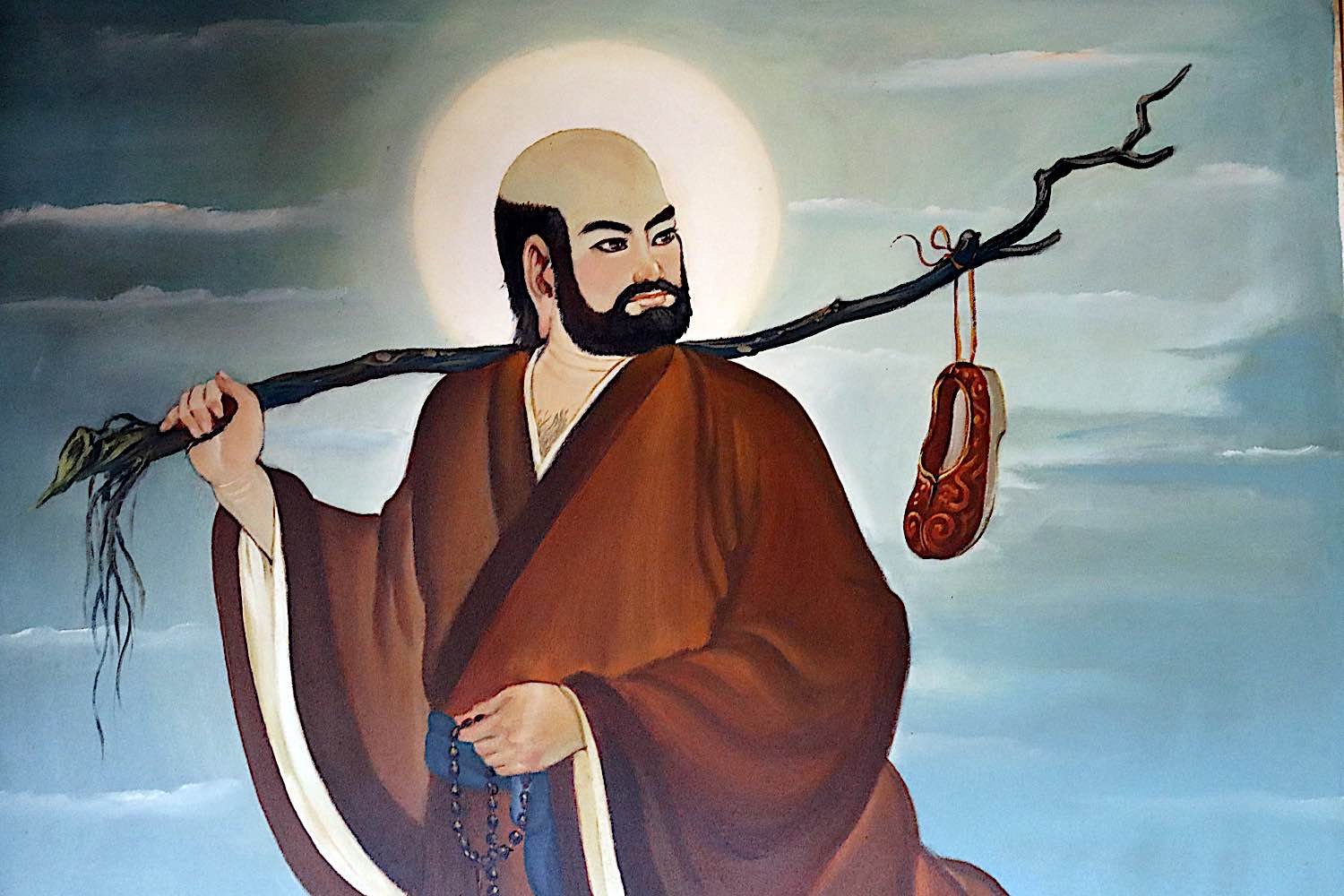
Bodhidharma

Bodhidharma

アーティスト

Semi-legendary 5th-6th century Buddhist monk who carried Chan (Zen) Buddhism from India to China. Famous for nine years of wall-gazing meditation at Shaolin and the four-line summary of Zen: 'A special transmission outside the scriptures, not founded upon words and letters.'

プロフィールを見る
トピックを見る
seeingnatureessence
よくある質問

よくある質問

Bodhidharma's phrase emphasizes the importance of self-awareness and introspection. He invites us to look beyond external distractions and societal expectations to discover our true essence, which is essential for spiritual awakening.

You can apply this teaching by incorporating mindfulness practices into your daily routine. Taking moments to pause, reflect, and observe your thoughts and feelings can help you connect with your true self and cultivate a deeper understanding of your nature.

Yes, the concept of seeing one's true nature is prevalent in many Zen texts, including the Heart Sutra and various teachings of Zen masters. These texts often emphasize direct experience and insight as pathways to understanding one's essence.

Prajna refers to the wisdom that arises from direct experience and insight into the nature of reality, while dharma encompasses the teachings and principles of Buddhism. In Bodhidharma's context, seeing one's nature is a form of prajna that leads to a deeper understanding of dharma.

Meditation, particularly zazen, is a foundational practice that supports living Bodhidharma's teaching. By sitting in stillness and observing the mind, practitioners can cultivate awareness and begin to see their true nature more clearly.

Encouraging others to see their nature involves creating a safe space for open dialogue and self-reflection. Sharing your own experiences and insights can inspire others to embark on their journey of self-discovery.

Related Quotes

すべて表示
Bodhidharma and the Origins of Shaolin Kung Fu
Inspiration

Bodhidharma and the Origins of Shaolin Kung Fu

すべて見るRelated Quotes→

旅をつづける

BrightStarのディレクトリから、さらなる智慧と集いを。

もっと記事を読む

教え、インタビュー、ガイドのライブラリ全体をご覧ください。

すべての記事に戻る →

講師とアーティスト

コンシャスな世界の系譜、音楽家、導き手を探しましょう。

アーティストを探す →

イベントを見つける

キルタン、リトリート、サウンドバス、ブレスワーク、フェスティバル — まもなく開かれます。

イベントを見る →