What is Ceremonial Music?
Ceremonial music is music created and performed with the explicit intention of facilitating sacred ritual, spiritual transformation, or collective worship. Unlike devotional music performed for personal or communal religious expression, ceremonial music functions as an active ritual element—marking transitions, invoking specific states of consciousness, or structuring the temporal and energetic arc of a ceremony. It appears across nearly every spiritual tradition: from Amazonian icaros sung by ayahuasca shamans to Tibetan Buddhist ritual chanting, from Native American peyote songs to the drone-based soundscapes of contemporary cacao ceremonies.
The defining characteristic is functional intent. Ceremonial music is not background ambiance or aesthetic performance; it serves as technology for consciousness. Practitioners describe it as creating containers for healing work, anchoring participants during challenging psychospiritual experiences, or literally “calling in” particular energies or spirit presences. The music may employ repetition, drone, polyrhythm, specific scales or modes, or the human voice in extended techniques—all calibrated to alter nervous system states and support non-ordinary consciousness.
Origins & Lineage
Ceremonial music predates written history. Archaeological evidence suggests ritualized music-making exists in every known human culture. Paleolithic bone flutes dating to 40,000 BCE indicate music’s role in early ritual life. Ethnomusicologists document unbroken ceremonial music traditions among indigenous peoples worldwide: the Bwiti ceremonies of Gabon using the ngombi harp and iboga plant sacrament, the Shipibo-Conibo traditions of the Peruvian Amazon with their intricate icaro song maps, and the Navajo Nightway healing ceremonies with their multi-day song cycles.
Major religious traditions codified ceremonial music forms: Vedic chanting preserved in the Samaveda (circa 1200-1000 BCE), Gregorian chant emerging from Christian monastic practice (6th-9th centuries CE), Sufi dhikr and qawwali traditions crystallizing in medieval Persia and the Indian subcontinent (9th-13th centuries CE), and Tibetan Buddhist liturgical music documented in texts like the Kangyur.
The late 20th century saw ceremonial music traditions globalize through several vectors: ethnomusicological documentation, the psychedelic revival’s interest in indigenous plant medicine traditions, New Age spirituality’s syncretism, and digital technology enabling unprecedented cross-pollination. Figures like ethnobotanist Terence McKenna, anthropologist Michael Harner, and musician/researcher Daniel Pinchbeck brought indigenous ceremonial music contexts to Western audiences in the 1980s-2000s.
How It’s Practiced
Ceremonial music practice varies radically by tradition but shares structural patterns. In indigenous contexts, music is typically performed live by trained ceremonial leaders—shamans, curanderos, medicine people—who have undergone years of apprenticeship. The Shipibo tradition requires learning hundreds of icaros, each corresponding to specific plant spirits and healing intentions. Tibetan monks train for decades in the overtone singing, trumpet, and percussion techniques required for empowerment ceremonies.
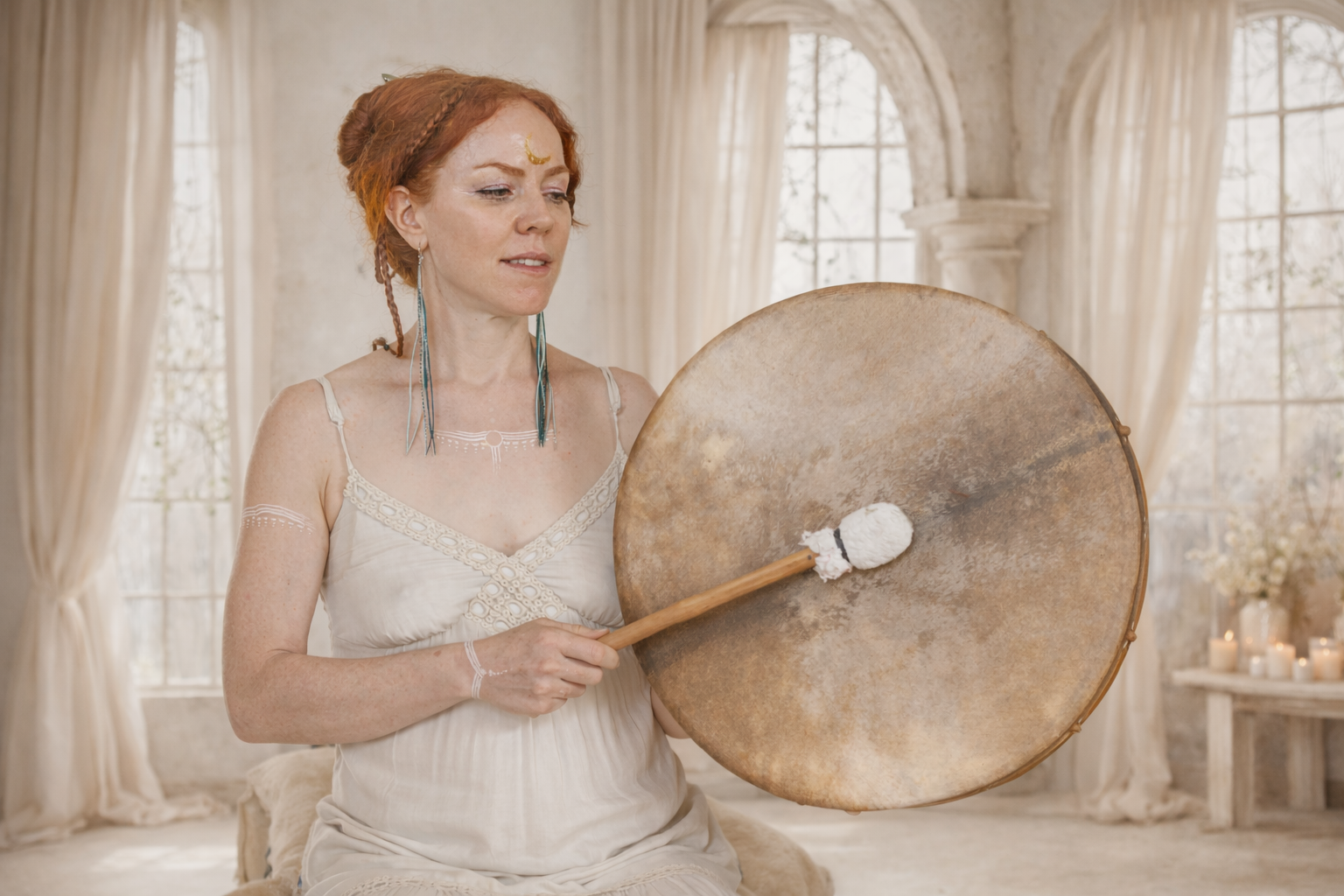
Contemporary Western ceremonial music exists on a spectrum. Some practitioners work within apprenticed indigenous lineages, learning traditional songs under the guidance of elders. Others create original compositions inspired by multiple traditions, using instruments like crystal singing bowls, gongs, harmoniums, frame drums, and voice. A growing field of “conscious DJs” blend electronic music production with ceremonial intention, creating bass-driven soundscapes for ecstatic dance and plant medicine ceremonies.
Musical elements commonly include: repetitive patterns that induce trance states, drones that provide harmonic anchoring during altered states, rhythmic drumming at specific tempos (often 4-7 Hz corresponding to theta brainwave states), and vocal techniques like overtone singing, glossolalia, or the extended vowel tones found in Mongolian khoomei and Tuvan throat singing.
Ceremonial Music Today
Seekers encounter ceremonial music primarily through: ayahuasca, psilocybin, and other plant medicine ceremonies held in retreat centers worldwide; sound healing sessions and “sound baths” in yoga studios and wellness centers; ecstatic dance events with live or DJ’d ceremonial music; Kirtan and Bhakti yoga gatherings; and online recordings and livestreams. Platforms like Bandcamp and Spotify host extensive ceremonial music catalogs, though practitioners debate whether recorded ceremonial music retains efficacy outside live ritual contexts.
Festivals and gatherings create temporary ceremonial music communities—events like Beloved Festival, Lightning in a Bottle, and regional Envision-style gatherings feature ceremonial music across multiple stages and contexts. Urban centers now host regular cacao ceremonies, breathwork sessions, and ecstatic dance nights with live ceremonial musicians.
The field faces ongoing questions around cultural appropriation, particularly when non-indigenous practitioners use sacred songs from closed traditions. Debates continue about commercialization, training standards, and whether ceremonial music requires plant medicine contexts or functions independently as consciousness technology.
Common Misconceptions
Ceremonial music is not meditation music, though both may induce calm states. Meditation music supports individual contemplative practice; ceremonial music structures collective ritual with specific beginning, middle, and end phases.
It is not simply “world music” or “ethnic music.” While much ceremonial music originates in indigenous traditions, the designation concerns function and context, not geography or culture. Contemporary electronic producers create ceremonial music; traditional folk music performed for entertainment is not ceremonial despite ethnic origins.
Ceremonial music is not inherently safe or benign. Practitioners report music can intensify challenging psychological material during ceremonies and occasionally destabilize participants. The “vibrational healing” claims made by some sound healing practitioners lack rigorous scientific validation, though preliminary research on binaural beats and brainwave entrainment shows promise.
Finally, access to recordings does not constitute ceremonial participation. Most traditions maintain that ceremonial music functions within specific relational, energetic, and intentional containers that recordings alone cannot replicate.
How to Begin
Start by attending a live ceremony or sound healing session in your area. Search directories like BrightStar Events for local offerings, prioritizing practitioners who clearly state their training lineage and cultural authorizations. Beginners often start with cacao ceremonies or sound baths, which offer gentler entry points than intensive plant medicine work.
For listening exploration, the Smithsonian Folkways catalog documents authentic ceremonial music traditions across cultures. The compilation “Sacred Tibetan Chant” by the Gyuto Monks, Laraaji’s ambient zither work “Day of Radiance,” and Jeremy Dutcher’s “Wolastoqiyik Lintuwakonawa” (which revives Wolastoq ceremonial songs) provide accessible starting points.
Those called to ceremonial music-making should seek apprenticeship rather than self-teaching. Contact established traditions directly, attend training intensives, or study with teachers who have undergone extensive apprenticeship themselves. The field requires deep respect for source traditions and honest reckoning with one’s cultural positioning and authority to carry specific practices forward.